


Hydrogen has long been considered one of the leading candidates to replace polluting fuels in industries that are difficult to electrify, from steel and chemical plants to heavy transportation. When hydrogen is burned or used in a fuel cell, its main byproduct is water.
But there is a catch: most of the world’s hydrogen is still produced from fossil fuels, in a process that generates significant carbon emissions. “Green” hydrogen, produced from water using electricity generated by solar or wind power, could solve that problem — but it remains expensive.
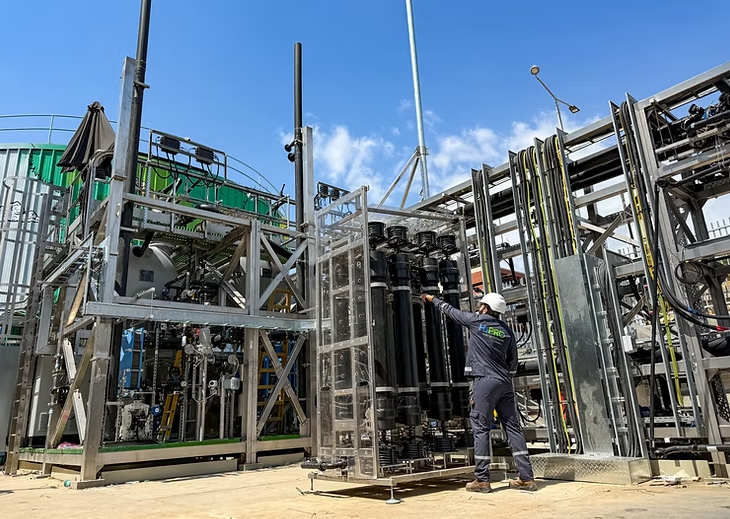
That is where Israeli company H2Pro comes in. Rather than trying to change hydrogen itself, it is attempting to change the way water is split to produce it.
The story begins at the Technion. As early as 2012, Prof. Avner Rothschild of the Faculty of Materials Science and Engineering and Prof. Gideon Grader of the Wolfson Faculty of Chemical Engineering, together with Dr. Hen Dotan and Dr. Avigail Landman, were exploring ways to improve water electrolysis.
Instead of simply trying to refine the conventional system, they asked a more fundamental question: Do hydrogen and oxygen actually have to be produced at the same time?
That question led to a new process that would later become the technological foundation of H2Pro. The research was published in Nature Energy in 2019.
To understand the innovation, it helps to understand how green hydrogen is produced. In electrolysis, an electric current is passed through water, splitting it into hydrogen and oxygen. In conventional systems, the two gases are generated simultaneously on opposite sides of the cell, requiring a membrane or another separator to keep them apart.
Those components add cost and complexity, while the system must also address the possibility of gases crossing from one side to the other.
The Technion team proposed a different solution: separating hydrogen and oxygen production in time. During one stage, hydrogen is produced while the state of the electrode changes. During another, oxygen is generated. The two gases therefore do not have to be produced simultaneously.
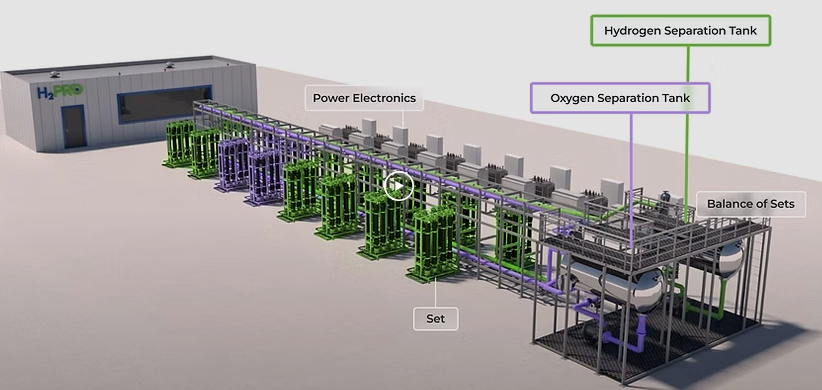
H2Pro
The research version of the process was called E-TAC, short for Electrochemical-Thermally Activated Chemical.
“We succeeded in alternately changing the chemical composition of the anode,” Prof. Grader explained. During the first stage, he said, the cathode produces hydrogen while the anode changes its composition without generating oxygen. In the second stage, the anode produces oxygen through a chemical process before returning to its original state, allowing the cycle to begin again.
In the original study, the researchers reported very high energy efficiency under laboratory conditions. The technology H2Pro is developing today evolved into a broader concept the company calls DWE, or Decoupled Water Electrolysis, in which hydrogen and oxygen production are separated.
In 2019, the academic research became a company.
Rothschild, Grader and Dotan joined forces with entrepreneur Talmon Marco and members of the team that had previously founded Viber, Juno and iMesh. Dr. Landman had played a central role in the research that produced the technology through her work with Rothschild and Grader.
H2Pro received an exclusive license to commercialize the technology from 3T, the commercialization unit of the Technion Research & Development Foundation. The result was an unusual combination: materials science and chemical engineering researchers joining forces with software entrepreneurs who had already built companies on an international scale.
Since then, H2Pro has raised more than $100 million from investors including Breakthrough Energy Ventures, the climate-focused fund founded by Bill Gates, as well as Temasek, ArcelorMittal, Sumitomo and Yara.
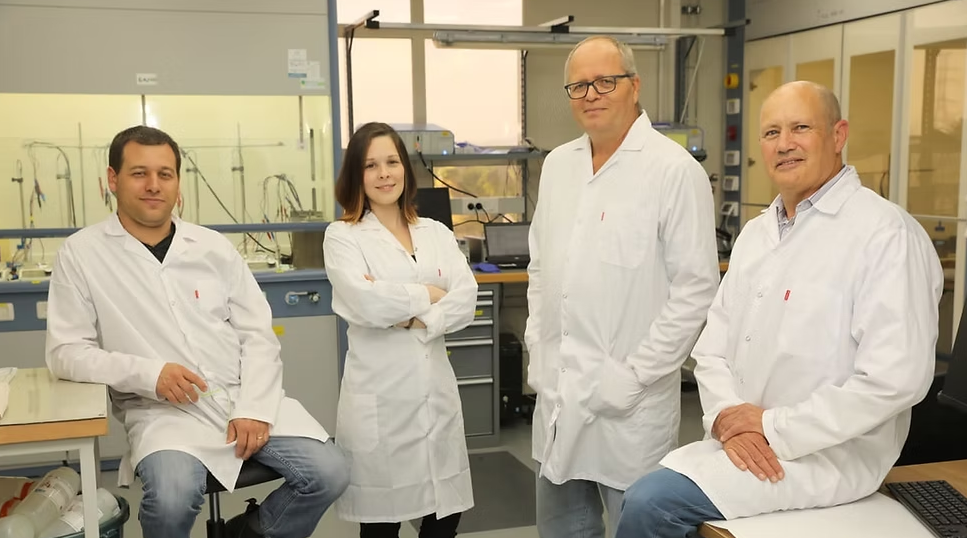
H2Pro team
The company currently employs around 100 people and operates research, development and pilot facilities in Israel. A 0.5-megawatt pilot system has been installed in the Tziporit industrial zone, and the next goal is to demonstrate that the technology can work not only in laboratories and pilot facilities, but in industrial-scale hydrogen plants.
In 2026, the company took several significant steps in that direction.
In March, H2Pro signed an agreement with Doral for a project in Spain that is expected to begin with a 5-megawatt DWE system connected directly to a solar facility, with plans to later expand it to 50 megawatts.
In June, a memorandum of understanding was signed for another project in the Tarragona region. That project is expected to begin at 25 megawatts and potentially expand to as much as 150 megawatts by 2032.
The concept behind both projects is significant: operating the electrolyzer directly on solar energy, without having to rely continuously on the electricity grid or large-scale battery storage.
“The ability to operate on intermittent renewable energy, with start-stop cycles and high efficiency even at partial loads, is critical to reducing the cost of green hydrogen,” H2Pro CEO Tzachi Rodrig said when the Doral project was announced.
The decisive stage, however, still lies ahead.
H2Pro has yet to demonstrate that its systems can produce hydrogen reliably for years at large industrial scale and at a cost competitive with existing electrolysis technologies. But that is precisely what makes the next several years so important for the company.
An idea that began more than a decade ago in Technion laboratories, with the decision to separate the two halves of a familiar chemical reaction, is now attempting to make the leap from a scientific paper and pilot installation to systems operating at tens or even hundreds of megawatts.
If that transition succeeds, the breakthrough will be about more than finding a new way to split water. It could offer a cheaper and more flexible way to turn sunlight and wind into fuel, energy that can be stored, transported and used in places where electricity alone may not be enough.