
Four decades of experience with unmanned systems have gone underwater: BlueWhale can operate for weeks, gather intelligence, detect mines and track submarines without putting a human crew at risk. After trials in the Baltic Sea, it has already been delivered to the German Navy
It is not just in the skies. ELTA, a subsidiary of Israel Aerospace Industries, has taken four decades of experience with unmanned systems and brought it into a new arena: underwater warfare. BlueWhale, known in Hebrew as “Caesaron,” is a sophisticated autonomous submarine capable of operating at sea for weeks without a human crew on board, gathering intelligence, detecting mines and tracking ships and submarines.
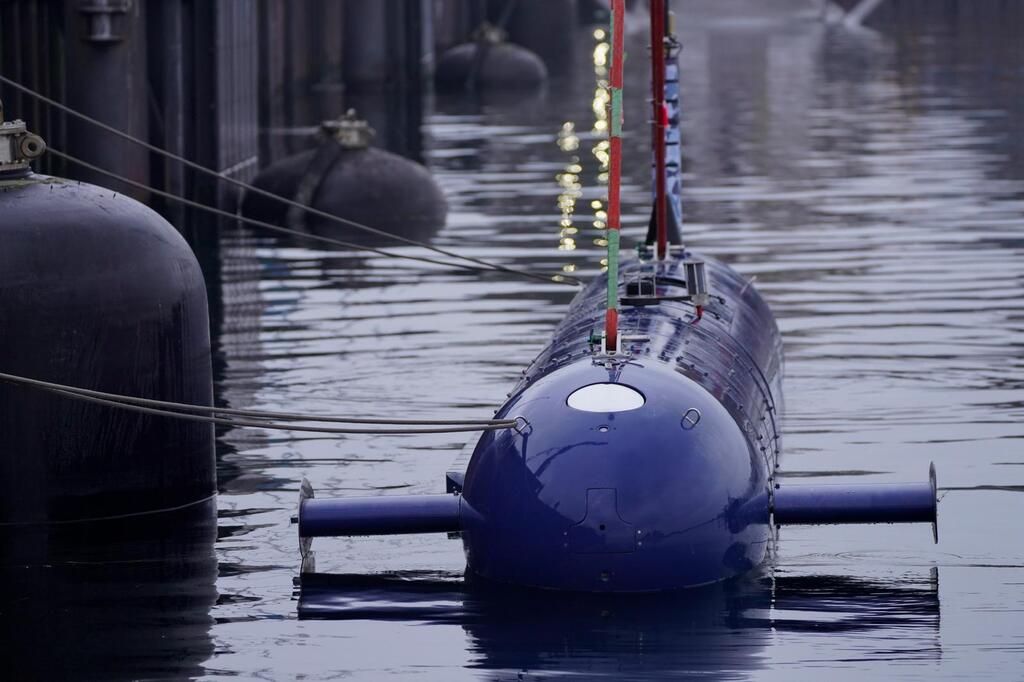
In other words, ELTA has developed an unmanned vessel that sends the technology into the depths while keeping people out of harm’s way.
When Israel Aerospace Industries first unveiled the submarine in 2023, it had already accumulated thousands of hours of autonomous underwater operations. The system was developed to address one of the longstanding challenges of the underwater arena: Navigating, detecting targets and communicating are far more difficult beneath the surface.
Radio waves, on which many land- and air-based communications systems rely, do not travel well through seawater, while threats such as submarines and mines can be extremely difficult to detect. For years, such missions required crewed vessels, expensive sensor arrays and personnel operating in potentially dangerous areas. The autonomous submarine offers another option — sending a smaller vessel on a mission that can remain at sea for extended periods.
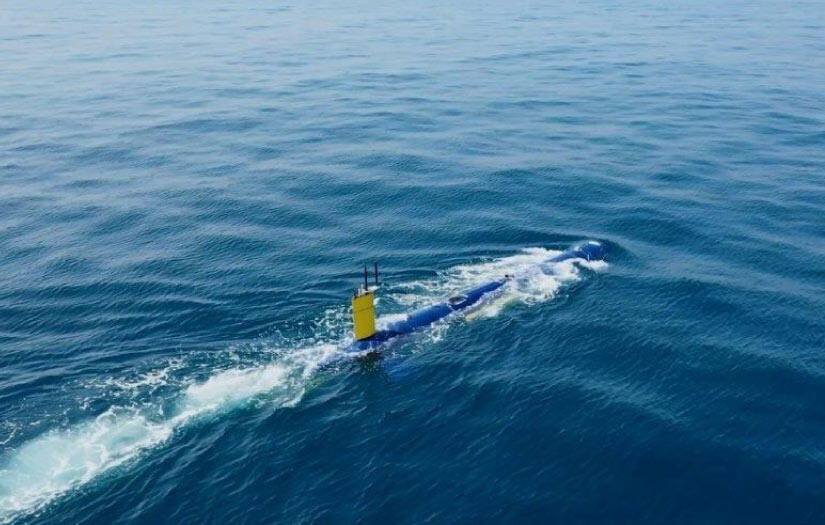
BlueWhale
(Photo: Israel Aerospace Industries)
BlueWhale is 10.9 meters (35.8 feet) long, weighs about 5.5 metric tons (6.1 U.S. tons) and can operate independently for weeks, depending on its mission and configuration.
To navigate underwater, it uses sonar systems — essentially its ears in the depths — that allow it to detect and track submarines and ships and map mines on the seabed. When it needs information from above the surface, a telescopic mast, similar to a periscope, rises from the vessel carrying radar, cameras and communications systems. Using satellite communications, it can transmit the information it collects in real time to a command center far from the vessel.
But the innovation goes beyond operating without a crew on board. BlueWhale’s onboard computer manages the mission and processes information received from its sensors, meaning the vessel does not require an operator on shore to direct its every movement.
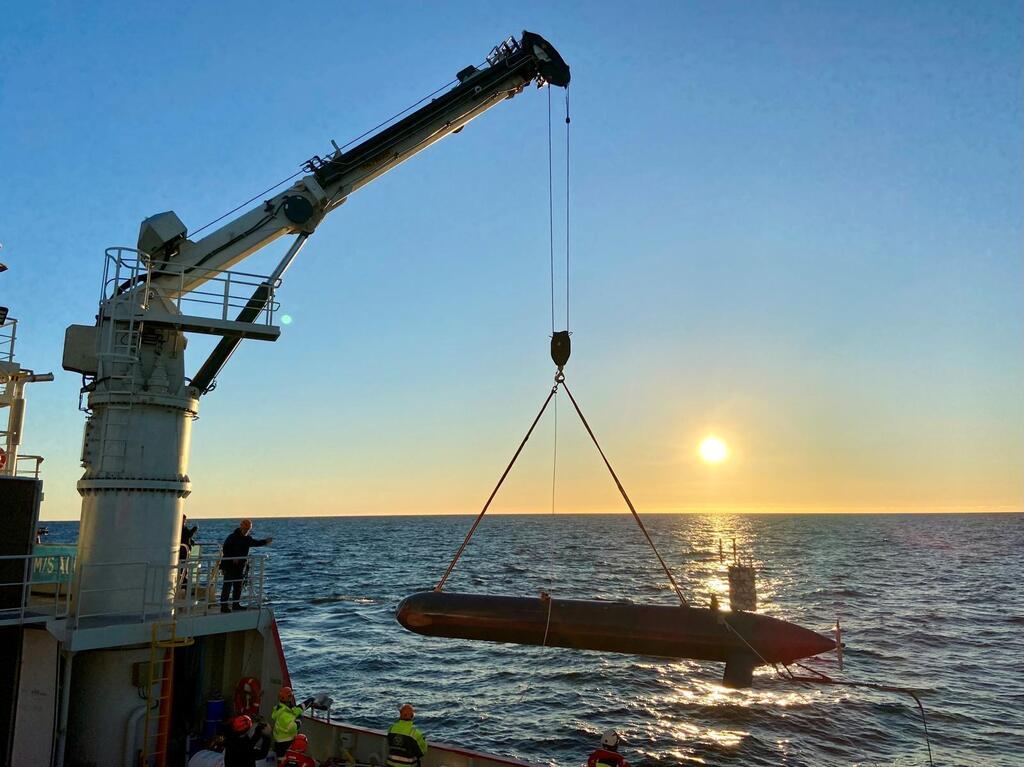
BlueWhale
(Photo: Israel Aerospace Industries)
That autonomy allows it to be sent ahead on long or dangerous missions and serve as an additional set of eyes and ears for crewed vessels. Logistically, it is also a very different proposition from a crewed submarine: BlueWhale can be transported between operational theaters inside a standard shipping container about 12 meters (39 feet) long.
The transition from demonstrations to adoption by foreign navies gained momentum in 2024. That year, the German Navy tested BlueWhale for about two weeks in the Baltic Sea. In 2025, a memorandum of understanding was signed with Hellenic Aerospace Industry to promote the system for the Greek Navy.
The most significant milestone to date came in February 2026, when Israel Aerospace Industries and TKMS delivered a BlueWhale system to the German Navy as part of “Kurs Marine 2035+,” its program for the fleet of the future.
The system delivered to Germany also incorporates sonar technology from Germany’s ATLAS Elektronik, making ELTA’s development part of the modernization program of one of Europe’s leading navies.
BlueWhale is not intended to replace crewed submarines but to add a new layer of capabilities. In the future, navies could combine large, crewed vessels with autonomous systems sent ahead of them, remaining in the operational area for longer periods and carrying out missions without putting crews at risk.
It is a transformation already familiar in the skies, where unmanned systems have become an integral part of military operations. Now, the same concept is making its way beneath the surface — and BlueWhale is among the technologies already turning that shift into reality.