

A video circulating online has exposed what security officials describe as a troubling new reality: a prototype shoulder-fired guided missile built with household tools, a 3D printer and parts costing less than $100.
The prototype, which reportedly cost $96 to assemble, was developed by independent engineer Alisher Khojayev, who published the full project online on GitHub.
Khojayev’s design includes a missile with folding stabilizing fins, a navigation system based on GPS and a compass, and a simple flight computer built on an ESP32 controller, the same low-cost chip commonly found in consumer electronics and smart home devices.
Beyond the launcher and missile itself, the engineer proposed a broader concept: a distributed network of cameras capable of triangulating airborne targets and transmitting targeting data to the missile in real time.
A wake-up call for defense industries
Security experts say the project serves as a wake-up call for defense agencies in Israel and around the world.
To grasp the scale of the development, analysts point to the cost gap between the prototype and existing military systems.

The U.S.-made Stinger missile, widely considered the Western standard for shoulder-launched air defense against low-flying aircraft, costs American taxpayers about $480,000 per unit.
Even the U.S. Air Force’s “low-cost missile” initiative, the Counter-Air Missile Program (CAMP), which aims to significantly reduce production costs, still targets prices of several hundred thousand dollars per missile.
In Israel, the economic comparison is also stark. An interceptor used by the Iron Dome defense system costs between $20,000 and $100,000.
The laser-based “Iron Beam” system promises interception costs of just a few dollars per shot, but its development and infrastructure are estimated to cost billions.
Khojayev’s prototype highlights a different path: cheap, decentralized production using consumer-grade technology and artificial intelligence, without the need for large factories or global supply chains.
The rise of 3D-printed weapons
The trend does not exist in isolation.
In China, the world’s largest manufacturer of 3D printers, the defense industry is rapidly adopting additive manufacturing to mass-produce missile components.
In Europe, defense giant MBDA already incorporates 3D-printed parts in its missiles to shorten production times.
The real testing ground, however, may be Ukraine, which has been fighting Russia for four years. Reports from the battlefield describe networks of “basement labs” using hundreds of 3D printers to produce low-cost interceptor drones and munitions.
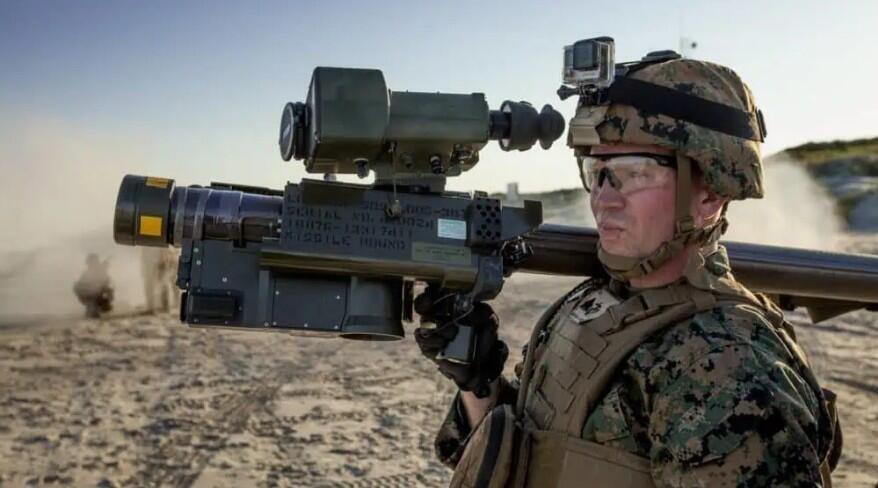
American Stinger missile
(Photo: MDAA)
Ukrainian company SkyFall recently unveiled the P1-Sun, a 3D-printed interceptor drone capable of reaching speeds of 450 kilometers per hour and designed to shoot down cruise missiles and Iranian-made Shahed drones.
The ability to rapidly alter manufacturing plans in order to evade Russian electronic warfare systems gives small-scale producers an advantage that large defense companies struggle to match.
From 3D-printed guns to guided weapons
The path toward a $100 missile began in 2013, when American activist Cody Wilson released the plans for the Liberator, the first fully 3D-printed handgun.
At the time, many experts dismissed the development as a dangerous but limited novelty.

The Ukrainian P1-Sun interceptor drone
(Photo: Reuters)
In 2026, however, the technology appears to have taken an evolutionary leap, moving from crude small arms to guided systems that combine sensors, software and artificial intelligence.
The underlying technology, known as fused deposition modeling (FDM), has become so accessible that virtually anyone can print aerodynamic airframes at home.
Stronger materials, such as carbon-fiber-reinforced polymers, combined with the rapid miniaturization of electronics, have eroded the line between hobbyist experimentation and military technology.
Security concerns grow
The democratization of military technology is raising serious ethical and security questions.
Smuggling a digital file instead of a physical missile challenges traditional arms control and monitoring mechanisms.
Non-state actors or sanctioned countries such as North Korea have already shown interest in producing advanced military equipment domestically, far from the scrutiny of international intelligence agencies.
For Israel, which operates at the forefront of military technology, the implications are clear. If armed groups can manufacture guided shoulder-launched missiles for the price of a family meal, the freedom of action enjoyed by air forces could face an unprecedented challenge.
The race, analysts say, is no longer only about who has the fastest missile, but also about who has the fastest printer and the smartest code.