

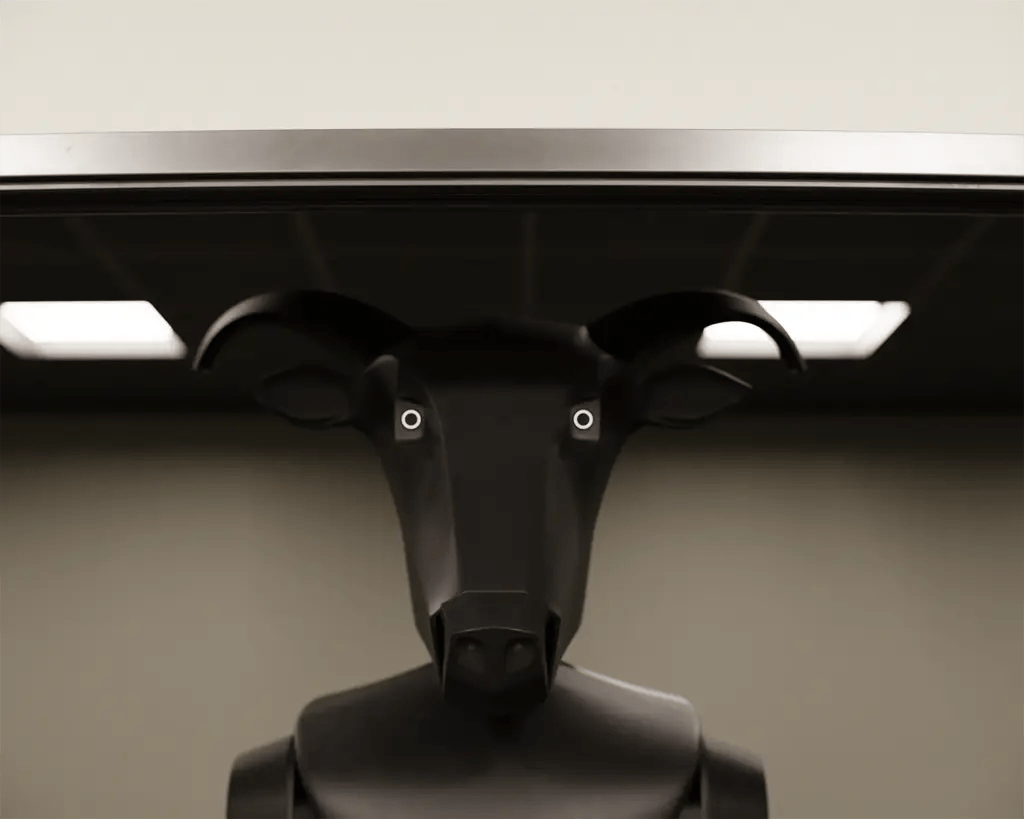
Half human, half horse and entirely built for rescue work, a California startup has unveiled Threehalves, a two-meter-tall robotic centaur designed to operate in disaster zones too dangerous for human responders.
Developed by Satyress, the machine combines a humanoid upper body with a four-legged base. It is intended to assist emergency teams during wildfires, building collapses, earthquakes and hazardous-material leaks.
Remotely operated
Threehalves is controlled remotely and is not designed to replace human judgment. An operator directs it from a safe distance, keeping rescue personnel away from unstable structures, flames and toxic substances.
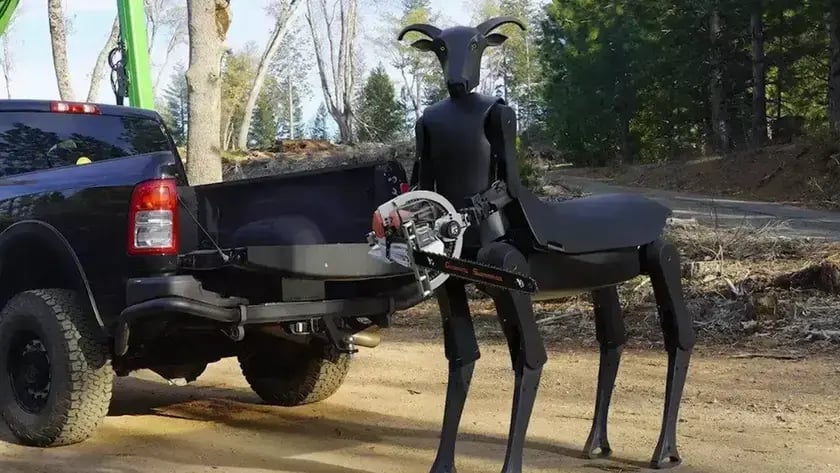
Instead of fixed arms and hands, the robot uses modular limbs that can be quickly fitted with tools including chainsaws, drills and industrial screwdrivers.
Its joints and components are built from a limited number of standardized parts, allowing damaged elements to be repaired, replaced and recalibrated within minutes in the field.
The centaur design is intended to combine the advantages of humanoid and four-legged robots. Two-legged machines can struggle to balance on broken terrain, while quadruped robots such as Boston Dynamics’ Spot are less suited to operating complex tools.
Threehalves’ four-legged base provides a low center of gravity and greater stability, while its humanoid upper body can handle equipment designed for human use.
(Photo: Satyress)
Despite standing two meters tall, it can fold down so that two units fit side by side in the bed of a standard pickup truck, allowing emergency crews to transport it quickly.
Not the first robotic centaur
Threehalves is not the first robot built in this configuration. Earlier projects include the Italian Institute of Technology’s Centauro and NASA’s RoboSimian.
The new robot places particular emphasis on passive physical safety. Pneumatic locking mechanisms are designed to stop its joints if pressure is lost or an emergency command is issued. Pressure tanks at the front and rear can also be punctured to trigger a complete mechanical lock if the machine loses control.
The design still presents significant challenges. Its size may make it difficult to move through narrow corridors and standard doorways.
Satyress has also not disclosed a price, commercial delivery date or whether the robot complies with the strict industrial safety standards required by emergency services in the United States and Europe.
Its real test will therefore not come in the laboratory, but in its ability to function safely and effectively amid the flames, rubble and chaos of an actual disaster.