

Six months have passed since Australia’s unprecedented law banning minors under 16 from holding social media accounts took effect.
While headlines around the world were quick to declare a resounding failure, and children themselves openly admit that nothing has changed, a new study published in the British medical journal BMJ now gives scientific backing to the reality on the ground: The ban simply is not working.
Children are not giving up social media
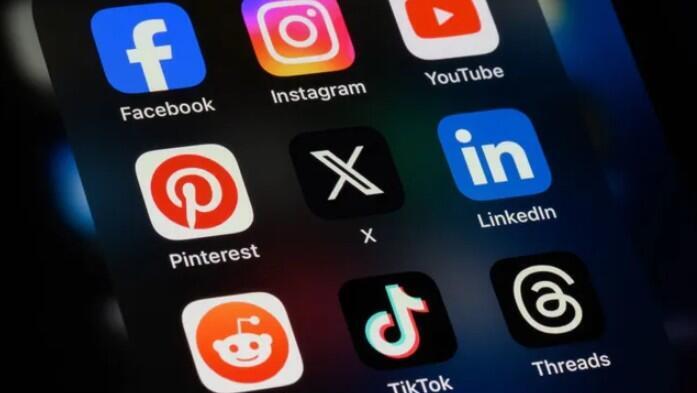
The research team, from the University of Newcastle, followed hundreds of teenagers aged 12 to 16 at two points in time — just before the law took effect in December 2025 and three months afterward. The findings were unequivocal: More than 85% of minors under the permitted age continued using blocked platforms such as TikTok, X, formerly Twitter, Facebook and Instagram, the vast majority through their personal accounts.
Two-thirds did encounter age-verification mechanisms, but said the most common way to bypass them was simply lying about their date of birth. These figures align with official reports by Australia’s eSafety Commissioner, which showed that about 70% of children maintained active profiles even under the new legal regime.
But the question of whether children are managing to outsmart the system is probably the wrong one. The expectation that a regulatory ban can make a social and technological phenomenon disappear overnight is a detached illusion. Every digital development comes with built-in loopholes, and the Australian law was never meant to be an instant magic solution, but rather a tool designed to apply sustained pressure on technology companies, backed by the threat of massive fines of about 50 million Australian dollars.
Some experts suggest that the logic behind the measure should be examined over time, similar to public health models in tobacco control. Britain, for example, adopted a similar approach in its tobacco and vaping law, which permanently bans the sale of smoking products to anyone born in 2009 or later.
The goal there is not to make current smokers quit, but to raise an entire generation for whom smoking is not a social norm. The Australian law appears to be making a similar bet: If access to social media is delayed long enough, its grip on childhood may slowly loosen, just as happened with cigarettes.

Australian Prime Minister Anthony Albanese
(Photo: Hollie Adams/Reuters)
However, that comparison runs into significant difficulties in reality. The fight against tobacco relied on choking off the supply chain through heavy taxation, plain packaging and sweeping advertising bans. Social networks, by contrast, are a “free,” infinite product, psychologically engineered to maximize engagement and addiction.
Online behavioral norms are especially sticky, and algorithms reward extreme content and risk-taking, making it difficult to change habits without relentless pressure sustained over years.
A global wave of legislation
While Australia serves as the world’s test case, other countries are rushing to join the trend, presenting different approaches to restriction. Britain is advancing a similar law expected to take effect in early 2027, France has set a stricter threshold of age 15, and Austria plans to ban access under age 14. Norway is even considering raising its existing minimum age from 13 to 16.
In the United States, the situation is more complicated: The federal government lags behind because of constitutional protections for free speech, and legislative efforts such as the Kids Online Safety Act have been significantly softened, with key provisions requiring companies to exercise a duty of care removed.
In Israel, the discussion around age restrictions on social media remains mostly at the level of social recommendations and local parent initiatives, without a binding legislative framework. Local efforts focus mainly on banning smartphones from schools, similar to models implemented in Denmark and Poland, though these are generally local initiatives, such as in Tel Aviv.

Ultimately, children will find ways around the law
(Photo: Shutterstock)
In addition, several programs have begun operating, including those run by the “Attention Revolution” organization, which has launched several school pilots in central Israel, including in Givatayim, and by “The Blue Pinecone,” a company that has been holding workshops for several years. Their goal is to create parent initiatives together with education systems and local authorities to guide and educate children and teenagers in digital literacy.
It is difficult to know which approach is most successful. A comprehensive study published by Stanford University last April found that after examining about 5,000 schools that adopted a policy blocking smartphone use in schools, with devices placed in designated lockers each morning until the end of the school day, students’ mental well-being improved significantly. The share of students using smartphones for personal purposes in class fell from 61% to 13%, a drop of about 80%.
However, the move was not without difficulties. In the first year of implementing such a smartphone “ban,” there was an increase in disciplinary incidents and disruptions by students. From the second year onward, however, the situation stabilized and began to show significant improvement in mental well-being.
On the other hand, those expecting academic improvement found that in that area there was no significant change, either positive or negative. In other words, the main significance lies in children’s psychological well-being.
It is also worth noting that laws of the type Australia has implemented always have unintended consequences. For example, when the country introduced mandatory bicycle helmet laws in the 1990s, the immediate result was that people simply rode less. In the current case, the study shows that some young people are turning to fake accounts, private browsing or encrypted messaging apps, moving into darker and less supervised corners of the internet.
Just as anyone who wanted to buy a weapon, drink alcohol during Prohibition in the United States or consume drugs found a black market, the same logic applies here. The issue is that a black market in its digital form is much easier for minors to access. All that is needed is a credit card, or even a crypto wallet.
It is unclear how much the younger generation’s exposure to social networks and digital communication platforms will decline thanks to, or because of, the Australian law. There is no doubt that social media is here to stay in one form or another, including among minors.
There are too many platforms that are available and do not fall under Australia’s local laws, and Canberra’s ability to control and monitor them is ultimately limited, especially because so much social communication now takes place through digital means. Still, as long as the state tries to deal with 21st-century problems using tools stuck deep in the previous century, things are unlikely to change fundamentally.