

A sudden and unusual surge of 15,000 new followers has been recorded on Prime Minister Benjamin Netanyahu’s Instagram account since Friday. The move has sparked suspicion among many online users, who are questioning whether this reflects a genuine and unexplained burst of popularity for Netanyahu, or artificial “bots” created and purchased to generate that impression.
The spike in follower numbers was first reported by network researcher Gil Feldman, who runs “The Existing Situation,” a data analysis and processing project that monitors discourse on social media and focuses on exposing manipulation.
Gallery
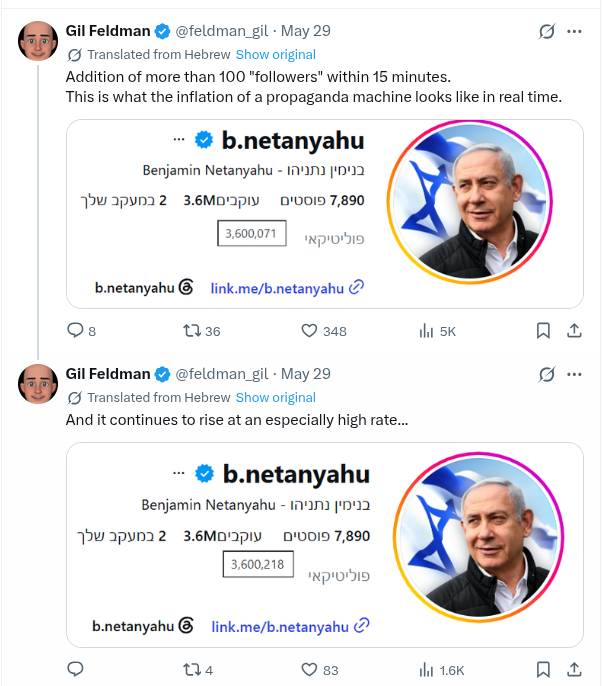
The spike in follower numbers was first reported by network researcher Gil Feldman
(Photo: screenshot from X; Gil Feldman)
According to posts published by Feldman on X, 6,000 followers were added to Netanyahu’s account at once on Friday, almost all of whom do not appear to be linked to real people. Over the weekend and through Sunday morning, another 9,000 followers were added to the account. For comparison, former Prime Minister Bennett and National Security Minister Ben-Gvir gained an average of 9-12 followers per hour over the weekend, while Netanyahu’s account was adding 302 followers per hour or more.
Politicians’ Affinity for Bots
The practice among politicians, public figures and celebrities of purchasing fake “followers” — effectively digital bots — to create an appearance of popularity and traffic is not unique to Netanyahu. Inflating follower numbers is not classified as an “advertisement” or “sponsored content,” but “merely” as manipulation of platform metrics, and existing Israeli law does not address it directly.
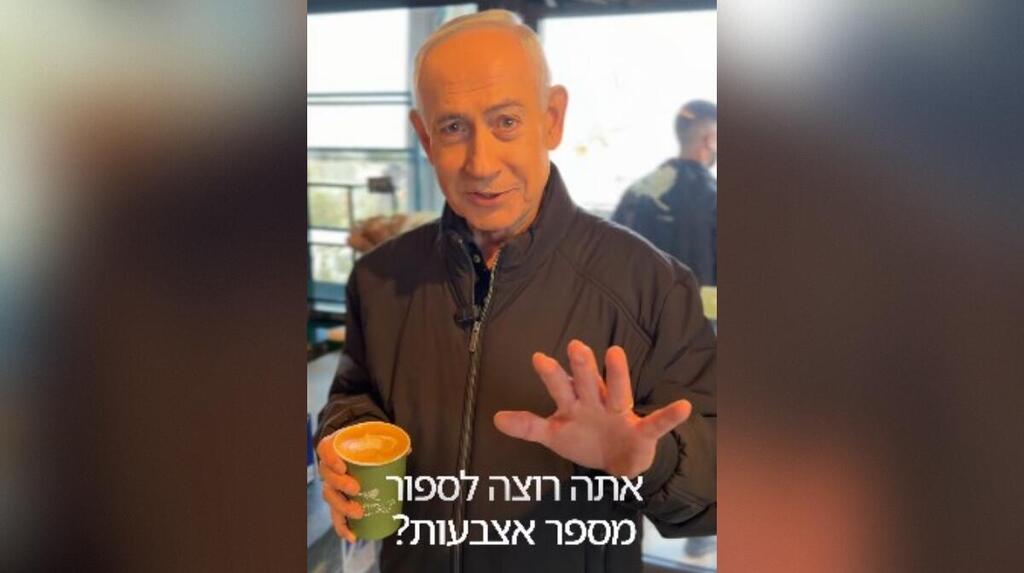
For comparison, Bennett and Ben-Gvir gained an average of 9-12 followers per hour over the weekend, while Netanyahu’s account was adding 302 followers per hour or more
(Photo: Social media)
During recent election campaigns, several petitions were submitted demanding that the Elections Committee require parties to declare they were not operating networks of fictitious profiles and bots. However, in various rulings, the committee determined that despite the severity of the phenomenon, the chair of the Elections Committee has no legal authority to investigate or initiate independent reviews of technological profile activity unless unequivocal evidence of violations of election propaganda laws is presented.
Still, purchasing fake followers, likes or comments is broadly prohibited across all major social media platforms, which are authorized to remove fake accounts. Usually, when such activity is discovered and found to violate platform rules, the companies proactively delete the bot accounts.
At times, the algorithm also “penalizes” the purchasing account, causing its content to stop appearing in the feeds of real followers or in search tabs. In cases of repeated violations or particularly large-scale purchases, the platform may shut down and permanently delete the account without the possibility of recovery.
In the United States, the Federal Trade Commission has already ruled that selling fake followers violates consumer deception laws, and heavy financial penalties have been imposed on companies that sold bots.