

As identity fraud grows more sophisticated—fueled by artificial intelligence, deepfakes and organized cybercrime—businesses are increasingly looking for ways to verify who their customers really are. One company seeking to address that challenge is AU10TIX, an Israeli technology firm that develops identity verification software used by major global platforms.
Founded in 2002 and headquartered in Israel with research and development operations in Hod Hasharon, AU10TIX traces its origins to technologies used in airport security and border control—sectors where confirming a person’s identity quickly and accurately has long been critical. That background helped shape the company’s approach to digital identity verification.
Today, AU10TIX provides a platform designed to help businesses confirm customers’ identities during onboarding, detect suspicious activity in real time and comply with increasingly strict regulatory requirements. Its technology is used by companies including Booking.com, TikTok and PayPal, according to the firm.
Gallery
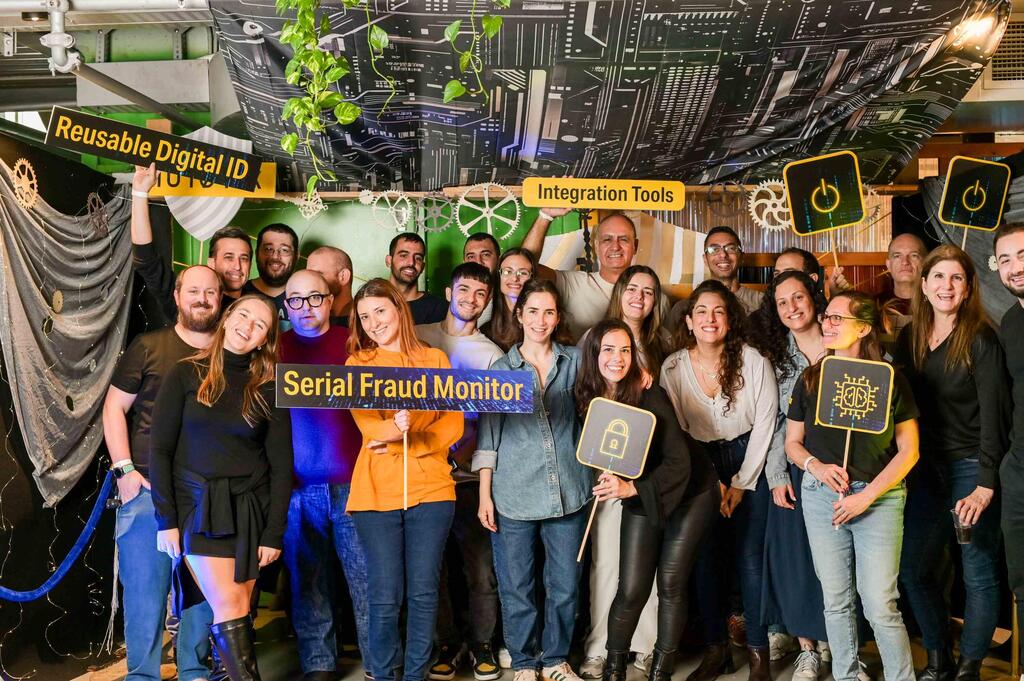
AU10TIX is an Israeli technology firm that develops identity verification software used by major global platforms
(Photo: Elad Baranga)
The system can verify a person’s identity in as little as four seconds, the company says, by analyzing government-issued identification documents from more than 190 countries and more than 5,000 document types. Rather than simply scanning an ID card, the platform uses artificial intelligence and machine learning to analyze document features, compare biometric data and cross-check information against trusted data sources and known fraud signals.
Because the process is largely automated, businesses can screen large volumes of new users without relying on manual review teams. That capability has become increasingly important for industries such as banking, financial technology, cryptocurrency, online gaming and e-commerce, where both regulatory compliance and fraud prevention are critical.
AU10TIX has also developed tools designed to detect coordinated fraud campaigns. Through a consortium of more than 60 companies that share fraud intelligence signals, its system can identify patterns suggesting that multiple fraudulent accounts are being created across different services.
The company’s “Serial Fraud Monitor” analyzes these patterns to identify large-scale fraud attempts before they spread. AU10TIX estimates its technology has helped prevent more than $24 billion in identity fraud overall, including an estimated $7.5 billion in losses avoided by businesses in 2024.
The threats companies face have become more complex in recent years. Advances in generative AI have enabled criminals to create convincing fake identities and deepfake videos. In one widely reported case in 2025, investigators uncovered a scheme in which North Korean operatives used fraudulent identities to obtain remote IT jobs at major companies.
(Photo: Shutterstock)
Security experts warn that such schemes pose risks beyond financial fraud. Access gained through false identities can expose sensitive corporate systems, intellectual property and confidential data.
U.S. law enforcement agencies have repeatedly warned that cybercriminals are increasingly using artificial intelligence to scale these operations and make them more convincing. AU10TIX says its machine-learning models are designed to adapt as new fraud techniques emerge.
The company is also promoting what it calls a “Verify Once, Use Everywhere” model, in which individuals verify their identity once and receive a reusable digital credential that can be accepted across multiple online services. The approach would reduce the need for repeated identity checks while protecting user privacy.
In December 2025, Microsoft selected AU10TIX as a verification issuer on its Microsoft Entra platform, enabling organizations to integrate AU10TIX’s identity verification tools into Microsoft’s digital identity infrastructure.
AU10TIX’s growth reflects a broader shift in the digital economy, where identity verification is becoming central to online security. As more commerce, employment and financial activity move online, regulators in regions including Europe and Australia have introduced stricter requirements for verifying customer identities.
In April 2025, the company appointed Yair Tal as its chief executive officer. Tal previously spent more than two decades in the payments and financial technology sector, including senior roles at Payoneer.
AU10TIX has expanded its global operations and invested in technologies designed to detect emerging fraud threats. The company’s focus highlights a larger trend in which identity verification is evolving from a regulatory requirement into a core component of digital trust—and a critical part of how businesses interact with customers online.