

Cybersecurity has entered a new phase, one defined less by firewalls and more by speed, scale and decision-making under pressure. That shift was at the center of a studio interview with Itai Tevet, CEO of Intezer, whose company develops AI-driven tools to help security teams cope with an explosion of digital threats. “Cybersecurity today is no longer just about stopping attacks,” Tevet said. “It’s about speed, scale and smart decision-making.”
interview Itai Tevet - CEO at Intezer global


Intezer works with some of the world’s most targeted organizations, primarily large enterprises in the United States and globally. These organizations are not short on technology, Tevet said—but they are critically short on people.
A shortage no tool can fix alone
“In the most basic terms, we’re solving the talent shortage in cybersecurity,” Tevet explained. “There are so many cyber threats and alerts that it’s overwhelming and there simply aren’t enough people to handle this.”
The scale of the problem is stark. According to Tevet, a typical large enterprise may face around 1,000 security alerts every single day. With limited staff, security teams are forced to triage aggressively.
“In reality, organizations end up looking at only the highest-severity alerts—maybe 30% of what they receive,” he said. “The rest are essentially ignored, not because they’re safe, but because there’s no capacity.” That gap, he warned, creates fertile ground for attackers.
From analyst support to strategic shift
Intezer’s own evolution mirrors the broader changes in the industry. Founded about seven years ago by veterans of Israel’s military cyber units, the company initially focused on tools designed to help individual analysts investigate threats more effectively.
“We built something we wanted to use ourselves,” Tevet said. “Tools for people who actually investigate cyber alerts.” While analysts embraced the technology, executives did not always see it as a strategic investment.“It was a point solution,” he said. “Organizations don’t usually buy products just to improve day-to-day analyst workflows.”
About three years ago, the company made a decisive pivot: instead of helping analysts work faster, Intezer focused on offloading the investigative work altogether. “That was the breakthrough,” Tevet said. “Not assisting the analyst, but removing the burden.”

What forensic AI actually means
At the heart of Intezer’s platform is what Tevet describes as “forensic AI”, an approach that differs from systems that simply feed alerts into generic AI models.
“Think of it as giving AI a full forensic lab,” he said. “Historical context, fingerprints, behavioral data, the same tools a human investigator would use.” This context, he said, is essential in a field where errors can have serious consequences. “In cybersecurity, trust requires something almost impossible,” Tevet said. “You can’t make mistakes.” The payoff, he added, is dramatic noise reduction. Customers using Intezer’s platform typically need to review only 2% to 4% of alerts that previously required human attention.
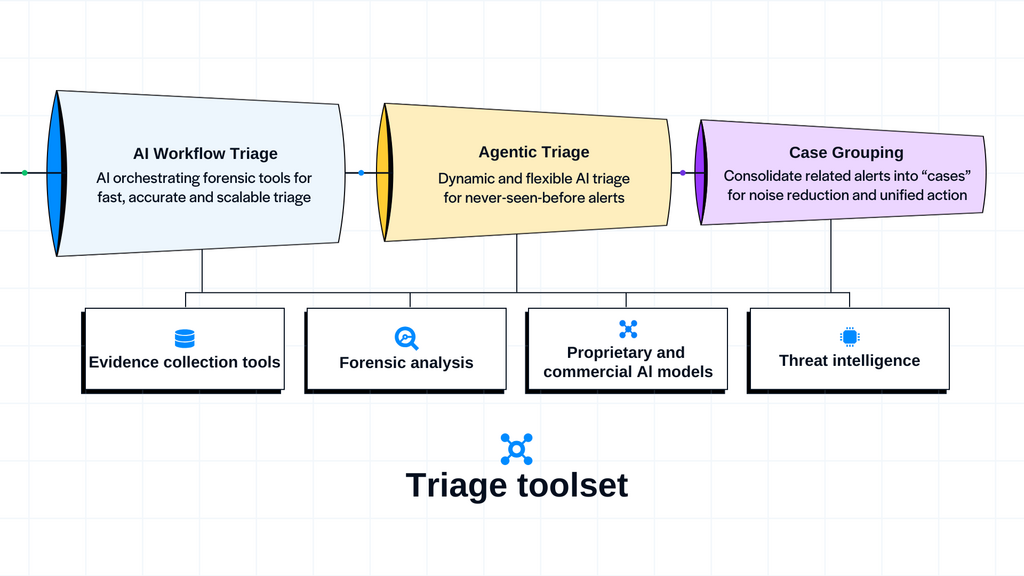
How Forensic AI works, Intezer
(Photo: Intezer PR)
Despite widespread concerns about AI replacing jobs, Tevet framed Intezer’s technology as a way to bring security operations back in-house. “Most large organizations already outsource alert investigation to managed service providers,” he said. “We allow them to keep that work internal but offload it to technology.”
The goal, he emphasized, is not to eliminate security professionals but to free them from repetitive, exhausting tasks. “This work is overwhelming,” he said. “That’s why it’s outsourced in the first place.”
AI on both sides of the battlefield
Artificial intelligence, Tevet noted, is transforming not only defense but offense. “The elephant in the room is AI,” he said. “Attackers are using it too, mostly to scale what already worked.”
Phishing emails are one example. Once easy to spot, they are now increasingly personalized and convincing.“AI solved the talent shortage problem for attackers as well,” Tevet said. “Not just for defenders.” The result is an arms race driven by scale rather than novelty. “It’s an order of magnitude bigger,” he said. “And it’s chilling.”
'The elephant in the room is AI', Intezer
(Photo: Intezer website)
Intezer’s focus on large enterprises reflects where the pressure is most intense. These organizations are attacked more frequently and at greater scale, despite having more resources.
“They’re targeted the most,” Tevet said. “And the complexity they operate under makes everything harder.” Winning their trust, he added, requires deep integration and near-zero tolerance for error. “You’re inside their systems,” he said. “Trust in cybersecurity is incredibly intimate.”
Advances in AI infrastructure are accelerating the pace on both sides of the cyber divide.“AI is a tool,” Tevet said. “It can be used for good or for bad.” As computing power grows, so does the speed of the arms race.“There’s no pause button,” he said.
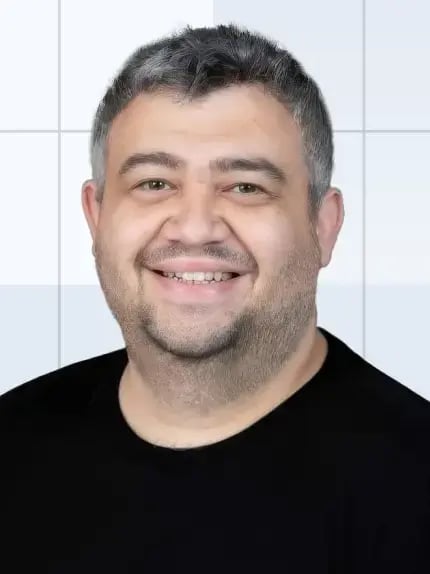 Itai Tevet, CEO of IntezerPhoto: Intezer PR
Asked about Israel, Tevet described a noticeable increase in cyber activity since Oct. 7, alongside the physical conflict. “We’ve seen a worldwide campaign against Israel and its assets,” he said, pointing to a rise in state-sponsored attacks and coordinated digital disruption. “It’s a form of digital terror,” he added.
Looking ahead, Tevet offered a blunt assessment for organizations still relying on traditional approaches. “If you don’t adopt AI in your security operations, you’re already behind,” he said. “And the years ahead will be very difficult.” For a problem that plagued cybersecurity teams for decades, AI may finally offer a path forward—but only for those willing to adapt. “This was a two-decade-old challenge that seemed unsolvable,” Tevet said. “Now, with AI, there’s finally a way to address it.”
*In cooperation with Intezer, exploring how artificial intelligence and human expertise are reshaping the future of cybersecurity, at a moment when digital threats are growing faster than ever.