

Israeli cybersecurity startup MIND Security has raised $72 million in a Series B funding round, about a year after its previous financing, as companies increasingly look for ways to prevent sensitive corporate information from leaking through generative AI tools and autonomous AI agents. It brings MIND’s total funding since its founding in 2023 to more than $112 million.
The company says it has reached an eight-figure revenue run rate and signed dozens of customers, including Fortune 500 companies in finance, manufacturing, health care and technology. MIND currently employs about 70 people, 40 of them in Israel, and plans to use the new funding in part to double its Israeli product and development teams.
MIND develops data loss prevention, or DLP, software designed to identify sensitive information and prevent it from being shared inappropriately across corporate systems.
The company is positioning its platform around a growing problem created by the rapid adoption of generative AI: employees can now upload documents to external AI services, while increasingly autonomous AI agents can access internal databases and applications and take actions involving corporate data with limited human involvement.
Traditional DLP systems were largely developed before those use cases became commonplace.
“Chief information security officers are being asked to protect data moving at AI speed using complex, manual tools that do not provide a complete solution and were built for a slower world,” co-founder and CEO Eran Barak said. “The DLP market is enormous and well established, but it was not built for the AI era.”
MIND says its system can discover and classify sensitive information, monitor how it is being used and block potentially risky activity in real time across SaaS applications, AI tools and agents, employee endpoints, email and on-premises file servers.
Unlike older systems that often rely heavily on predefined rules, the company says its software analyzes both the information itself and the context in which it is being used in an effort to distinguish legitimate activity from potential leaks and reduce false alarms.
MIND also has introduced AI agents of its own to automate some of the routine work traditionally performed by security teams, including investigating risks, responding to incidents and enforcing DLP policies.
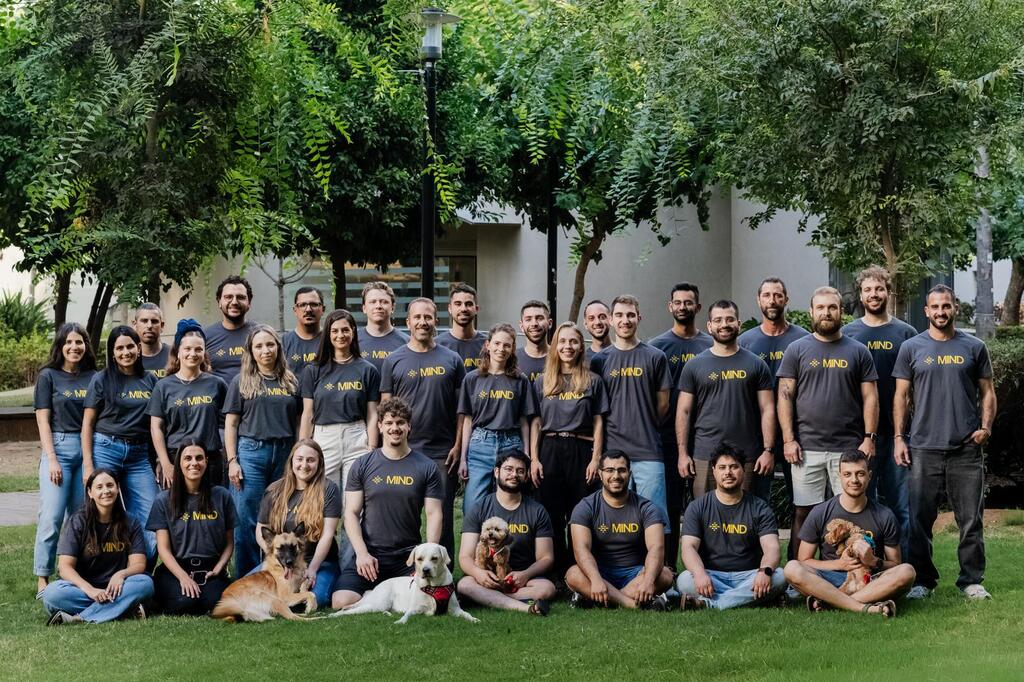
The MIND team
(Photo: Tomer Lesher)
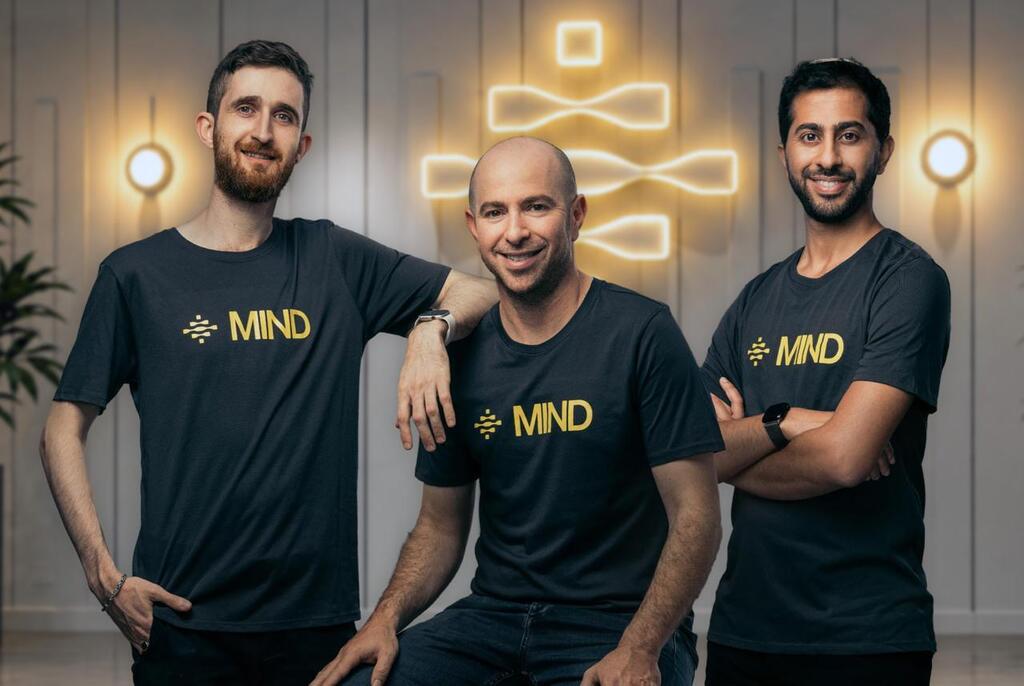
MIND was founded by Barak, CTO Itai Schwartz and VP of R&D Hod Ben Nun.
The round was led by Crosspoint Capital Partners, with existing investors YL Ventures and Paladin Capital Group also participating.
The funding comes amid a broader surge in investment in cybersecurity products designed around generative AI. While companies are racing to deploy AI assistants and agents to increase productivity, security teams are simultaneously trying to understand which systems those tools can access and what corporate information they may expose.
MIND, citing its own data, says about 90% of organizations use generative AI tools and more than two-thirds have deployed AI agents, while roughly 65% are not confident their existing security systems can protect corporate information against the resulting risks.
The company plans to use the latest financing to expand sales and marketing, develop additional product capabilities and build out partnerships with other technology vendors and distributors.
Barak said the company sees the shift toward AI as both the source of the problem it is trying to solve and the technology that could allow it to challenge established DLP providers.
“Artificial intelligence increases the challenge, allowing users, systems and AI agents to access sensitive information and move it in new ways and at unprecedented speed,” he said. “At the same time, it gives us the technology to reinvent the way that information is protected.”