


The modern battlefield is undergoing perhaps its most far-reaching transformation since the invention of the tank. The wars in Gaza and Lebanon, as well as the war between Russia and Ukraine, are demonstrating that the era of sending human soldiers to the front line of combat is gradually fading. In its place is an entirely new architecture of ground robots, unmanned aerial vehicles and artificial intelligence operating in full coordination. That is precisely the field in which Israeli company Fuse operates.
“We are advancing the concept of smart, effective mass, in which swarms of aerial and ground robots are operated by a single system from behind,” said Eyal Dahan, CEO of Fuse. “Our main objective is sharp and clear: ‘No blood at first encounter.’ We don’t want blood to be shed in the first encounter with the enemy. Instead, autonomous systems should absorb the initial fire, clear routes and neutralize threats before the first soldier sets foot in the area.”
After decades in which defense companies developed large, complex systems, recent years have shown that the modern battlefield requires large numbers of small, inexpensive systems, as well as extremely rapid development and the ability to accommodate frequent changes in technical specifications. That led Elbit to pursue a spinoff, establishing Fuse as a subsidiary designed to operate more like a startup in the emerging defense technology sector.
Fuse was established around capabilities and experts drawn from four different areas within Elbit: the research company Pearls of Wisdom, drone company Flying Production, an autonomous technology development unit and, most recently, ground autonomy company BWR.
In effect, the process is the reverse of the familiar model in which major corporations absorb young, small startups. Elbit, which develops large-scale systems including unmanned aircraft, missiles and laser weapons, concluded that the rules have changed in robotics and AI, requiring faster development and rapid, low-cost production.
“I’ve been at Elbit for almost a quarter of a century, and I don’t remember anything like this,” Dahan said. “Elbit realized that it is a kind of heavy cargo ship or aircraft carrier that isn’t always suited to the rapid maneuvers required in today’s market. Usually, large companies buy and integrate. Here, for the first time, Elbit understands that something profound is happening in the market and is doing the opposite — establishing a company in the defense-tech environment that operates much faster and more agilely.”
Yoav Poizner, vice president of marketing at Elbit Systems C4I and Cyber, added: “Fuse was established precisely for this purpose: to provide a technological solution at the upper end of the spectrum, quickly and agilely, in response to our customers’ needs. The connection to Elbit gives Fuse a unique advantage: access to all of our global customers, major contracts and the group’s entire technology portfolio.”
The combination is intended to enable what the company describes as a groundbreaking “one-to-many” operational concept: a single human operator controlling an entire swarm of aerial and ground systems managed through a unified AI-based operating system.
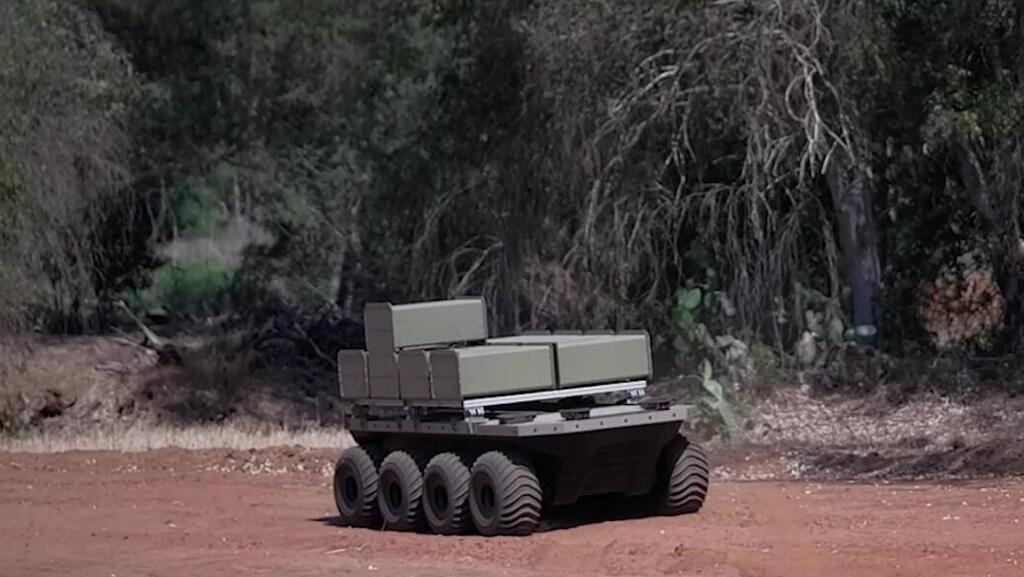
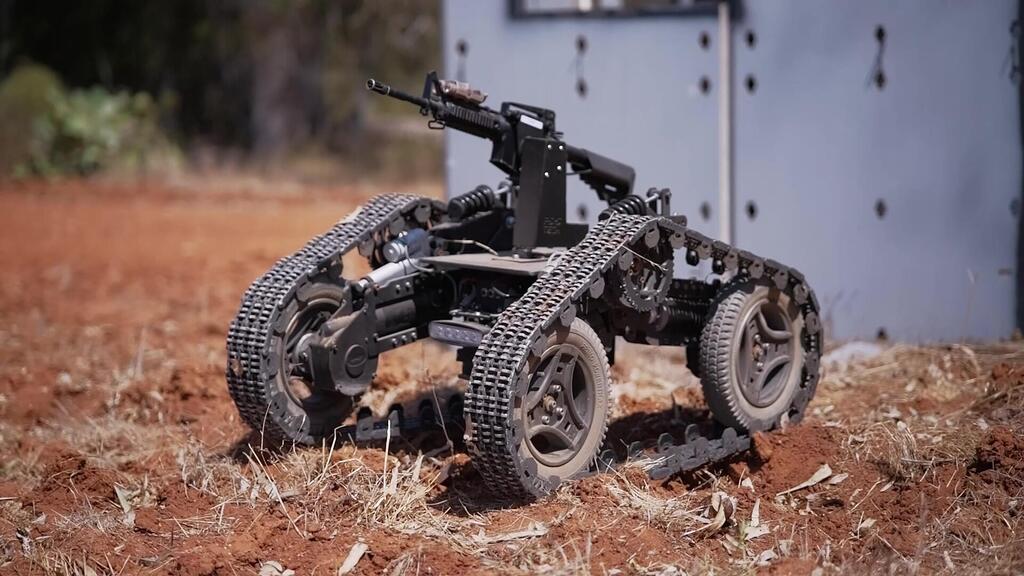
“The robots are sent in ahead of the soldiers, depending on the scenario,” Dahan said. “In urban warfare, we send them into buildings first. They enter, scan and neutralize threats. In open terrain, the system can generate masses of ground robots carrying drones or weapons, open up the terrain, conduct preliminary seizure operations and rapidly and effectively close fire loops.”
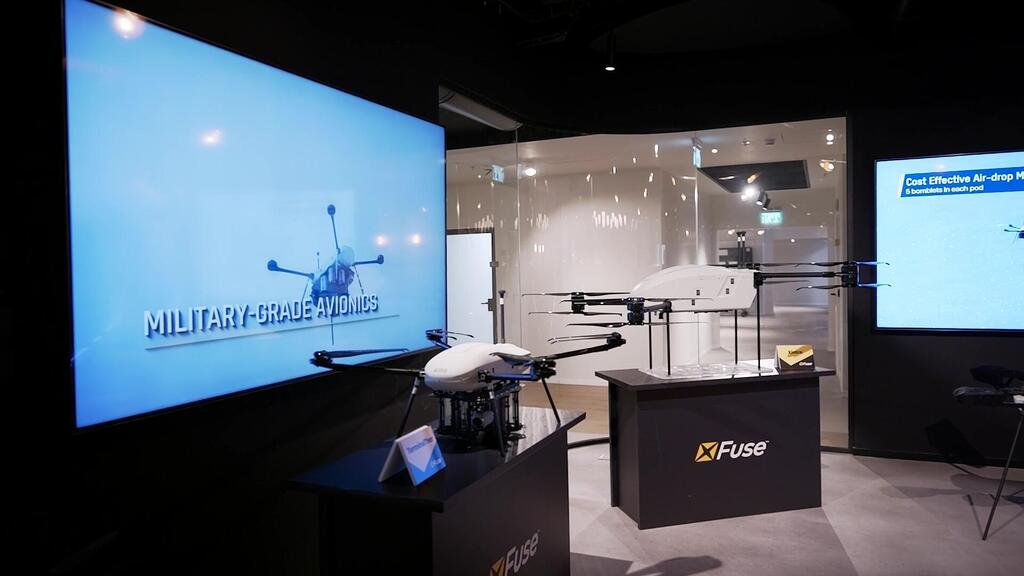
Unlike off-the-shelf civilian systems that are sometimes improvised for use on battlefields and can fail under electronic warfare conditions, Fuse’s systems were designed from the outset to meet strict military standards and contain no Chinese components. The company says the systems can maneuver and strike targets with high precision even in GPS-denied environments and under heavy electronic interference.
Fuse currently employs about 210 people at three main sites and has an order backlog worth hundreds of millions of dollars. Its technology has already gained international recognition, including winning the MRR project for the U.S. military, establishing production lines in the United States to assemble thousands of tactical drones and working with British special forces and the militaries of Austria, the Czech Republic and the Philippines.
As part of its effort to expand its autonomous capabilities, Fuse acquired Israeli startup BWR, or Blue White Robotics.
BWR began not in defense but in agriculture, specializing in converting tractors and trucks into autonomous robots capable of operating in orchards and open fields. Its algorithms were tested and refined over more than 100,000 hours of civilian driving in difficult terrain before being adapted relatively quickly for robotic combat systems controlling vehicles, armored personnel carriers and bulldozers on the battlefield.
“When I speak with customers in NATO or the United States and they ask what we can deliver tomorrow morning, this acquisition significantly shortens the time to market for our ground autonomy solutions,” Poizner said. “We can now offer a multidomain, multi-branch solution in which ground systems and drones communicate within the same ecosystem.”
Ben Alfi, co-founder and CEO of BWR, said the company’s autonomous AI technology was designed to support forces operating under the harshest conditions.
“Our autonomous artificial intelligence is designed to support forces in the toughest and most challenging environments,” Alfi said. “By upgrading existing vehicle fleets and integrating next-generation robotic platforms, we provide the capabilities and intelligence needed to protect lives and ensure mission success.”
Where is military robotics headed, and what will its future look like? The global trend points toward an increasingly autonomous, multidimensional battlefield built around what the industry calls smart mass.
In the battlefield envisioned by developers, commanders would increasingly direct swarms of autonomous systems capable of learning and adapting to changes in real time rather than managing soldiers at the point of direct contact. The ability to synchronize aerial and ground forces through a single system could make military maneuver faster and more lethal while reducing the risks faced by troops.
Israel’s defense industry is betting that the combination of operational experience accumulated on the battlefield and rapid technological innovation will help it compete for a leading position in the global market. Such Israeli-developed systems are likely to reach militaries around the world as computers and robots take on an ever-greater share of the roles once performed by people on the front line.