

For years, Mark Zuckerberg has been searching for an escape from the rules of Apple and Google’s ecosystems. His vision of the metaverse, which prompted the company to change its name in 2021, cost tens of billions of dollars but struggled to attract the masses with heavy, cumbersome headsets. On the other hand, Meta’s entry into the world of AI has been highly successful, producing the most popular AI app of the past six months.
At Meta Connect 2026, held Wednesday night at the company’s California headquarters, the tech giant unveiled a clear strategic shift: moving away from its exclusive pursuit of online virtual spaces toward what it now calls “personal AI hardware.” The goal is no longer to disconnect users from their surroundings but to envelop them in a continuous voice and visual interface that does not depend on a smartphone’s touchscreen.
The pendant and the Muse
The most surprising announcement at the event went well beyond glasses. Zuckerberg pulled a small device about the size of an earbud case from his pocket. Called the Muse Charm, it is a dedicated physical device for the company’s new AI agent, Muse, designed to function as a standalone keychain or pendant. The hardware includes a tiny touchscreen measuring about 2 inches that can be operated with a thumb, built-in 5G connectivity, microphones, a speaker and a fingerprint sensor.
The device is not intended for conventional voice calls but for continuous communication and real-time conversations with Muse’s avatar to carry out tasks, manage calendars and coordinate services without opening a smartphone app. Meta plans to begin selling the device in December. The combination of an independent cellular modem and compact design signals a clear attempt to create a new category of voice-operated devices.

In the smart glasses category, Meta has sharply divided its product strategy to address two of the biggest barriers facing wearable technology: privacy and comfort.
On the privacy front, the company unveiled the Ray-Ban Meta Audio, a model that does away with cameras entirely. Weighing just 43 grams, the glasses feature open-ear speakers and an advanced microphone array.
The glasses offer a solution for users who are uncomfortable wearing a camera lens on their faces in public spaces or who have been barred from entering sensitive workplaces with camera-equipped devices.
Priced at $349 and available starting in mid-October, the glasses offer up to 12 hours of continuous use, with the charging case providing an additional 48 hours of battery life. The model will be available in Ray-Ban’s classic Clubmaster and Burbank designs and will support a wide range of prescription lenses.
For users seeking full recording and multimedia capabilities, Meta introduced the third generation of its flagship glasses, the Ray-Ban Meta Gen 3, with a starting price of $449. The new model features an upgraded 12-megapixel camera supporting 3K Ultra HD video recording and dynamic photo capture.
The audio system includes six microphones capable of filtering out more than 90% of background noise and is expected to support spatial audio recording using Dolby Atmos technology. Battery life has been extended to nine hours, and a dedicated action button has been added to the frame for immediate access to AI commands.
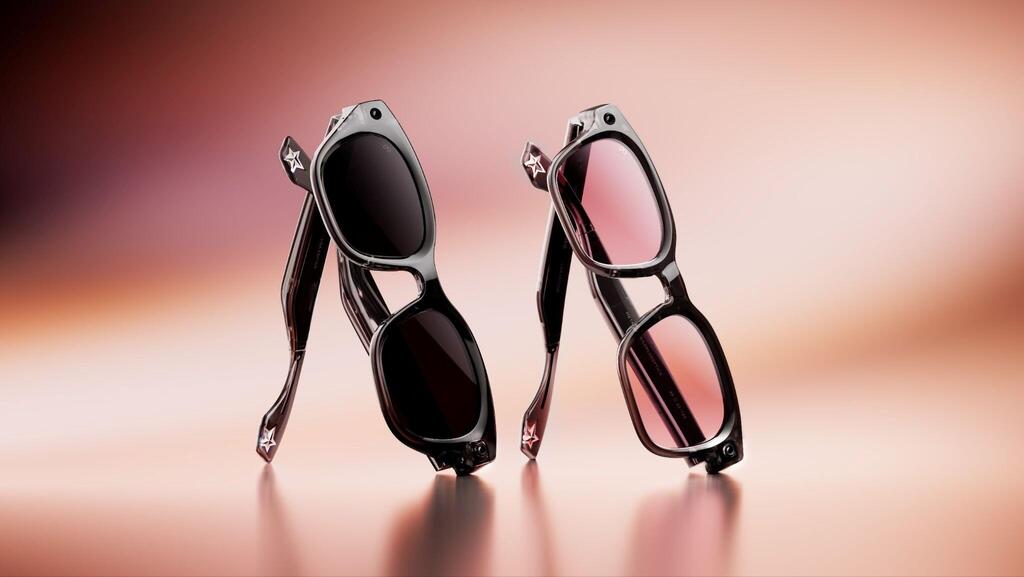
The third generation of Ray-Ban Meta glasses
(Photo: Meta)
As part of the announcement, Meta also expanded its fashion collaborations around the brand, introducing special editions designed by singer Lisa and Kylie Jenner, alongside a lower-priced sports model called the Meta Adventurer, which costs $249.
The Muse AI assistant was positioned as the brain connecting all these devices. Meta has integrated third-party capabilities into the agent, allowing it to make purchases directly from retail and travel companies, including Walmart, Best Buy, Expedia and Instacart.
Using the cameras in the third-generation glasses or the microphones in the audio glasses and smart pendant, the agent can analyze environmental information, assist with everyday tasks and provide visual interactions on screens and personal computers.
Zuckerberg isn’t giving up on VR
Alongside the expansion of its glasses and AI product lines, Meta also offered a glimpse of the high end of spatial computing with the unveiling of the Meta VR Glasses.
The device offers an engineering solution to the weight problem associated with traditional headsets, weighing only about 100 grams on the face.
The weight reduction was achieved by moving the processor and battery into a compact external unit carried in the pocket and connected by a cable, similar to Apple’s approach.
The optical system is based on Micro-OLED displays with 5K resolution and a pixel density of 37 pixels per degree, designed to ensure sharp text readability without screen-door distortion.
Priced at $1,299 and scheduled for release in spring 2027, the device is intended to serve as a multiwindow workstation and personal cinema, relying on eye tracking and hand gestures without the need for physical controllers.
The overall picture emerging from Meta’s hardware conference illustrates how the company’s focus has shifted from abstract promises about virtual universes to practical tools for everyday use.
By combining camera-free audio glasses, more advanced camera-equipped hardware and a standalone pocket device, Meta is building a multilayered ecosystem of devices designed to reduce users’ dependence on smartphones and establish its AI agent as part of their everyday physical lives.

Meta’s new VR glasses
(Photo: Meta)
The products Meta unveiled Wednesday night may represent one of the most important announcements in the company’s history. They place it at the forefront of today’s hottest areas of technology, with solutions suited to different types of users.
These range from a personal AI device — a form factor that OpenAI, Apple and other companies are also working on — to mixed-reality glasses that manage to solve most of the problems associated with Apple’s Vision Pro, and Meta glasses aimed primarily at users who document and share their personal content on Meta’s social networks.
The prices of most of the devices are also surprisingly attractive, despite the surge in hardware costs this year caused by shortages of memory chips and processors.
The main problem is Meta’s platform, which has a long history of privacy violations, prioritizing business interests over ethical considerations and, above all, disregarding users’ rights.
Will the content users share become fodder for Meta’s advertising business, even though they are paying for these devices, unlike free services such as Facebook and WhatsApp? Will Meta be able to prevent malicious actors from exploiting AI? Will it be able to protect us from abuse by unscrupulous politicians?
The answers to these questions are far less clear than the announcements themselves, and one can only hope that Meta’s executives have taken these issues into account as well.