

The dream of understanding animal language stretches back thousands of years. In Jewish tradition, King Solomon, renowned for his wisdom, was said to have been able to speak with animals. For centuries, naturalists managed to identify basic patterns of communication among certain species, including primates, birds and whales, through painstaking observation and manually analyzed recordings.
But the rapid advances in artificial intelligence over the past two years, and AI's ability to process enormous datasets and extract patterns from them, are beginning to transform the field. The past two years in particular have brought several intriguing breakthroughs.
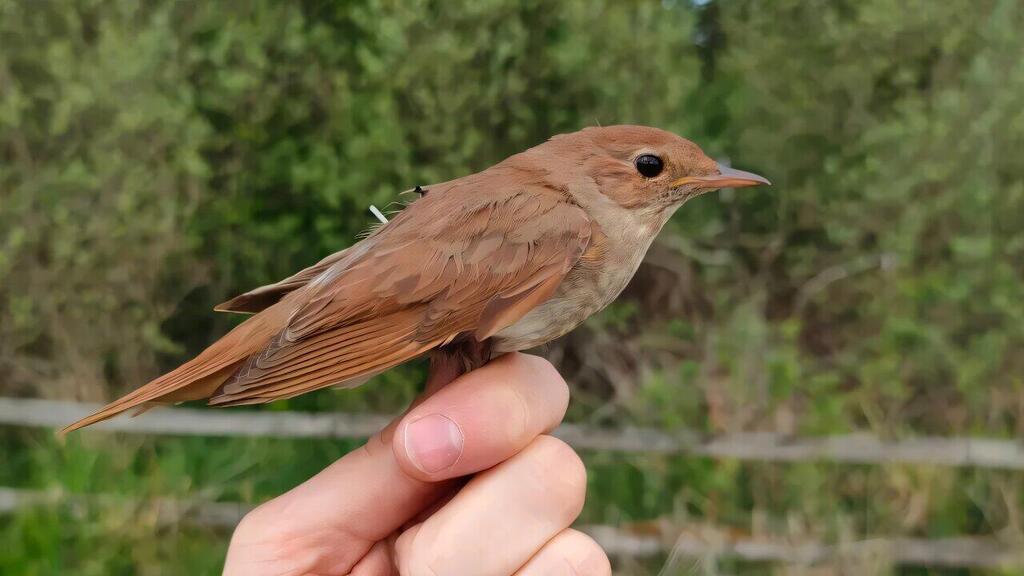
One of them is the release of NatureLM-audio, a new foundation model developed by the Earth Species Project, or ESP, that can independently learn structures and communication patterns from hours of audio recordings.
ESP consists of around 15 technologists and engineers and is funded by millions of dollars in donations.
Three years ago, the organization released its first foundation model for animal communication, which was able to accurately identify calls made by beluga whales. It later worked to apply the technology to different species of orangutans, elephants and even spiders.
At the time, researchers told Wired that within 30 years, wildlife documentaries might no longer need narration because the animals' own dialogue could simply appear in subtitles.
The murmurs of ravens
Until relatively recently, ecologists often treated animal vocalizations as simple biological reflexes signaling danger, courtship or hunger. But AI tools are increasingly suggesting that communication in nature is far more complex.
Today's systems can simultaneously analyze video of an animal's behavior, its vocalizations and its location in space, including information gathered by drones.
The computer system then connects physical behavior with sound and searches for recurring patterns.
It does not, of course, produce a human-style translation such as, "Hello, I'm hungry." Instead, it generates statistically based hypotheses about what a particular sound may mean.
The technology is already producing results in the field. Researchers in Spain, for example, used an AI model to identify and classify more than 127,000 vocalizations made by ravens and their chicks.
The unprecedented scale of the dataset revealed that much of their communication takes place through quiet, short-range murmurs rather than the loud, long-distance calls researchers had previously emphasized. The study was recently published in the journal Animal Cognition.
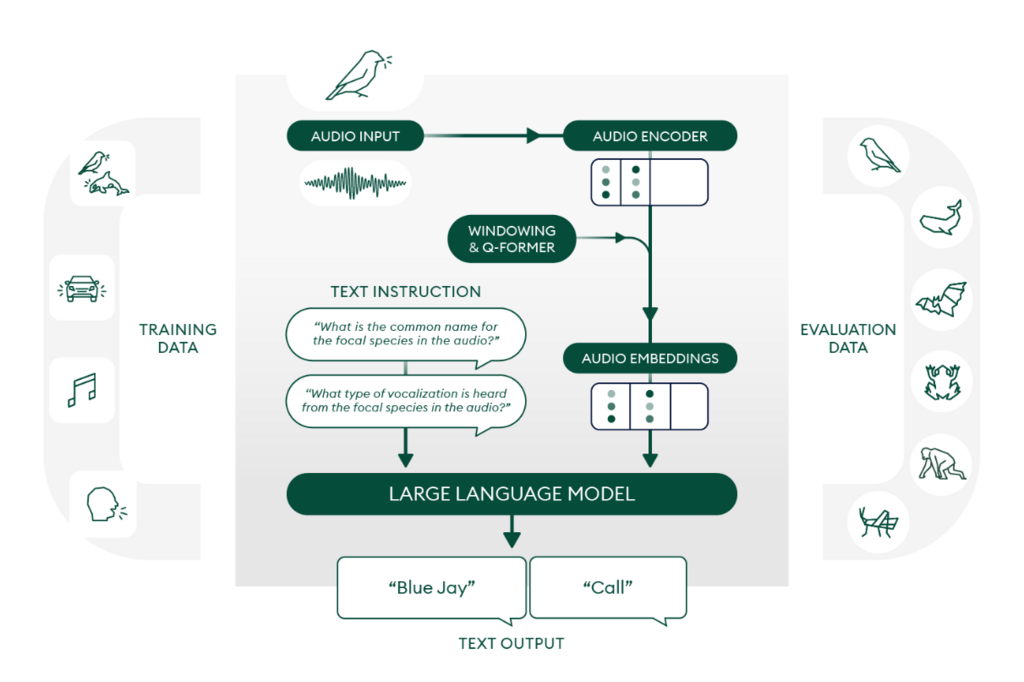
The NatureLM-audio model
(Photo: Earth Species)
Last year, another generative AI model called ZF-AIM was developed in collaboration with McGill University in Montreal. It focuses on the zebra finch, a small, highly social songbird found across central Australia and parts of Indonesia.
The model was trained on 1.5 million bird calls and can generate spontaneous vocal interaction, allowing researchers to conduct a kind of basic real-time "conversation" with the birds.
The system, which gives scientists a powerful generative platform for studying animal communication, was presented this year in Rio de Janeiro at ICLR 2026, a major international conference on machine learning and artificial intelligence.
Another prominent organization in the field is Project CETI, an international initiative combining marine biology, robotics, linguistics and artificial intelligence in an effort to decode the acoustic communication of sperm whales.
Sperm whales communicate in the deep ocean through complex sequences of clicks known as codas. Over the past year, researchers have made major progress in understanding the structure of these codas.
Rather than following whales in boats, which can disturb them, scientists used advanced drones together with hydrophones, underwater microphones, and improved sound and motion sensors.
AI analysis of the resulting data indicated that whale codas function in a way resembling a complex phonetic alphabet.
Research published in March also examined sperm whale vocal patterns during cooperative birthing events and found striking coordination among members of the group as well as apparent efforts to reinforce the newborn calf's first social bonds.
Immediately after birth, other whales moved in synchrony, diving and helping lift the newborn calf to the surface so it could take its first breath.
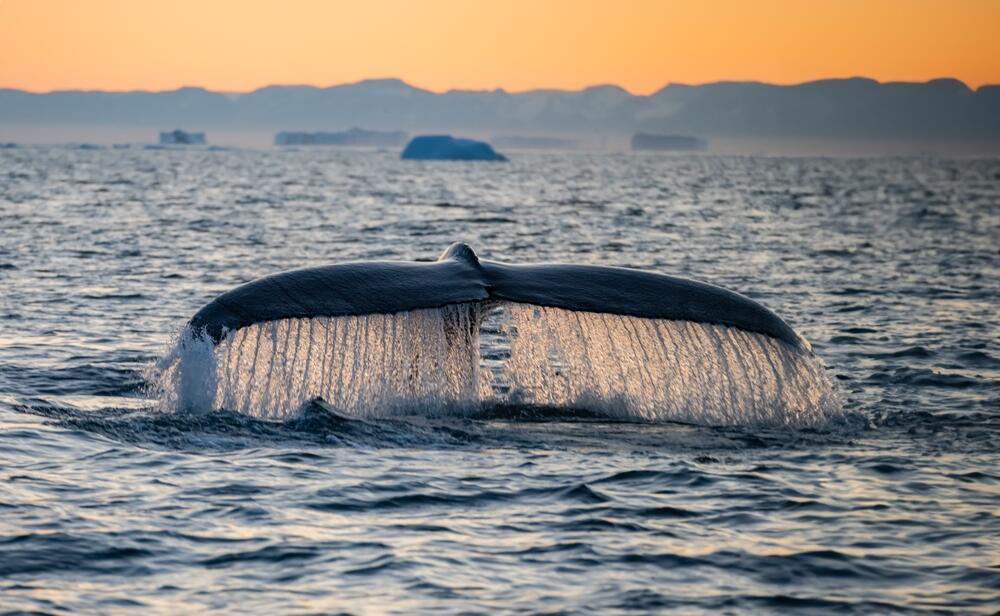
A whale in Disko Bay, Greenland
(Photo: Jan Tolar / shutterstock)
The risk of disruption
Alongside the excitement, some scientists are warning against relying on artificial intelligence alone to decode animal communication.
A study published last week and led by researchers at Tel Aviv University found that classifying vocalizations solely according to their acoustic similarity can produce a misleading picture.
According to the researchers, reliably interpreting animal communication also requires observation of behavior and, in some cases, measurements of brain activity.
Other scientists are warning about the broader consequences of the technology, particularly attempts to "talk" to animals by using AI to generate natural-sounding calls that animals might perceive as completely authentic.
They argue that creating an active dialogue without fully understanding the animals' context could cause severe confusion, anxiety and even disruption across entire ecosystems.
Whalers, for example, have in the past used sonar frequencies that caused whales to surface in panic. Being able to identify patterns in animal communication, these scientists argue, does not necessarily mean humans are ready to intervene in it