

In a world racing toward automation, a young Israeli company is eliminating one of the last remaining inefficiencies in robotics: charging downtime.
CaPow, born out of research at Ben-Gurion University of the Negev, has developed a Power-in-Motion platform that allows mobile robots to receive energy continuously as they move.
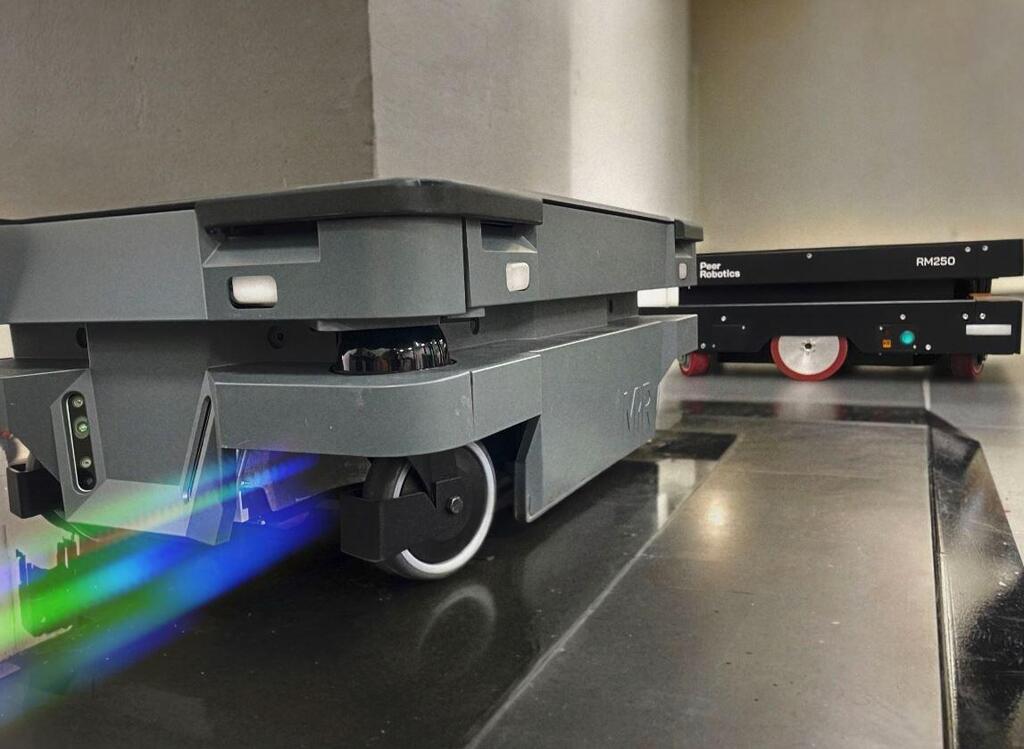
This breakthrough technology is redefining how factories, warehouses and logistics operations manage their robotic fleets: freeing up floor space, and delivering measurable gains in efficiency and sustainability.
For years, automation leaders have struggled with the silent cost of robotic downtime. Charging interruptions force operators to inflate capital expenses, and limit return on investment.
“Every time a robot stops, it becomes an operational loss,” says Prof. Mor Peretz, CEO and co-founder of CaPow. “You can make a robot as smart as you want, but if it needs to stop to charge, its effectiveness is compromised. We’ve entered a new era, one where energy moves with motion.”
Peretz, a global expert in power electronics, founded CaPow in 2019 alongside Dr. Eli Abramov and Dr. Alon Cervera, both of whom studied under him as PhD candidates. Before the age of 40, Peretz had already become a full professor, receiving offers from MIT and UC Berkeley, but chose to return to Israel’s southern tech hub out of commitment to building innovation at home.
CaPow’s technology, commercialized under its flagship platform Genesis, is already in advanced deployment across global operations, including Hyundai’s innovation arm, Peer Robotics, and a tier-1 manufacturer, among others.
The impact is tangible: Up to 30% smaller robot fleets with identical throughput, elimination of dedicated charging stations, 100% uptime and ROI improvements measured within weeks.
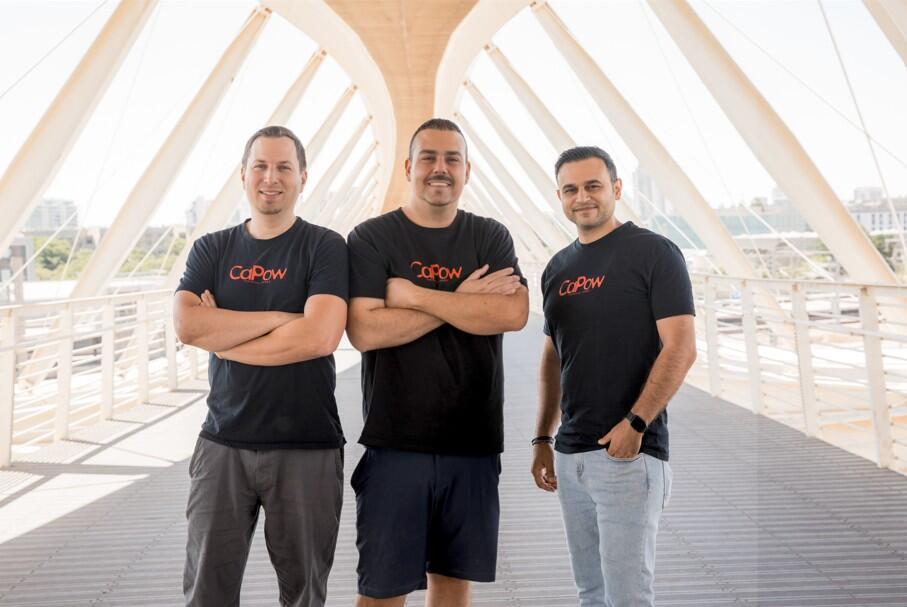
CaPow co-founders
(Photo: Adva Shalhevet Brazilai)
Earlier this year, the company raised $15 million in a Series A round, with participation from IL Ventures, Elements VC, Payton Planar Magnetics, Mobilion and Doral Energy-Tech Ventures.
Unlike inductive or static charging solutions, CaPow’s capacitive transfer technology enables full mobility and safety while reducing battery size and cost by up to 80%. Freed from the need for charging zones, operators can reclaim valuable warehouse real estate and run leaner, more energy-efficient operations.
“Energy shouldn’t be a limitation, it should be a performance tool,” says Peretz. “When robots can move without interruption, power becomes part of the efficiency equation itself.”
This philosophy is positioning CaPow as a catalyst for a new class of automation, one that is more sustainable and more profitable.
From its Be’er Sheva headquarters, CaPow employs 33 engineers, many of them former students of Peretz, and continues to collaborate closely with Ben-Gurion University. The company’s growing recognition in the U.S. and Europe includes the CE certification and UL safety compliance.
With its Power-in-Motion platform already reshaping warehouse and manufacturing operations, CaPow’s next frontier is clear: enabling the same continuity of power for humanoid robots, autonomous vehicles, and the broader connected industry ecosystem.
“The future belongs to those who understand that energy should never be a constraint,” says Prof. Peretz. “It should be a tool for constant improvement, powering systems that never stop and industries that never stand still.”