

A new generation of AI does not wait for questions. It receives a task and carries it out on its own, step by step, until the job is done.
In this article, we explain what AI agents actually are, where they can already be used today and how the major platforms on the market differ from one another.
Gallery
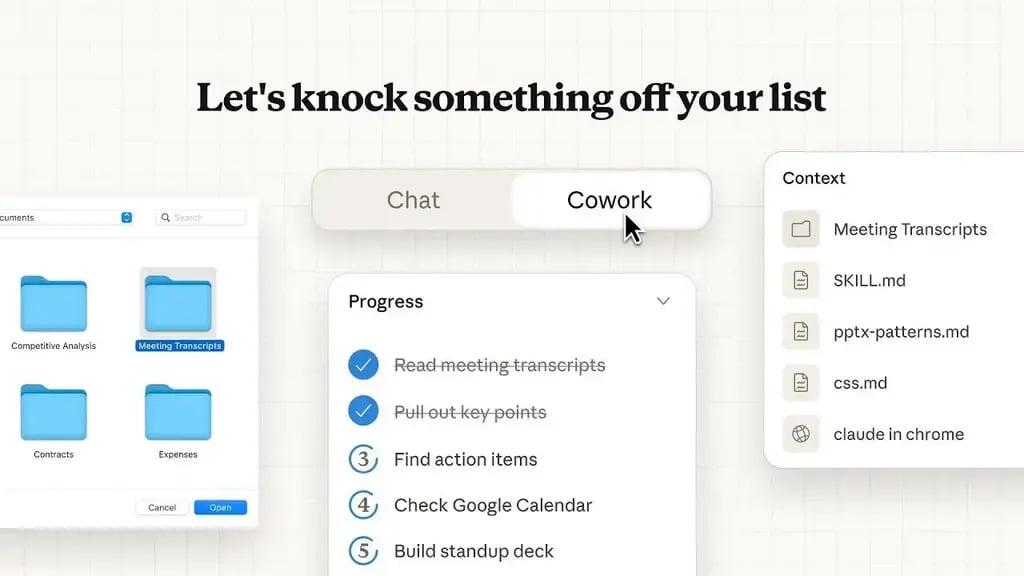
Claude Co-work, one of the most powerful AI agent tools currently available
(Photo: Anthropic)
Privacy and data security
First, it is important to understand that agents work differently from regular AI tools. They can access accounts, browse websites and sometimes retain information between conversations.
Before connecting an agent to your email, calendar or sensitive data, read the privacy policy of the specific tool and ask: Are my data used for training? Does the agent save history? These are the kinds of questions worth considering before beginning to work with AI agents.
What is an AI agent?
The word “agent” means someone who acts on behalf of someone else. In the world of artificial intelligence, the term “AI with agency” is used to describe AI that can act independently to achieve a goal, adjust its strategy while working and use memory and context to complete complex tasks.
In practice, an AI agent is a system that can take a task and perform it independently, step by step, without requiring you to tell it what to do at every stage. It does not stop after each step and ask, “What now?”
You can think of an AI agent as an AI model that has also been given tools and the ability to act independently: to browse the internet, use applications, make decisions and complete complex tasks. In other words, it can carry out countless actions that until recently were reserved for us, the humans.

Artificial intelligence can manage your entire computer, if you let it
(Photo: Shutterstock)
The agent platforms worth knowing
ChatGPT Agent is available to ChatGPT Plus subscribers and above. To use it, click the plus button and select Agent mode. This is a version of ChatGPT that does not only answer questions or respond to requests. It can also browse the internet, open websites, fill out forms and complete entire tasks independently.
For example, you could ask it: “Look at my calendar and prepare a briefing on the clients I have meetings with this week, based on recent news about them.” The system will open the calendar, search Google for each company and write a summary, without you stopping it once along the way.
Custom GPTs are “light” agents, somewhere on the spectrum between bots and full agents, and are also available within ChatGPT. Users can go to chatgpt.com/gpts and find hundreds of thousands of ready-made GPTs, each with its own instructions, tools and predefined access to information.
In simple terms: if you want to use existing GPTs, you do not need a subscription. If you want to build your own GPT agent, you will need a Plus subscription or higher.
Genspark calls its system a “Super Agent,” and that is not an exaggeration. It does not only browse and research. It can also prepare presentations, create videos and even make phone calls on your behalf. Yes, phone calls.
You enter the site, give it a task, such as “Prepare research on my competitors and summarize the data in a presentation,” and it goes off, digs into the material and builds the result.
In terms of pricing, users can start with the free version, currently limited to 100 credits per day. Those who want more can move to a Plus subscription for $19.99 a month or to a more advanced $200 monthly subscription. I will say it honestly: I really like this system.
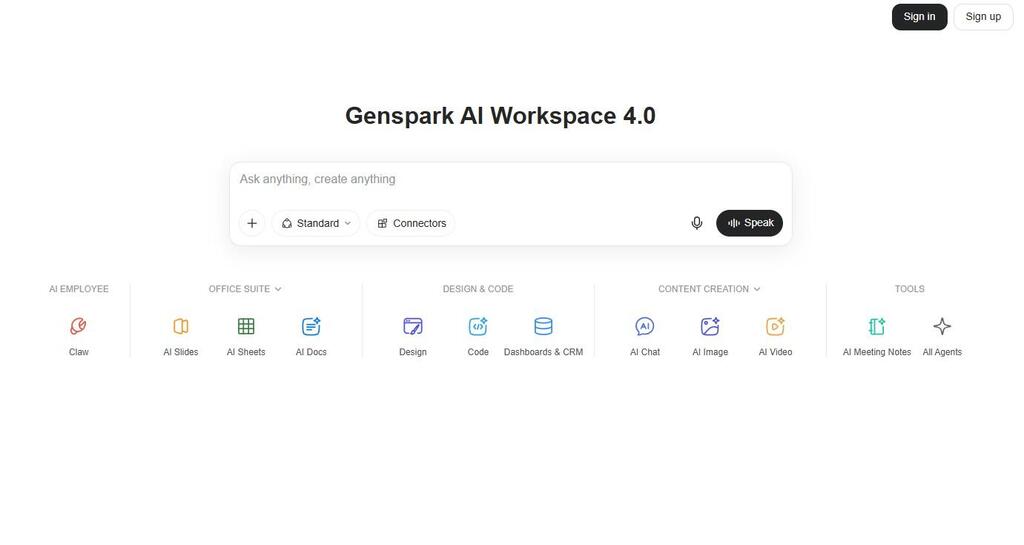
Genspark platform
(Photo: Genspark)
Manus is an agent platform from China, and Meta recruited a significant part of its team as part of a broader deal. Manus’ agent works fully autonomously. It does not stop between stages, does not wait for your approval and simply carries out the task until the end.
You define a goal, it builds a plan, executes it and returns a finished product.
As for pricing, there is a free version that currently includes 300 credits per day, alongside paid subscriptions ranging from $19 to $199 a month. And yes, you have probably already noticed that AI companies are converging around the same subscription prices.
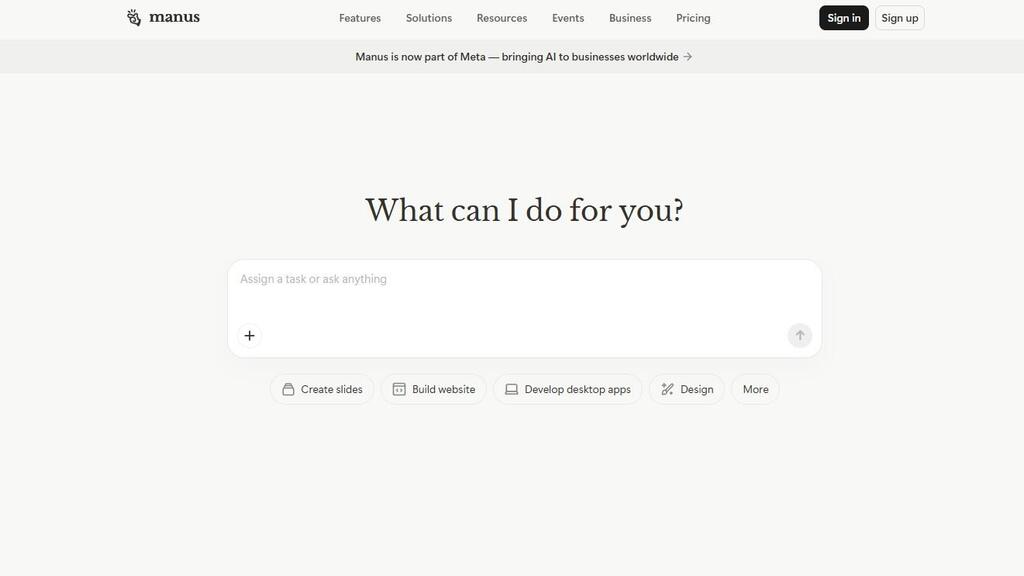
Manus platform
(Photo: Manus)
Claude Code/Cowork are systems we have written about in detail before, so we will note only that these are agents that activate other agents. If you ask Claude Code to build you a presentation about artificial intelligence in 2026, it will activate one agent to scan the internet, another to process the information, another to build the presentation and so on.
In this case, the use of agents is “transparent.” They work without requiring you to manage who is doing what.
How to start
If you have not yet tried any AI agent, the free versions of Genspark or Manus are the easiest and simplest way to enter the world of smart agents. Custom GPTs are also easy to use because they come with ready-made agents you can start using immediately.
Start with a task you know how to verify. When an agent works for you without supervision, it is easy to miss a mistake. Until you get used to working with agents, choose tasks you understand well enough to check whether the result is correct and accurate.
Specific instructions lead to better results. “Prepare research on the SaaS market” is too broad. “Prepare research on five direct competitors of [company name], including prices and main capabilities, in table format” will work much better.
Do not connect an agent to sensitive data right away. As noted earlier, take into account the risks involved in sharing information with external systems and make your own judgment. Either way, start by getting to know the tool and experimenting with noncritical, nonsensitive information.
When you begin working with agents, start by learning the tool and testing it with information that is not critical or sensitive.
The bottom line
Even if you have not yet used an AI agent, there is a good chance you will do so soon. Major technology companies are rapidly integrating agents into operating systems, search engines and work tools, with the aim of making AI use simpler and more automatic.
For most users, this transition is expected to be almost invisible. Instead of opening apps, copying information or carrying out a series of manual actions, more and more tasks will be completed behind the scenes by AI agents.
That is why it is worth understanding now how AI agents work and what they can do. In the coming years, they are likely to become an inseparable part of our digital lives.