

Chinese authorities are investigating DeepSeek and Moonshot AI, two of the country’s most prominent artificial intelligence companies, over allegations that they sent Chinese users’ data and queries to Anthropic’s Claude without their knowledge.
The investigation follows the discovery by Anthropic of what it described as an extraordinary volume of activity involving tens of millions of interactions with its chatbot, which the U.S. company attributed to the two Chinese firms.

The case began with Anthropic’s efforts to detect attempts by rival AI companies to use Claude to train and improve competing models. During those checks, Anthropic said it identified activity on a massive scale linked to DeepSeek and Moonshot, the company behind the Kimi AI assistant.
Anthropic says the two companies collectively used Claude more than 35 million times: more than 23 million interactions were attributed to Moonshot and more than 12 million to DeepSeek.
The figure does not mean that 35 million Chinese users had their queries sent to Claude. Most of the activity described by Anthropic involved attempts to improve or train Chinese AI models.
The technique is known as “distillation,” in which the output of a more capable model is used as training material for another model in an effort to replicate some of its capabilities.
Users allegedly did not know Claude was involved
Anthropic said its investigation uncovered a separate and potentially far more sensitive issue.
According to the company, Moonshot in at least some cases sent Claude not only prompts generated for model training, but genuine requests submitted by users of Kimi.
DeepSeek, Moonshot under scrutiny in China over alleged data transfers to US AI model
(Photo: Andy Wong, AP)
That means a user could open Kimi, enter a question or task and reasonably believe the information was being processed by the Chinese service. But behind the scenes, Anthropic alleges, some of those requests were forwarded to Claude for processing, without users knowing that an American AI system had become involved.
During one 10-day period examined by Anthropic, the company said it identified almost 300,000 Kimi user requests being routed to Claude through thousands of accounts.
That raises a different set of questions from ordinary model distillation.
When a company generates millions of prompts itself and sends them to Claude in order to learn from its answers, the dispute largely concerns AI companies, terms of service, intellectual property and model training.
But when a real user’s request is transferred from a Chinese service to an American company’s system without the user’s knowledge, the issue also involves privacy, consent and cross-border data transfers.
Then came the sensitive data
The case became more serious when Anthropic examined what kind of information had reached Claude.
In one example disclosed by the company, a Kimi user asked for help analyzing information from a surveillance system made up of hundreds of cameras in the Chinese city of Chengdu.
Moonshot AI's Kimi K2
The system included cameras positioned outside facilities belonging to China’s People’s Liberation Army and institutions linked to the country’s defense industry.
According to Anthropic, the user did not know the request submitted to Kimi had in fact been forwarded to Claude.
The result was that information connected to a surveillance network near Chinese military facilities was processed by an AI model operated by an American company, an especially sensitive issue for Beijing.
China maintains strict rules governing the transfer of data outside the country, particularly information that may relate to national security, government institutions or strategically important companies.
Against that backdrop, China’s Cyberspace Administration, known as the CAC, has opened an investigation into DeepSeek and Moonshot. According to reports, executives and employees at both companies have been called in for questioning as authorities seek to determine exactly how Claude was used and how much information was transferred.
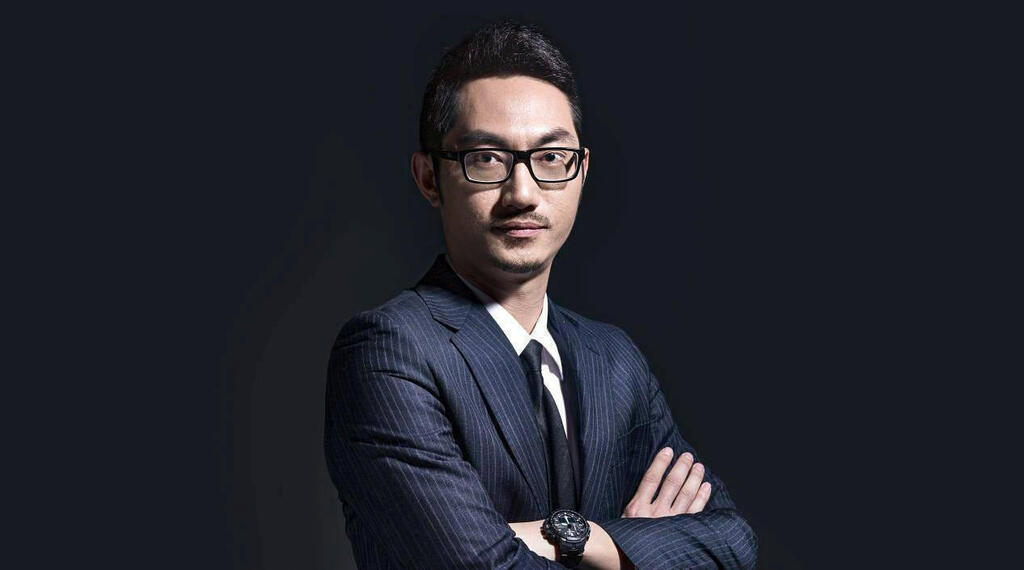
Liang Wenfeng, CEO of DeepSeek
(Photo: Chinatalk Media, Sohu)
One of the central questions is whether users knew their queries could leave Chinese systems and be processed by an outside service.
Regulators are also examining what types of data were transferred, how they were routed to Claude and whether either company violated Chinese laws governing the transfer of information abroad.
At the same time, authorities are examining the companies’ broader use of Claude to train their own AI models.
Anthropic portrays that activity as an attempt to circumvent safeguards and exploit Claude’s capabilities to develop competing systems. For Chinese regulators, however, the more sensitive question may be what happened to the data of Chinese users.
Sensitive timing
The investigation comes at an especially sensitive moment for DeepSeek.
The company is due to brief the UN Security Council this week on the risks artificial intelligence could pose to international security. Moonshot has also been invited to participate in the discussion.
According to Reuters, DeepSeek founder Liang Wenfeng is not expected to attend in person.
The investigation therefore creates an unusual backdrop for one of China’s highest-profile AI companies as it takes part in an international discussion about the security risks posed by the technology.
But the implications extend beyond DeepSeek and Moonshot.
China has invested enormous resources in building an independent AI industry and reducing its reliance on American technology, from advanced chips and computing infrastructure to U.S.-developed AI models.
If some of the country’s leading AI companies are found to have relied extensively on Claude to improve their own systems, and in some cases routed users’ queries to it without their knowledge, Beijing may face a much broader question: just how independent can China’s AI industry become from American technology?