

After four years of fighting Russia, Ukraine’s moment has arrived: the United States, Israel and Gulf states are now courting Kyiv for its low-cost interceptor drones, many of which are produced using 3D printers.
Prime Minister Benjamin Netanyahu reportedly approached Ukrainian President Volodymyr Zelensky last week with a request for Israeli-Ukrainian cooperation on the issue.
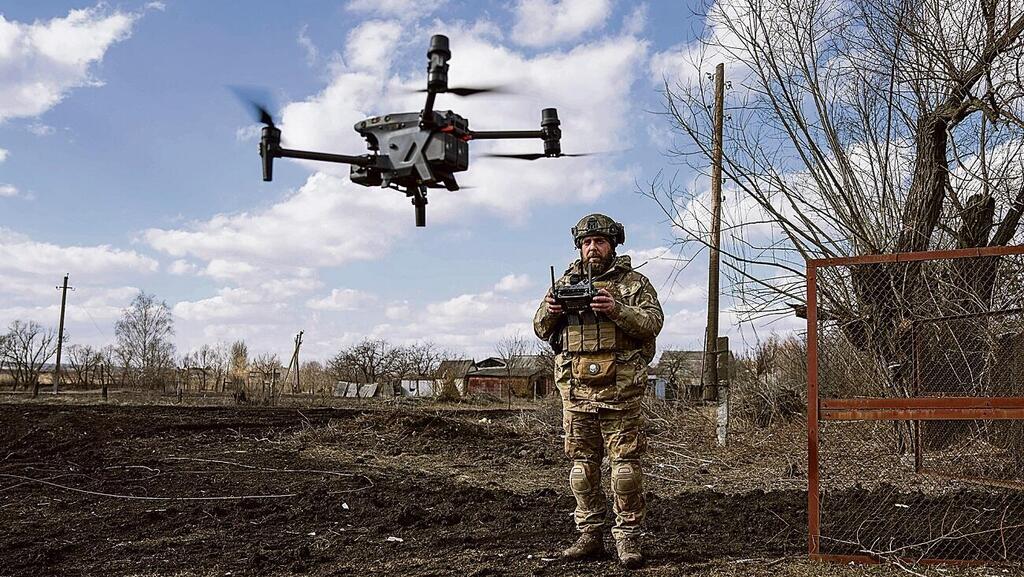
What makes Ukraine’s interceptor drones so unique?
The war with Russia forced Ukraine to confront the destruction caused by Russian suicide drones — most of them Iranian-made, primarily Shahed-136 models. To counter them, Ukraine developed a wide range of cheap and effective solutions that combine surprisingly advanced technology.
The result is a new generation of “pocket interceptors” — small, fast and remarkably inexpensive drones costing up to $2,000 per unit, capable of doing what expensive missile batteries often struggle to achieve against this threat.
Ukraine is now able to shoot down the majority of Russian attack drones. Although Russia launched about 5,000 attack and decoy drones toward Ukrainian cities in February alone, Ukraine succeeded in intercepting 87% of them.
One of the cheapest interceptor models, the P1-SUN, built on a frame produced with a 3D printer, costs about $1,000 — dramatically cheaper than Patriot interceptor missiles, which cost about $3 million each and have been used by the United States and its allies against Iranian suicide drones. For comparison, producing a Shahed attack drone costs Iran about $50,000.
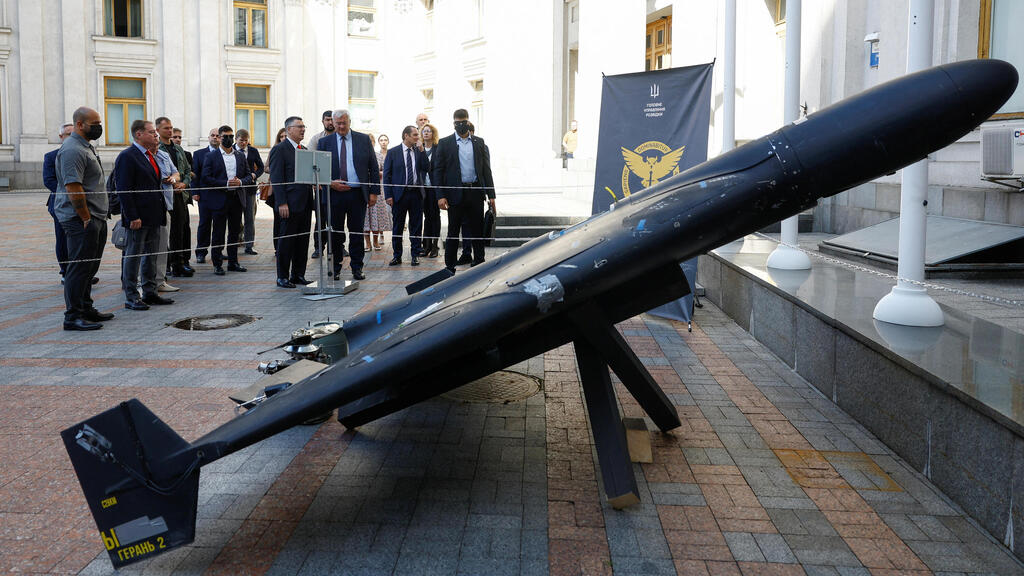
Ukraine’s Foreign Minister Andrii Sybiha shows Foreign Minister Gideon Sa’ar a Russian-made suicide drone identical to the Iranian Shahed
(Photo: Valentyn Ogirenko/Reuters)
The Ukrainian interceptors include models such as Sting, Bolt, P1-Sun, Octopus 100 and ODIN Win Hit. They are first-person-view (FPV) drones, meaning operators on the ground can see from the drone’s perspective. But they are also equipped with image-processing chips and computer vision systems that allow them to autonomously lock onto targets.
Once a human operator identifies a target and locks onto it, the interceptor switches to autonomous mode. Even if the attacker manages to jam communications with the operator, the interceptor continues tracking the Shahed drone based on its shape and structure until impact. Computer vision also allows the interceptor to identify vulnerable points on the drone — such as the engine or warhead — and strike them directly.
At night, the technology changes slightly. The interceptor must detect the heat emitted by the Shahed’s piston engine. To do this, Ukraine uses inexpensive infrared sensors that home in on the drone’s internal combustion engine from hundreds of meters away, or CMOS sensors — essentially cameras capable of amplifying extremely low light levels so operators can clearly see the outline of the target.
To ensure the drone not only “sees” but also “understands” what it sees, tiny artificial intelligence chips known as NPUs are installed in the flight controller. These chips run models trained to recognize aircraft. A tracking algorithm calculates the optimal interception point, meaning the interceptor flies not to where the target is now but to where it will be a second later.
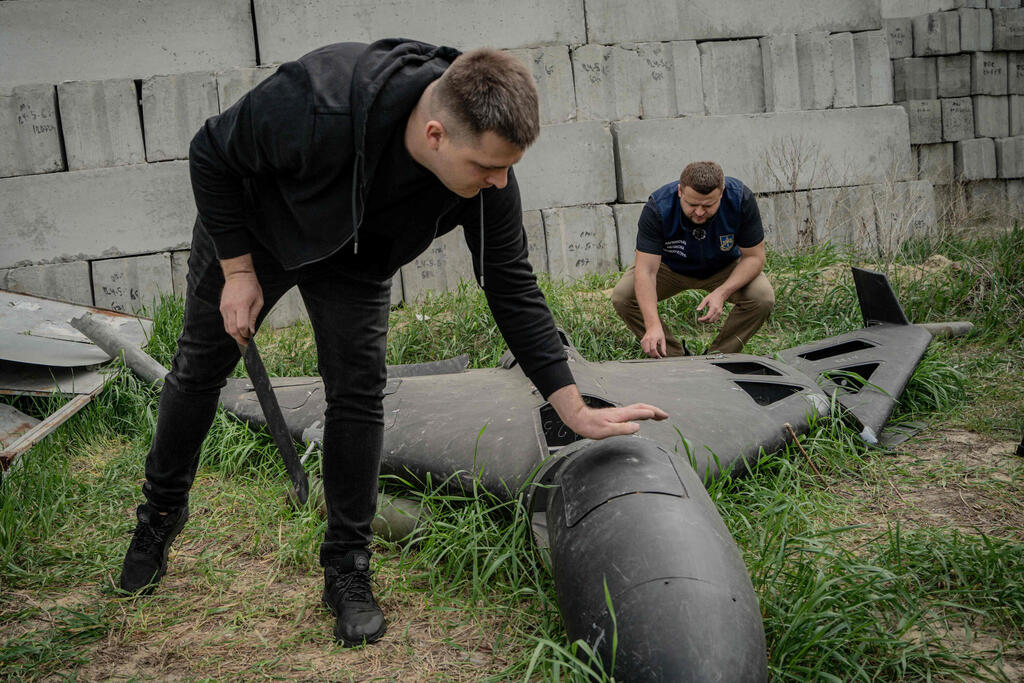
A Russian drone of the Iranian Shahed model after being shot down in the Kharkiv region of Ukraine on April 30
(Photo: Ivan Samoilov/ AFP)
To reach speeds of more than 150 km/h — necessary to catch the Shahed drones — Ukrainian engineers use high-powered motors and batteries capable of extremely high discharge rates. Instead of directly hitting the attacking drone’s body, many interceptors carry a small fragmentation charge that detonates near the target, significantly increasing the chances of a successful interception even if the final navigation is not perfect.
Brilliant detection capability
But interception success begins with detection. Ukraine devised an unusually creative solution by deploying a nationwide network of thousands of sensitive microphones connected via cellular networks to simple smartphones, in a project called “Zvuk.”
The idea exploits the fact that Shahed drones are very loud — Ukrainians often call them “flying lawnmowers.” The acoustic network quickly processes data from the sensors, identifies the drone’s direction and altitude with high precision and transmits the information in real time to drone units.
These data allow operators to launch interceptors in advance along the predicted collision path instead of chasing the drones from behind. This conserves battery life and increases the chances of a successful hit.
Despite the interceptors’ autonomous capabilities, Ukrainian operators have gained significant combat experience that allows them to maneuver the drones even in highly “noisy” electronic environments and make split-second course corrections.
Another advantage of the Ukrainian interceptors is that they can be launched and controlled by a single operator. By contrast, Patriot missile launches require three soldiers per launch and about 90 personnel to operate and maintain the system. There is also a global shortage of Patriot missiles — only about 620 were delivered to militaries worldwide last year.
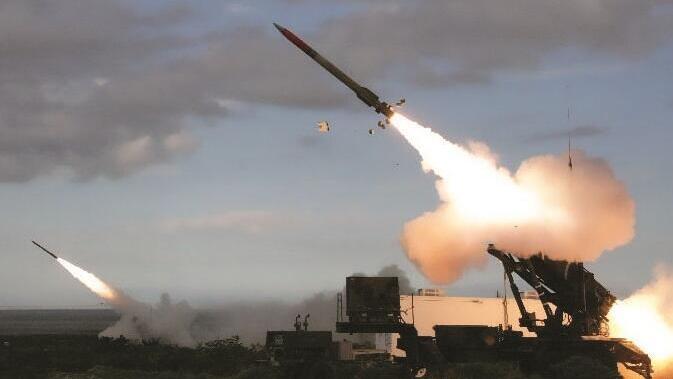
Patriot missile system in action
(Photo: US Army)
Ukraine’s response to the U.S. request for cooperation was reported by Zelensky in a post on X and in an interview with The New York Times. Last Thursday, he wrote that he was awaiting “approval from the White House” to sign a major drone production agreement.
According to Zelensky, the first interceptor systems and their training teams arrived in Jordan more than a week ago and are expected to gradually enter operational use.
Reports over the weekend indicated that interceptor stockpiles used for air defense in Israel and Gulf states are running low. Analysts note that during the war with Iran, more Patriot missiles were launched than the total number delivered to Ukraine during the four years of its war with Russia.
Western intelligence sources say Iran still possesses thousands of low-cost Shahed drones similar to those supplied to Russia.
Iranian officials, for their part, accuse Ukraine of assisting Israel and have threatened retaliation. Ebrahim Azizi, chairman of Iran’s parliament national security committee, said last week that all Ukrainian territory should be considered a legitimate target.
“By providing support to the Israeli regime through drones, the collapsing Ukraine is effectively participating in the war,” he said.
During the first week of the war, one such drone killed six U.S. soldiers at a command center in Kuwait. While the initial waves of Iranian ballistic missiles weakened after U.S. and Israeli strikes, the number of drones being launched has not declined.