

A Tel Aviv-based company founded by former NSO Group employees operated roughly 1,000 fake social media accounts that entered Israeli political discussions and published content both supporting and opposing Prime Minister Benjamin Netanyahu, according to a New York Times report detailing a new generation of largely automated online influence operations.
The company, IntelEye, was one of two private Israeli companies whose activities were traced as part of a broader investigation into campaigns using artificial intelligence to create and operate networks of fake accounts, the Times reported. Similar campaigns linked to Iran and China were found to be state-backed.
A U.S. security official briefed on IntelEye's activities told the Times that the operation came to the attention of social media companies and U.S. intelligence earlier this year. The accounts appeared across Facebook, Instagram, TikTok and X and responded to posts and comments concerning Israel's national election.
According to the official, the accounts also published material both backing and opposing Netanyahu, placing the network on multiple sides of the Israeli political conversation rather than promoting a single political position.
IntelEye disputes the characterization of its work as an influence campaign and says the activity was a defensive research experiment intended to expose weaknesses in artificial intelligence systems.
“IntelEye does not operate influence campaigns,” co-founder Maor Sellek told the Times. “Our work with DeepSeek was conducted for defensive research and testing, to understand how models with insufficient safeguards could be misused and to improve detection of that activity.”
10,000 accounts purchased, around 1,000 active
Sellek said IntelEye purchased 10,000 social media accounts for artificial intelligence agents to control, though only about 1,000 became operational.
Those accounts left comments beneath posts and videos and attempted to engage other users in conversation, although Sellek said they achieved little success. He also said the AI system itself chose the prompts and topics on which the accounts posted.
IntelEye used DeepSeek, the Chinese open-source AI model, to control the accounts, according to Sellek.
Unlike conventional automated accounts that follow predetermined scripts, the technology described by the Times allowed AI “agents” to carry out multiple steps independently. Such agents can operate software, create accounts, decide what to post and interact with other users with comparatively little human involvement.
Sellek acknowledged that, in hindsight, IntelEye should have informed the social media companies that it was carrying out the tests.
Meta, the parent company of Facebook and Instagram, gave a sharper assessment of the activity.
“This appears to have been a coordinated attempt to create inauthentic accounts across several platforms,” a Meta spokesman told the Times.
The company said only a small percentage of the accounts were present on Meta platforms and that the vast majority had already been removed by its automated detection systems.
Meta also identified a separate campaign attributed to a “commercial operation based in Israel,” according to a report it released last month. The company did not name the operator or provide further identifying information, but said the campaign used AI in a “fairly sophisticated setup.”
Iran and China used similar methods
The Israeli activity was part of a wider pattern identified by U.S. officials and security researchers, who told the Times that Iran, China and groups in Israel had recently begun combining powerful open-source AI models with autonomous agents to run influence campaigns at greater speed and scale.
Hundreds of AI agents were used to open fake accounts on Instagram, Facebook, X and TikTok and then populate them with political and current-affairs content designed to sway opinions or inflame existing disputes, according to the report.
The Times described the development as one of the first known cases in which AI agents backed by Chinese models were used across almost the entire process, from creating fake identities to coordinating what they posted.
In many cases, safeguards designed to prevent AI systems from creating deceptive accounts or manipulating online discussions had been disabled by the people operating them, U.S. officials told the newspaper.
(Photo: shutterstock)
Although the campaigns were described as crude, the level of automation attracted the attention of U.S. intelligence agencies, technology companies and cybersecurity researchers.
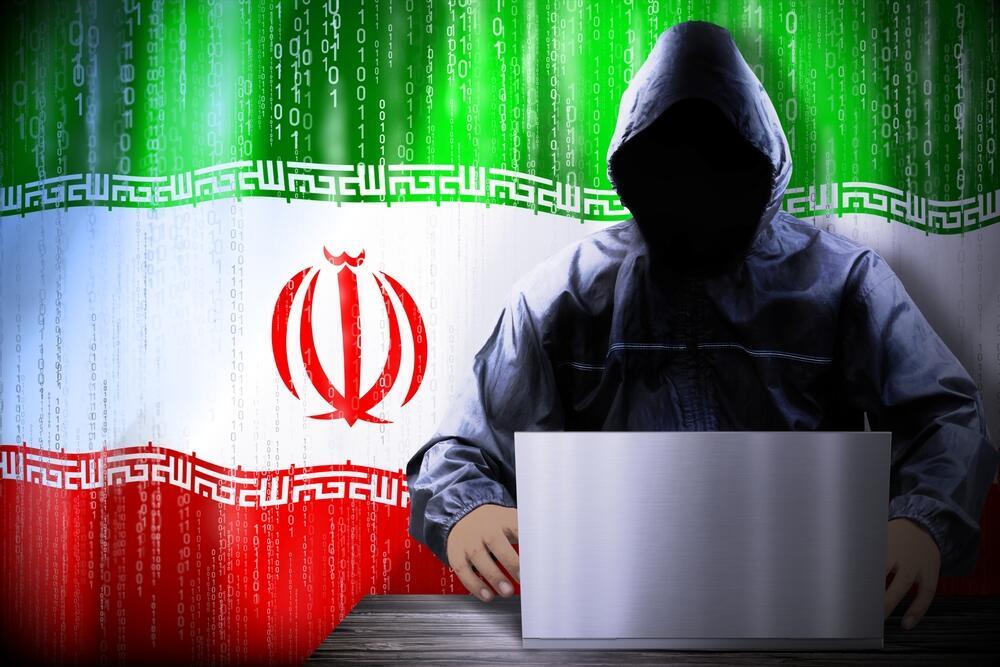
The Iranian operation caused particular concern because it targeted audiences in the United States. According to the Times, AI-generated accounts posed as ordinary Americans living in major cities, tagged politicians and journalists and circulated memes and anti-Republican Party content.
Nearly 80,000 users followed accounts linked to the Iranian network, which was active during the first half of the year.
Officials provided fewer details about the Chinese operation, saying only that it had experimented with the same AI-driven tactics.
From fake posts to fake users
Artificial intelligence has been used for years to generate misleading photographs, videos and text. The significant change described in the Times report is the increasing ability of AI to run the operation itself.
Instead of simply producing a political post for a human operator, AI agents can increasingly create the account, establish an online persona, select a topic, post material and respond to other users.
Meta said recently that AI was becoming “embedded within automated systems that can produce, adapt, and distribute content with minimal human intervention.”
Security researchers told the Times that open-source AI models are particularly significant because they can be downloaded, modified and run privately. Unlike closed models operated by technology companies, there may be no outside company capable of intervening and shutting down a privately run system once safeguards have been removed.
Kyle Crichton, a fellow at Georgetown University's Center for Security and Emerging Technology, said the risk went beyond the sheer number of accounts that could be created.
“Agents can be fairly sophisticated, and so in addition to just scale, they have an ability to blend in and look more like a human user,” he told the Times.
U.S. officials said the emerging capabilities have intensified concerns that similar operations could be used against voters ahead of the U.S. midterm elections in November. Russia, Iran and China have all previously used online influence campaigns targeting American audiences, with varying levels of AI involvement.
In Israel, the IntelEye case offers a particularly concrete example of how the technology can enter domestic political conversation: around 1,000 artificial identities commenting, responding and publishing messages on competing sides of a politically charged debate, while the company behind them maintains that the entire operation was designed to demonstrate precisely how easily such systems could be abused.