

As Israel meets the High Holiday season, it's a fitting time to pause and reflect on the complex year that has unfolded across Israel’s tech sector.
From the October 7 attack to the Israel–Iran war, the past year has reshaped both the national and business landscapes. Alongside geopolitical upheaval, sharp shifts in the economic and social arenas have posed new challenges for senior executives across the industry. We spoke with leaders from prominent Israeli tech companies to understand the key trends that defined their field over the past year—and to hear their forecasts and outlook.

Tel Aviv
(Photo: Shutterstock)
Israeli companies are back on investors' radar
"During 2024 and 2025, local geopolitical volatility posed significant challenges for both investors and VC funds, particularly when addressing heightened concerns around investment risk," says Moran Chamsi, managing partner at Amplefields Investments.
"At the same time, we faced logistical hurdles caused by disruptions to international flights and travel. Despite these headwinds, we remained fully transparent with our investors, provided regular updates on our activities, and continued to advance transactions wherever possible- adapting with flexibility to the evolving reality.
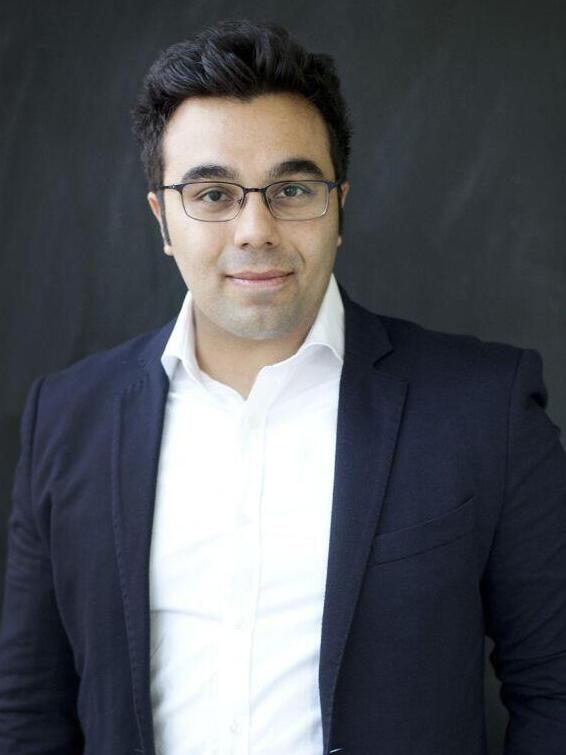 Amplefields Investments Managing Partner Moran Chamsi Photo: Merav Ben Loulou
"Recent M&A activity and public listings by Israeli companies such as eToro, Wiz, CyberArk and Melio have reignited momentum in the market, encouraging overseas investors who had remained cautious over the past two years. Fundraising activity in the private markets has also begun to recover, creating new opportunities for startups, growth-stage companies and the funds that support them.
"Amplefields is focused on late-stage, pre-IPO investments—providing liquidity at a time when many strong companies are delaying public offerings and need to extend their capital runways. In 2025, we’ve seen a notable rise in secondary market opportunities, and we anticipate that 2026 will bring a more favorable environment for capital raising by funds like ours".
Driving agtech innovation from seed to shelf
"Global agriculture is undergoing profound transformation, and Hazera is at the forefront of key trends," says Oranit Haim, head of Global Innovation at Hazera. "Food security is a strategic goal that requires developing high-yield varieties with extended shelf life and superior nutritional value.
 Hazera Global Head of Innovation Oranit Haim Photo: Hazera
"As growing conditions change worldwide, we develop tailored solutions to ensure continuous abundance. Labor shortages are accelerating the adoption of advanced technologies and promoting more efficient resource utilization, including using by-products as raw materials for creating value-added products.
"This year, we established Hazera's Global Innovation Unit, which I'm proud to manage, operating across the entire value chain in collaboration with academia, authorities and startups. We're implementing artificial intelligence both in product development and organizational processes. Our goal: to integrate breakthrough technologies into products and processes, and advance Israeli and global innovation in agtech.
AI at the core of business growth
"Over the past year, we've witnessed an unprecedented acceleration in the adoption of artificial intelligence at the organizational level," says Priority CEO Sagive Greenspan. "More and more companies are integrating AI solutions to streamline operations, boost productivity, sharpen business forecasting and enhance decision-making.
 Priority CEO Sagive GreenspanPhoto: Iya and Avi Photographers
"There's a clear global trend: enterprise management systems are evolving into engines of growth, innovation and operational agility. Embedding AI into the organizational core empowers businesses to respond swiftly to market changes, improve operational efficiency, and deliver customer experiences that create a distinct competitive edge.
"Looking ahead to the coming year, we at Priority anticipate that the market, both globally and in Israel, will rapidly move toward deeper and broader AI adoption. Those who fail to embrace this transformation simply won't survive. With our AI-powered smart ERP platform, we offer a revolutionary solution that identifies patterns, replaces manual processes with automation, delivers insights and recommendations and optimizes business workflows at the click of a button. Users will shift from performing tedious tasks to making strategic decisions, guided by intelligent system-generated suggestions."
Deepfakes and phishing escalate
"Over the past year, phishing and fraud attacks have surged dramatically, increasingly delivered through video calls, phone conversations and instant messages," explains Cyvore Security CEO Ori Segal. "Cybercriminals now exploit deepfake technology to convincingly mimic voices and faces, making scams far harder to detect. This combination of social engineering and AI-driven deception raises severe risks for both businesses and individuals, demanding stronger awareness and defenses.
 Cyvore Security CEO Ori SegalPhoto: Cyvore
"In the coming year, phishing and fraud are expected to intensify, driven by AI-powered deepfakes, cross-platform impersonation and advanced identity theft. Cyvore addresses these threats using its Cyvore engine, which can detect and prevent attacks across all remote communication channels, including video calls, email, WhatsApp, Slack and more, uncovering malicious attempts like never before.
Tech meets patient-centered care
“We’ve seen two clear shifts in reproductive medicine: AI moving from promise to practice, and remote care becoming a patient expectation," says Dr. Nadia Prisant, co-founder of IMMA Health, which is developing a portable vaginal ultrasound for women in fertility treatments. "At IMMA, we’ve focused on bringing high-quality monitoring into patients’ hands, while keeping physicians central to care. Our technology serves as a powerful tool that enhances clinical decision-making, ultimately leading to more personalized and effective treatment plans for everyone involved.”
 Dr. Nadia Prisant
“The coming year will be about integration - making sure AI and remote tools strengthen, not replace, the patient–doctor bond by creating more meaningful touchpoints and freeing up clinicians to focus on compassionate, personalized guidance. IMMA’s mission is to expand self-operated ultrasound and AI-guided monitoring, so fertility care becomes both technologically advanced and deeply human.”
'Our strategy delivered strong results'
"This past year has been transformative for Zoomd. Our strategy of expanding into current and new segments, such as e-commerce and streaming and geographies delivered strong results, driving a nearly 500% increase in our market valuation since the holiday season last year," says CEO Ido Almany. "These achievements also earned us a place in the S&P/TSX Venture Composite Index — recognition that reflects how our model consistently turns engagements into long-term partnerships built on measurable results."
 Zoomd CEO Ido AlmanyPhoto: Zoomd
“In the age of AI, the real differentiator will be combining cutting-edge technology with proper human servicing.”
Almany adds, "The coming year will be defined by ongoing macro challenges and global instability - a new reality that demands resilience, agility and constant adaptation of strategy and tactics. At the same time, competition will intensify as the industry accelerates its embrace of AI tools. We believe the true differentiator in this new era will be the ability to combine a robust AI stack with meaningful human engagement. That is why we are investing decisively in both: advanced AI to drive efficiency and scale, and human expertise to foster trust, insight and enduring partnerships."
The future of data centers: Green energy and Gen AI
"Over the past year, NTT Israel has expanded and deepened its global activity with the various business units of the NTT Group worldwide. The goal is to drive as many meaningful business collaborations as possible based on Israeli innovation," says CEO Noa Asher. "This year, the main focus was on cybersecurity - particularly the integration of artificial intelligence in cyber solutions, including agentic AI and application security.
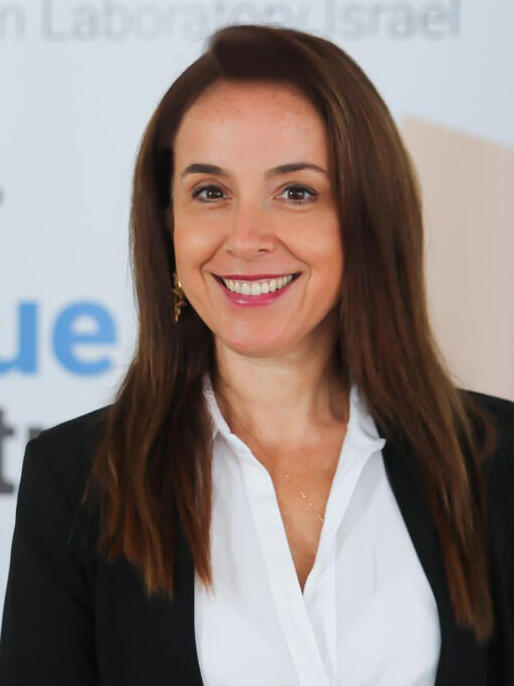 NTT Israel Innovation Lab CEO Noa Asher Photo: Michal Levy
"Looking ahead, the forecast for the coming year is to achieve significant success in the field of energy for data centers (NTT Group is considered one of the top three global operators of data centers). This field, now facing a critical juncture due to the Gen AI revolution, requires a major technological leap in areas such as liquid cooling, heat reuse, AI-powered temperature management and the direct integration of renewable and green energy sources into the data centers — solar, wind, nuclear and more.
"In addition, we are promoting other innovative fields where NTT operates globally, such as optical communications and quantum computing."
Organizations will seek solutions that enable 24/7 continuous operation
"Over the past year, we’ve seen growing awareness that traditional charging infrastructure, such as static stations or inductive charging, creates significant operational limitations," says CaPow founder and CEO Prof. Mor Peretz.
 CaPow founder and CEO Prof. Mor Peretz Photo: Adva Barzilai
"The need for scheduled charging stops leads to frequent downtime and complex maintenance. More and more industrial operators are beginning to recognize that the ability to maintain stable and continuous output depends on reducing reliance on fixed charging infrastructure, especially at sites operating around the clock.
"The forecast for the coming year shows that organizations will increasingly look for solutions that enable 24/7 continuous operation, particularly when it comes to energy supply. At CaPow, we focus on delivering Power in Motion to factories and logistics centers, allowing robots to operate without interruptions. Our goal is to scale up production of our systems to meet the market’s growing demand for maximum output and improved operational efficiency, especially in logistics hubs and highly automated manufacturing environments such as automotive production lines.
"It is important to note that advanced automotive manufacturing lines and global logistics centers are already implementing 24/7 continuous operation models thanks to CaPow. This trend is expected to expand to additional commercial factories as part of a broader effort to increase output and maximize return on investment in robotic systems, particularly as the integration of AI software and load management tools will require uninterrupted operational infrastructure."
Despite the many challenges faced by the tech sector over the past year, our conversations with industry leaders revealed a strong sense of optimism, innovation and determination. Looking ahead, it’s clear that the sector is poised to continue evolving, leading and delivering creative solutions across a wide range of fields.