

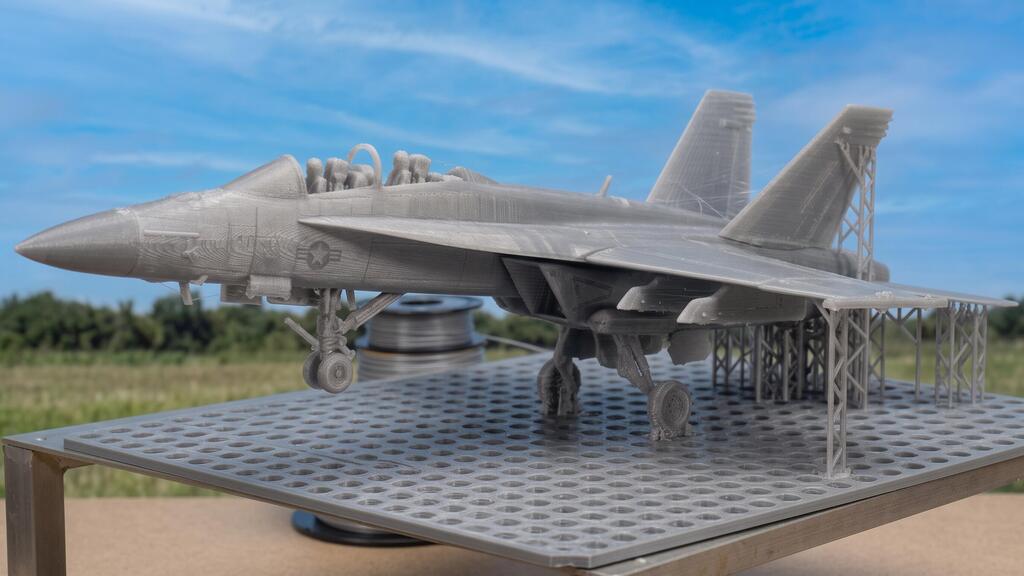
As geopolitical tensions intensify around the world, the U.S. military is turning to an unexpected technological answer for one of its most vulnerable weaknesses: the supply chain. According to recent reports abroad, the U.S. Navy has begun an advanced series of trials using 3D printers to produce complex replacement parts, aiming to cut repair times for its leading fighter jets by as much as half.
The trials, led by the Naval Air Warfare Center Aircraft Division and Fleet Readiness Center Southwest, focus on F/A-18 Super Hornet fighter jets. These aircraft, a central pillar of American carrier aviation, often suffer damage to external panels such as engine bay doors as a result of bird strikes, debris on runways or routine operational wear.
The goal: faster, cheaper repairs
Until now, damage to panels made from composite materials required a cumbersome, expensive and lengthy logistical process. Such materials are more difficult to repair than traditional aluminum and require advanced skills. For an aircraft damaged at a remote base or aboard an aircraft carrier at sea, the result could be prolonged grounding until replacement parts arrived from thousands of miles away.
The new technology would allow forces in the field to print composite “patches” directly at a forward base, apply them to the aircraft and return it to service much faster. After successfully completing laboratory and ground tests, the project is now moving into the decisive stage: operational flight trials under real loads.
The American move is not unique. It is part of a global technological arms race around additive manufacturing on the battlefield. In China, for example, the military has already integrated mobile 3D printers into field units and ships, based on the understanding that in a future conflict with the United States, supply lines would be among the first targets hit.
Europe is also not standing still. Defense corporations are examining the use of 3D metal printing to produce replacement parts for Eurofighter Typhoon and Dassault Rafale aircraft. In Israel, the air force and defense industries are considered early adopters in the field, with printed components introduced into F-16 aircraft more than a decade ago and now also used in the F-35, alongside the growing use of industrial 3D printers for maintaining aircraft and unmanned aerial vehicles at air force bases.
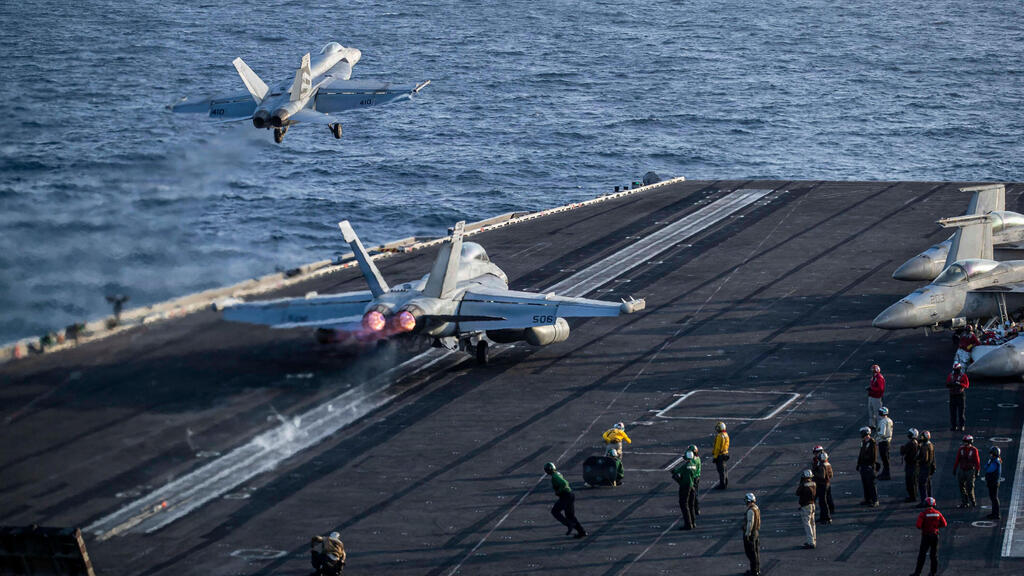
An F/A-18E Super Hornet aboard the USS Abraham Lincoln
(Photo: AFP PHOTO / US NAVY / NAVCENT PUBLIC AFFAIRS)
The U.S. Navy has already been expanding 3D printing across fleet maintenance and shipbuilding, including metal printed parts for vessels and maintenance centers looking for ways to reduce long lead times and high replacement costs. In one Navy maintenance example, a component that would have required replacing a much larger system was produced through additive manufacturing at a fraction of the traditional cost.
Originally, 3D-printing technology, which began in the 1980s, was used mainly to create simple plastic prototypes. The major breakthrough for additive manufacturing in aviation came in the previous decade, as laser-based printing of metal powders such as titanium and carbon fiber-rich composite components matured. These materials offer an exceptional strength-to-weight ratio and can withstand extreme temperatures, making them suitable for the demanding requirements of military aviation.
The Navy’s decision to carry out the current test on Super Hornet aircraft is not accidental. Boeing, the aircraft’s manufacturer, is expected to end production of the model in the near future, while the Navy plans to keep the fleet operational at least into the 2040s. The Super Hornet remains a key U.S. Navy carrier-based combat aircraft, even as the service looks toward future replacement programs.
The combination of radar and display upgrade programs with revolutionary 3D-printed maintenance solutions is meant to help preserve the U.S. Navy’s operational edge against Chinese and Russian challenges, without relying as heavily on distant and vulnerable supply lines. In the next war, the decisive spare part may not arrive by cargo plane. It may come out of a printer.