

Wizz Air has been largely responsible for a recent flurry of travel between Israel and Budapest. However, this time the passengers involved are not tourists seeking cheap vacation deals, but rather senior Transport Ministry officials engaged in intensive talks with the airline about establishing a hub at Ben Gurion Airport.
Just last week, Transport Ministry Director-General Moshe Ben Zaken and Israel Airports Authority CEO Sharon Kedmi visited the Hungarian capital.
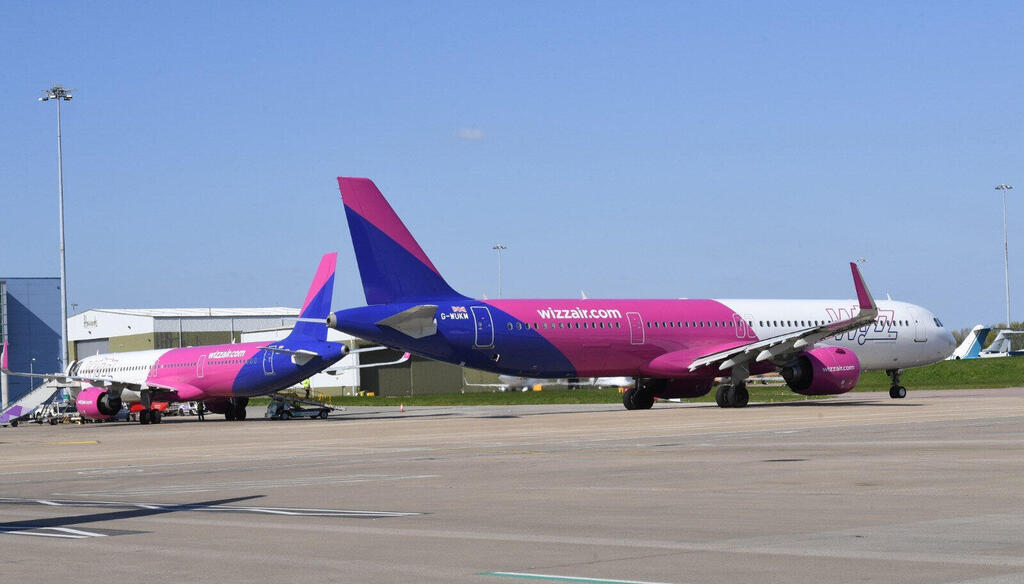
Only days after their visit, Wizz Air executives hosted our team at their headquarters in Budapest, marking the first time the Hungarian budget airline has allowed an Israeli media delegation into its nerve center.
Wizz Air is a Hungarian economic success story. It is the second-largest low-cost airline in Europe, after Ryanair. Until the outbreak of the Gaza war, it was the most active foreign airline at Ben Gurion Airport, second only to Israel’s national carrier El Al.
That’s precisely why the Transport Ministry, despite opposition from Israeli airlines, is actively courting Wizz Air to open a base in Israel. After coming under heavy criticism for its handling of air travel during the Gaza war, the ministry hopes that an expanded Wizz Air presence, including new destinations and increased flight frequency, will lead to fierce competition and lower average ticket prices.
A local base would put Wizz Air on an equal footing with Israeli airlines at Ben Gurion, transforming the Israeli airport into its home turf, free from the restrictions that typically apply to foreign carriers. In industry terms, this is known as "seventh freedom" rights. But how close is this to becoming reality? Wizz Air executives are urging caution.
“This isn’t something that will happen tomorrow, or even in the coming months,” said Andras Rado, Wizz Air’s head of communications, in an interview. “We’re still examining whether the parameters justify opening a base at Ben Gurion. There are currently several issues related to Israel’s existing aviation regulations."
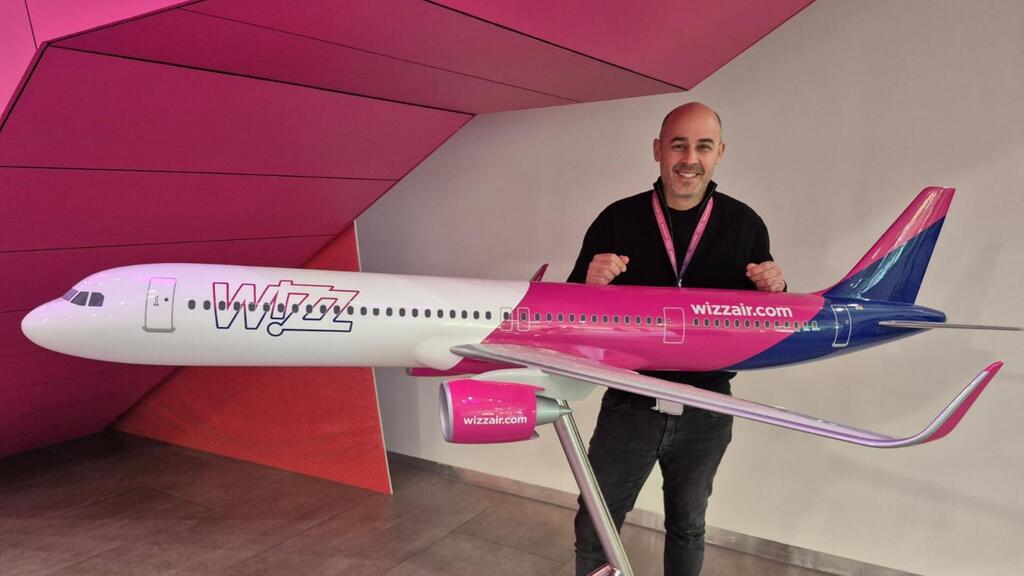
Wizz Air’s head of communications Andras Rado
What kind of issues?
“For example, Israeli pilots can’t be employed directly by a European airline. That’s something we need to solve. Employing locally based Israeli pilots would significantly reduce operational costs for the base. But that’s just one of many challenges involved in opening a base in a foreign country."
So what does it actually mean to open a permanent base at Ben Gurion? It would allow Wizz Air to permanently station aircraft and crews in Israel and secure coveted takeoff and landing slots during peak hours.
This would enable the airline to increase the number of flights to and from Israel by dozens of percentage points and expand to more distant destinations such as the Balkans, the Caucasus, the United Arab Emirates and even Morocco.
Ministry officials believe this could be a game-changer for Israeli travelers, leading to significantly lower prices on new routes.
One of the ministry’s conditions is that Wizz Air also operate domestic flights on the Tel Aviv–Eilat route. It’s also no secret that the airline is hoping to pick up additional route allocations at the expense of rival low-cost carrier Ryanair, which shows no signs of resuming service to Israel anytime soon, if at all.
Currently, Israeli airlines enjoy a major advantage over their foreign counterparts: their planes are based at Ben Gurion, giving them access to the earliest and latest slots, favored by travelers. If Wizz Air sets up a base in Israel, it would gain the same access and become a dominant player during peak travel hours.
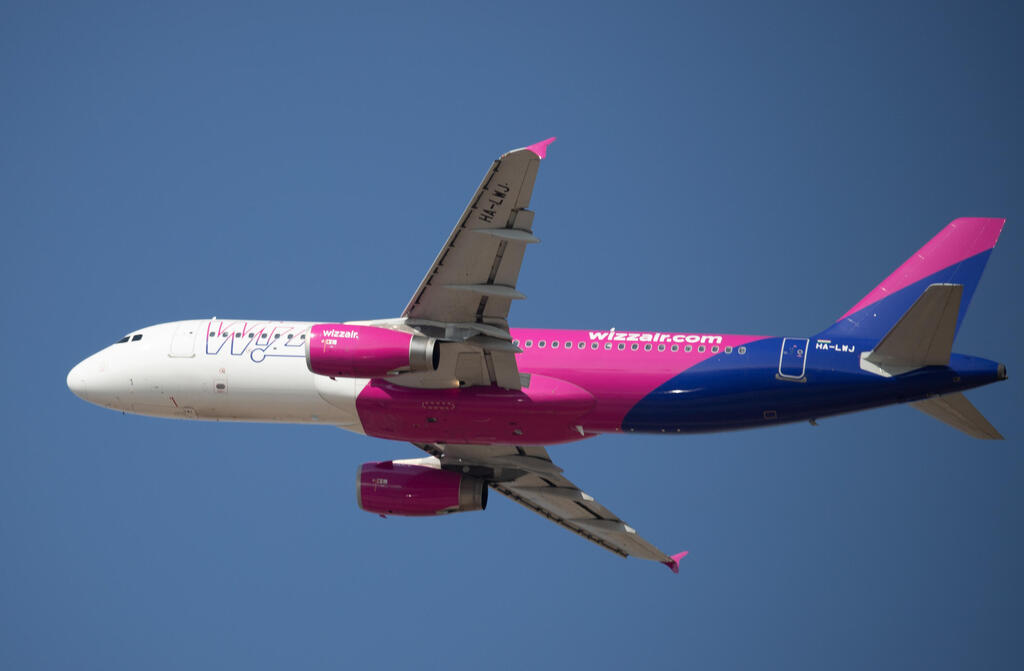
(Photo: Eran Granot)
It would also maintain its status as a foreign airline, exempting it from strict Israeli regulations such as enhanced security coordination with El Al, which is not just a competitor but also a provider of security services for the entire sector.
The discussions around granting Wizz Air a permanent base are already causing a stir in Israel’s aviation industry. Alongside the Transport Ministry’s determined push, there is significant opposition, starting from the Aviation Authority to Israeli airlines, including El Al, Arkia and Israir.
The Israeli carriers fear, not unreasonably, heightened competition and warn of a catastrophe in times of emergency. As seen during the recent war, most foreign airlines halted operations, leaving Israeli carriers as the sole lifeline keeping the country connected. Without them, Israel would have become a no-fly zone.
One of the key points in negotiations is the ministry’s demand that Wizz Air commit to continuing operations from Ben Gurion even during wartime.
“Wherever we see potential to grow passenger numbers, we consider opening a base,” Rado explained. “Israel absolutely warrants a deeper look in terms of efficient and profitable operations, but regulatory issues are currently the main obstacle. A base here would allow us to park aircraft overnight, perform routine maintenance at Ben Gurion, and recruit local cabin crew."

Rado
At present, many low-cost flights from Israel arrive in Europe late in the evening, requiring an extra night’s stay for the crew. Return flights often depart from Europe in the morning, meaning yet another overnight hotel stay just to make the schedule. “If we can park our aircraft at Ben Gurion overnight, we can offer morning departures from Tel Aviv and return in the evening, saving Israeli travelers time and money,” Rado said.
Are you aware of the strong opposition to this move among Israeli airlines?
“Of course, but it doesn’t really concern us. We’re not afraid of competition; on the contrary, it makes us better. And ultimately, it’s the consumer who benefits, as it drives prices down."
Would opening a base at Ben Gurion lower your fares to and from Israel?
“Probably not significantly, since our fares are already very low, starting from 200 shekels. Our approach as a low-cost airline is that travelers shouldn’t have to spend a large sum on the flight, which is just one part of the total vacation expense that includes hotels, car rentals, attractions, restaurants and shows."
If you do establish a base in Israel, will you hire local staff such as pilots and flight attendants? Do you currently have Israeli pilots?
“Yes, that’s the plan. We’ll definitely hire local crews. Right now, we have several Israeli pilots who live abroad and work for us."
An island of opportunity
Founded in 2004, Wizz Air continues to grow at an impressive pace. In 2024, the airline carried 62.8 million passengers. This past summer was the most successful in its history, peaking at 1,000 daily flights. Wizz Air is traded on the London Stock Exchange at a valuation of about $1.3 billion.
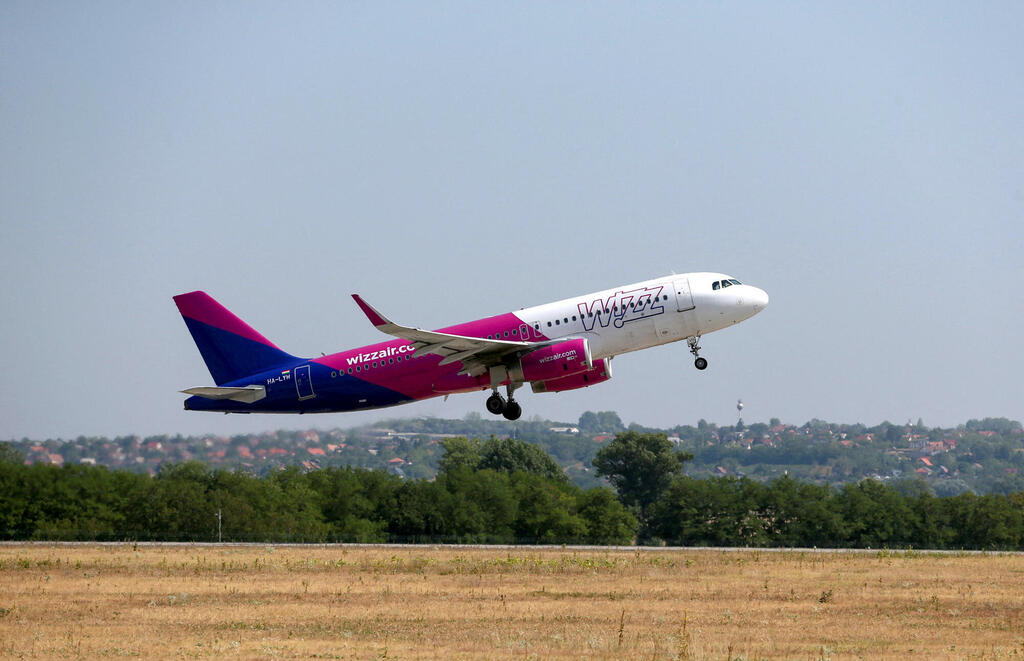
(Photo: REUTERS/Bernadett Szabo)
In Israel, Wizz Air is a success story: Since launching operations in 2013, more than 10 million passengers have flown with the airline. Wizz Air resumed flights to Israel following the war with Iran and currently operates 21 routes out of Ben Gurion.
Destinations include Budapest, London, Vienna (until March), Bratislava (starting March), Sofia, Varna, Larnaca, Athens, Thessaloniki, Rhodes, Crete (in summer), Milan, Rome, Venice, Naples and others. For 2025, the airline is offering 117 weekly flights and about 1.55 million seats in the Israeli market.
“And that,” Rado emphasized, “is only during months when we were able to fly amid the tense security situation. We’re seeing more and more people wanting to fly to Israel following the ceasefire, and of course, we’ll add flights if demand continues to grow.”
Can you guarantee Israeli passengers that you won’t suspend flights to Israel again in case of a security emergency?
“We’re here for our Israeli customers. As long as it’s safe to fly to Israel, we will continue flying."
What makes the Israeli market special in your eyes?
“Israel is a small country, but it’s essentially an island; you can only get in or out by air or sea, so demand for flights is very high. Also, Israelis love to travel, especially after a prolonged period of war.
"Our prices are attractive regardless of whether we have a base in Israel or not. Our model is not about selling half a plane at double the price, but selling a full plane at half the price. We want to expand our offering, fly more to and from Israel.
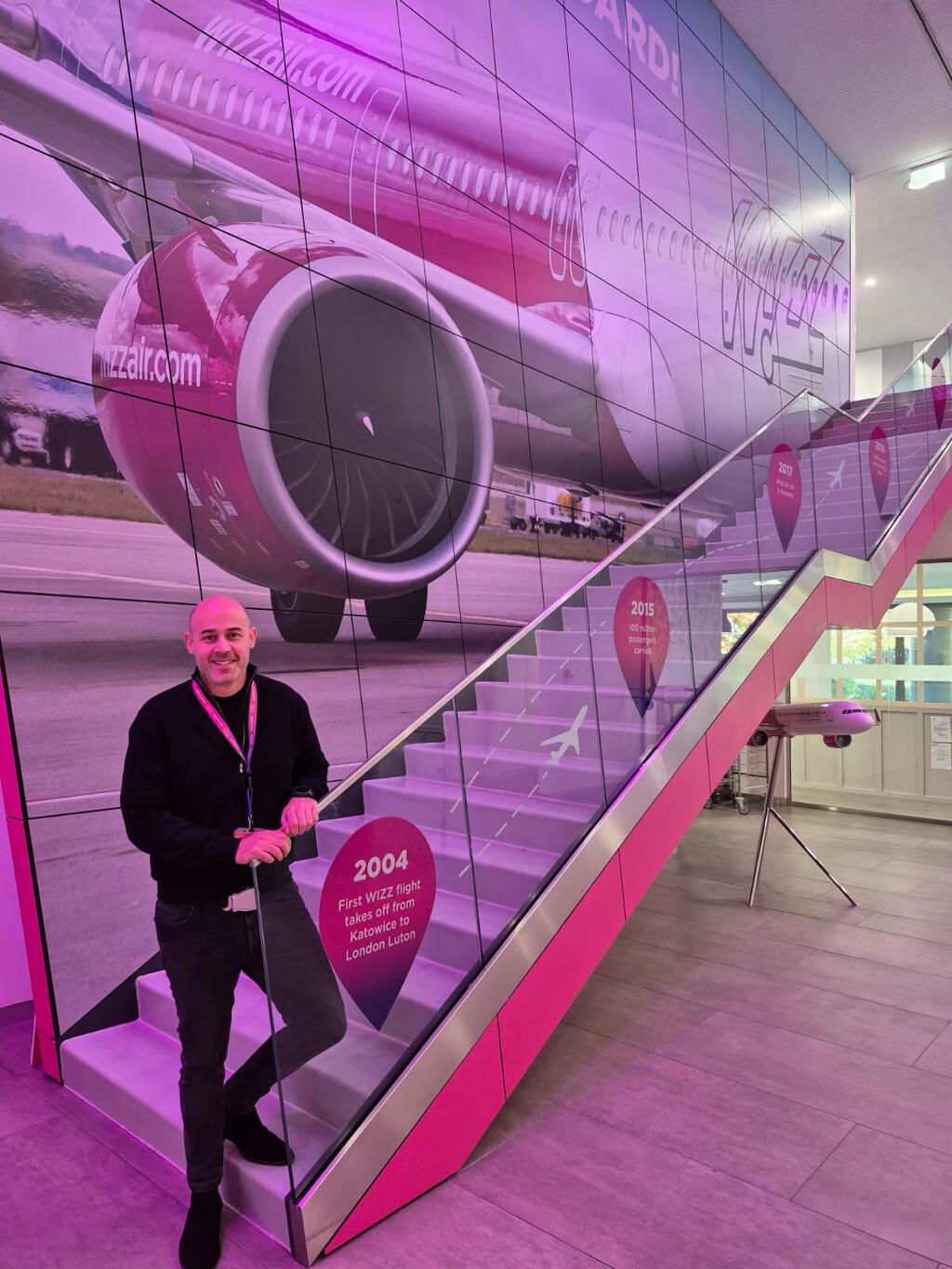
Rado at the Qizz Air HQ in Budapest
“But, if a base we’ve opened doesn’t justify itself, we have no problem shutting it down, just as we did in Abu Dhabi last September and in Vienna in April due to high taxes. Our model is based on minimal expenses and maximum profit. As a low-cost airline, we only fly profitable routes. Even without a base in Israel, we’ve seen that more and more Israelis are choosing to fly with us since we resumed operations amid the war.”
How would you characterize the Israeli passenger?
“Israeli consumers really like low-cost flights. And it doesn’t look like competitors such as Ryanair and easyJet are planning to return to Tel Aviv anytime soon, so we’re aiming to increase our slot allotments in Israel. Israeli passengers fit the low-cost model like a glove."
How so?
“They understand that adding a checked bag, selecting a seat or buying food onboard increases the price. They’re not picky about seats; they sit wherever available, they bring their own food and drink and they usually travel with just a backpack or at most a paid trolley case.
"Israelis have realized that the flight is just a means of transportation, like a bus, and that real vacation spending starts at the destination, on hotels, car rentals and restaurants."
“At the same time, we’re encouraging Israeli customers to join our ‘All You Can Fly’ program, which costs $499 and allows travel to any of our destinations on a space-available basis, with each flight priced at just €9.90. We launched the offer last week and it sold out within hours in Israel.”
How many bases does Wizz Air operate globally? How many aircraft are in your fleet, and what models?
“We fly to nearly 200 destinations in over 50 countries. We operate 32 bases worldwide. Our fleet consists of 250 Airbus A320 and A321 aircraft. We have no plans to purchase wide-body aircraft, so we’re not planning to fly to destinations like Thailand.
"We’ll continue to operate narrow-body aircraft from the A320 family. The A321XLR, a narrow-body jet with extended range, can fly up to seven hours and connect the farthest points in our network. We currently have over 9,500 employees."
Speaking of buses, will we ever see standing-room-only flights to further reduce ticket costs?
“That’s not something we’re considering at this time. We're offering only seated flights."