

Not every remarkable destination is defined by white beaches, snow-covered peaks or picturesque European cities. Some places look as though the laws of nature simply stopped applying: rivers turn red, craters burn for decades, lakes glow pink and mountains appear to float above the clouds.
Here are 10 destinations that look as though they were created by artificial intelligence, but are entirely real.
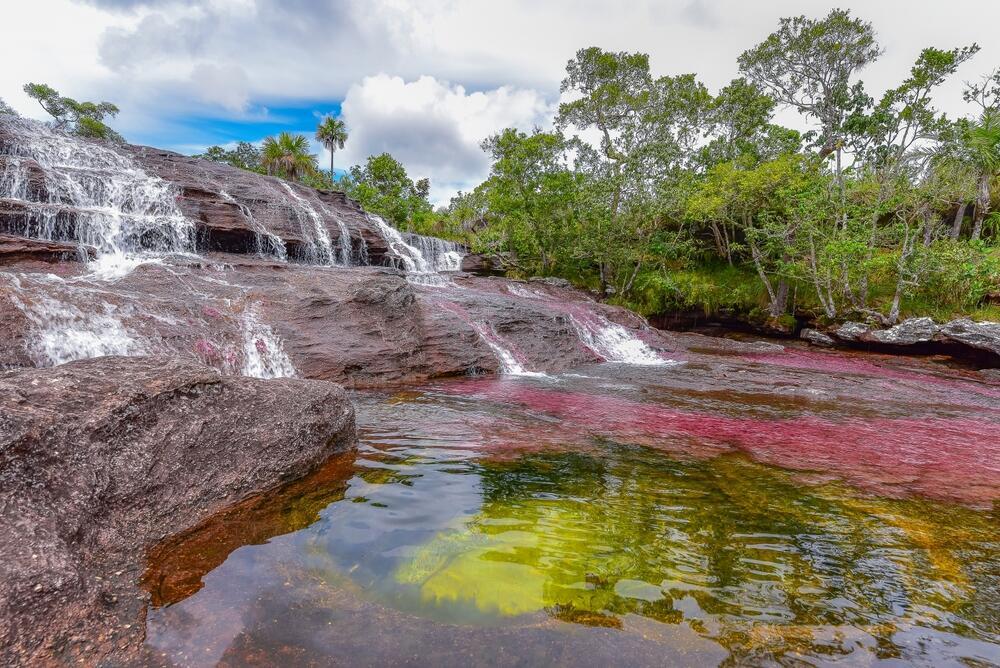
A rainbow melted into water: Caño Cristales, Colombia
What it is: A river hidden in Colombia’s La Macarena region that looks fairly ordinary for most of the year. For several months, however, it erupts in vivid colors and earns its nickname, “the most beautiful river in the world.”
Gallery
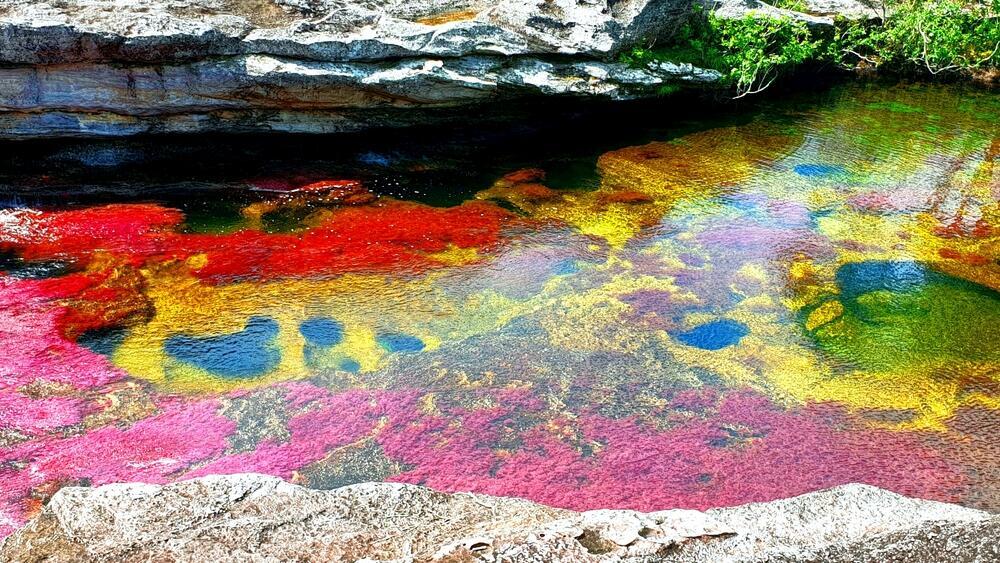
Caño Cristales, the unique multicolored river in Sierra de la Macarena National Park
(Photo: iralgo74 / shutterstock)
(Photo: Hugo E. Rueda Ramirez / shutterstock)
Why it is bizarre: Its famous red color is produced mainly by a unique aquatic plant called Macarenia clavigera. When sunlight, water flow and water levels align, usually between May and November, the red plants combine with clear water, dark rocks, green vegetation and yellowish sand to create an almost unreal landscape.
How to get there: Visitors take a domestic flight to the town of La Macarena and continue on a regulated guided tour that usually includes a boat ride, a vehicle transfer and hiking. Access is controlled to protect the fragile ecosystem.
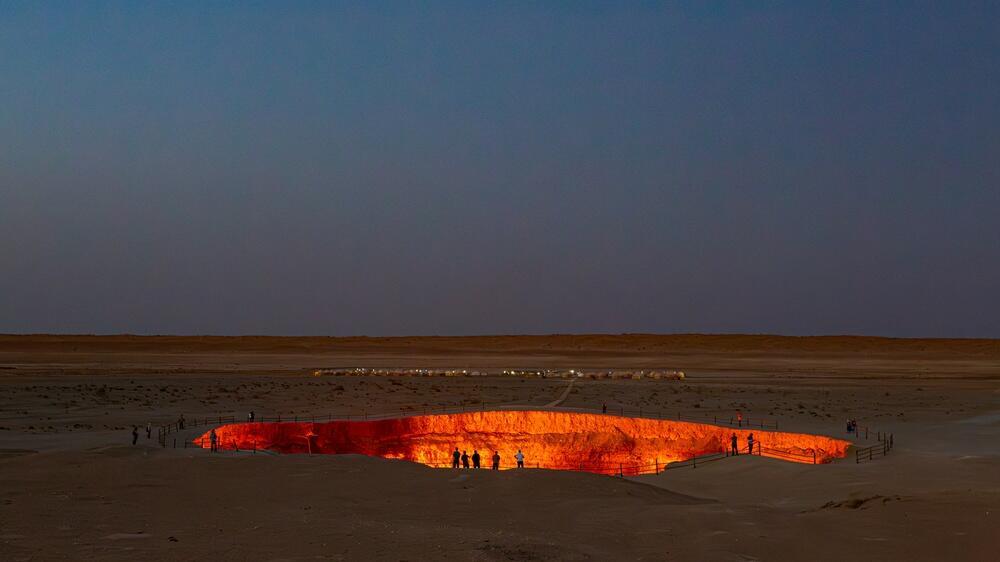
Breathing fire: The Door to Hell, Turkmenistan
What it is: A large crater in the middle of the Karakum Desert that has been burning continuously and looks exactly like the nickname attached to it, a fiery gateway to the underworld.
Why it is bizarre: According to the most common account, the crater formed after Soviet drilling struck an underground gas pocket and caused the ground to collapse. The gas was reportedly set alight to stop it from spreading, on the assumption that the flames would quickly die out. They did not. The crater continues to burn today, though the precise circumstances of its formation and ignition were never fully documented, and several versions of the story remain in circulation.
How to get there: Travelers fly to Ashgabat, the capital of Turkmenistan, and continue by four-wheel-drive vehicle deep into the desert. Entry to the country requires a visa and usually advance coordination with a local operator.
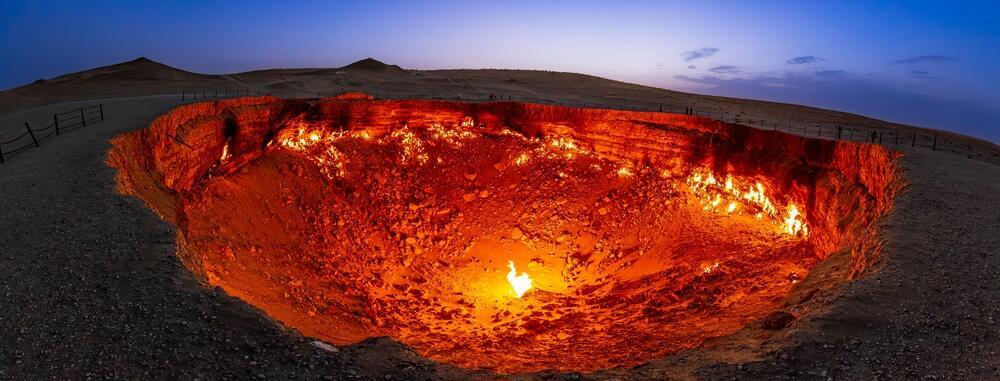
Darvaza gas crater, known as the “Gates of Hell,” Turkmenistan
(Photo: Peter Wollinga / shutterstock)
(Photo: Peter Wollinga / shutterstock)
A lake that looks like an abstract painting: Lake Natron, Tanzania
What it is: A salty, alkaline lake in northern Tanzania near the Kenyan border that sometimes turns vivid shades of pink, red and orange.
Why it is bizarre: High salinity and alkalinity, together with algae and microorganisms adapted to the extreme conditions, give the lake its unusual colors. At certain times of year, it looks like a vast sheet of paint spilled across the landscape. Despite its harsh environment, Lake Natron is also one of the world’s most important breeding grounds for lesser flamingos.
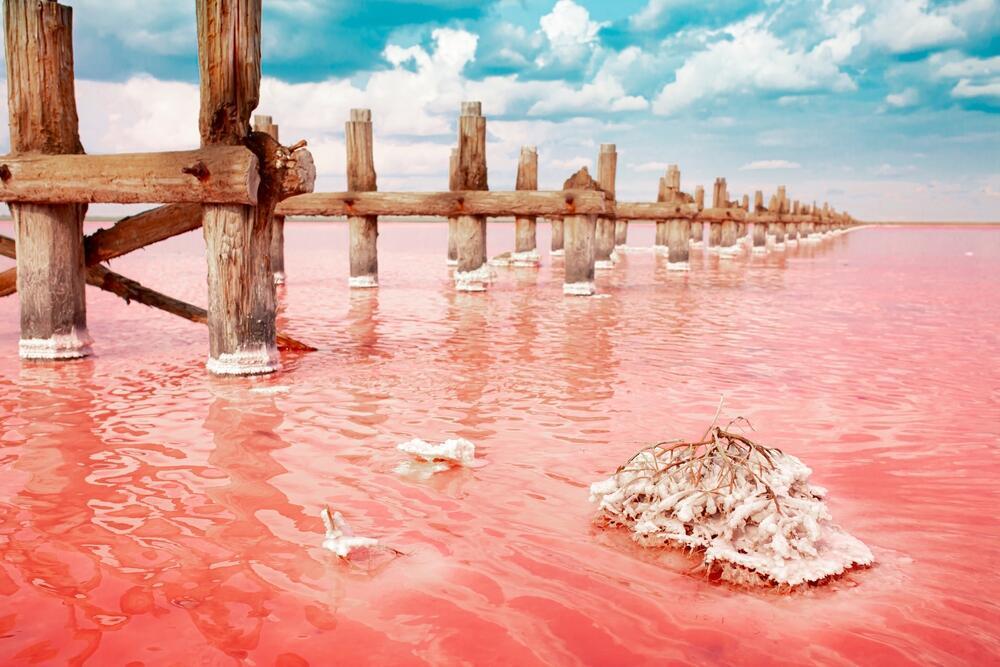
The pink lake
(Photo: Vera Larina / shutterstock)
How to get there: Most visitors arrive as part of an organized trip or safari from northern Tanzania, usually through Arusha. The route is long and rough, so travel is generally by four-wheel-drive vehicle.
A ‘Toy Story’ nightmare: Island of the Dolls, Mexico
What it is: An exceptionally creepy site in the canals of Xochimilco, south of Mexico City, where countless old, weathered and sometimes dismembered dolls hang from trees and line the paths.
Why it is bizarre: According to local legend, Don Julián Santana Barrera, who lived there alone, began hanging dolls to appease the spirit of a girl who drowned nearby, or who he believed had begun haunting him. Years of humidity, insects and decay transformed the entire site into something resembling a horror-film set.
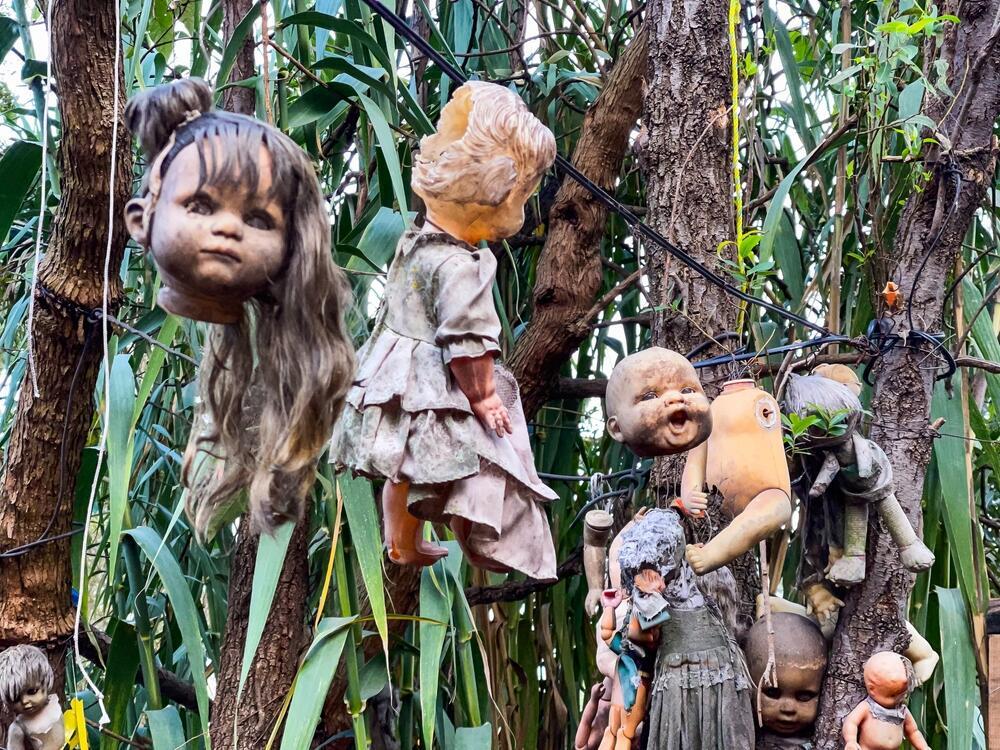
Island of the Dolls
(Photo: marketa1982 / shutterstock)
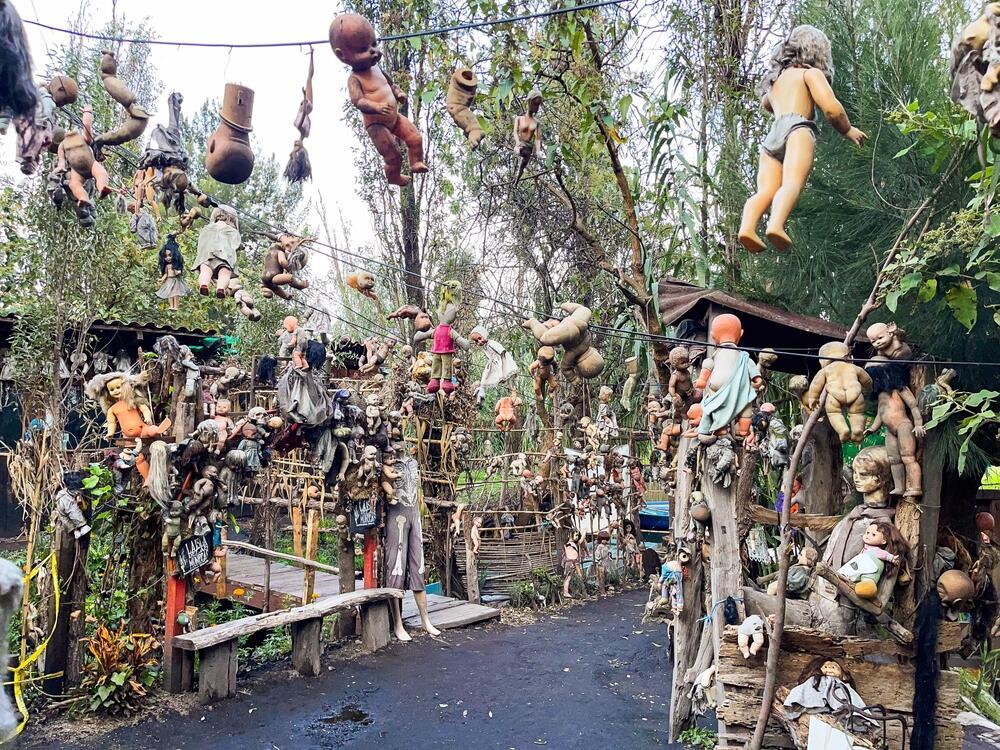
(Photo: marketa1982 / shutterstock)
How to get there: Visitors travel to the Xochimilco canals and continue by boat. It is important to verify the operator in advance, since alternative sites in the area are also marketed to tourists as the “Island of the Dolls,” and reports differ over whether the original site is accessible. Routes vary, and reaching it may require a long boat ride and advance arrangements.
An alien sculpture in the desert: Fly Geyser, Nevada
What it is: A colorful mound that sprays hot water and steam, resembling a surreal sculpture in shades of red, green, yellow and orange in the middle of the desert.
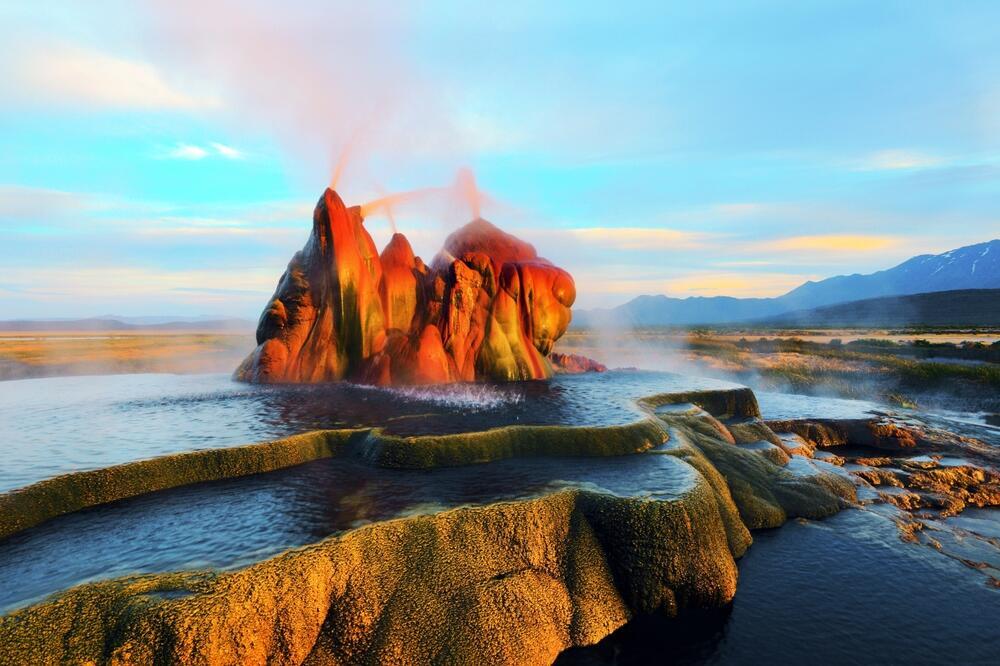
Fly Geyser at Fly Ranch, near Gerlach, Nevada
(Photo: Fotogro / shutterstock)
Why it is bizarre: The geyser formed after a geothermal drilling operation in the 1960s. Water rising from underground carried minerals that accumulated over time and created its distinctive shape. Heat-loving algae and microorganisms contributed to its intense coloring.
How to get there: Fly Geyser is located on private property in northern Nevada, so visitors cannot simply pull over and walk up to it. Access is available only through guided tours arranged in advance.
Nature’s color palette: Spotted Lake, Canada
What it is: A lake in southern British Columbia that becomes covered in dozens of circular pools in different colors during summer, separated by mineral ridges and pathways.
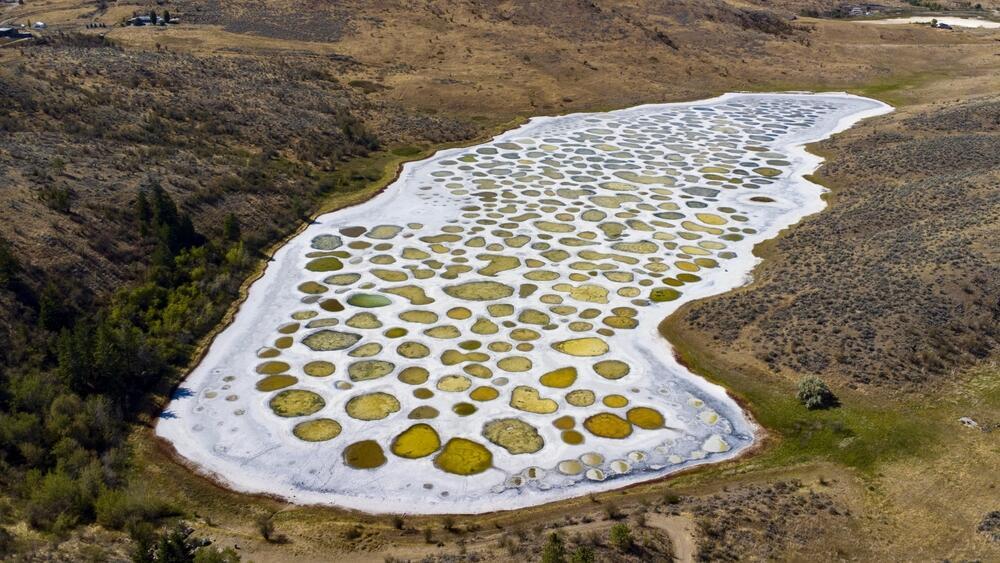
Spotted Lake
(Photo: AURELINA FILMS / shutterstock)
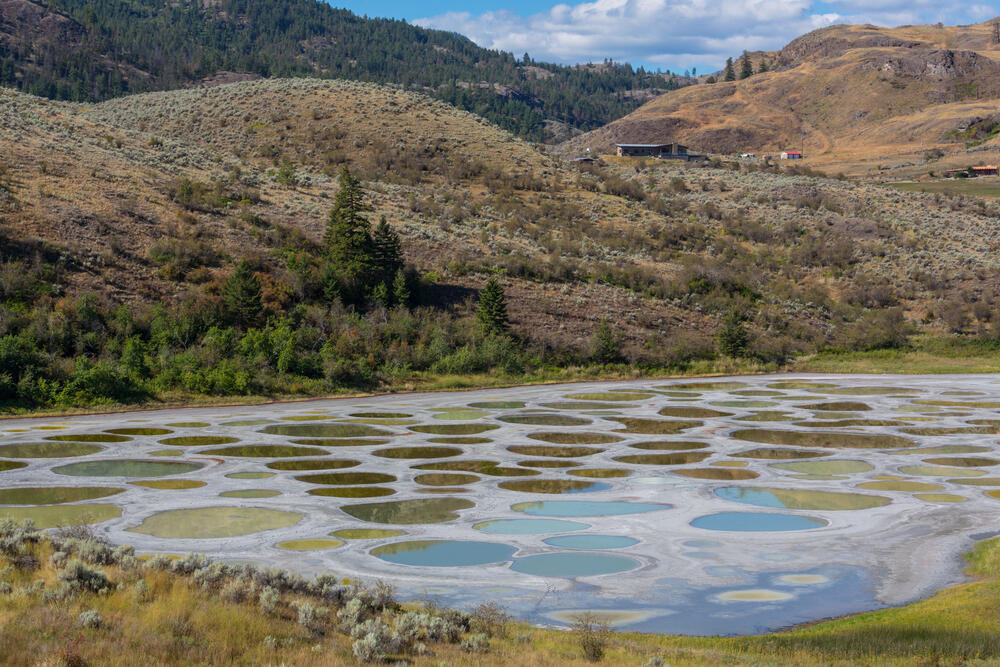
(Photo: Galyna Andrushko / shutterstock)
Why it is bizarre: As water evaporates during the warm season, high concentrations of minerals create spots and pools in shades of yellow, green, blue and white. Beyond its appearance, the lake is sacred to the Syilx Okanagan people, who regard it as a place of spiritual importance with a long tradition of healing and ceremony.
How to get there: The lake lies near the town of Osoyoos. It can be viewed from the road and nearby stopping points, but direct access is restricted out of respect for the site and the local community.
A landscape from another planet: Dallol, Ethiopia
What it is: An extreme hydrothermal area in the Danakil Depression of northeastern Ethiopia, filled with acidic pools, hot springs and salt formations in dazzling colors.
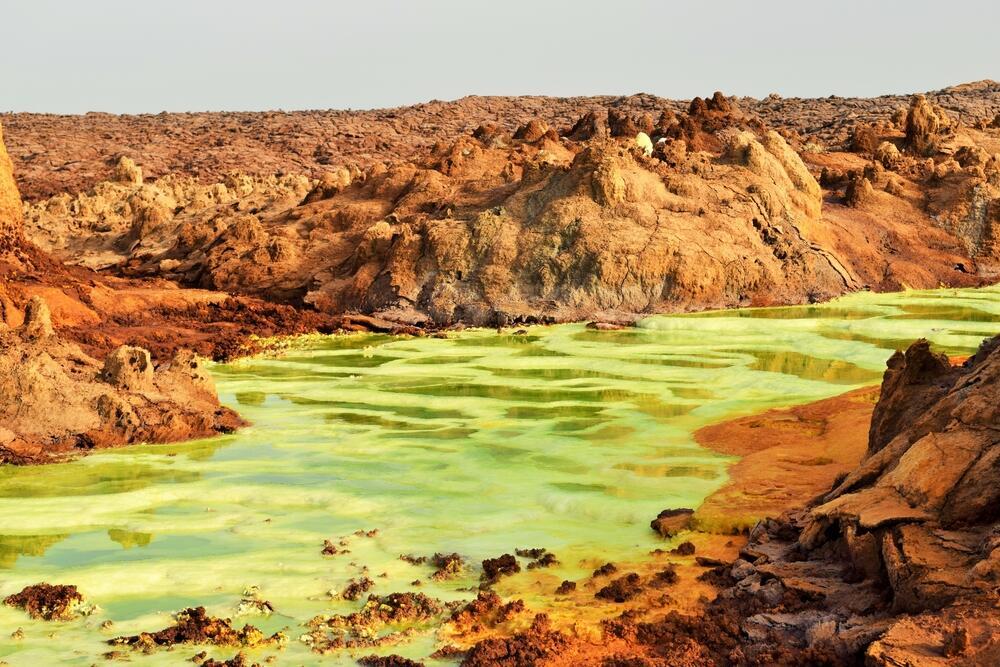
Dallol in Ethiopia’s Danakil Depression
(Photo: taravelworld1971 / shutterstock)
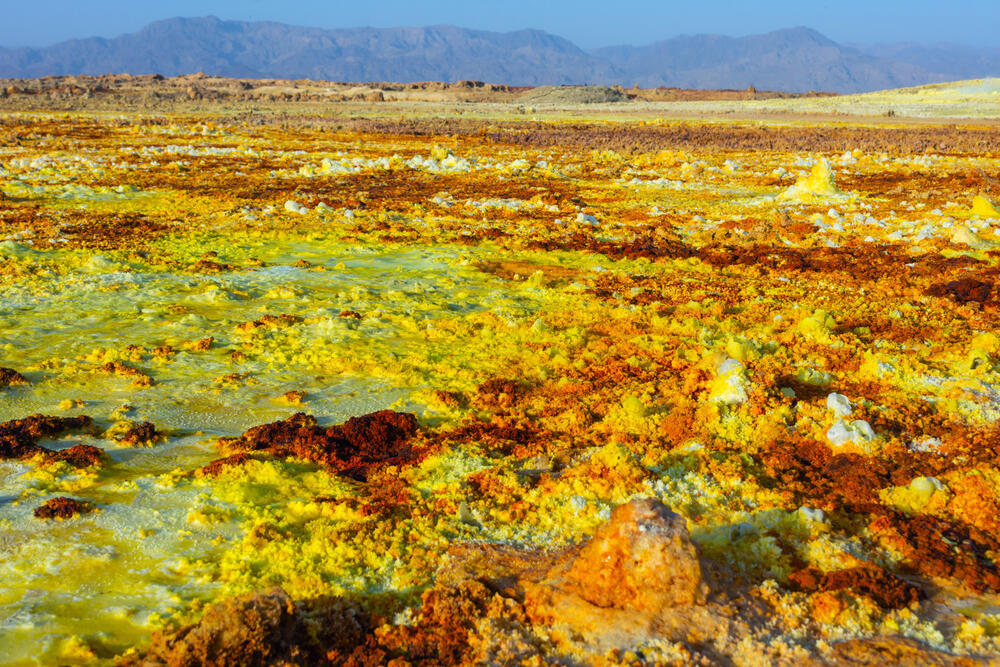
(Photo: Ana Flasker / shutterstock)
Why it is bizarre: Sulfur, salt, metals and hot water combine to produce a psychedelic landscape in shades of green, yellow, orange and white. Intense heat, extreme acidity and active terrain make Dallol one of the harshest and strangest places on Earth.
How to get there: Access is complicated and depends on security conditions and movement restrictions in the region. When visits are possible, they are conducted as organized expeditions using four-wheel-drive vehicles, local guides and sometimes security escorts.
The island floating above the clouds: Mount Roraima, South America
What it is: A massive tabletop mountain rising about 2,800 meters at the meeting point of Venezuela, Brazil and Guyana. Its sheer cliffs rise abruptly above the rainforest below.
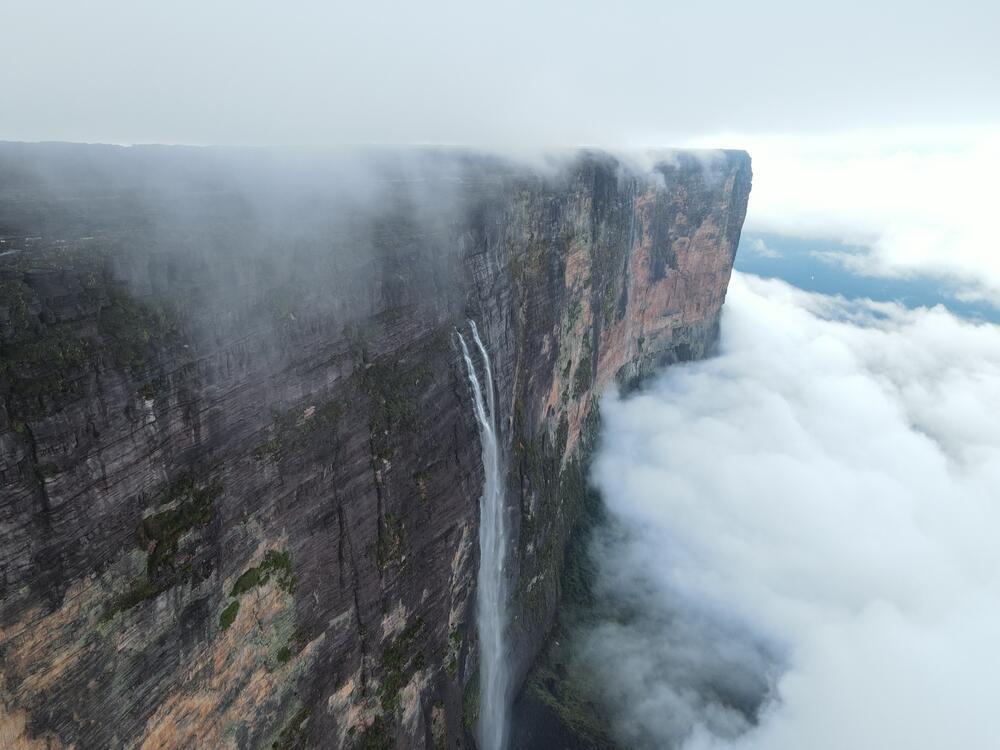
Aerial view of Mount Roraima’s steep cliffs, with waterfalls cascading from them
(Photo: Don Serhio / shutterstock)
Why it is bizarre: Roraima’s summit is a high, isolated plateau often wrapped in clouds, making it look like an island floating in the sky. Its long isolation created a unique ecosystem with plant and animal species found nowhere else. Venezuela’s tepui landscapes, including Roraima, are often associated with the visual inspiration behind the fictional world of the film “Up.”
How to get there: Most travelers begin a multi-day trek from the Venezuelan side. The route is demanding and includes long hikes, changing conditions and an ascent to the summit along a natural path running up the mountain’s flank.
Landing on another planet: Socotra, Yemen
What it is: An isolated island in the Arabian Sea known for extraordinary landscapes and vegetation that looks as though it belongs to another world.
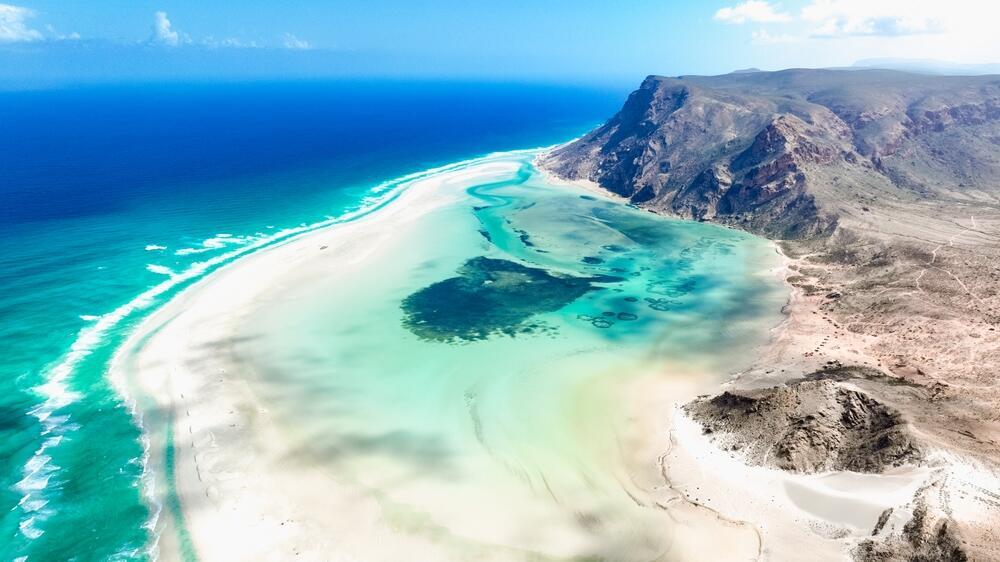
(Photo: Dave Primov / shutterstock)
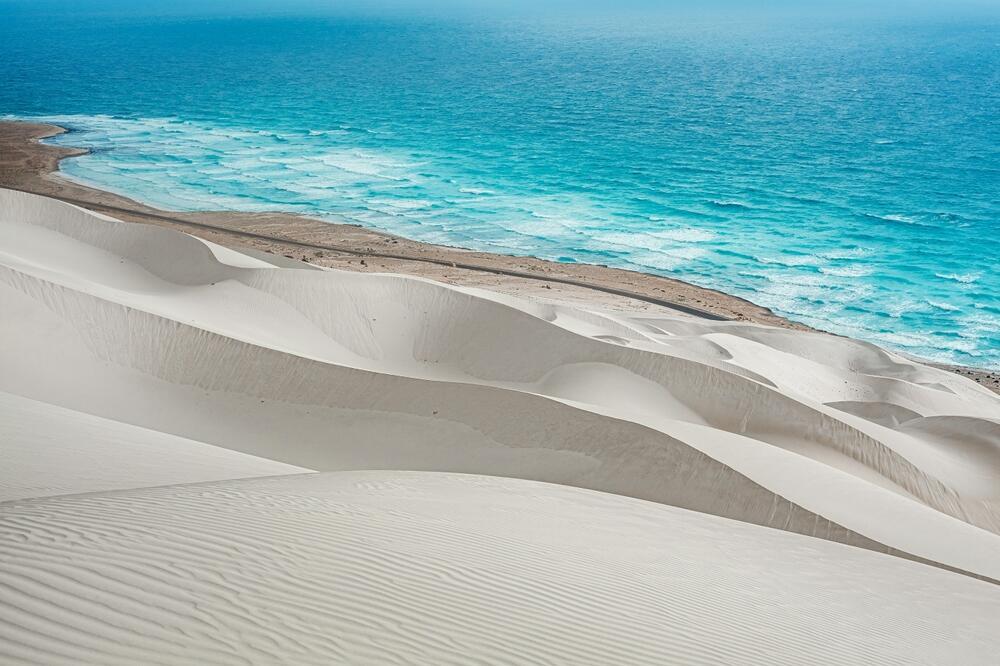
Archer Dunes
(Photo: Tatyana Druzhinina / shutterstock)
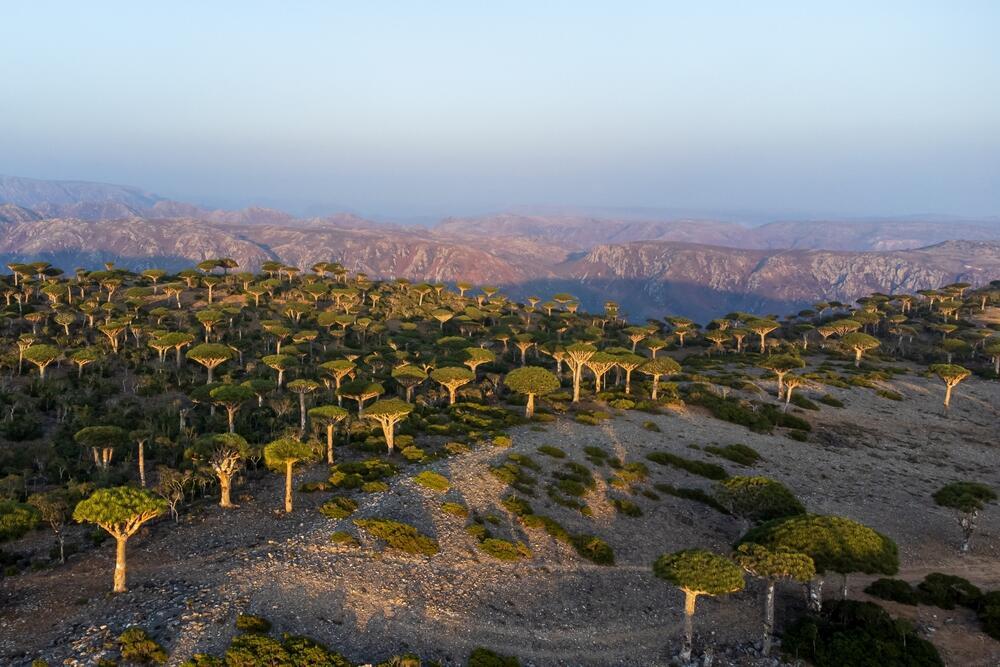
Dracaena cinnabari (Socotra)
(Photo: Indi_kator / shutterstock)
Why it is bizarre: Socotra’s long isolation created an exceptional concentration of species found nowhere else. Its most famous symbol is the dragon’s blood tree, with its umbrella-shaped crown and red resin that gave the tree its name.
How to get there: Access to Socotra is limited and changes according to security conditions and available flights. Israeli citizens are prohibited from traveling to Yemen, including Socotra, even when using an additional passport. For Israeli travelers, it is therefore neither an accessible nor a legal destination.
A galaxy beneath the ground: Waitomo Glowworm Caves, New Zealand
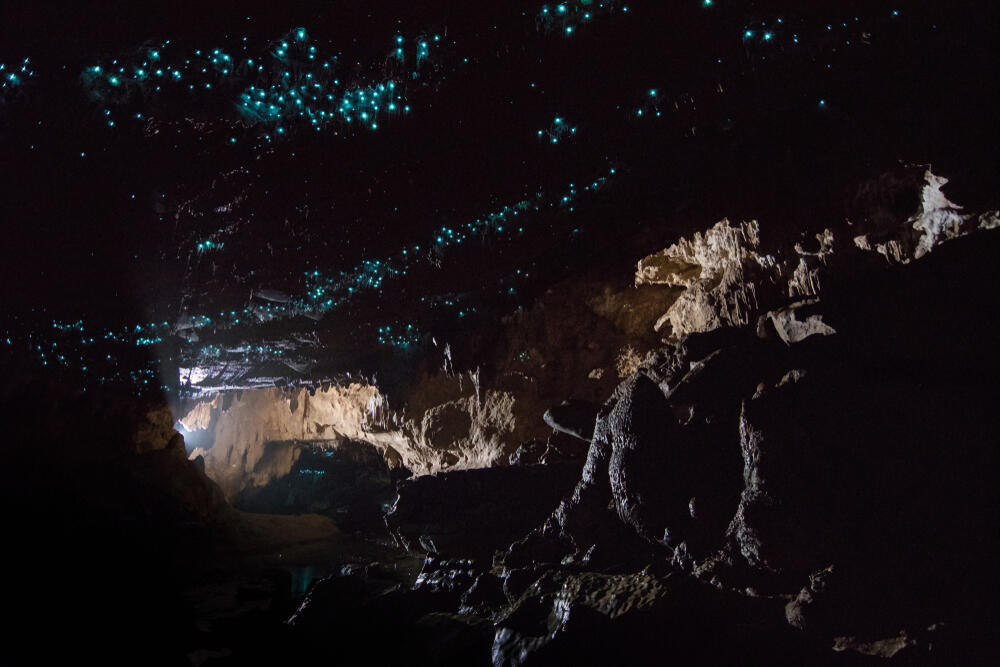
What it is: Caves in the Waitomo region of New Zealand’s North Island that appear, in darkness, to contain a night sky filled with stars.
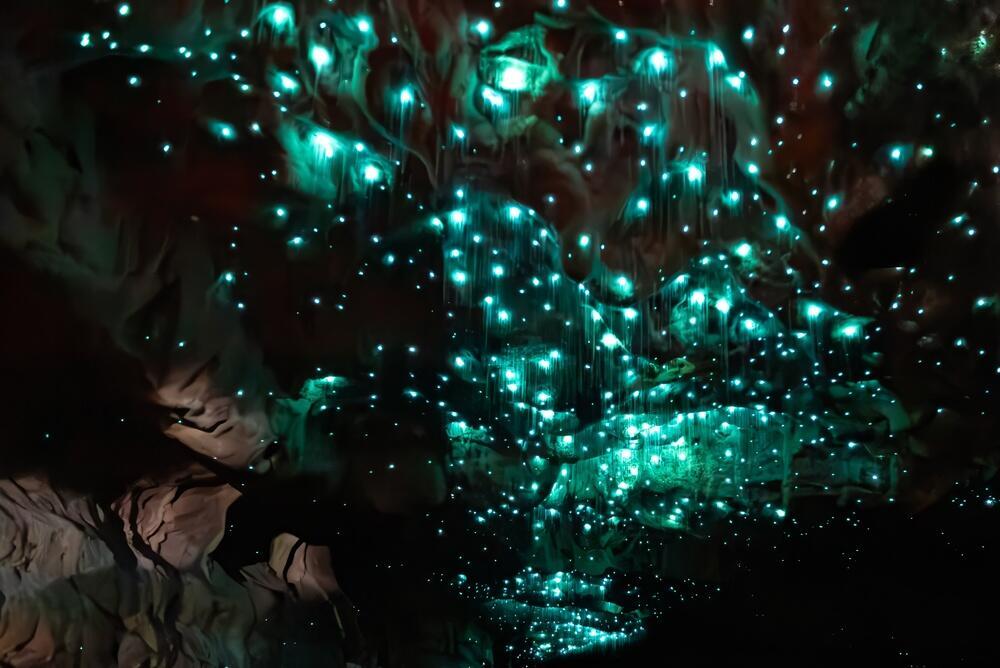
Waitomo Glowworm Cave
(Photo: gary yim / shutterstock)
(Photo: Mike-Hubert.com / shutterstock)
Why it is bizarre: The “lights” are actually larvae of a native insect that produce a blue-green glow to attract prey toward sticky hunting threads hanging from the cave ceiling. The biological mechanism may be less romantic than the spectacle suggests, but the result is mesmerizing.
How to get there: Visitors reach the Waitomo visitor center and join a guided tour. One of the highlights is a silent boat ride through the dark cave directly beneath thousands of tiny glowing lights.