

1. More vacations may mean lower heart risk
A 2019 American study published in Psychology and Health examined the effect of vacations on heart disease risk. The year-long study followed 63 employees who were entitled to paid vacation days. Participants were asked to take an average of five vacations during the year, each lasting three to four days.
The researchers had them complete lifestyle questionnaires and also took blood tests to track biological markers linked to heart disease risk. They found that the more vacation episodes participants took during the 12-month study, the lower their risk of developing heart disease in the following year, by as much as 25%.
Gallery
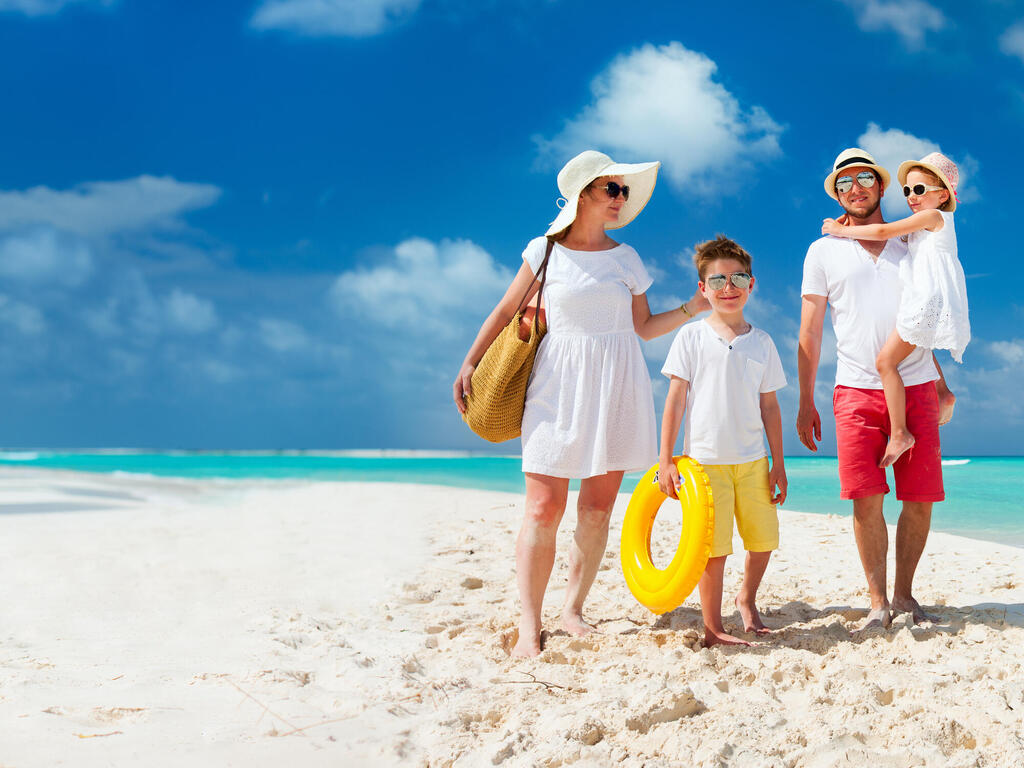
When we take a beach-style vacation, our sedentary habits decrease for up to four weeks afterward
(Photo: Shutterstock)
2. Beach vacations may reduce sedentary behavior
In the same study, researchers found that unlike other types of vacations, a beach-style, rest-focused holiday was linked to a reduction in sedentary behavior for up to four weeks afterward. Other types of vacations, by contrast, were followed by an increase in sedentary time during that period.
The researchers also found that after any kind of vacation, participants were more physically active than they had been before leaving.
3. Even a short staycation can reduce stress
A 2018 study published in the International Journal of Environmental Research and Public Health examined the effect of a relatively short vacation on mental well-being. Previous studies had shown that a weeklong vacation could reduce stress significantly, but not everyone can afford to take that much time off.
For the study, researchers recruited 40 especially busy managers and sent them on one of two four-night breaks: one group went to a luxury hotel, while the other stayed home and was simply asked to disconnect completely from work.
The researchers measured the effects of the break after 15, 30 and 45 days, across four areas: stress, well-being, the ability to respond to stress and the ability to function better at work and in daily life.
Both groups improved significantly across all measures, and the benefits could still be seen 45 days after the vacation ended. However, the hotel group showed a greater stress reduction even after monitoring stopped.
Tip: Can’t take a long vacation because of work? Take several shorter breaks and make sure to change your surroundings. Pay attention to who you travel with, too. The wrong travel companions, or a family vacation that does not suit the children, can leave you needing a vacation from your vacation.
4. Camping in nature can reset the circadian clock
Our bodies have a circadian clock, or biological clock, that helps regulate daily bodily functions. It is affected by many factors, including nutrition and physical activity, but the main one is light. In modern life, we are exposed not only to sunlight but also to screen light.
A 2013 study by researchers from the University of Colorado Boulder, published in Cell, examined the effect of a vacation in nature on the circadian clock. The study included eight adults with screen-heavy lifestyles. They were asked to spend a week in nature without screen light, with only camping lights, sunlight and starlight for illumination.

Bedtime shifted earlier after the camping trip
(Photo: Shutterstock)
Researchers found that before the camping trip, participants’ average bedtime was midnight. In the week after the trip, however, their circadian clock had shifted two hours earlier, and they were going to sleep at 10 p.m.
The researchers observed this shift not only by bedtime, but also through biological markers of the circadian clock, such as the release of melatonin, the sleep hormone that signals to the body that it is time to sleep.
The earlier bedtime lasted for a while, then gradually faded as participants returned to modern life. Since the biological clock regulates many of the body’s functions, disrupting it can affect a wide range of processes. That is why resetting it and syncing it with the natural day-night cycle is important for health.
Tip: Can’t go camping in nature? There are other ways to cut back on screen time. Try cutting back on phone and social media use, especially during vacation, and focus instead on enjoying the moment.
5. Any type of vacation may improve sleep after you return
That is what an Australian study published in 2023 in the International Journal of Behavioral Nutrition and Physical Activity found.
Researchers followed 308 participants aged 18 to 65 for 13 months, using smart heart-rate monitors to track their physical activity, sleep and daily routines. Participants took vacations averaging about 12 days and ranging from leisure trips to camping and staycations.
After the vacations, researchers measured changes in sleep duration and found that across all types of vacation, participants slept longer each day during the month after returning.
6. Get at least five hours of sleep if you plan to drive on vacation
If a car is your main mode of transportation on vacation, remember that sleep matters when you are behind the wheel.
A study published in Nature and Science of Sleep examined the dangers of driving while sleep-deprived. Researchers from the University of Queensland in Australia reviewed 61 studies on car crashes and their causes.
They found that driving after less than five hours of sleep the night before is comparable to driving with a blood alcohol level above the legal limit. In practical terms, that means your risk of being involved in a crash is 15 times higher than if you had slept more than five hours the previous night. That figure is not especially surprising, given that about 20% of road accidents are caused by driver fatigue.
Get at least five hours of sleep if you plan to drive on vacation
(Photo: Shutterstock)
Tip: Heading out on a road trip and want to make the most of it? Make sure to get at least six hours of sleep. It is also recommended to limit driving to eight hours a day and take a 15-minute break every two hours.
7. Do vacations cause weight gain? Less so for people who weigh themselves
Food is one of the main attractions of any vacation, but many of us return home to find we have gained weight. So what can be done to prevent it?
A 2019 study published in Obesity by researchers at the University of Georgia included 111 participants, who were divided into two groups. The first group was asked to weigh themselves once a day during vacation and try to maintain their original weight, but they were not told how to do it. They were free to choose any method, such as reducing calories or increasing physical activity. The control group was asked not to weigh themselves and received no further instructions.
During the study and the 14-week follow-up period, researchers found that the participants who weighed themselves not only maintained their weight, but even managed to lose some. The control group, which did not weigh itself, gained weight.
The researchers noted that one possible explanation is that people are sensitive to changes in their regular weight. In other words, when we weigh ourselves daily, even without necessarily taking active steps, we still try to maintain our existing weight as much as possible.
How much weight do we really gain on vacation? Not as much as we might think. A 2017 study published in Obesity found that people gain only about 0.4 to 0.9 kilograms on average during vacation. One possible explanation is that most people walk a lot while traveling, helping offset some of the extra calories.
Tip: Don’t want to give up the culinary pleasures of vacation? Try spreading them out. Taste something new each day, rather than everything at once, so you can enjoy the food while spreading your calorie intake over a longer period.
8. The most comfortable seat on the plane may also be the most infectious
For some people, flying is exciting; for others, it is a nightmare. But everyone wants to get through it in good health.
A 2018 study (two years before COVID) published in PNAS, examined where passengers should sit on a plane to reduce their chances of catching a cold or summer flu. Researchers from the University of Florida studied 10 flights, each averaging about four hours, and tracked the behavior and seating locations of 1,540 passengers.
The data were then entered into a special model, which found that the overall risk of catching a cold from a sick passenger was only about 3%. But that risk depended heavily on where you were sitting in relation to the sick person.
The study found that passengers seated more than 90 centimeters (about 3 ft.) from a sick person had a 3% risk of infection, but for those seated within that distance, the risk jumped to 80%.
The researchers also examined which seat carries the highest risk of catching something during a flight, and their answer was clear: aisle seats may be the most comfortable, but they are also the most infectious.
These seats expose passengers to possible infection from four directions, as well as from people moving through the cabin during the flight. So if you choose an aisle seat, your risk of infection is the highest.
Tip: Worried about your health during a flight? Choose a window seat. Also, disinfect your seating area as much as possible when you board.
9. To get the vacation effect, you have to disconnect from work
If you find it hard to disconnect from work during vacation, you are probably missing out on the full vacation effect. That is what a group of researchers in the UK found in a study published in 2023 in the Journal of Occupational and Organizational Psychology. The researchers followed 90 teachers in the UK for eight weeks, during which the teachers took their winter break.
The researchers measured participants’ condition in three areas: anxiety, depression and exhaustion, before the vacation, during it and after they returned.
Researchers found a clear drop in all three measures during the vacation. But among teachers who reported doing actual work, reading emails or contacting a colleague for work-related reasons, the benefits of the break almost disappeared afterward.
Anxiety was especially affected, returning to pre-vacation levels within just two weeks. The study suggests that disconnecting from work during vacation is essential, and that failing to do so can erase both the effect you hoped to gain from the break and the money you spent on it.
Tip: Have to stay in touch with work during vacation? Try to keep it limited. Answer emails only, and avoid joining daily Zoom calls.
10. An active vacation can make you more effective at work when you return
Even if you choose a beach-style vacation, spending most of the day doing nothing may not be the best idea. That is not just our recommendation; it is what the science suggests.
A group of researchers from Finland published a study in 2022 in the Journal of Occupational and Organizational Psychology examining the vacation habits of about 3,500 participants over several years.
They found that people who chose a more active vacation, including sports or other forms of physical activity, returned to work more effectively, adjusted more quickly and were more engaged in their roles. Participants who chose a “lazier” vacation, by contrast, had a harder time readjusting to work afterward.
11. Even the best vacation can end with post-vacation blues
Do you know that intense feeling of emptiness and sadness after a vacation, along with the thought: Where was I yesterday morning, and where am I today?
If that happens to you, you are probably experiencing post-vacation blues. Symptoms usually include mild anxiety, emptiness and nostalgia, and may last up to two weeks after returning home.
Here are a few ways to reduce that low feeling:
- Keep a souvenir. A 2020 study published in the Journal of the American Art Therapy Association found that people who returned from vacation and made a photo album were less prone to depression. Another study, published in 2021 in Tourism Analysis, found that people who occasionally looked back at photos from their trip recovered more quickly from post-vacation blues. Even keeping a small souvenir, such as a piece of clothing you bought or a tiny hotel soap whose scent reminds you of the trip, can help.
- Give yourself time to recover. If possible, take one extra day at home before returning to your routine. Studies have shown that this kind of “adjustment day” can significantly reduce post-vacation blues.
- Make more fun plans. Try to schedule something enjoyable after your vacation, something you can look forward to. Having a new plan waiting for you can help replace the usual emptiness after returning and make it easier to settle back into routine.
- Pay attention to what brings you down. Post-vacation blues can help reveal what needs to change in your daily life. Try to notice what bothers you during the trip and address it when you return.
- Listen to yourself. If the low mood lasts more than two weeks or feels severe, the vacation may only be the trigger, not the cause. Seek professional help and add activities that calm your mind.