

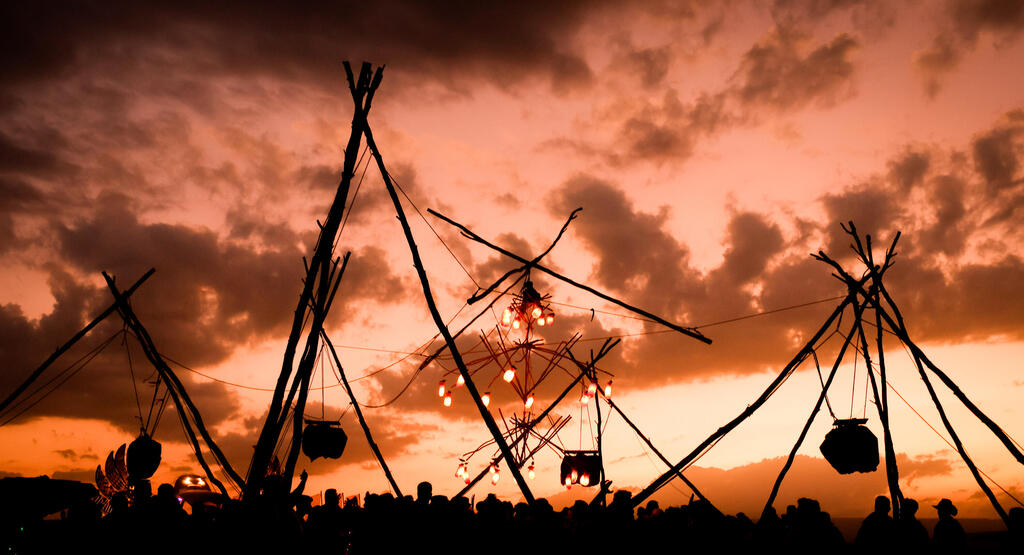
At dawn in the Arava, between Ma’ale Akrabim and Ir Ovot and beneath the iconic Mount Zin, a temporary city rises out of the wild desert. Midburn 2025 looks like a mirage in the middle of nowhere: rows of tents, improvised streets, massive art installations and thousands of people dancing in the rain.
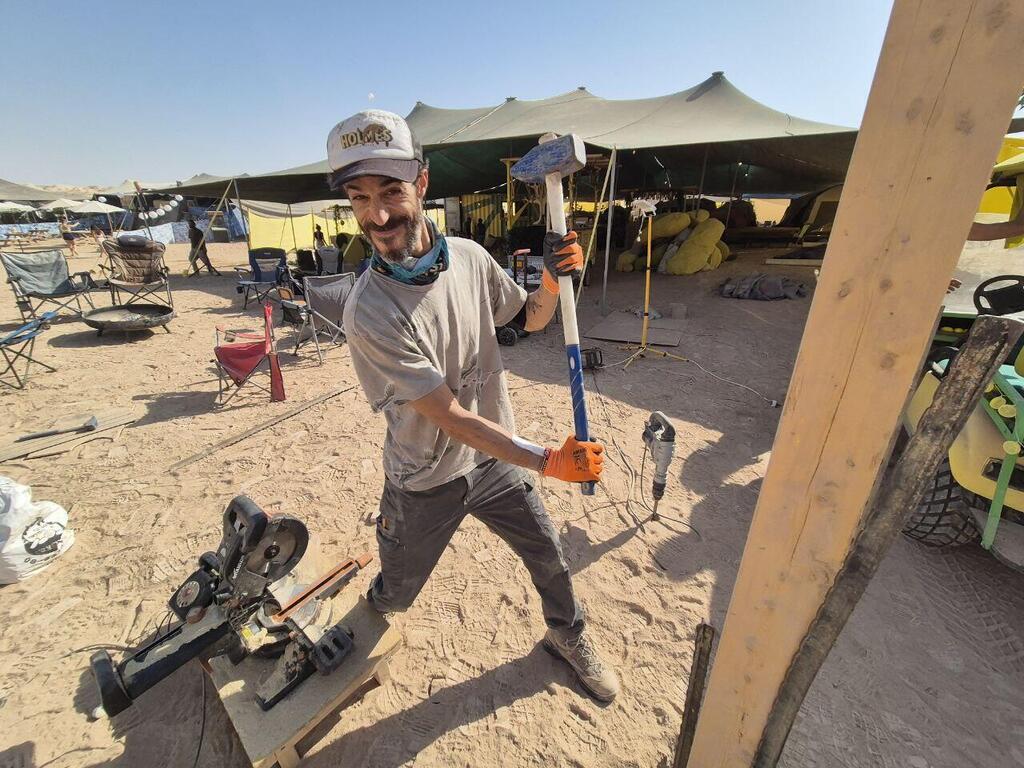
On the far side of the playa — the event grounds — Namer, 40, a carpenter-artist dressed like a Thai laborer with a face cover to block the wind and sand, hammers stakes into the hard earth. “I got into the Lemon Tree Camp because I told them I’m a great guy. They trusted me — and I’ve got tons of tools,” he says lightly. “Midburn is the safe place, brother. You leave your kids with the grandparents, come here and get a taste of life.”
Midburn 2025
(Video: Assaf Kamar)


Asked about the physical hardship of desert life, even this tough man gets emotional. “This year, Midburn is cold and dry. It’s freezing — I can’t sleep, I’m shaking on the ground. There are planes training above us and I don’t understand what’s happening, but we survive. Building everything is insane fun. The ground here is brutal — I’m working with a jackhammer first thing in the morning. I haven’t had coffee yet and I’m already digging holes.”
Midburn 2025 - Utopian City in the Desert
(Video: Assaf Kamar)
Bat-El, 26, a DJ and event producer, has just woken up from a night of parties and dust and is in the middle of an especially rough “morning routine” near the water tanker. “There’s a basin on the ground and a tiny tap — try to get 50 people to manage with that in the morning,” she laughs, scrubbing her face with a wet sponge. “Those are the conditions and that’s the fun. What doesn’t kill you makes you stronger. Leaving your comfort zone is the whole point. You don’t come here to be comfortable — you come to take off.”
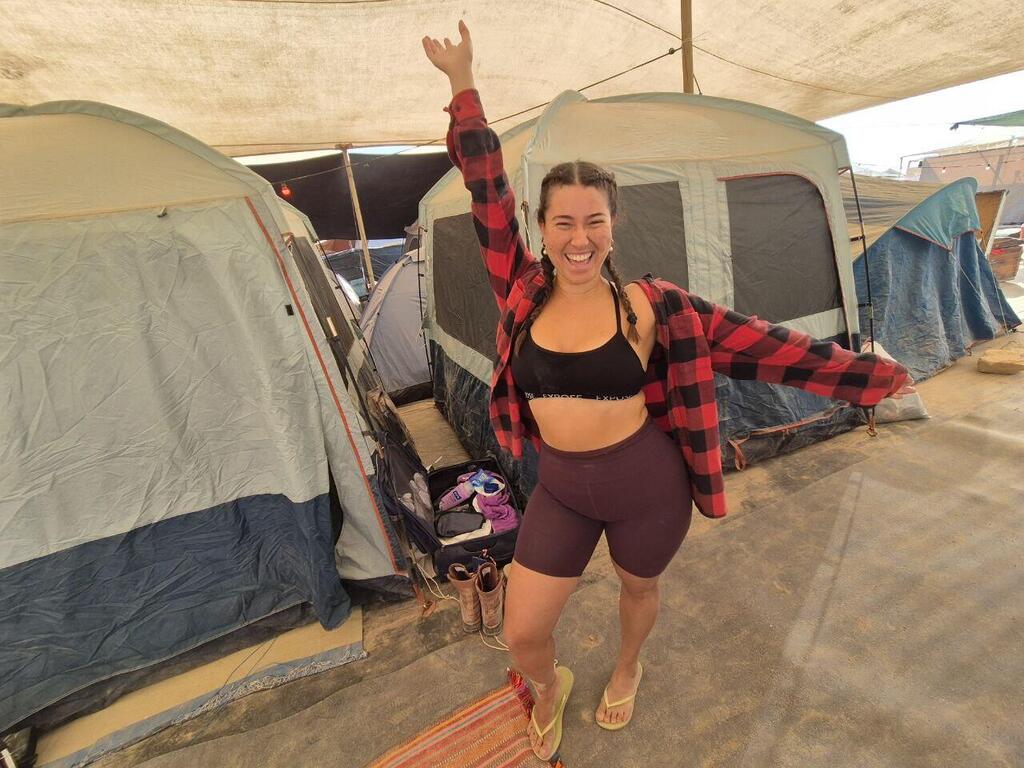
“I came to meet myself,” Bat-El says simply when asked why she returned to Midburn 2025. “To meet people who speak my language, to have an out-of-body experience in a space disconnected from everything outside — and mostly, to meet myself.”
What did you discover?
“That I’m insanely talented. That I have crazy energy even though we’re all exhausted. That I’m open to adventure. I’m incredibly curious. Midburn is a space for artists, for people with heart and spirit. A place where you express yourself. If you want to wake up as a rooster — be a rooster. If you feel like the Ice Princess — be the Ice Princess.”
Despite the festival’s full embrace of openness, Bat-El stresses that not everything is permitted and that even this utopian city has clear boundaries. “Almost anything is possible, but the boundaries are real,” she says. “Anything that harms someone else — that’s the line. Sexual harassment, violence. Even environmental protection — we sort our waste.”
And the war?
“If the war changed anything, it’s that we’re here after two years without Midburn. The art here comes partly from the pain of the war and partly from the desire to return. But this space isn’t about war. It’s about the reality we create here and now.”
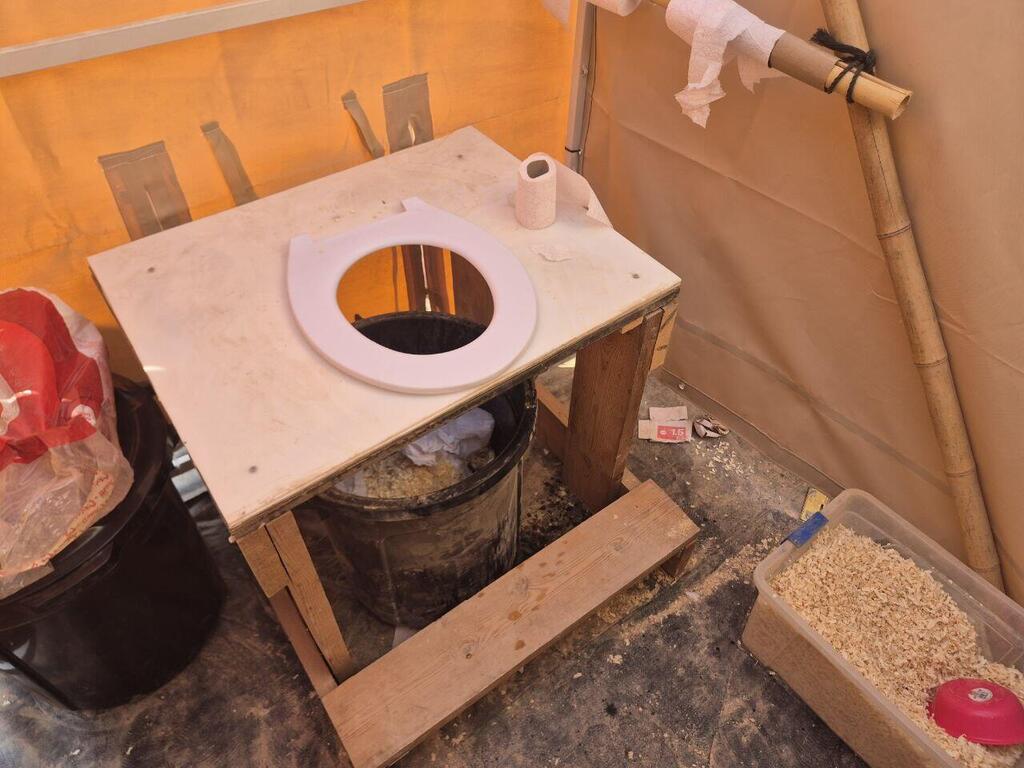
Difficult conditions, Midburn 2025
(Photo: Assaf Kamar)
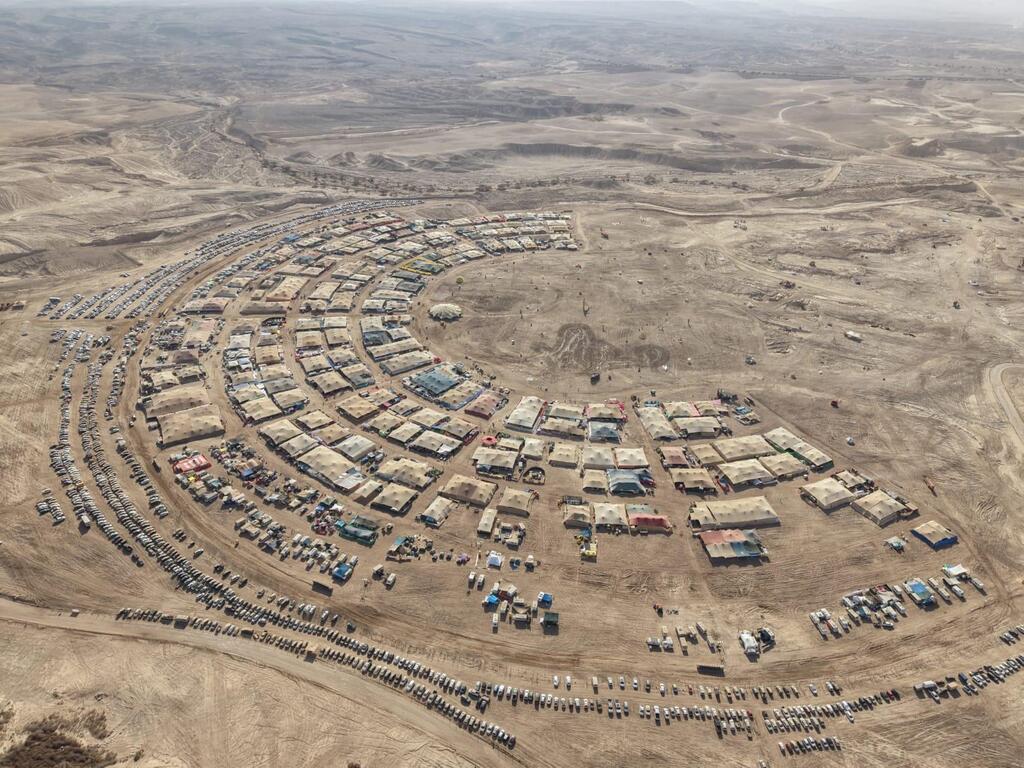
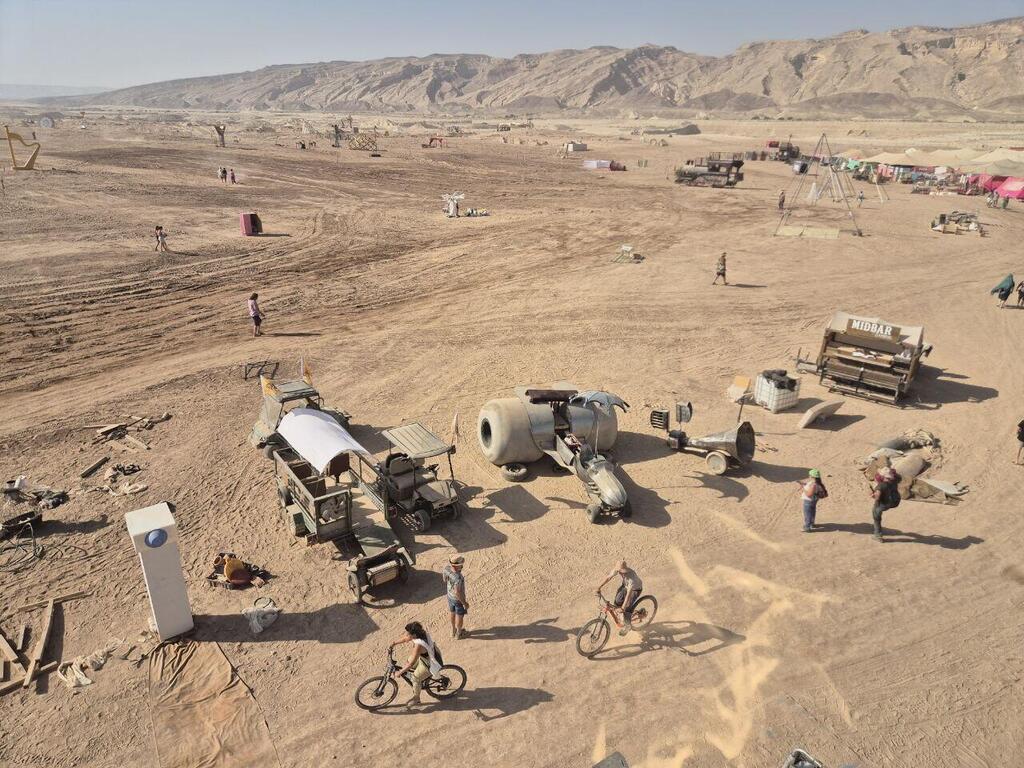
Midburn from the drone
(Photo: Or Adar)
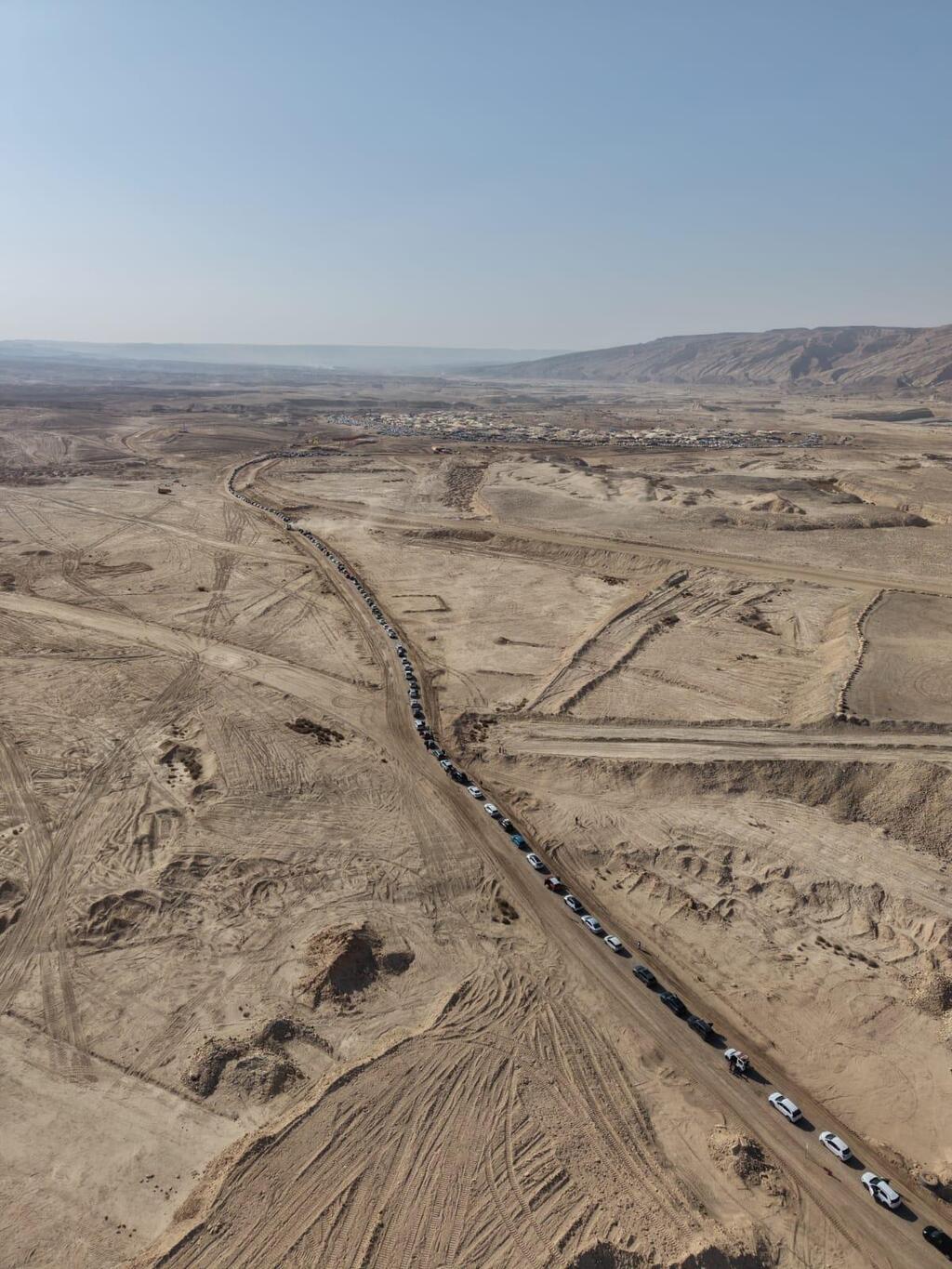
The traffic jam on the way to Midburn
(Photo: Or Adar)
Tal Levana, 36, an educator in daily life, leads the “Magic Carpet” camp, which stages weddings and henna ceremonies straight out of a fairy tale. “We’re an old camp that started with a random group of people who met at the first Burn in 2018,” she says as she prepares high-quality coffee in a surprisingly luxurious machine. I join her in the line for the outdoor shower. “We went for a stroll on the playa, drank a ton of arak and bonded — and out of that group came a love story.”
Her husband overhears and blushes — and it’s far from the only love story I hear throughout the day.
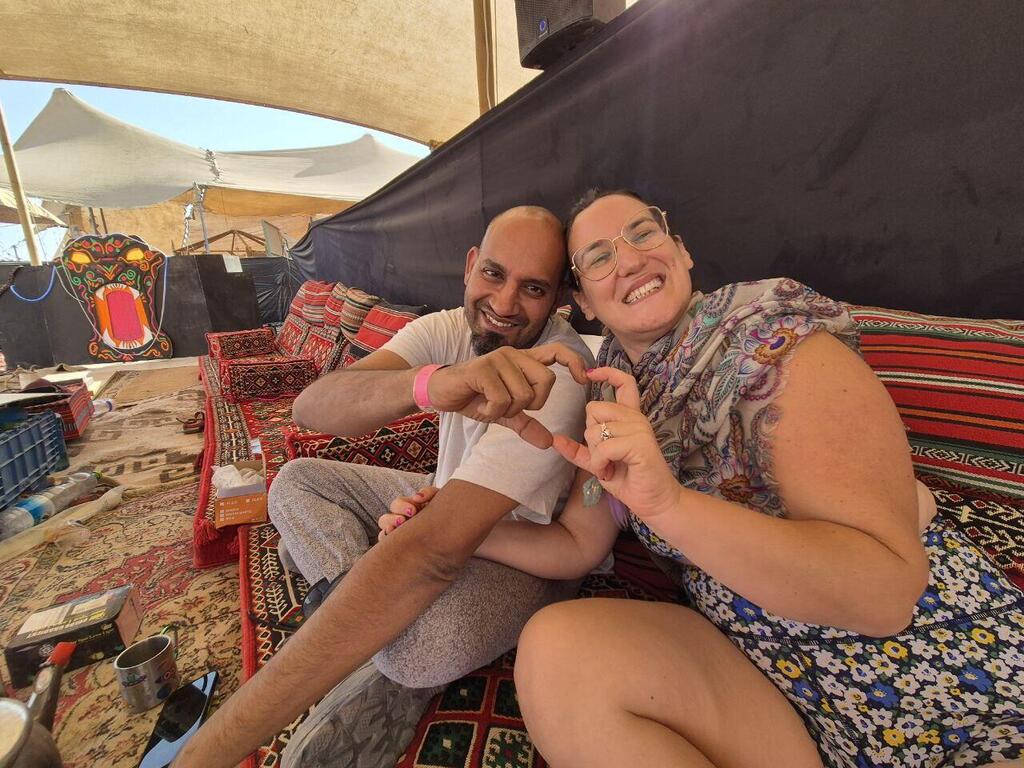
Tal and her partner - met in Midburn
(Photo: Assaf Kamar)
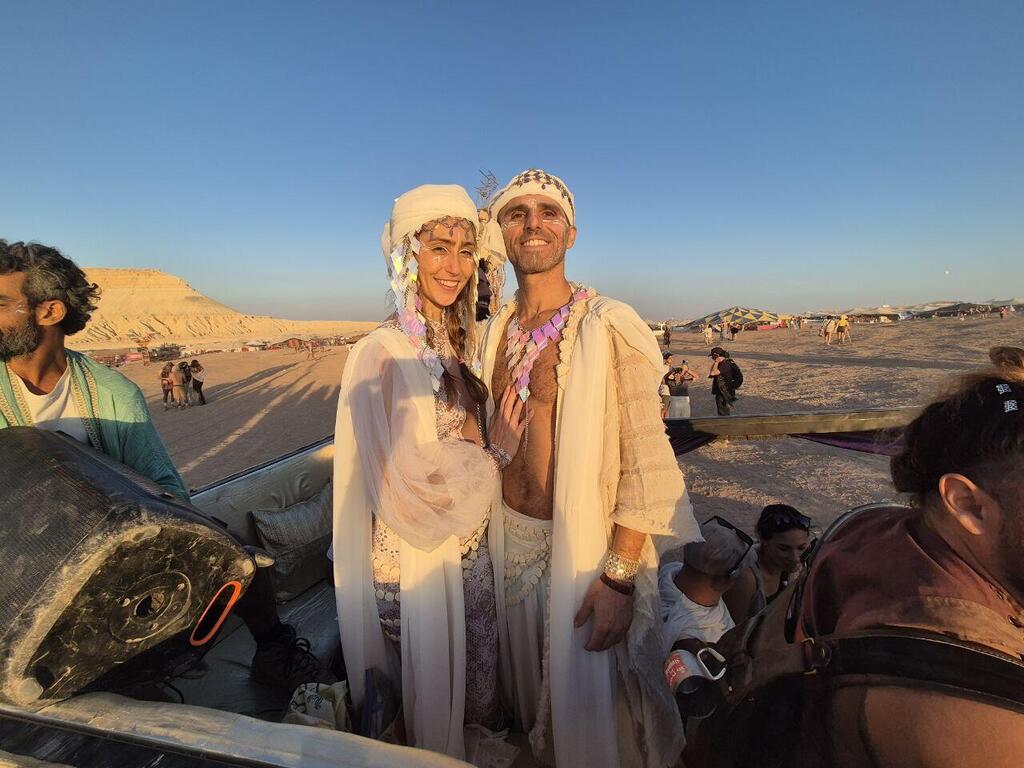
Dvir and Natalie Rosen got married in Midburn
(Photo: Assaf Kamar)
Shahar Iluk, 30, an industrial kitchen designer from Kiryat Motzkin, shares her own Midburn experience. “It’s a place where anyone can be who they want, even if they’d never dare dream it in daily life. You live together in a camp for a week — sleep and eat together — and you feel a sense of belonging like a family. I met my partner here a few years ago,” she says with a smile.
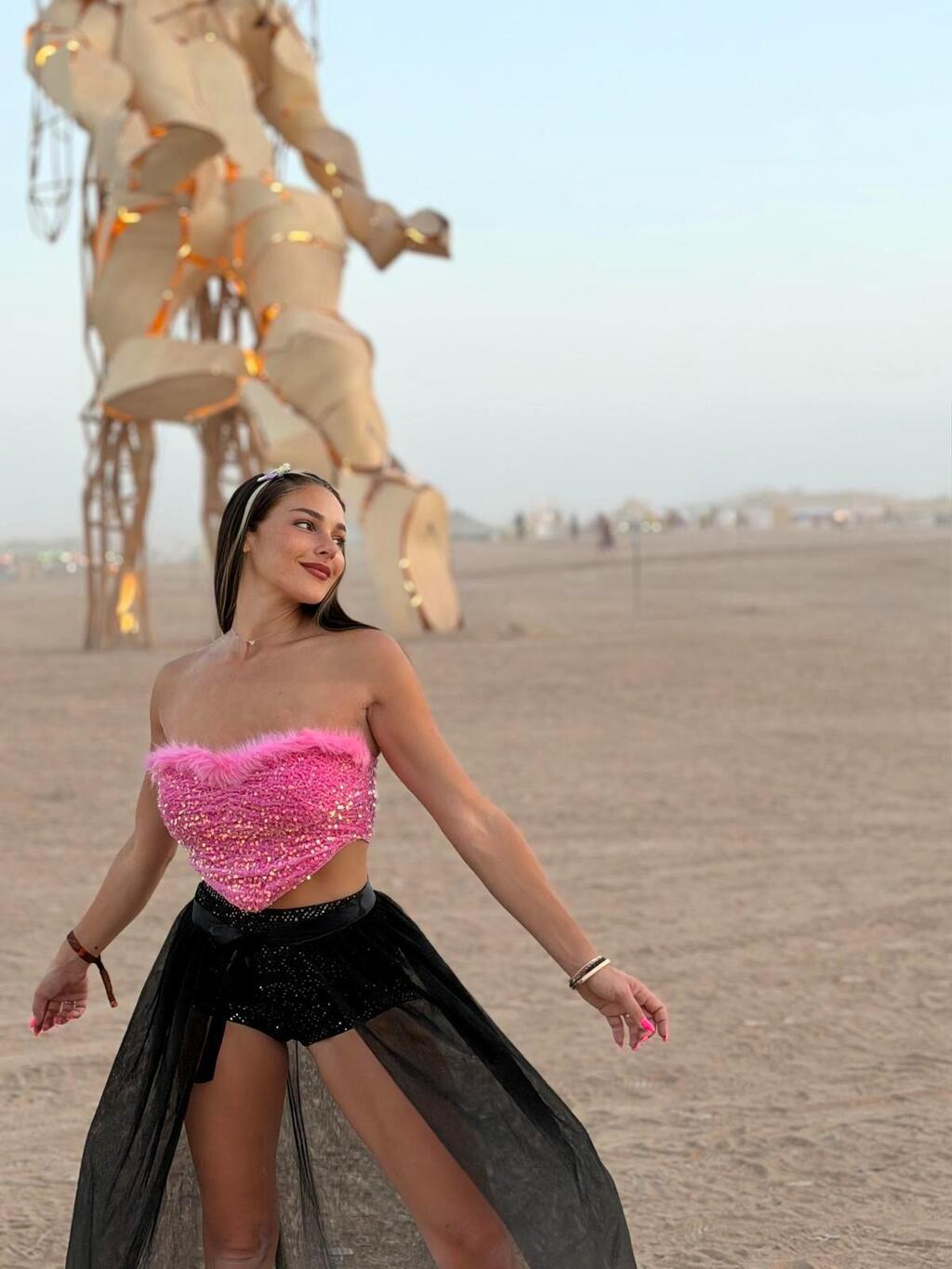
Shahar
(Photo: Asi Azoulay)
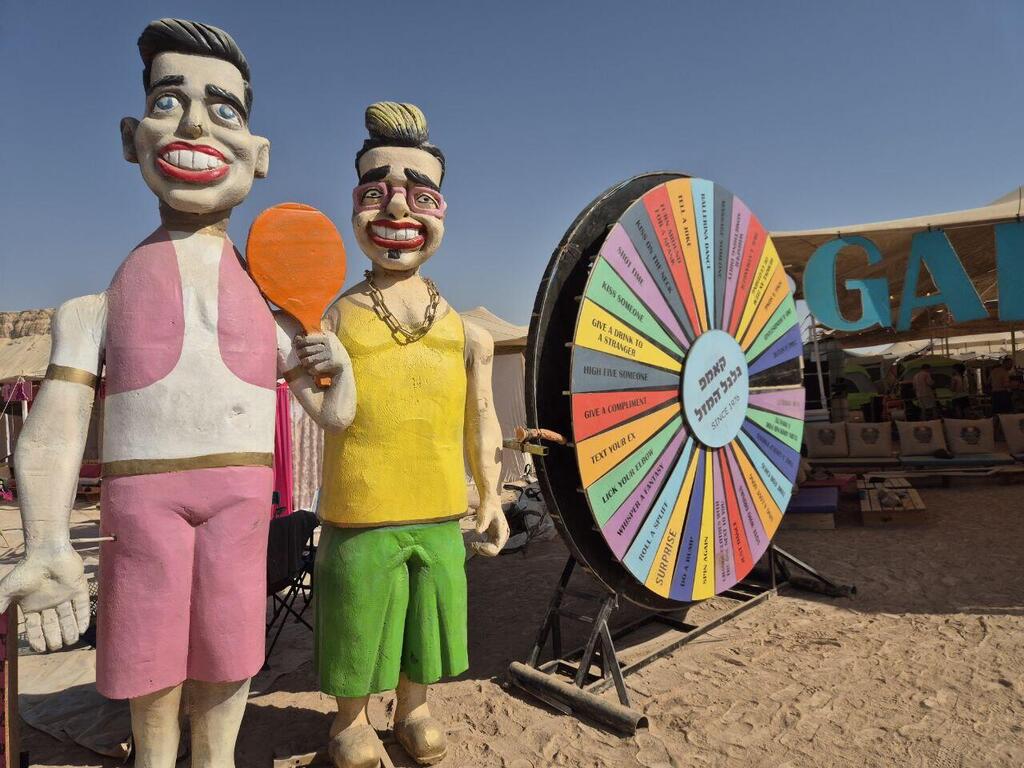
Like any Burner, Shahar insists her camp — Aqua — is “the best camp in the world.” “Midburn has at least 200 camps, each with its own vibe,” she laughs. “There’s a kind of competition — every camp wants to show it’s the coolest, the most polished, the most dialed-in.”
Midburn 2025, set literally at the edge of the world, has severe cell service problems and, after flooding, the road back to civilization is blocked. As a network-dependent reporter hunting for reception in the desert, I’m welcomed by the well-equipped Aqua camp, which managed to secure a Starlink satellite setup, courtesy of Elon Musk, letting me send updates back to the newsroom.
How much does it cost?
“Entry ticket: 1,370 shekels. Camp dues: another 1,800. And more expenses beyond that,” Shahar explains. She says the better conditions at Midburn cost money. “A couple could take a flight and hotel abroad. Instead, we come to Midburn — take time off work, spend 4,000 shekels to sleep in a tent, eat dust and breathe.”
Under Midburn’s strict photography rules, Shahar documents her daily routine unfiltered. “I film the real day-to-day — dishwashing with gray water, not just the pretty stuff and the parties. It’s hard to live here and stay clean. We brought tons of wet wipes, and our camp has a decent shower and hot water from a kettle, but within three minutes I feel filthy again,” she laughs.
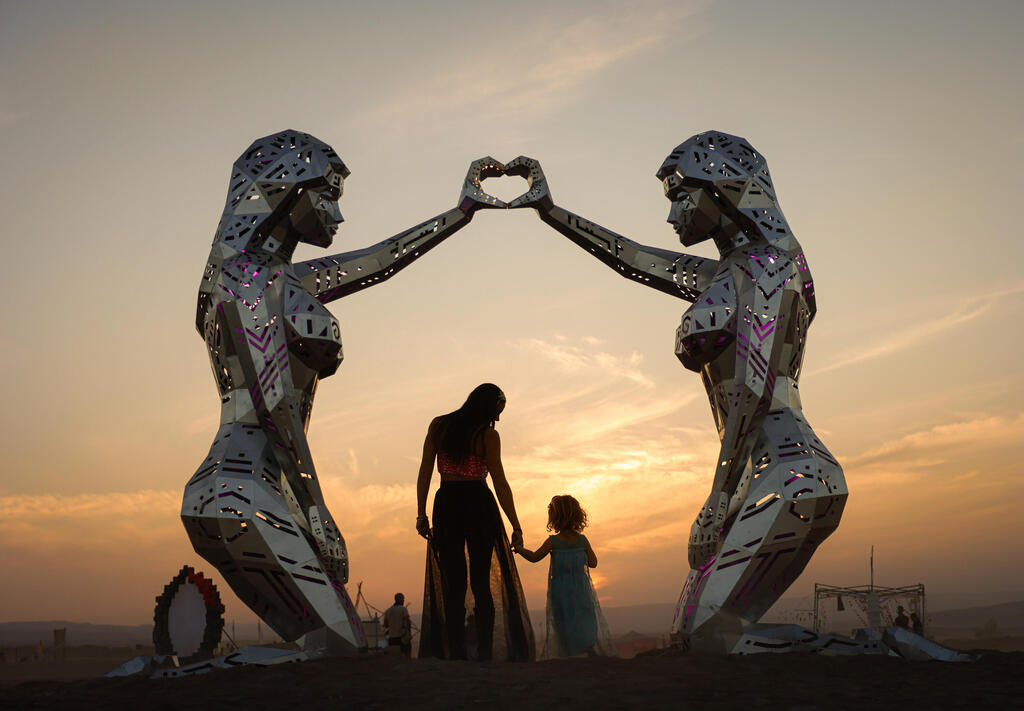
(Photo: Ronen Bilya)
(Photo: Ronen Bilya)
(Photo: Assaf Kamar)
(Photo: Assaf Kamar)
(Photo: Assaf Kamar)
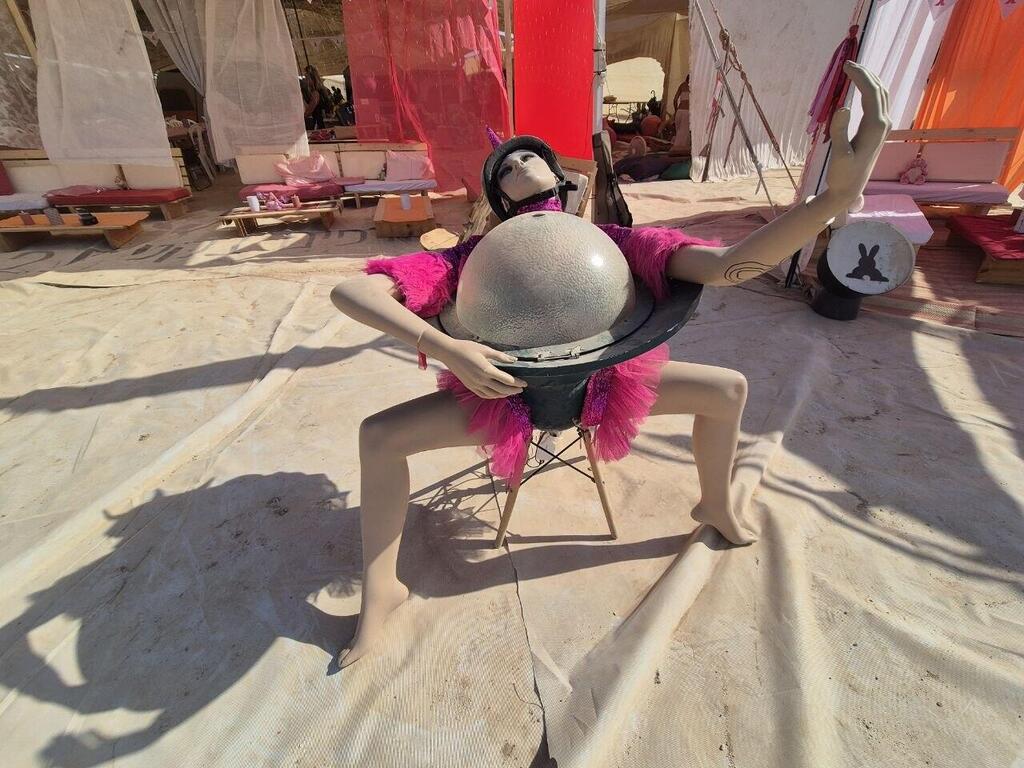
(Photo: Assaf Kamar)
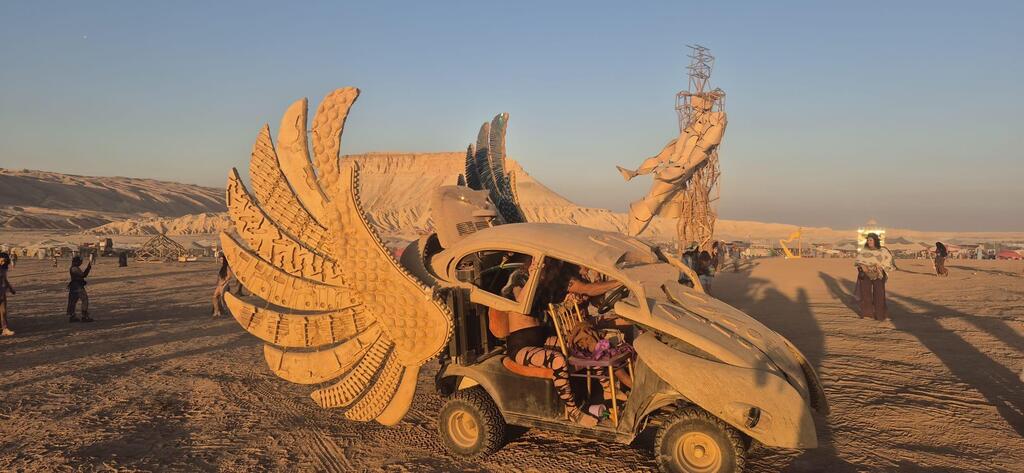
(Photo: Aaliyah Meisner)
(Photo: Assaf Kamar)
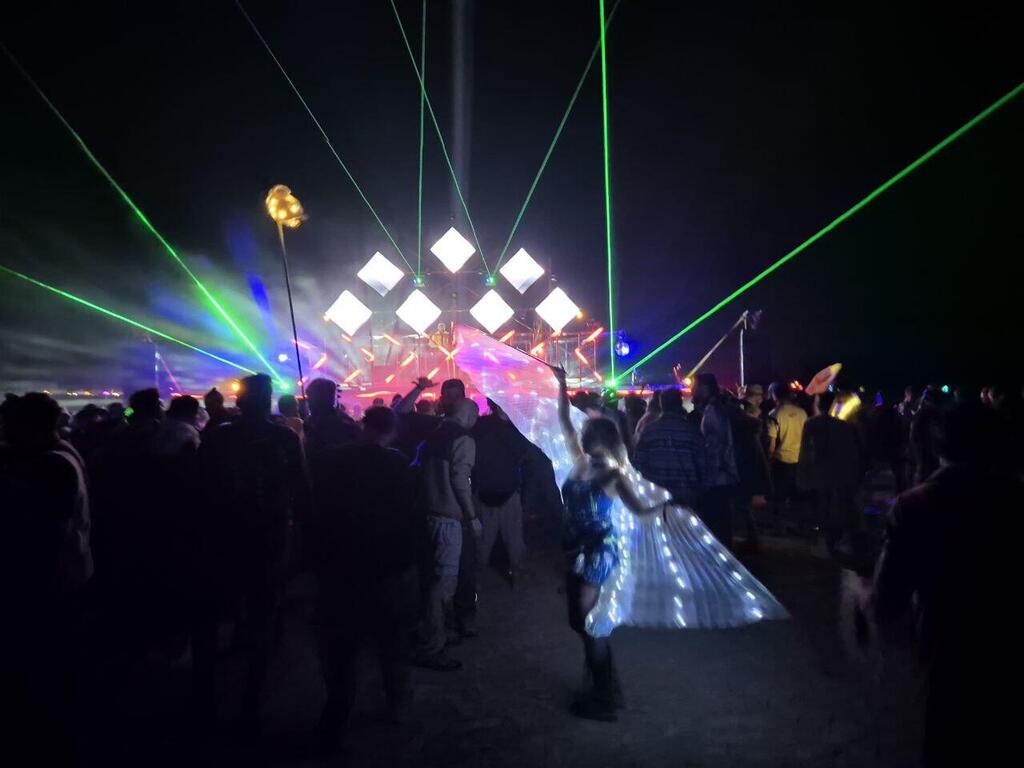
And at night, of course, the celebration begins
(Photo: Assaf Kamar)
A cloud of dust sweeps across the desert as Ilan Sherman, 50, head of the festival’s accessibility department, takes me on a VIP-style ride in an art car — an old motorcycle with a sidecar converted to electric. He speaks as a volunteer, an engineer and someone who survived Oct. 7.
“My hobby is building wild vehicles you don’t see every day. Midburn lets me share that gift with others. That’s why I lead accessibility — I bring all kinds of crazy rigs so people with disabilities can ride around the city and go wild in the sand. There’s nothing more fun.
“We work shoulder to shoulder with groups like Grot Rally, building amazing vehicles for wounded soldiers and anyone who needs accessibility here. We want to invite everyone with special needs or anyone who’s hesitant to come because of physical limitations — to prove that in this harsh place we can overcome things together.”
Sherman is part of the Midburn 2024 organizing group that survived the Hamas massacre on the Black Sabbath, in which Dr. Hagit Rafaeli-Mishkin was murdered.
“For me, Midburn 2025 is a victory,” he says. “For us — the production team who survived the parties on Oct. 7 — coming back here to rebuild the city at full scale, with a ring of incredible camps, 900 dunams of city and 170 dunams of built space, is a huge victory.”
First published: 15:58, 11.28.25