

Nir Levy’s vacations do not begin at the duty-free shop or with the frustration of waiting through security checks. They begin in a small four-seater plane, its limited baggage compartment stuffed with suitcases and an inflatable raft for emergencies.
Levy, 26, an Israeli flight instructor originally from Moshav Paran in the Arava and now living in the United States, told ynet that she never planned to see the world by plane. But one moment, at age 15, hundreds of feet above the ground, changed her course.
Nir Levy's plane joy ride
(Video and editing: Nir Levy)


“My father has a small plane, an ultralight,” she said. “Ever since I was little, I’d fly with him once or twice a year, not a lot. I always loved it, but I never thought I could do it myself.” She added: “It didn’t pull me in and it didn’t really interest me, until one day, when I was 15, I flew with him over the Arava on some weekend and decided I wanted to do it too.”
“I started saving money. Every day after school I went to work. At the end of 11th grade, I flew to the United States and got my first license. Then I kept going before the army and after I was discharged — more licenses, more hours. It just built up slowly.”
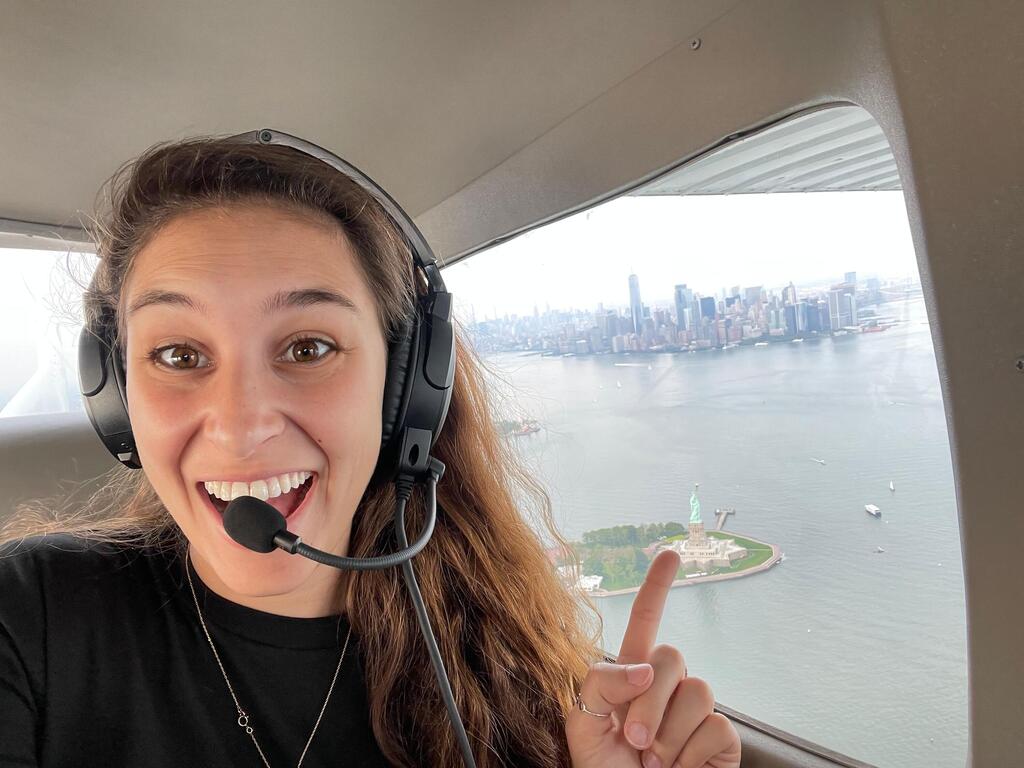
Today, she is a certified flight instructor in Maryland, on her way to fulfilling a dream of working for an airline. And when she has free time, she takes the plane and goes traveling. Not flights. Trips.
“We loaded the plane like a car,” she said of her Caribbean flying trip to the Dominican Republic, which began as a far-fetched idea and turned into a complex operation. She stressed the mental challenge of choosing the route for an airborne vacation.
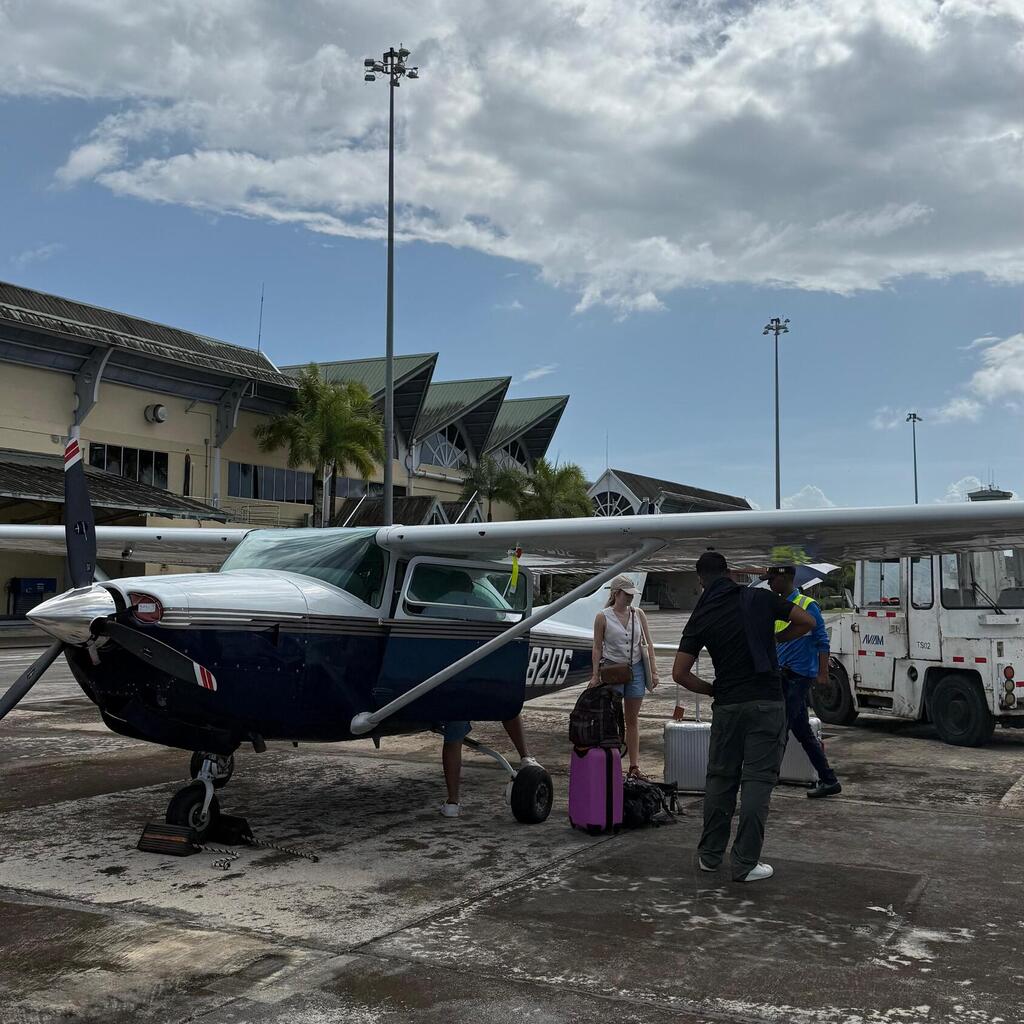
The airport in the Dominican Republic
(Photo: Nir Levy)
“On a flight like that you also need emergency gear for a water landing — an inflatable raft, life vests, things like that. You also have to file international flight plans, prepare everything in advance, but in the end it still feels a bit like taking a road trip — only you’re in the air.”
The plane had four seats. The passengers numbered four. “The plane was packed as much as we were allowed to pack it,” she said with a laugh. “We really crammed it with gear.”
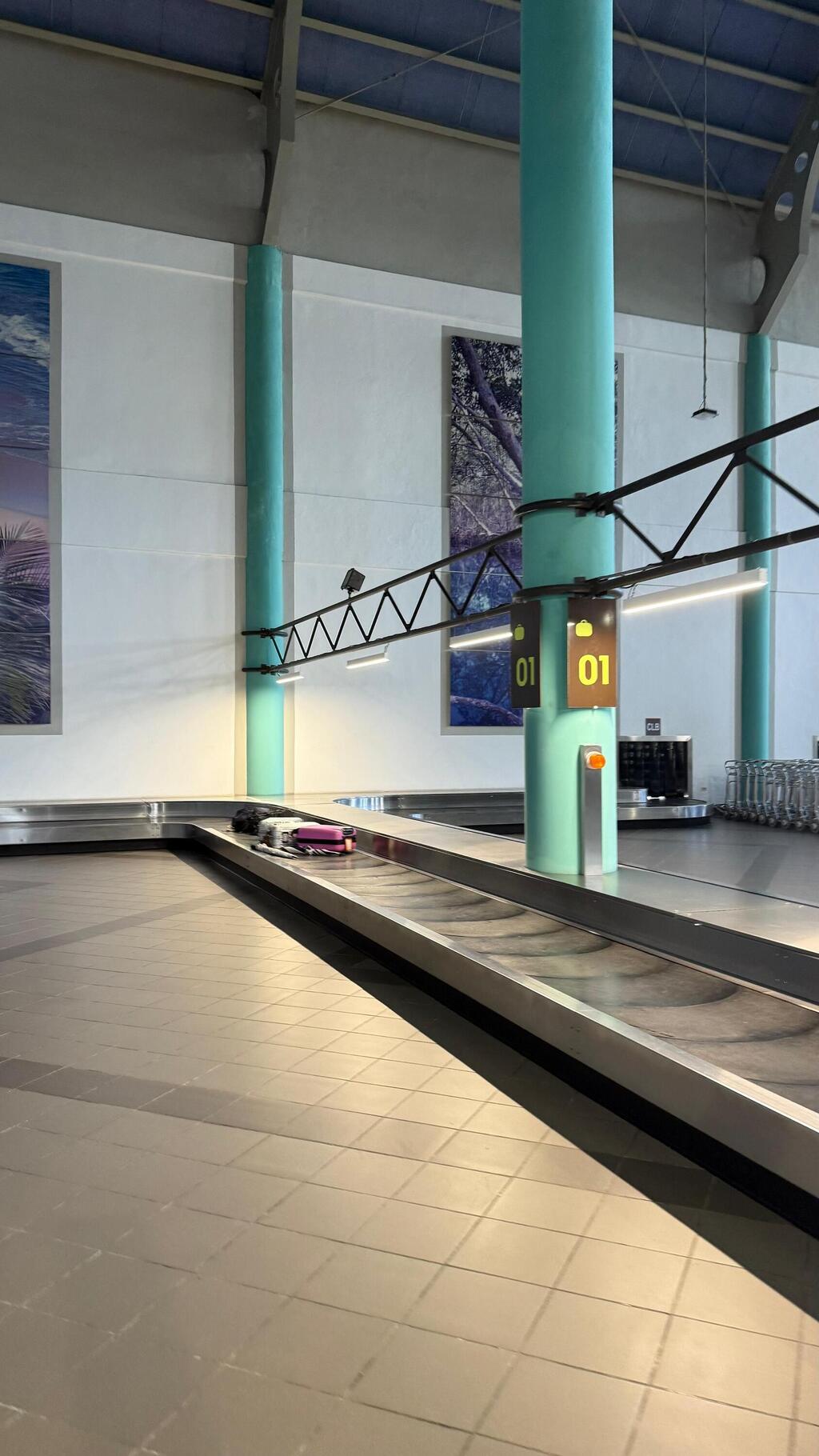
The airfield is deserted, with only Nir’s suitcase on the baggage carousel
(Photo: Nir Levy)
On board were her student, who also owns the plane, his wife and Levy’s then-boyfriend. “There are two sets of controls — on the right side and on the left side — so you can switch during the flight.”
She explained how duties were divided during the flight over the Caribbean Sea: “I’m the instructor, so I manage the flight — radio, decisions, who lands and when. It’s not a passive trip.”
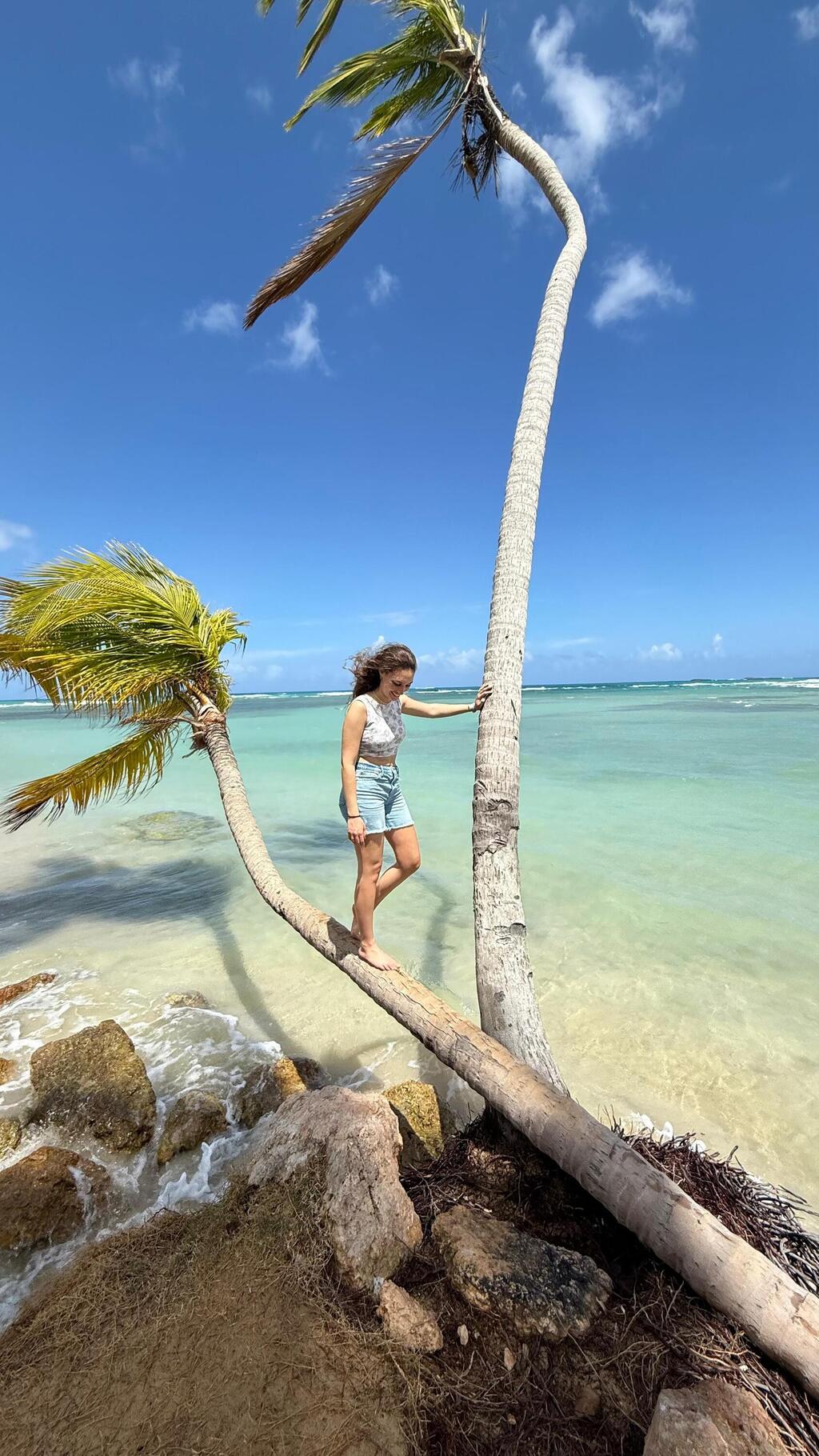
Nir in the Dominican Republic
(Photo: Nir Levy)
The journey itself was a kind of wild road trip in the skies. “To get to Florida is something like seven hours flying. From there to the island of the Dominican Republic is another seven hours. So we made a pit stop to fuel in the Bahamas on the way. We always make sure to have at least an extra hour of fuel, because things can happen: an airport can close, weather can change, the route can shift. We don’t take risks.”
And the stops along the way in a small plane are not only technical. “After three or four hours, you stop for fuel and to pee,” she said candidly. “It’s tough, but you manage.”
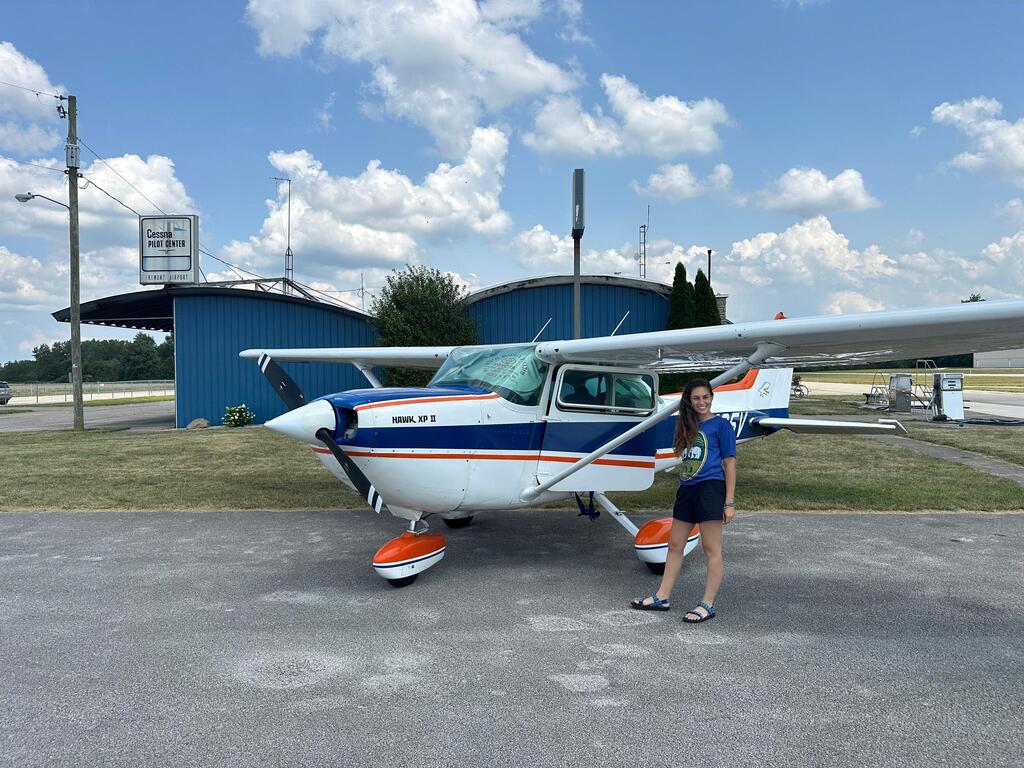
Landing in the middle of nowhere for fuel and lunch
(Photo: Nir Levy)
And when they land on one of those exotic islands, it is not at a massive international airport of the kind most people know. “It has to be an international airport because of passports,” she stressed.
There, they park the plane as usual and continue the trip exactly as they would on a vacation with a rental car. “You leave the plane there for a few days,” Levy said. “It’s a little stressful, because these are less developed countries. Before we left on the return flight, they told us to check carefully that no one had put anything in the plane, so we wouldn’t end up smuggling something without knowing it. So we really inspected it before flying back to the United States.”
As with many adventures, the moments that stay with you are not always found at the destination, but on the way there. “Right before we got to the Dominican Republic, we saw a whale with its calf in the water. It looked like this black mass in the sea, so we dropped a little lower to get a better look.”
She recalled the moment excitedly, then moved straight to another one that sounded like the opening scene of the Netflix drama Narcos. “They told us that on one of the islands there was the wreckage of Pablo Escobar’s plane that crashed there. So on the way back, we flew to see it. The water there is so clear you can see everything from above.”
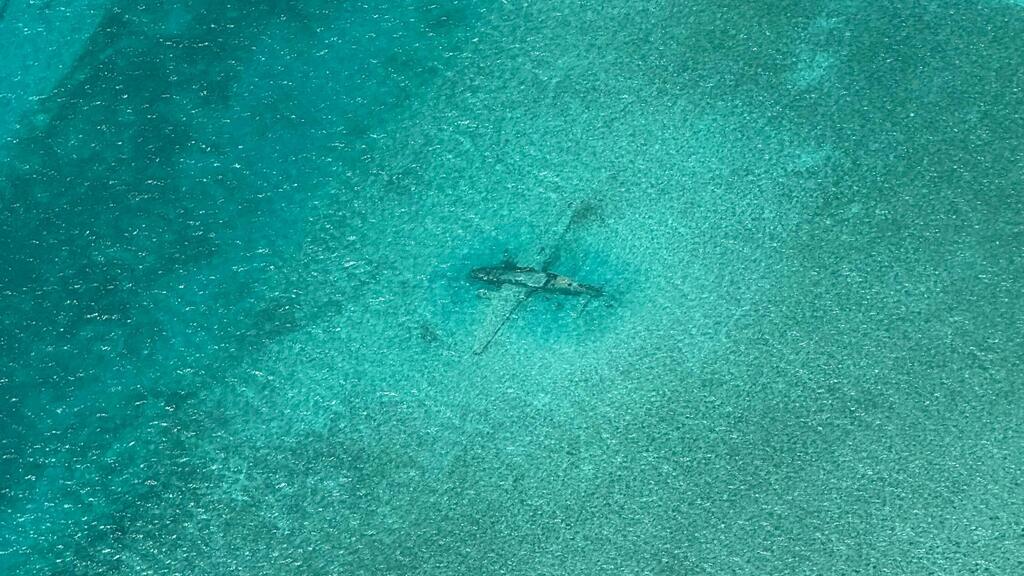
The wreckage of Pablo Escobar’s plane
(Photo: Nir Levy)
One of the unplanned stops on the Caribbean trip was a forgotten British territory — the Turks and Caicos Islands. “They weren’t on my destination list at all,” she said with a laugh. “I don’t think I would have gone there for a vacation if I hadn’t arrived by plane. You just open a map, look and say, OK, we’re here, what’s along the way? And then you just pick what looks interesting.”
And what do you do when there is no flight attendant? “We listened to a lot of music. My student put on Latin songs, and we also talk about the plans ahead — where we’ll land, how to get around the weather. There’s a lot to keep track of on a flight like that.”
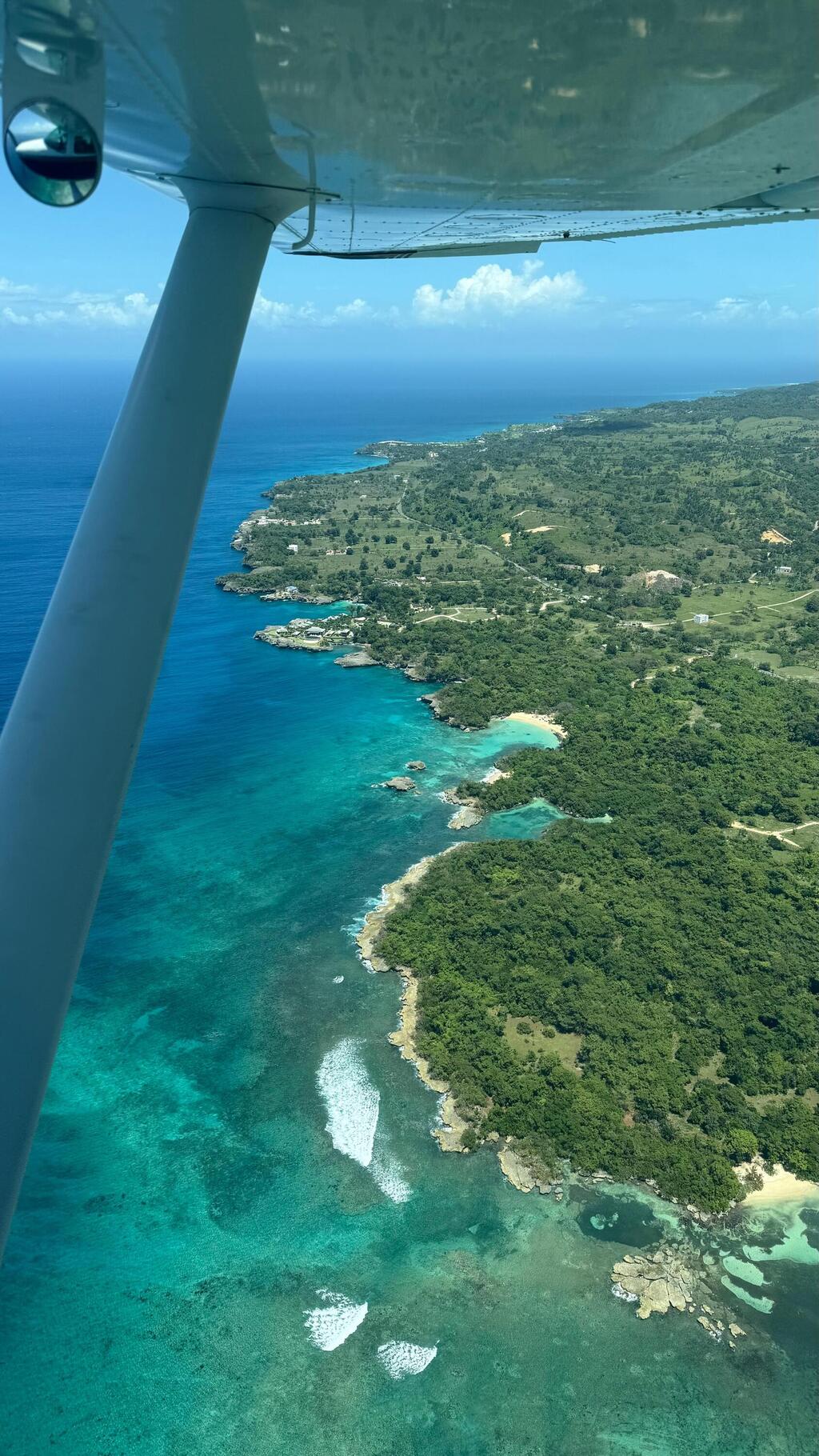
Over the Turks and Caicos Islands
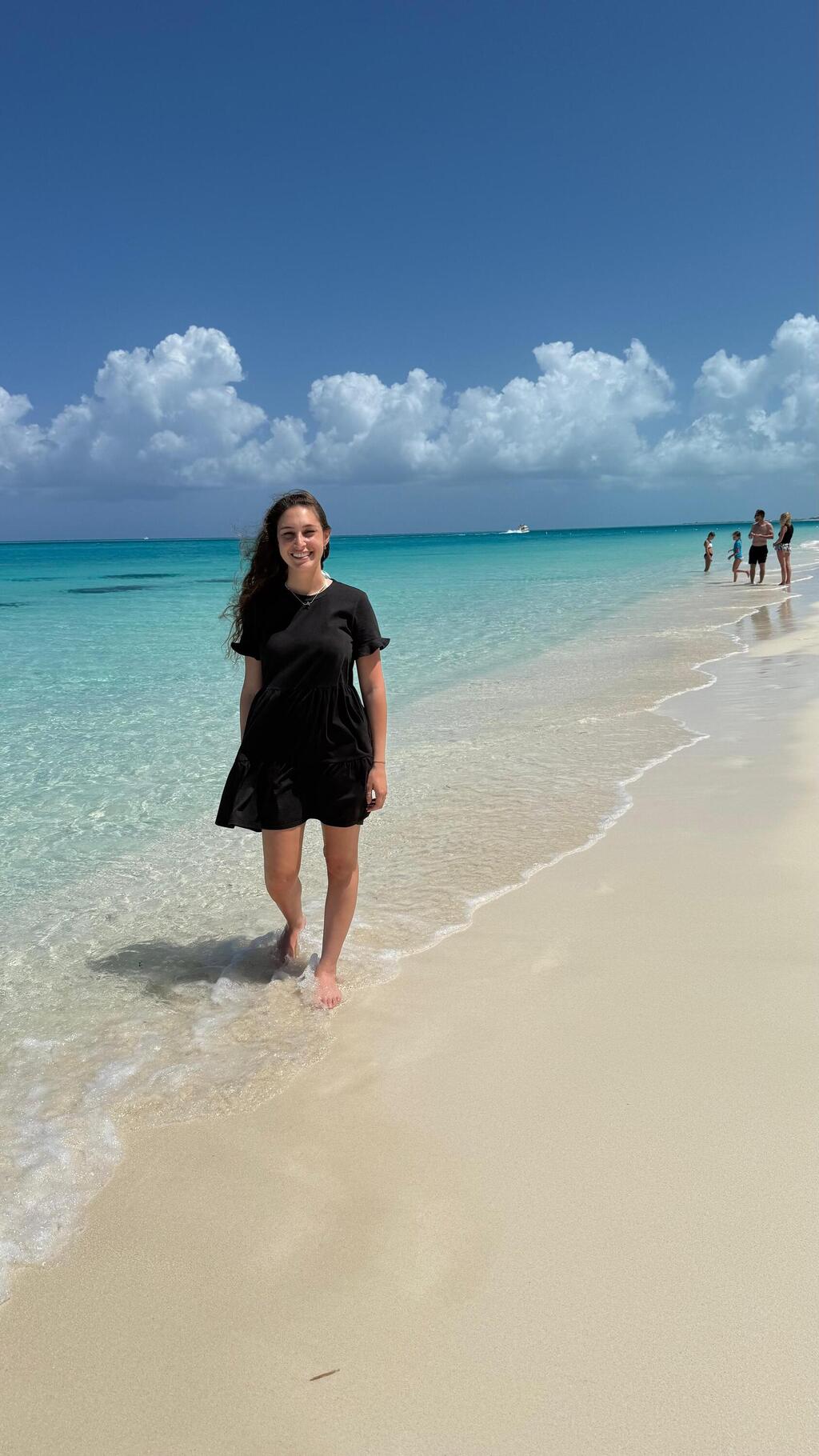
Enjoying the white sands of the Turks and Caicos Islands
That moment — a small plane above the ocean — might sound like a nightmare to most people. Levy sees it differently. “It’s not something that crosses my mind while I’m up there. I’m very mission-driven. I have a task, and that’s what I need to do.”
Even the fear of crashing into the water is, for her, a matter of perspective. “We took emergency equipment, but it wasn’t something that worried me too much. On other flights, actually — say, with my father to Cyprus — it was something we thought about more.”
And how much does it cost? Surprisingly, it is not out of reach. “For flights within the United States, renting a plane is about $180 an hour, and that includes fuel,” she said encouragingly. “In the Bahamas it’s more expensive, because it’s an island and it costs more to get fuel there.”
Before the indulgent Caribbean flying getaway, Levy embarked on a very different kind of journey — a cross-country trip across the United States in a small plane, the kind that takes off from one airfield and lands wherever you decide to stop. “I’ve done it twice,” she said enthusiastically. “Once with friends and once with my father, who got his license with me.”

The route mapped across the United States
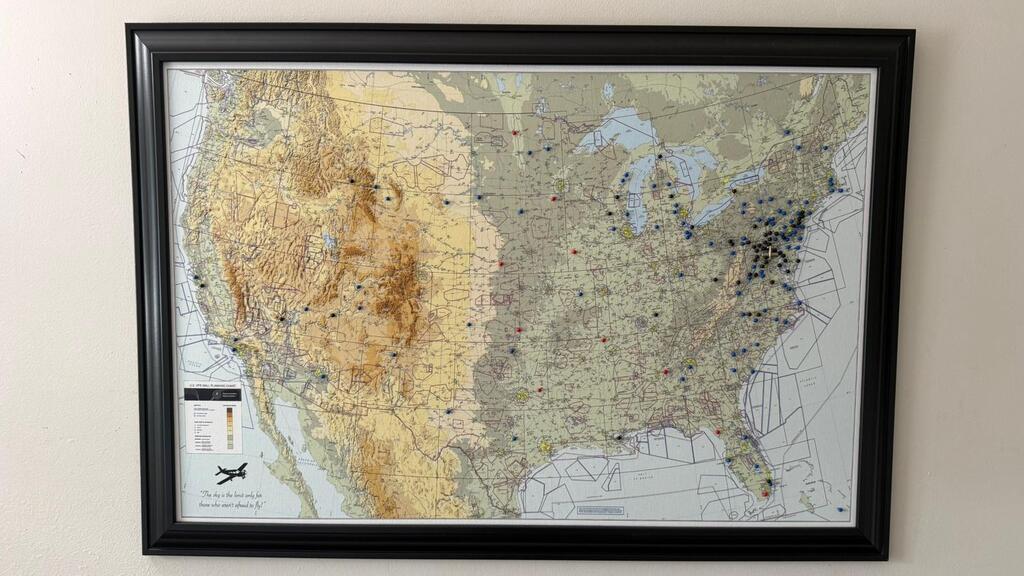
A pin in every airfield where Nir landed
(Photo: Nir Levy)
She elaborated on the father-daughter dynamic in the skies: “I was already a flight instructor in the United States, so he came over and got an American license for slightly bigger planes than what he flies in Israel. To celebrate, we went on this kind of flying trip around the United States, and it was amazing.”
The route took shape on the fly. “We left from Maryland and headed west. We spent the first night in Madison, Wisconsin, because we wanted to get to an aviation festival. From there we continued to Mount Rushmore, then Yellowstone, where we stayed a full day. Then we went south to the desert area — we visited Arches and Zion National Park. After that we continued to family in San Francisco, and from there we started heading back through Vegas and more stops along the way.”
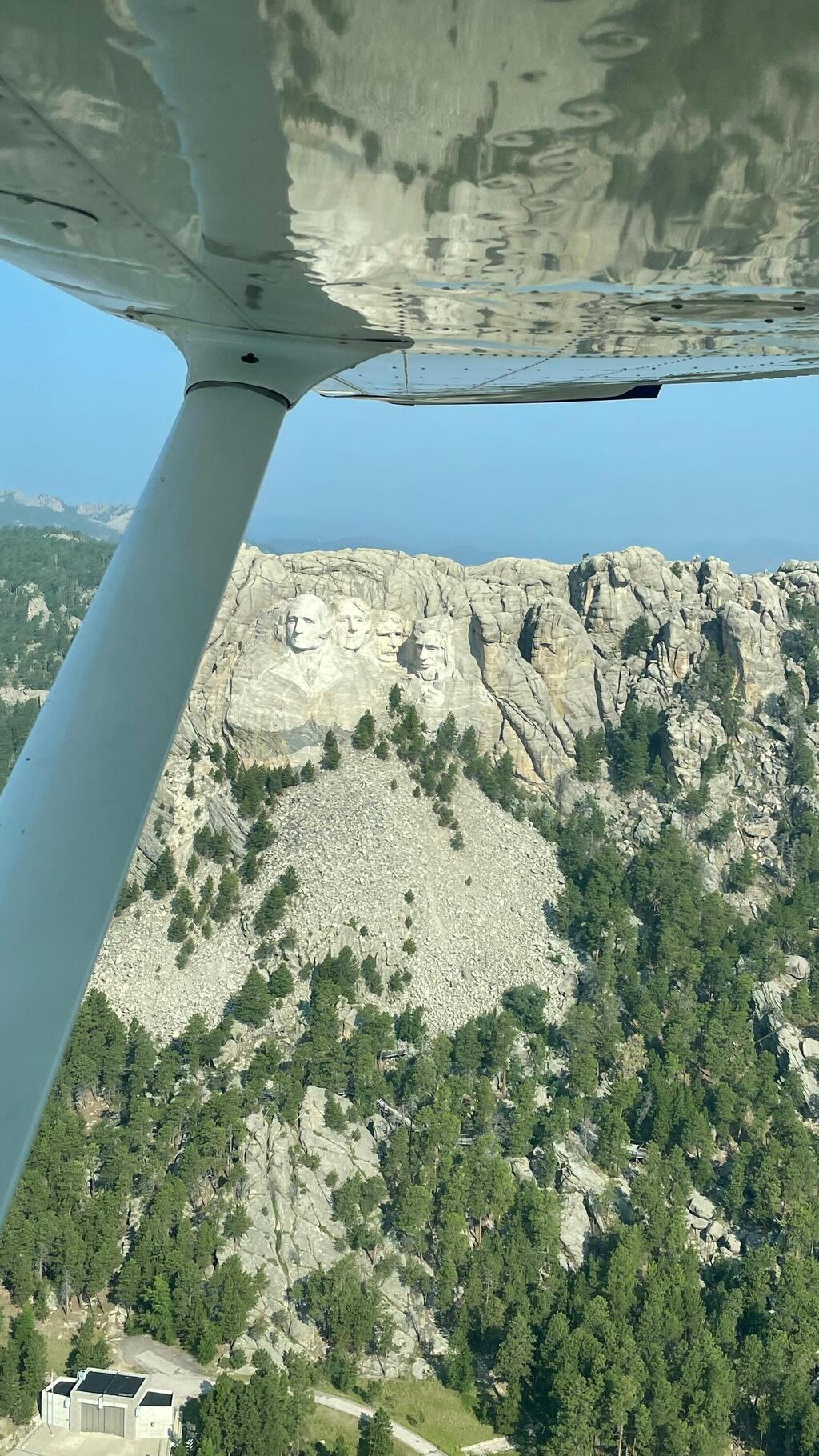
Passing Mount Rushmore
(Photo: Nir Levy)
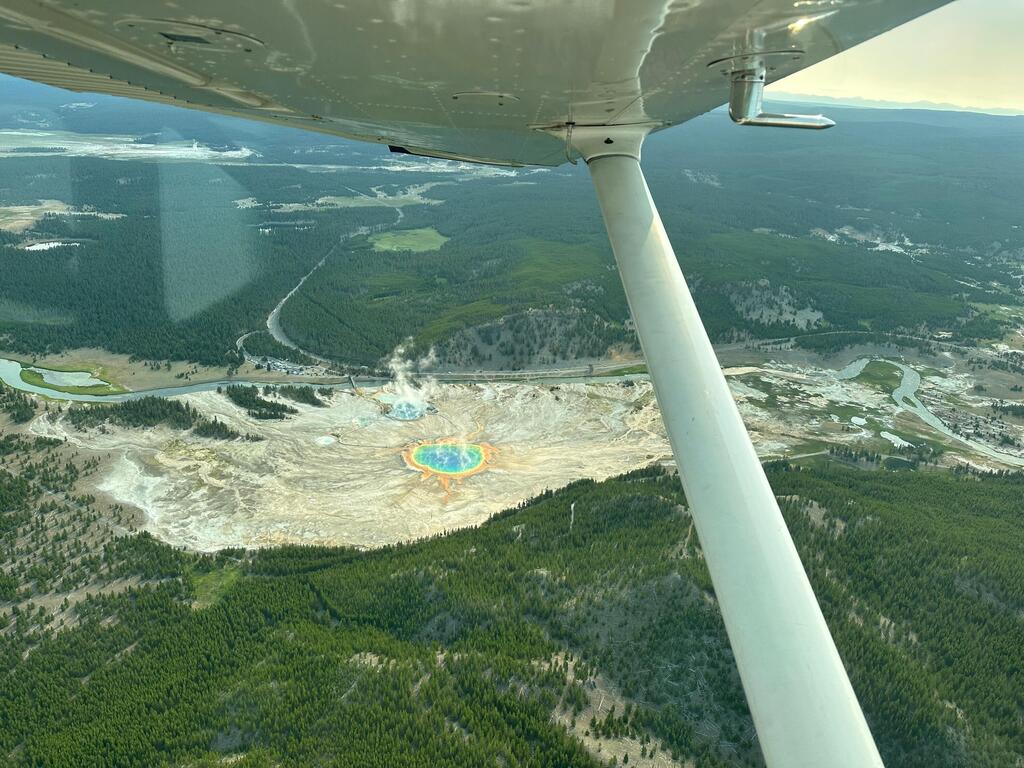
Above Yellowstone National Park
(Photo: Nir Levy)
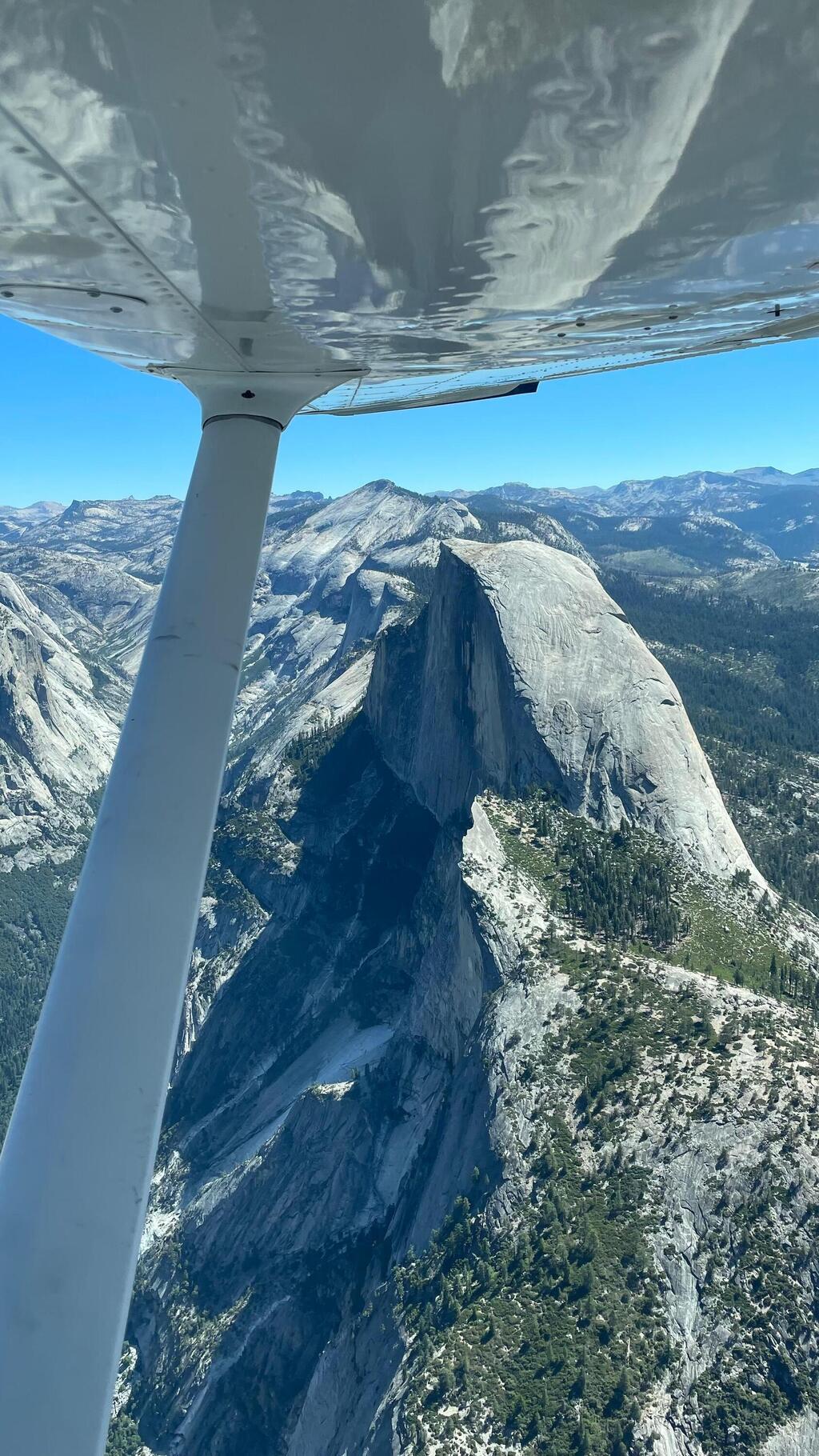
Above Yosemite National Park
(Photo: Nir Levy)
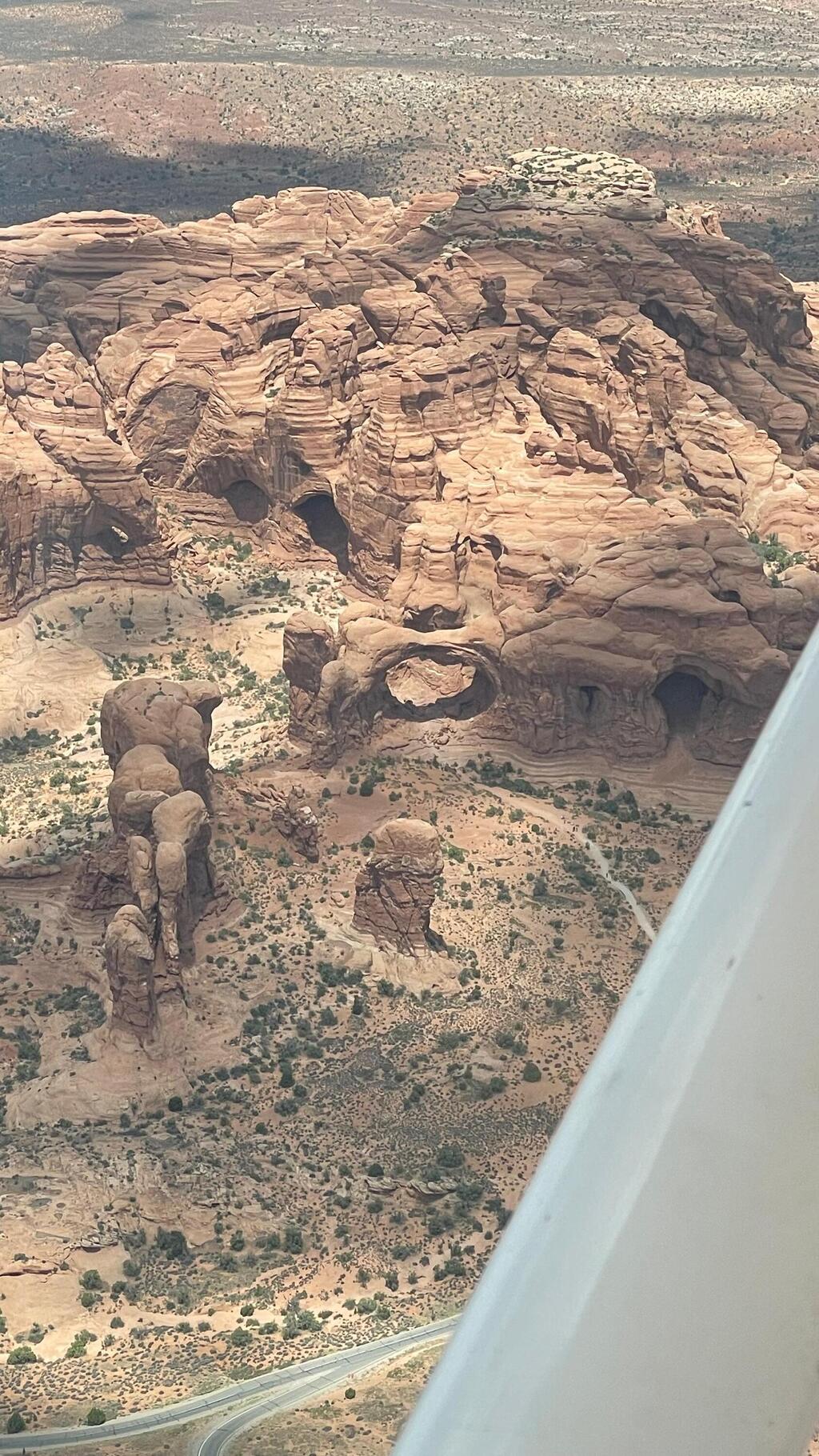
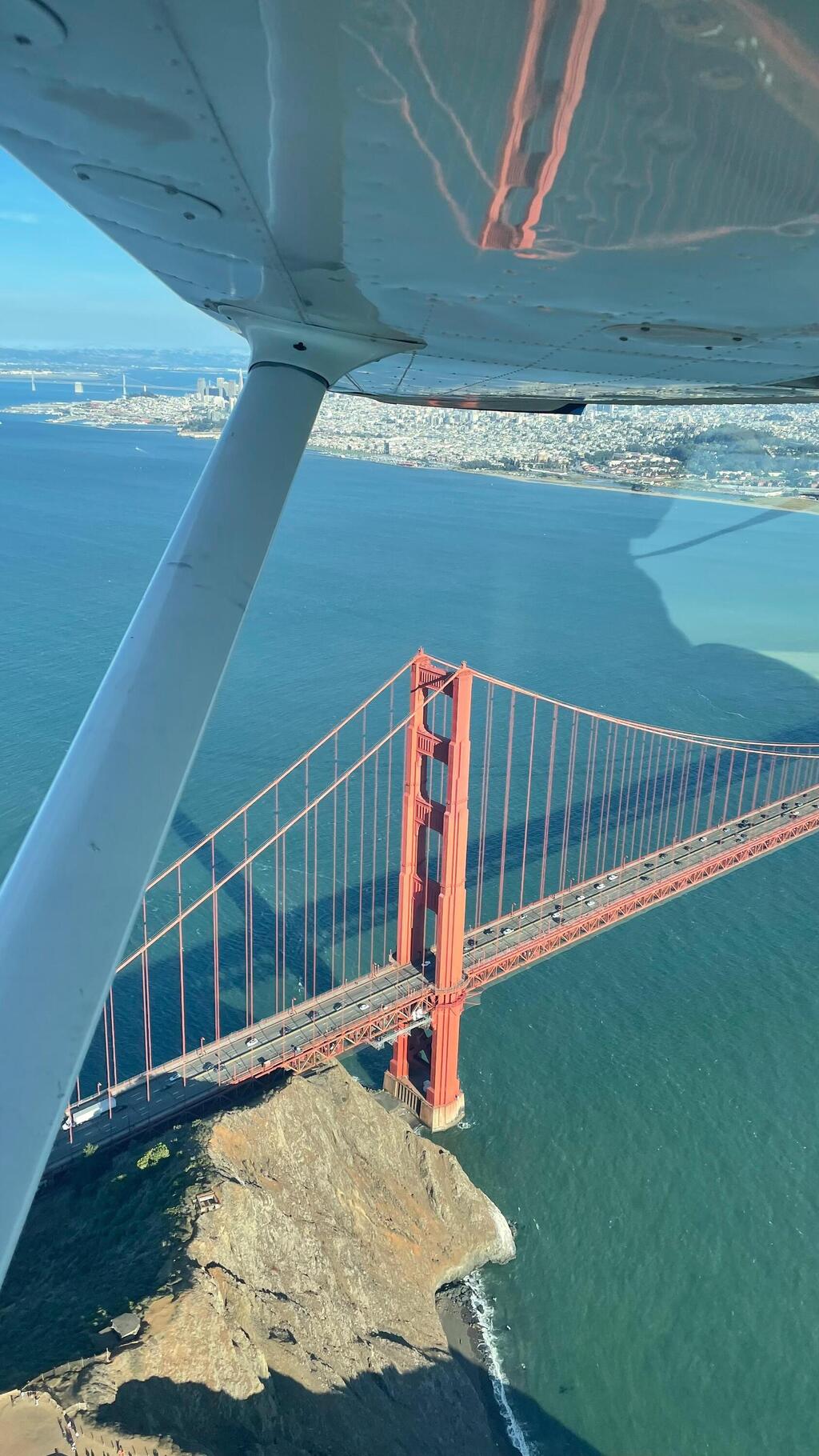
Flying over the Golden Gate Bridge
(Photo: Nir Levy)
But the truly interesting moments were not the big destinations. They were the small stops in the middle of nowhere. “You’re flying from point A to point B, and there’s nothing in between, and then you have to stop — to eat, refuel, sleep. So you open a map, pick an airfield and land. These are places I never would have chosen to go to in a million years.”
And that is exactly the magic of it. “You get to some hole in the middle of nowhere, and there’s this tiny airport there. Sometimes there’s nobody there at all. It’s crazy. Just an experience.”
“Places like the Dakotas and Wyoming — there are holes there where it’s surprising there’s even an airfield. You land in the middle of nowhere and there’s nobody around. Those are the most special places.”
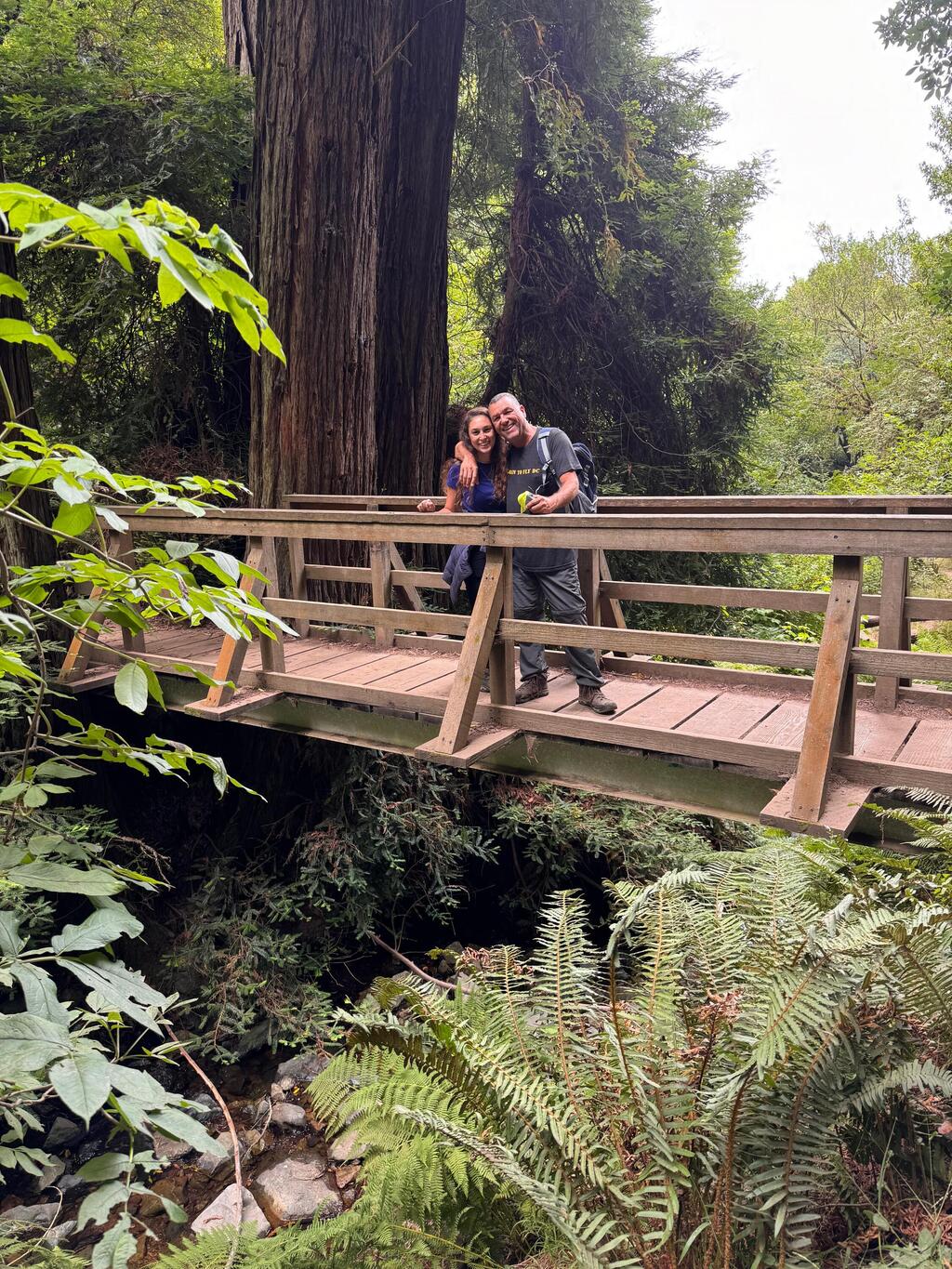
Levy hiking with her father in the San Francisco area
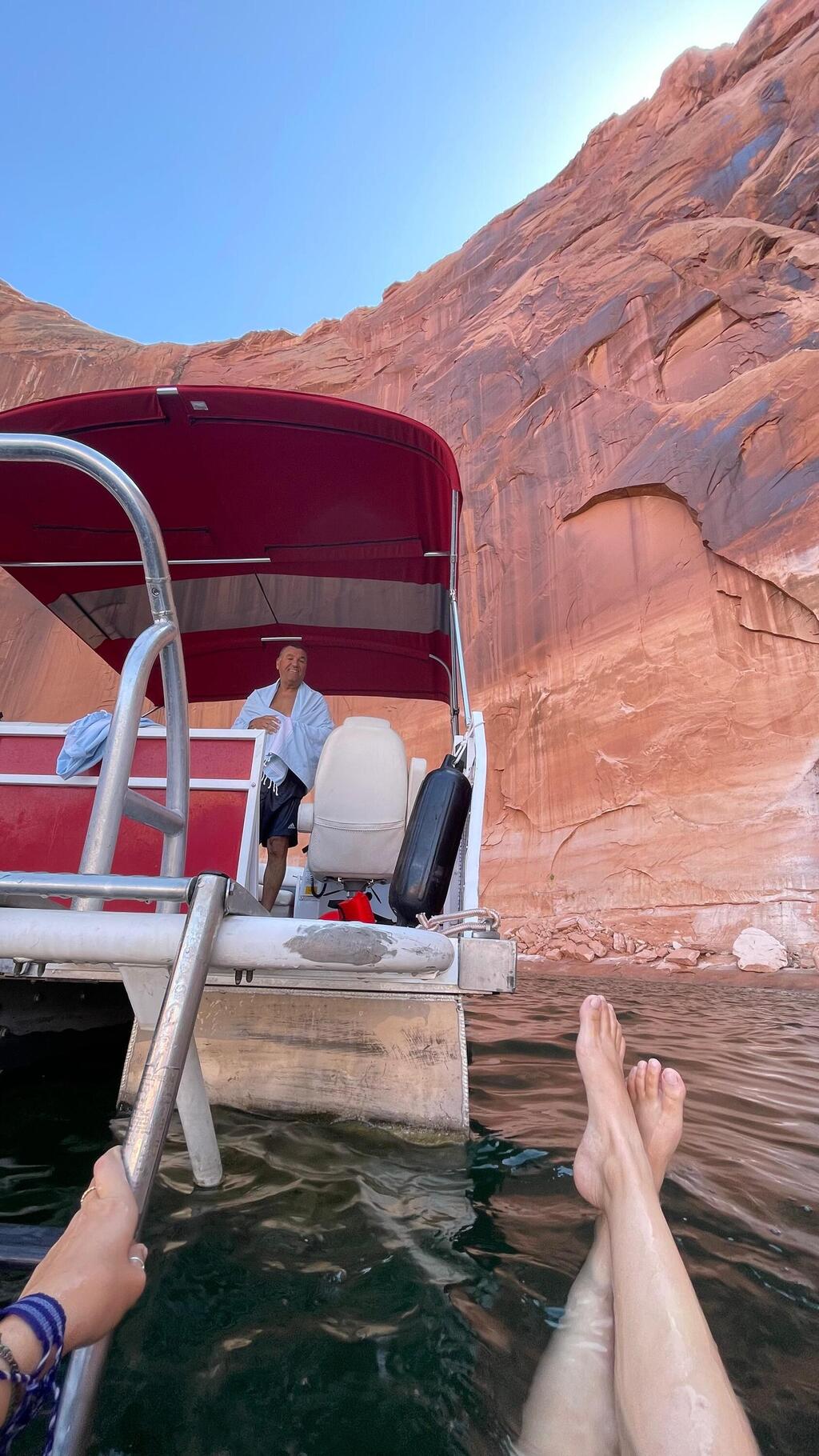
Spending time with Dad at Lake Powell
(Photo: Nir Levy)
And at every landing, every encounter, the same dynamic plays out. “People ask, ‘Where did you come from?’ When we tell them we came from the other side of the country, they’re in shock. ‘You came all that way in this plane?’ They can’t believe it,” she said with a laugh.
And it does not end outside the airport either. “Even the Uber driver taking you from the airfield to the hotel is stunned. To them, it seems completely out of the ordinary.”
And now for a personal recommendation you may not be able to act on, though there is no harm in dreaming: “There’s a place I really love flying to — Mackinac Island, on the border with Canada. It’s an island with no cars at all, only horse-drawn carriages, horses and bicycles. You can only get there by boat or by plane, and every time I have the chance, I stop there.”