

This past weekend, millions around the world marked Halloween. In the U.S., UK, Europe, and yes, even in Israel, wild parties took place with men and women in revealing costumes.
It’s somewhat similar to Purim, in its international version. Today’s modern take on “All Saints’ Eve” draws inspiration not from biblical villains like Haman and Zeresh, but from vampires, monsters, horror films and pop culture as a whole.
Día de los Muertos festivities in Mexico
(Photo: Amir Bogen)


But while revelers worldwide are united for Halloween festivities (and wake up with harsh hangovers), in Mexico, the celebration takes an entirely different shape: Día de Muertos, or the Day of the Dead.
It’s a spectacular, musical and deeply nostalgic folk display that harks back to the pagan roots of Mexico’s Indigenous populations. The event attracts both locals and curious tourists to the city of Oaxaca, a popular destination in late October each year.
There are striking similarities between the growing Halloween phenomenon and the colorful Oaxaca celebration, both filled with skeletons and skulls. But where New York is draped in orange pumpkins, Oaxaca is covered in Mexican marigold flowers (cempasúchil), painting the city in vivid hues of orange.
So what makes this modest city of just 250,000 residents a magnet for so many visitors during the holiday?
The state of Oaxaca has the most distinct Aztec identity in Mexico, and ancient Indigenous languages from before the Spanish colonization era are still spoken among the local population. So too are the traditional rituals of those ancient communities, based on mythologies and customs that have survived through the centuries.
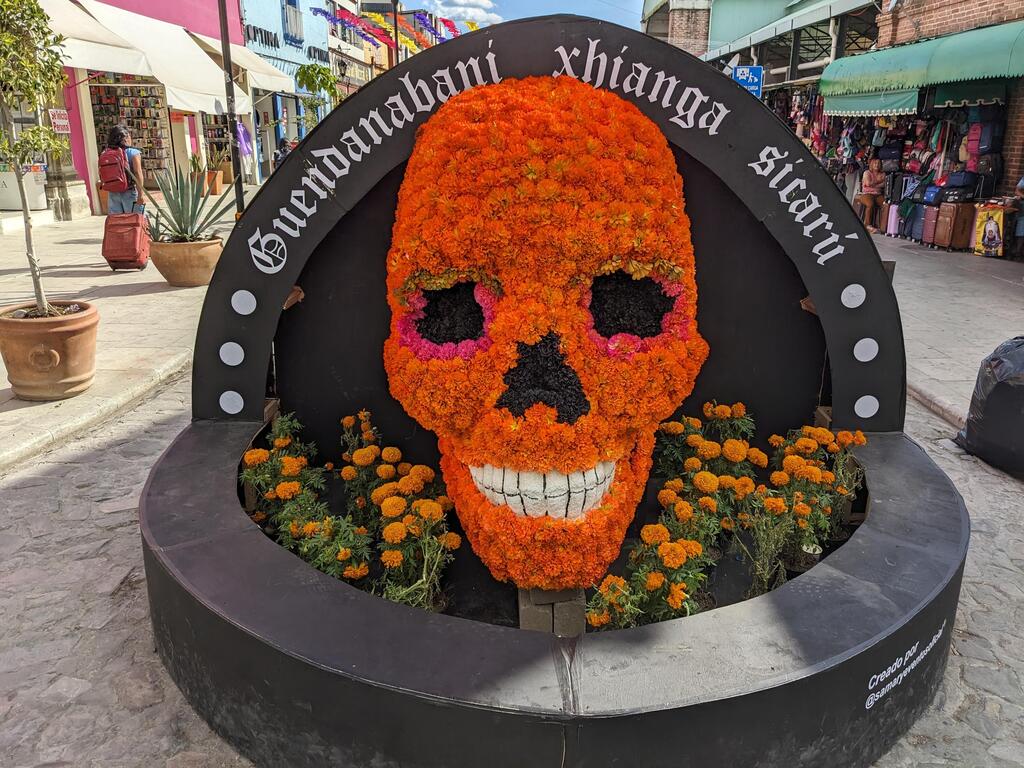
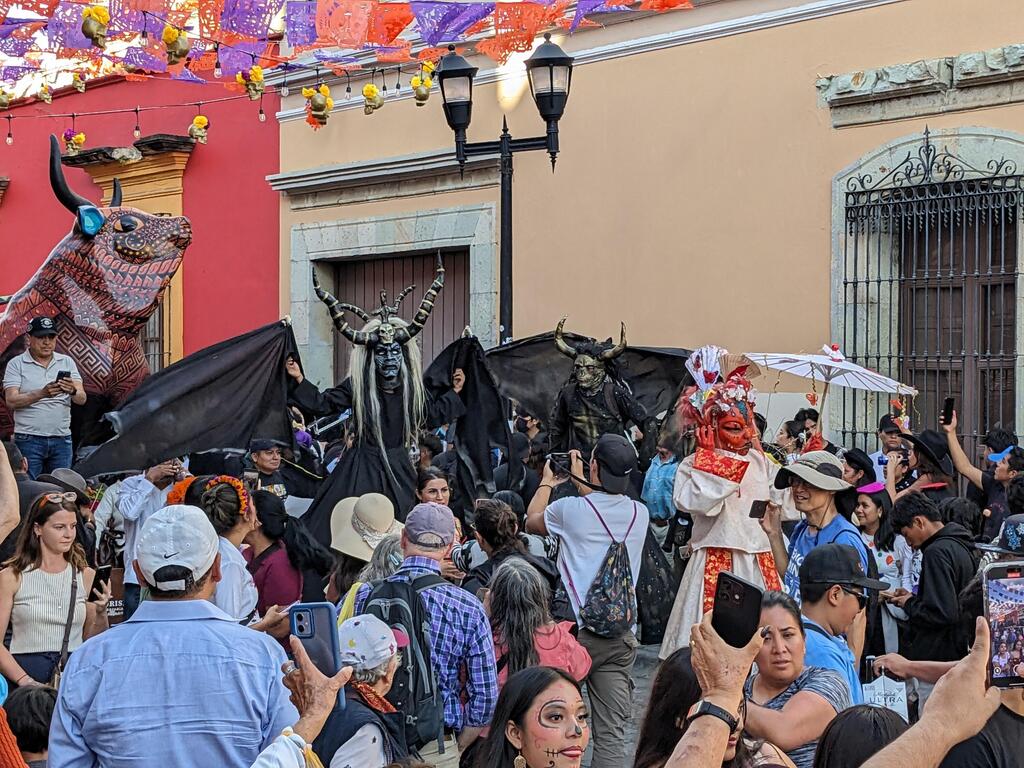
A one big celebrations
(Photo: Amir Bogen)
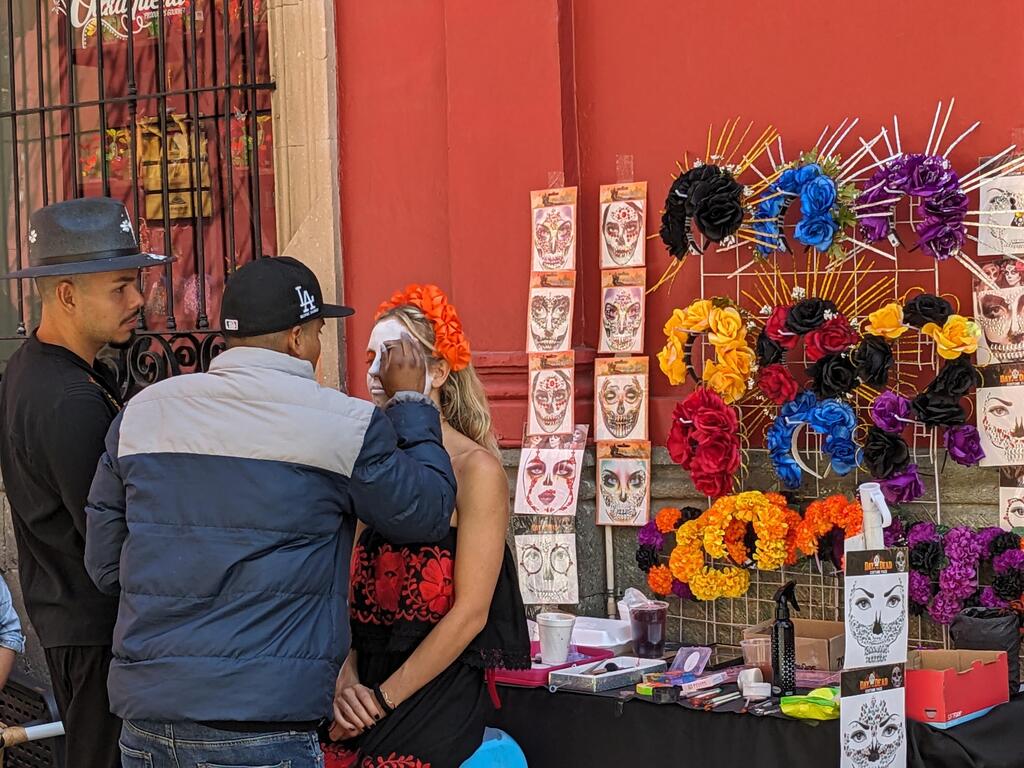
Makeup artists on the streets
(Photo: Amir Bogen)
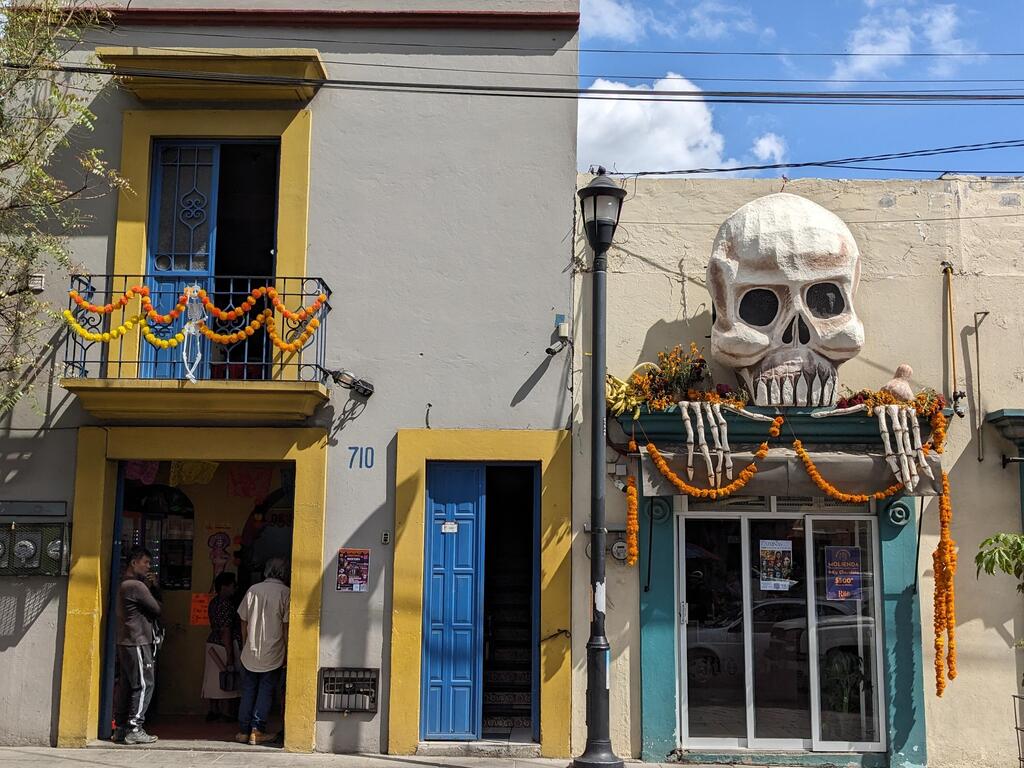
The holiday is felt everywhere
(Photo: Amir Bogen)
The Day of the Dead, while incorporated into Catholic tradition over time, blends grief, mourning and remembrance of loved ones with macabre humor, grand street parades, music and dancing by those still among the living.
Officially, Día de Muertos is observed on November 1st, but festivities begin several days earlier, especially for locals who approach the holiday with both serious reverence coupled with a playful spirit. According to tradition, participants dress as goblins and monsters to either appease or scare off the wandering souls of the dead, returning them respectfully to their eternal rest.
In both fantasy and reality, the city transforms. Oaxaca’s red-tinged streets and colorful homes become, through the efforts of local authorities, a theatrical stand-in for the center of the Earth, or at least its meeting point with the underworld.
Giant skeleton models stand in the streets, while marigold wreaths decorate nearly every doorway. The city’s central square, the Zócalo, hosts stages and stalls for local vendors, as well as a stunning improvised altar known as an Ofrenda. On it are offerings in the form of mischievous goblin figurines and comical drawings of the dead who’ve returned from hell, behaving as though they’ve forgotten they’re dead.
One display, however, is far less humorous: a somber reminder of the 2014 abduction and execution of 43 students near the town of Iguala by corrupt police working for the Guerreros Unidos drug cartel. The massacre remains a painful national trauma, haunting Mexico’s collective memory like a ghost.
On ordinary days, graffiti, posters and banners bearing the victims’ faces can be seen in the Zócalo, alongside the haunting question: “Where are the 43?” But during the Day of the Dead festivities, city officials deliberately clear away the remnants of protest and remembrance for the victims who will not return (the bodies of 40 of them have still not been found); after all, why ruin the celebration for the public, or for casual visitors?
For Israeli tourists visiting Mexico, the faces of the Iguala massacre victims may evoke the posters of the October 7 hostages that have become part of everyday life in the past two years. Unfortunately, it's also hard to ignore the hostile sentiment many Israelis now feel when traveling abroad, even in Mexico.
Even in distant Oaxaca, among the many graffiti slogans questioning the fate of the 43 students, one can occasionally spot hate-filled messages equating the Star of David with a swastika.
For the Day of the Dead, an installation was erected in solidarity with Gaza, condemning what organizers labeled as genocide. The altar included skeletons or figures of emaciated Palestinian children depicted as victims of the conflict. In addition, pro-Palestinian activists held a separate, modest but vocal procession, shouting: “Zionists are not welcome here.”
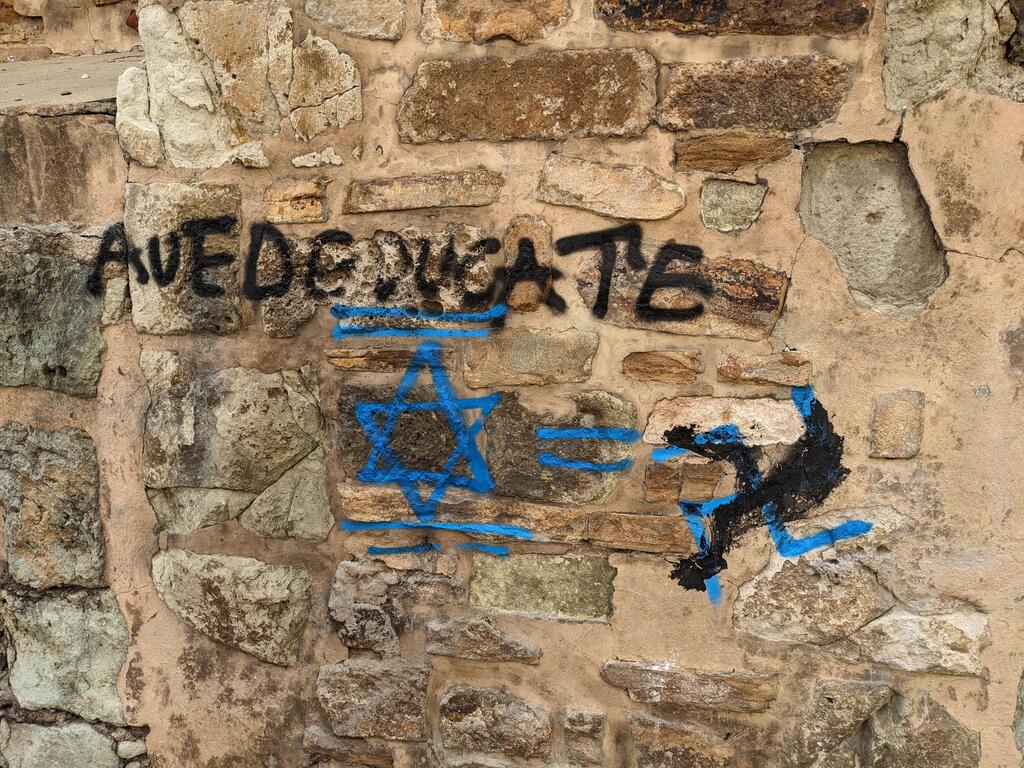
Anti-Israeli graffiti in Oaxaca
(Photo: Amir Bogen)
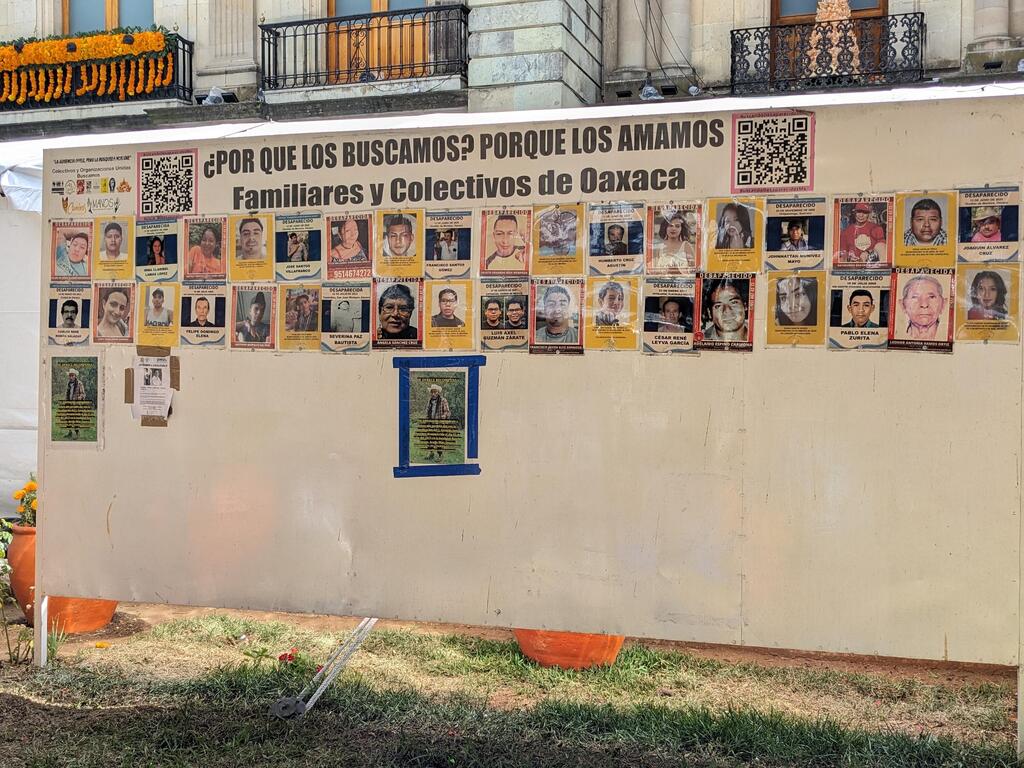
A memorial for the victims of the student massacre
(Photo: Amir Bogen)
So why should Israelis bother visiting Oaxaca, a remote destination even from the U.S., let alone from Israel? As with any international celebration, there are always a few individuals trying to hijack the spotlight for political agendas. But the vast majority of the crowd simply ignores them, scoffs, and goes on enjoying the good life, especially on the Day of the Dead. And there’s plenty to enjoy.
In the days leading up to the holiday, massive street parties break out. Brass bands in the grand tradition of Mexican music flood the streets. These are lively street battles fought with trumpets instead of rifles and trombones in place of cannons.
Somehow, the music, though not always in perfect harmony, melds into a magnificent cacophony. Young people in Oaxaca gather en masse, dressed in elaborate costumes: demons and spirits, skeletons, voodoo priests, vampires, Lucha Libre wrestlers, you name it. Everyone jumps and dances together for hours on end.
As it turns out, these spontaneous street parties are just the warm-up to the city’s official parade, which marches down Avenida Benito Juárez from north to south, all the way to the Zócalo square in the heart of the city.
The main thoroughfare is divided into various groups, representing community organizations, schools, nonprofits, and perhaps even cartels, that march one after another. Each group brings its own flair: ancient symbols, themed costumes, and extravagant moving floats.
Giant puppets sway through the streets. And every group has its own band playing nonstop. It’s a dazzling, vibrant, and loud spectacle that brings to mind the Rio Carnival, though this version is more authentic, more modest, and more tightly packed.
Spectators divide into two camps: those who set up makeshift viewing stands on building rooftops, and those who prefer to mingle with the crowds lining the packed sidewalks.
To blend in, and as part of parade preparations, it’s worth placing your face in the skilled hands of one of the many makeup artists working on street corners. They’ll gladly transform your face into a stylized skull, either in classic black and white or in fluorescent colors. You likely won’t recognize yourself, but that’s the point. The goal is to lose yourself in the life-affirming joy of this death-themed celebration.
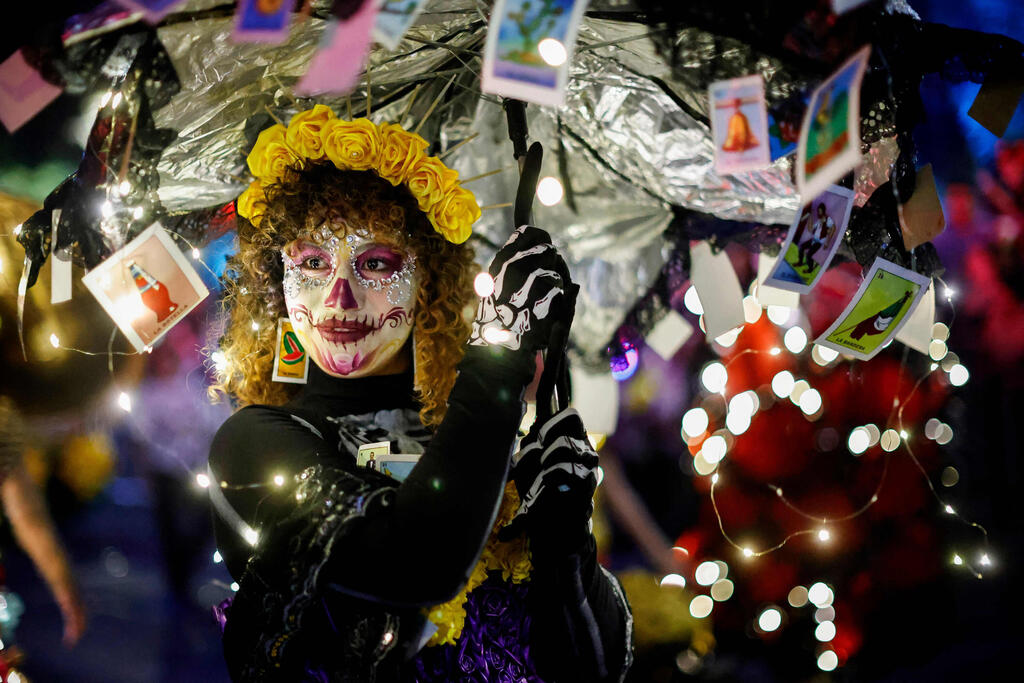
A woman dressed as La Catrina, an iconic figure of the Day of the Dead
(Photo: Rodrigo Oropeza / AFP)
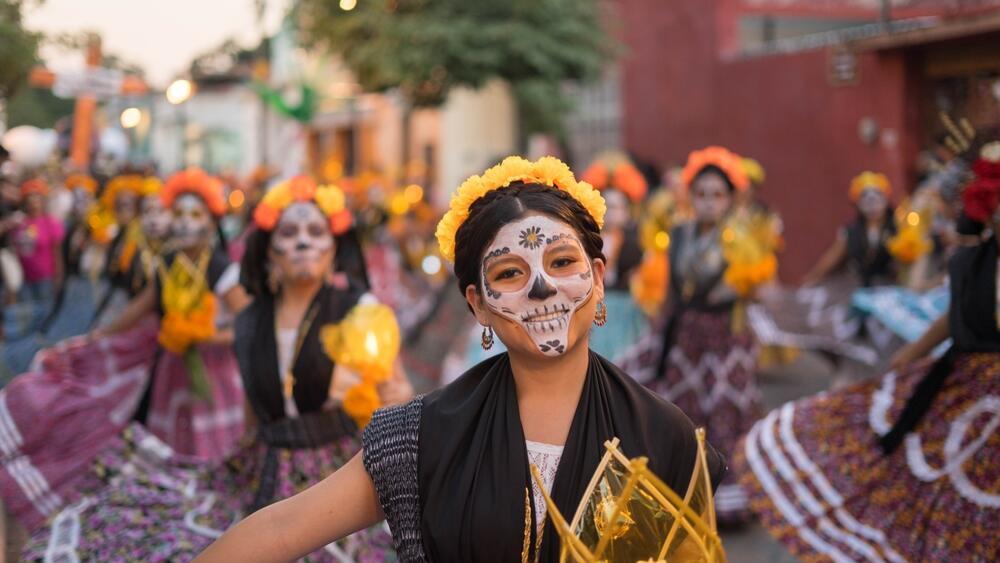
Blend into the environment
(Photo: Reyda Val / shutterstock)
(Photo: Amir Bogen)
The main parade in Oaxaca is the centerpiece of the city’s Day of the Dead events, organized by local authorities. But insiders (myself now included) say that even this grand spectacle pales in comparison to the parades held in the city’s more remote neighborhoods. They may be less extravagant, but they’re far more intimate, and even more exhilarating.
I had the chance to take part in one of these community parades in the Villa de Etla, where everyone is invited to join the festivities, not just as a spectator, but as a full participant. Marching through residents’ yards, even when faces are hidden behind monstrous masks, is an emotionally uplifting experience. You blend into the environment as the musicians set both the rhythm and the direction.
Though reaching these neighborhoods requires a short trip, and the events themselves are more spontaneous and less formally organized, it’s well worth doing a bit of research ahead of time to pin down exact locations and schedules.
And if you feel you're exerting too much effort, don't worry, someone nearby will likely offer to revive you with a shot of mezcal. Or two. Or three. Local generosity flows freely from tiny glasses throughout the parade.
Mezcal is a distilled spirit made from agave, a plant native to the region. While tequila is widely considered Mexico’s national drink, that’s a bit of a misconception; technically, tequila is a type of mezcal. Oaxaca proudly holds the title of mezcal capital of the world, earned not just thanks to the numerous local distilleries, but also due to the unique life cycle of the agave plant. It grows slowly, and the window to harvest it for mezcal is brief - only in its final stages of life.
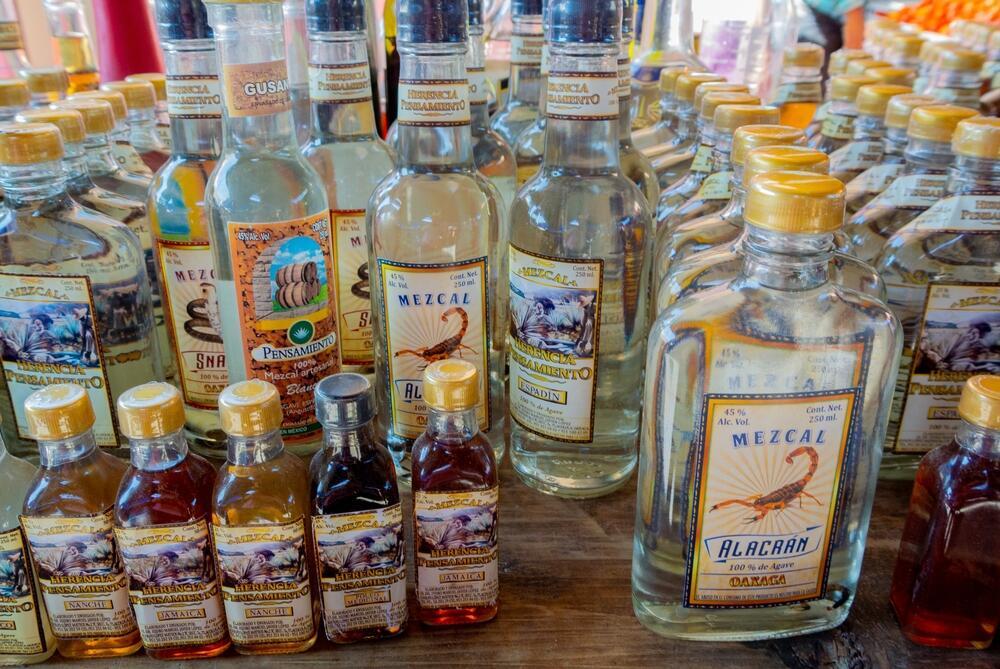
Mezcal
(Photo: NEKOMURA / shutterstock)
Unlike the traditions of Día de Muertos, the "spirit" of the agave plant vanishes after death, never to return. Still, mezcal is deeply woven into the local culture and lifestyle in Oaxaca. The city boasts numerous mezcalerías (mezcal bars), open year-round. Some offer a wide selection of premium brands and varieties for connoisseurs, while others simply let you drink cheaply and enjoy yourself.
That sentiment of simple enjoyment is typical of Oaxaca, a city known for its dynamic nightlife, full of late-night bars, clubs, and creative shows, including drag performances in Lucha Libre wrestling rings.
Mezcal fuels Oaxaca’s vibrant nightlife year-round, especially during Día de Muertos. But the industry is facing growing challenges. Aside from the complexity of cultivating agave and distilling alcohol from it, local farmers and distillers now face a new threat: climate change. Prolonged droughts are taking a toll on the region, raising fears of future scarcity. Most immediately, the city is confronting a water crisis that affects both locals and tourists.
As in much of Mexico, tap water in Oaxaca is not safe to drink. But worsening shortages are making the situation even more complex and dangerous. Tanker trucks deliver water to refill the city’s dwindling reserves. For personal use, tourists are advised to stick to purified bottled water, still the safest choice for drinking or even brushing your teeth. Yes, even safer than mezcal.
When it comes to food, however, there’s no crisis, unless you're worried about gaining weight. Oaxaca is renowned for its culinary excellence, with many local restaurants offering outstanding dishes, including a few that have earned Michelin stars. Unlike Mexico City, street food during the day is rare. Most food stalls open in the late evening to serve partygoers moving between clubs.
For those seeking a hearty meal on a budget, Oaxaca's food market 'Mercado 20 de Noviembre' hosts dozens of food stands, offering a wide variety of Mexican fare. A must-try is Tlayuda, a signature Oaxacan dish that resembles a pizza, made on a thin corn tortilla base and topped with vegetables, cheese, avocado, and meat of your choice. If, unlike me, you consider yourself a food tourist, Tlayuda is the perfect gateway to exploring the region’s rich cuisine.
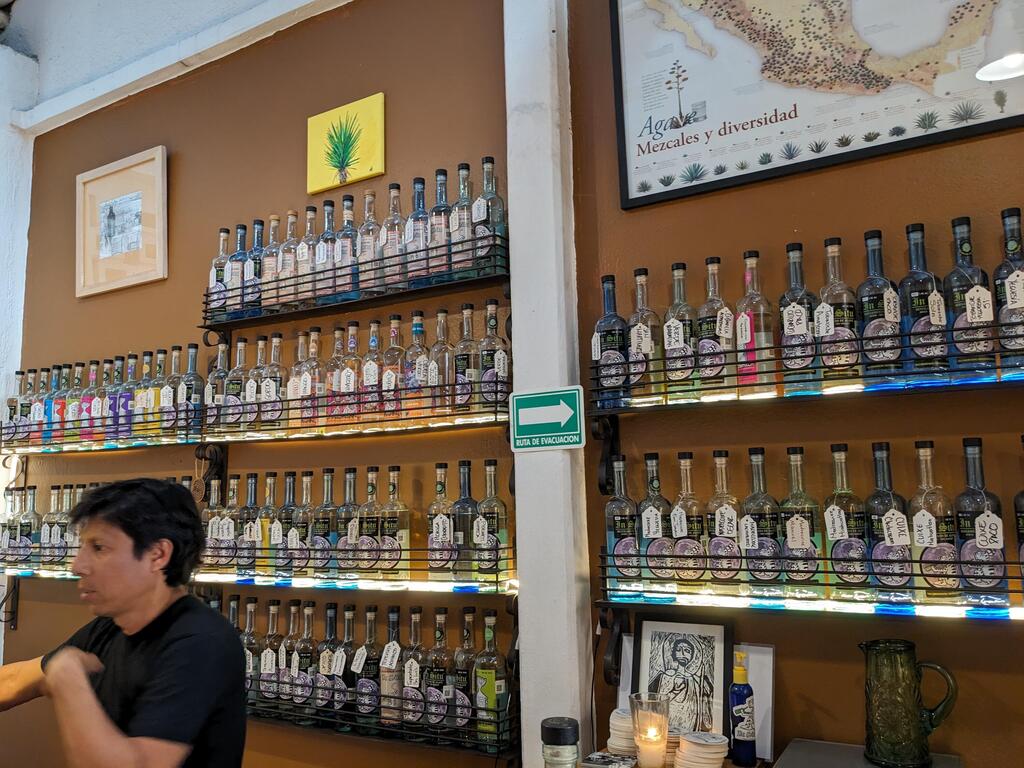
A typical bar in town. "Mezcal fuels Oaxaca’s vibrant nightlife"
(Photo: Amir Bogen)
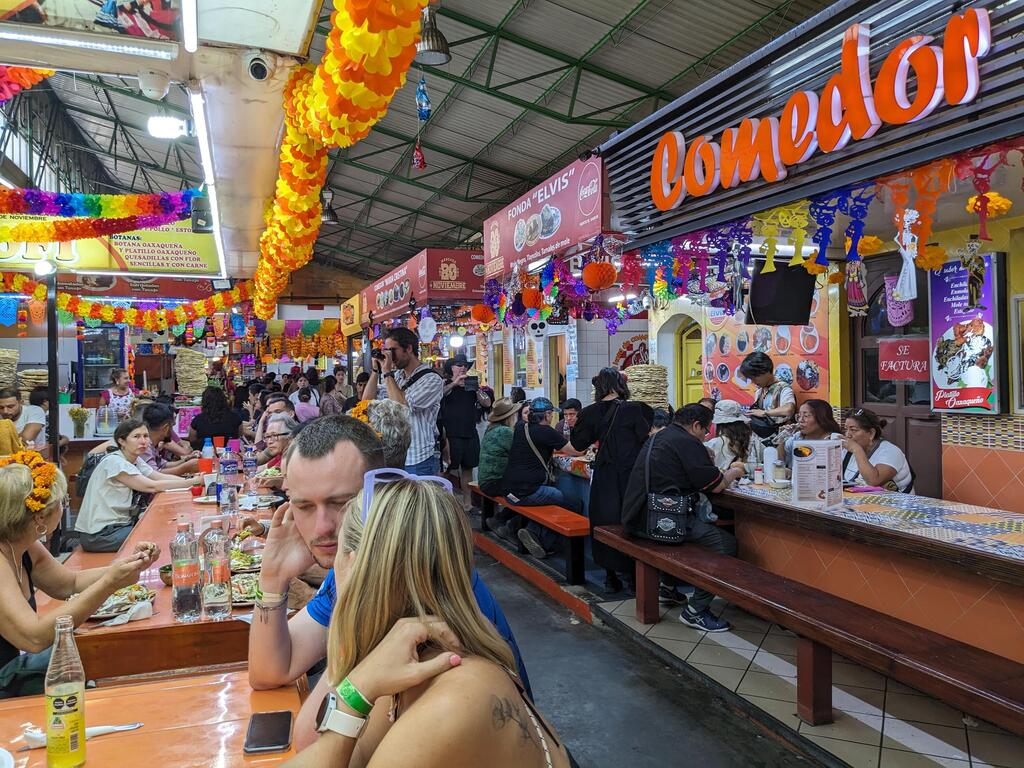
You won't stay hungry
(Photo: Amir Bogen)
Oaxaca is a modest, beautiful, and vibrant city worth visiting if you're in the region. But when it comes to the week of Día de Muertos, it’s worth catching a flight for the event, even if it means crossing the globe. Yes, it’s a tough and pricey journey. You’ll likely stop at Mexico City’s major airport for a connecting flight to Oaxaca, or a seven-hour bus ride. Alternatively, you could fly into the small airport in Puerto Escondido on the coast and take a three-hour drive from there.
In any case, book your accommodation and flights well in advance. Prices skyrocket as early as summer. It might feel like a logistical nightmare, but the path from that hellish journey to the dreamlike celebration of Día de Muertos is more than worth the effort. If you don’t overdo the mezcal, chances are the memories you make will be vivid and unforgettable.