


An astonishing Jewish find underground: During an archaeological excavation currently underway in the Yehudiya Nature Reserve in the Golan Heights, the remains of an ancient synagogue from about 1,500 years ago — whose location was previously unknown — have been uncovered.
In the dig, conducted by researchers from the Zinman Institute of Archaeology at the University of Haifa in cooperation with the Department of Land of Israel Studies at the Kinneret Academic College and under license from the Israel Antiquities Authority, dozens of decorated architectural fragments, lintels and basalt columns were found that confirm the existence of the ancient synagogue at Yehudiya.
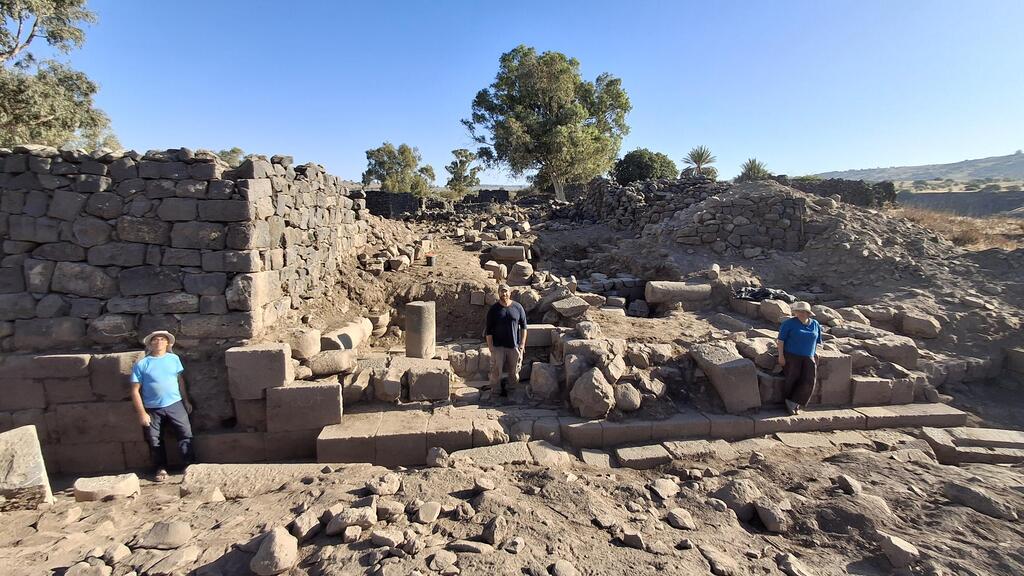
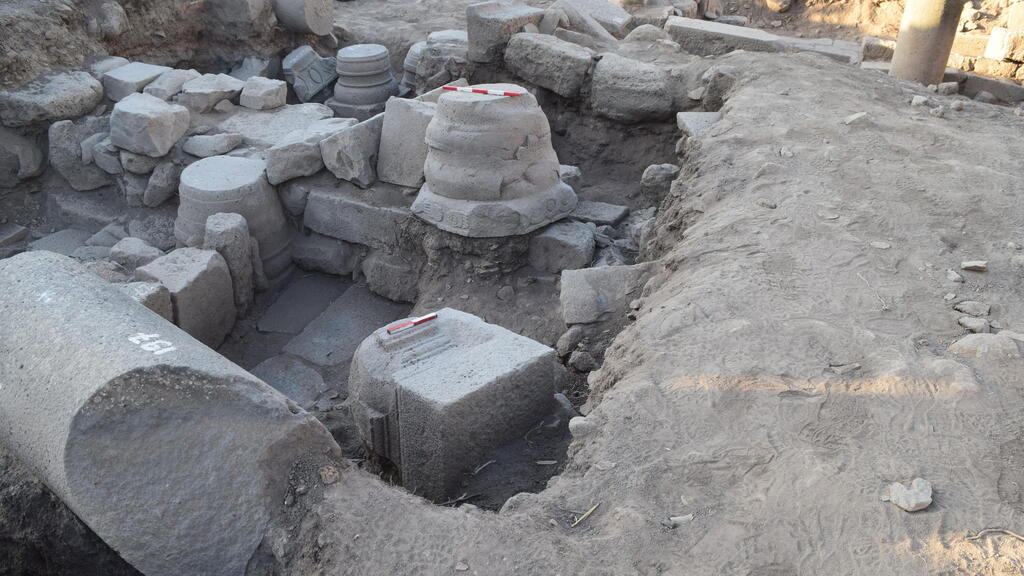
Items discovered in the remains of the synagogue
(Photo: Dr. Michael Azband )
"As part of a long-term research project documenting architectural elements from villages in the Golan – together with Profssor Chaim Ben-David and Dr. Benny Arubas – we documented over 150 items at the Yehudiya Reserve, most of which were reused in the abandoned Syrian village. However, the location of the synagogue remained unknown until now," said Dr. Michael Azband from the Zinman Institute of Archaeology at the University of Haifa.
Azband added: “We identified an unusual concentration of architectural items and column drums laid along a path in the modern abandoned village, and there we decided to carry out an inspection. Already at the start of the excavation dozens of architectural items were exposed, and to our surprise the southern wall of the building was later revealed as well, with three openings oriented toward Jerusalem.”
Although hundreds of architectural items from the Byzantine period have been documented in the Yehudiya reserve in the past, experts explain that the synagogue’s location remained a mystery. Earlier archaeological surveys collected and recorded more than 150 items including lintels, column drums and decorated basalt stones. Now, following a focused excavation, the structure itself has been uncovered for the first time: two courses of stone of the building’s southern wall are built of dressed masonry and include three openings. Near them two lintels were found close to their original positions opposite the openings, one of them decorated.
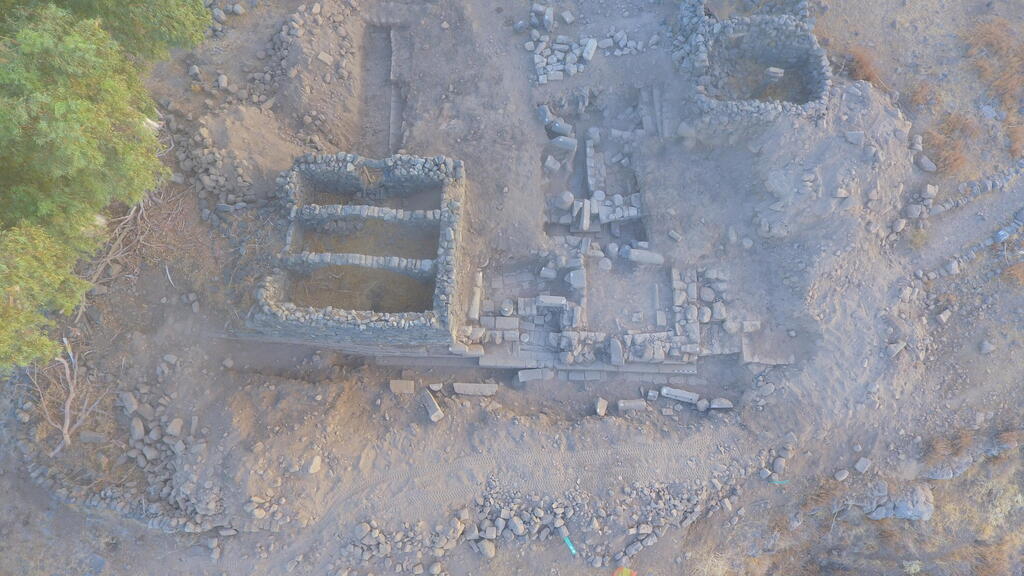
Aerial photo of hte remains f the 1,5000-year-old synagogue in the Yehudiya Nature reserve
(Photo: Dr. Michael Azband )
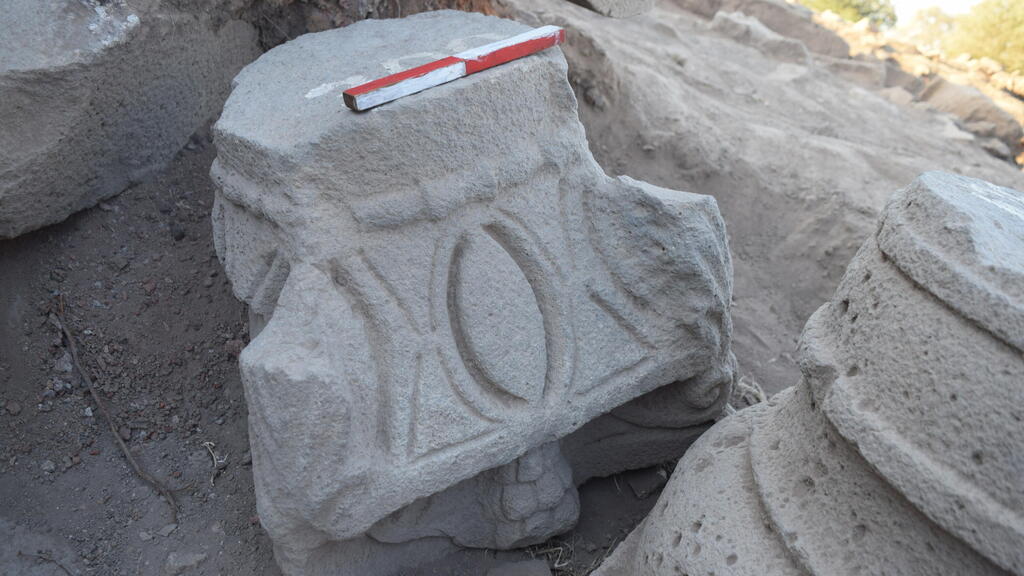
Item discovered among the ruins of the synagogue
(Photo: Dr. Michael Azband )
In addition, many decorated items were found outside the southern wall and inside the structure — some in stone collapses and earth fill and some reused in later periods. Past surveys at the site revealed many items of monumental and public construction including lamp ornamentation.
The Golan area, where the synagogue was found, was in former times a Jewish region in the Roman and Byzantine periods — from the 1st century BCE until the 7th–8th centuries CE. The plan of the building, about 13 meters wide and at least 17 meters long, indicates it was built in the basilica style — a rectangular building with two rows of columns and benches built along the walls — an architectural form characteristic of ancient synagogues in the Land of Israel.
Azband said that the mere discovery of the southern wall, with openings that face Jerusalem, combined with the items found and those known from other synagogues exposed in the past — such as benches (reused), what appear to be parts of the Ark of the Covenant, and more — constitute clear evidence of the structure’s designation as a synagogue.
A trip through the streams in the Yehudiya Forest Reserve in the Golan
(Video: Georgi Norkin and Rinat Russo, Israel Nature and Parks Authority)


The Israel Nature and Parks Authority notes that the excavation is being carried out in cooperation with the University of Haifa, with assistance from the Hecht Foundation, the Department of Land of Israel Studies at Kinneret Academic College, and with the help of reserve manager Naal Da’bous and the staff of the Yehudiya Reserve.
Dr. Dror Ben-Yosef, an archaeologist at the Israel Nature and Parks Authority, also commented on the discovery: “Besides this synagogue, around 25 other ancient synagogues have been discovered in the Golan, bearing witness to the strong Jewish presence in the region. These synagogues served not only as places of prayer, but also as centers for learning and promoting Jewish literacy. The Sages frequented these buildings and spread Jewish knowledge to all members of the community, from children to the elderly. We intend to complete the excavation of this magnificent synagogue at Yehudiya and make it accessible to all visitors to the reserve.”