


The Foreign Ministry has identified a disturbing phenomenon it says was virtually unknown on this scale in previous years: Israelis abroad increasingly seeking help after being targeted in antisemitic incidents.
Between July 2025 and July 2026, 45 Israelis who experienced antisemitic incidents overseas required assistance and support from the ministry’s Department for Israelis in Distress.
Gallery

Pro-Palestinian protest at Columbia University
(Photo: David Dee Delgado / GETTY IMAGES NORTH AMERICA / AFP)
Foreign Ministry officials said the figure was almost nonexistent in previous years and reflects the changing reality facing Israelis around the world since the outbreak of the war.
The incidents included assaults, fights, spitting, verbal abuse, refusal of service, expulsions from hotels, cafés and restaurants, and cases in which Israelis felt threatened.
“Over the past year, we have seen a phenomenon on a scale we had not encountered before: Israelis contacting us after experiencing antisemitic incidents during stays abroad,” said Eli Yifrah, the Foreign Ministry’s deputy director general for consular affairs.
“Our missions provide them with assistance and support alongside their routine consular work.”
The figures released by the ministry summarize the work of its overseas assistance department and diplomatic missions worldwide from January through mid-July 2026, as well as cumulative data for the past year.
Thousands of calls for help
A total of 3,611 cases were referred to the Department for Israelis Abroad by the Foreign Ministry’s situation room.
The largest category involved emergencies related to Operation Lion’s Roar, accounting for 1,825 cases.
The department also handled 630 miscellaneous inquiries, 384 reports involving missing people or individuals who had lost contact with their families, 292 cases involving detainees and prisoners, 202 medical emergencies, 173 lost travel documents, 63 traffic accidents and 16 domestic violence cases.
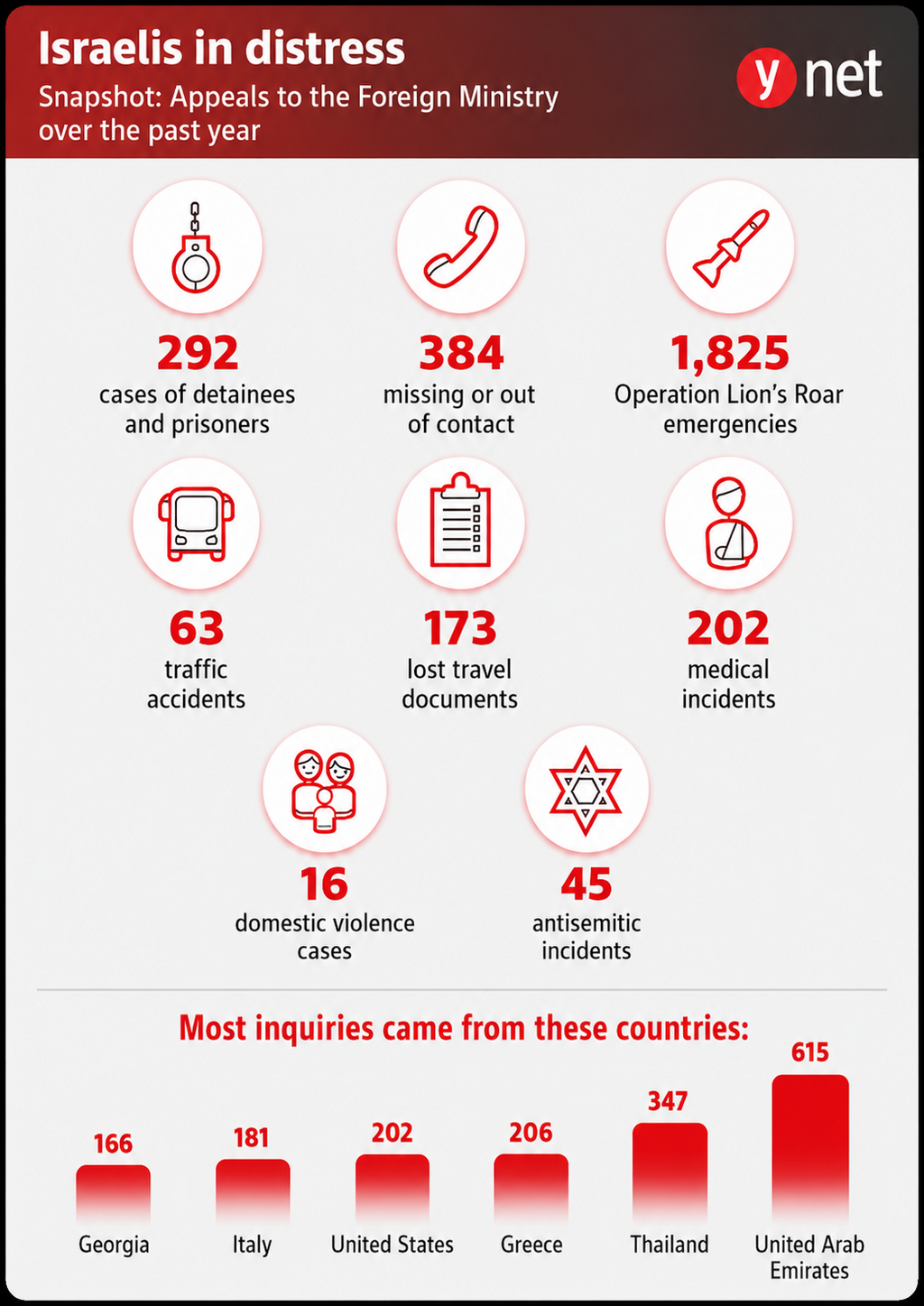
The countries generating the largest number of inquiries were the United Arab Emirates, with 615; Thailand, 347; Greece, 206; the United States, 202; Italy, 181; and Georgia, 166.
During 2025, the department handled about 2,500 cases involving Israelis in distress abroad.
From the beginning of 2026 through mid-July, it handled 1,247 such cases. Over the full preceding year, the figure was 2,031.
The department also dealt with a significant number of arrests and imprisonments. Since the beginning of the year, 292 cases involving detainees and prisoners were referred to it, including 110 requiring complex treatment and prolonged follow-up.
Over the past year, the department handled 323 cases involving detained or imprisoned Israelis.
More than 375,000 consular actions
Foreign Ministry data also showed the broad scope of consular activity worldwide.
Over the past year, Israeli missions issued 80,914 travel documents and carried out 375,323 consular actions.
At the same time, 2,147 cases of stolen, lost or damaged travel documents were reported, with Bangkok, New York, Miami and Los Angeles recording the highest numbers.
The ministry also handled 406 missing-person or lost-contact cases, 143 hospitalizations, 149 rescue operations, 55 mental health emergencies, 22 domestic violence cases and 96 traffic accidents during the past year.
Another major area of activity involved the transfer of bodies to Israel for burial.
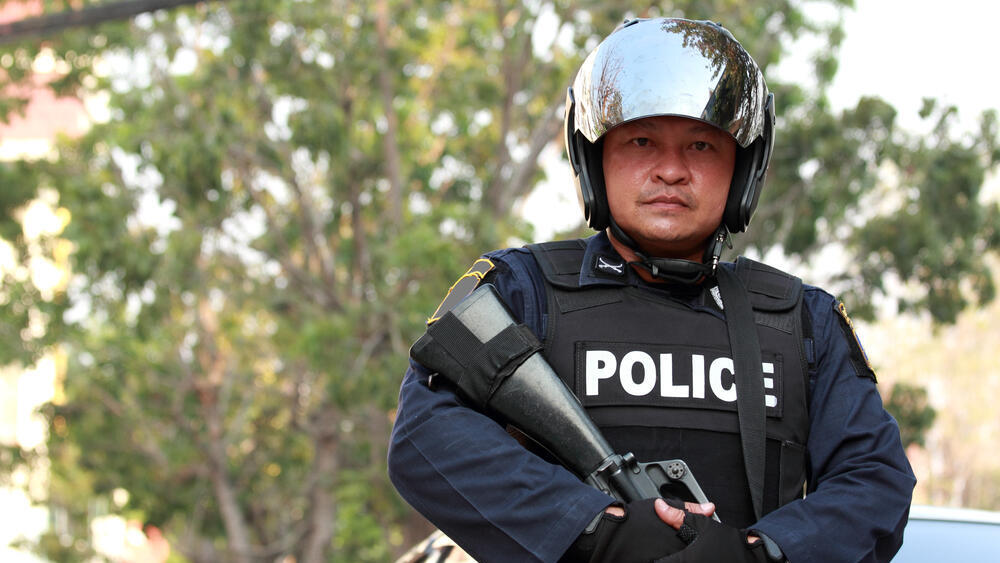
Thai police officer. ‘292 detainee and prisoner cases worldwide’
(Photo: Shutterstock)
The Foreign Ministry assisted in transporting 1,612 coffins to Israel over the past year, with most arriving from France, 575, and the United States through the Israeli Consulate in New York, 569.
“The Foreign Ministry’s consular network continues to operate around the clock, 24 hours a day, through Israeli missions worldwide, providing assistance and services to Israeli citizens in a wide range of routine and emergency situations,” Yifrah said.
Israelis targeted over their identity
Yifrah said the 2026 figures reflected both the continued rise in the number of Israelis traveling abroad and the complex security situation since the outbreak of the war.
Emergency events, including Operation Lion’s Roar and other regional crises, led to a significant increase in the number of requests and assistance cases handled by the ministry, he said.
At the same time, officials recorded an increase in hostility and antisemitism directed at Israelis overseas.
“In several countries, cases were reported in which Israelis were identified because of their identity or visible Israeli characteristics and were targeted with harassment, threats and even physical attacks,” Yifrah said.
“In those cases, Israeli missions provided consular support, assisted the victims and contacted local authorities according to the circumstances.”
He said the figures illustrated the scale of the consular network’s work and its commitment to assisting Israeli citizens wherever they may be.
Distress reports from unusual destinations
Since the beginning of the year, the Foreign Ministry has also received distress reports involving Israelis in countries not usually associated with large numbers of Israeli travelers.
These included 56 cases in Egypt, 45 in Turkey, 41 in Ukraine, 37 in Jordan, 33 in Japan, 13 in Morocco and 12 in Oman, which has no diplomatic relations with Israel.
The ministry also handled nine cases in the Seychelles, six in Indonesia, four in Malaysia, two in Bahrain, two in Iraq, two in Saudi Arabia and two in Cuba.
Indonesia, Malaysia, Saudi Arabia and Oman do not maintain diplomatic relations with Israel.
The rise in antisemitic incidents has added a new category to the ministry’s already extensive consular workload, with officials warning that Israeli travelers are increasingly being targeted not only because of where they are, but because of who they are.