


The Israel Antiquities Authority announced Sunday the completion of excavations uncovering one of the longest and best-preserved sections of Jerusalem’s Hasmonean-period city wall, a fortification built in the late second century BCE.
The newly exposed segment, found on the grounds of the Tower of David Jerusalem Museum within the historic Kishle complex, was revealed during an Israel Antiquities Authority dig ahead of construction of the museum’s new Schulich Wing of Archaeology, Art and Innovation.
A section of Jerusalem’s Hasmonean-era city wall — one of the longest and most intact segments ever uncovered — unearthed at the Tower of David Jerusalem Museum
(Video: Emil Aladjem/Israel Antiquities Authority)


Excavation directors Amit Re’im and Marion Zindel of the Israel Antiquities Authority said the exposed portion—identified with what ancient sources call the “First Wall”—extends more than 40 meters (131 feet) and is roughly 5 meters (16 feet) thick. The wall was built of large, hewn stones with characteristic chiseled bosses and originally stood more than 10 meters (33 feet) high, though only its lower courses survive.
Other sections of the same fortification line have previously been uncovered on Mount Zion, in the City of David, in the Citadel of David courtyard and along the western perimeter of Jerusalem’s Old City.
The wall appears prominently in the writings of first-century Jewish historian Josephus, who described it as “impregnable” and lined with 60 towers. Re’im and Zindel said the newly uncovered portion shows signs of intentional destruction.
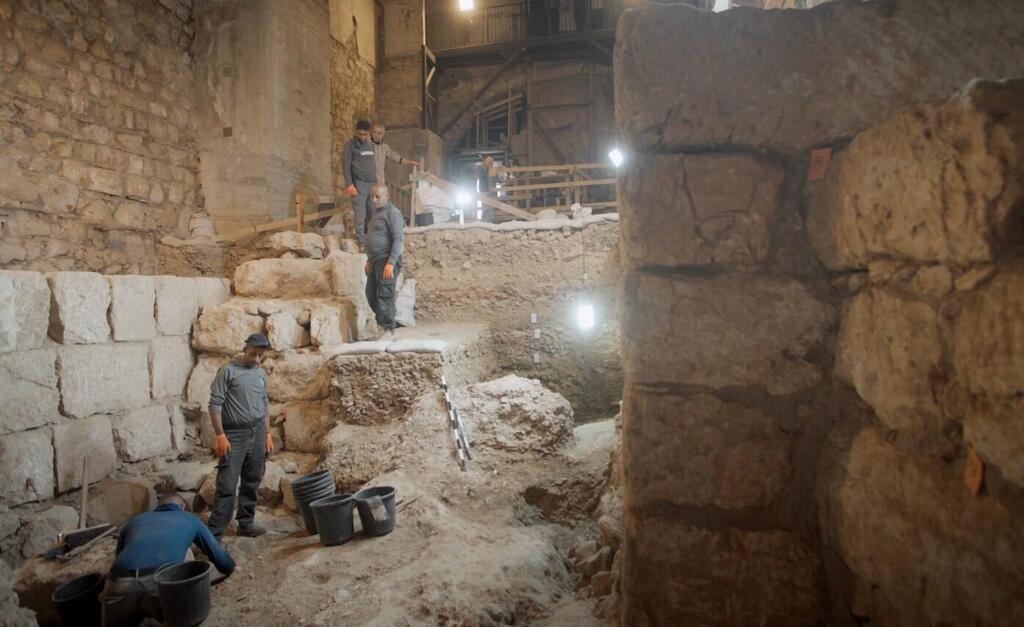
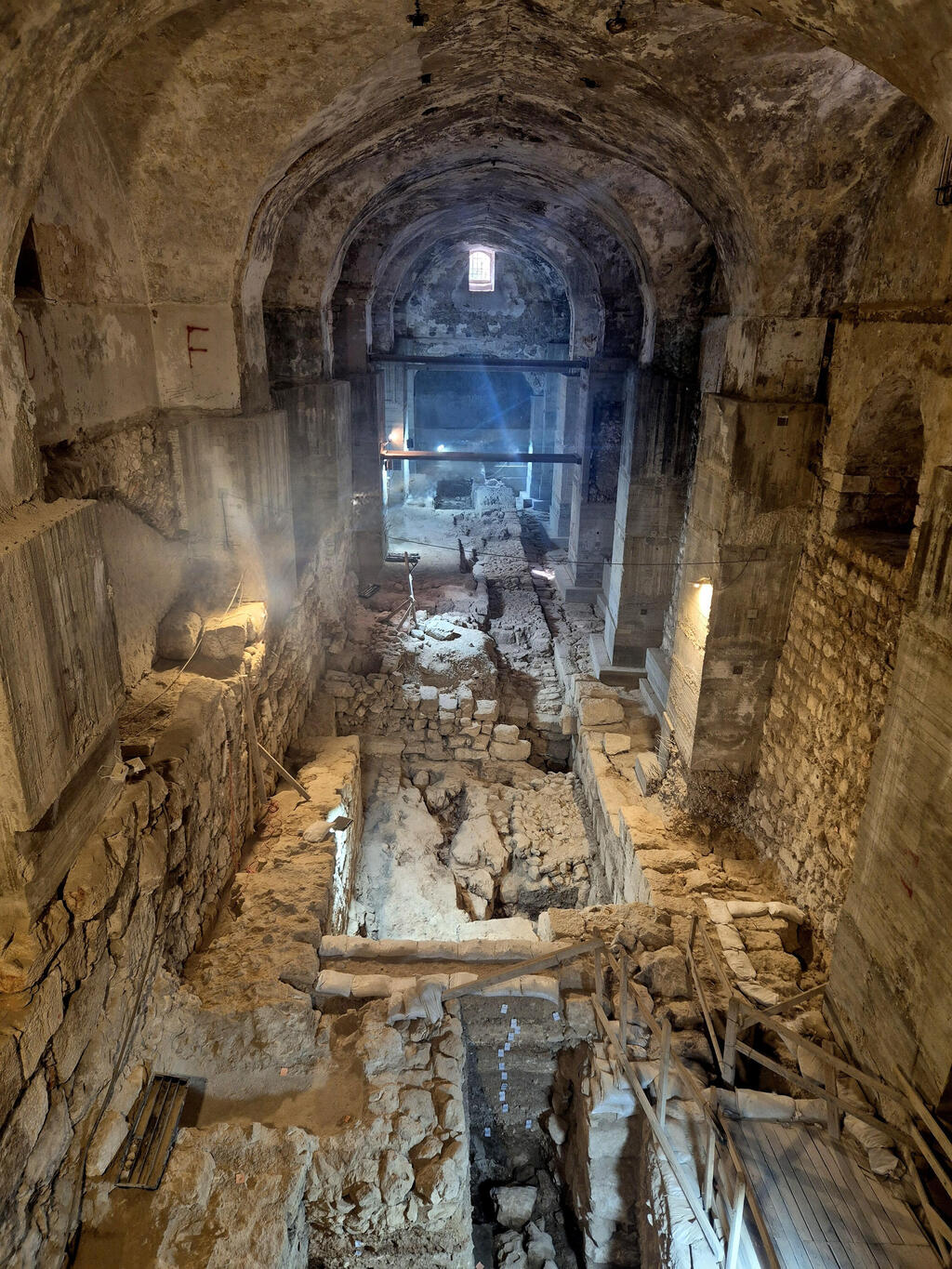
Excavation of the Israel Antiquities Authority in the Kishle
( Photo: Yoli Schwartz/Israel Antiquities Authority)
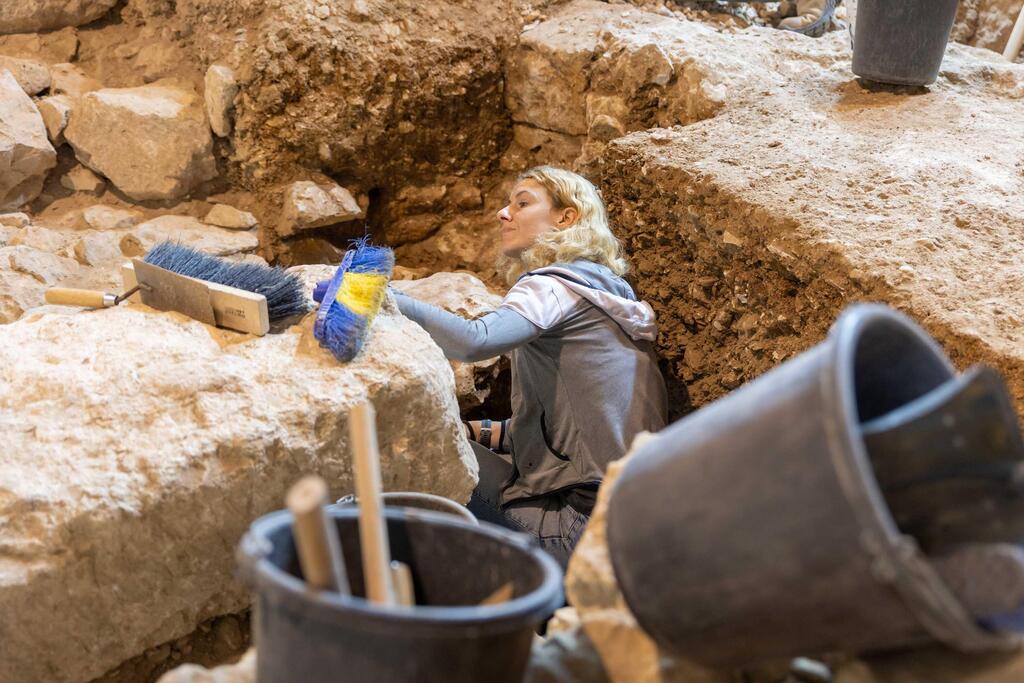
Dr. Marion Zindel, excavation director on behalf of the Israel Antiquities Authority, in the Kishle excavations
(Photo: Dor Pazuelo/Tower of David Jerusalem Museum)
“This is predetermined destruction,” they said, noting it did not result from time or isolated conflict but from a systematic effort to raze the fortification. They said the findings raise questions about who ordered the demolition.
The researchers outlined two possible explanations. One is that the Hasmoneans themselves dismantled the wall as part of a settlement with Seleucid ruler Antiochus VII Sidetes, who besieged Jerusalem between 134 and 132 BCE.
Josephus recounts that Hasmonean leader John Hyrcanus I reached a peace agreement with Sidetes—funded in part by treasures allegedly taken from the Tomb of David—under which Jerusalem’s fortifications were to be removed in exchange for lifting the siege. The archaeologists said the newly discovered destruction layer could be evidence of that arrangement.
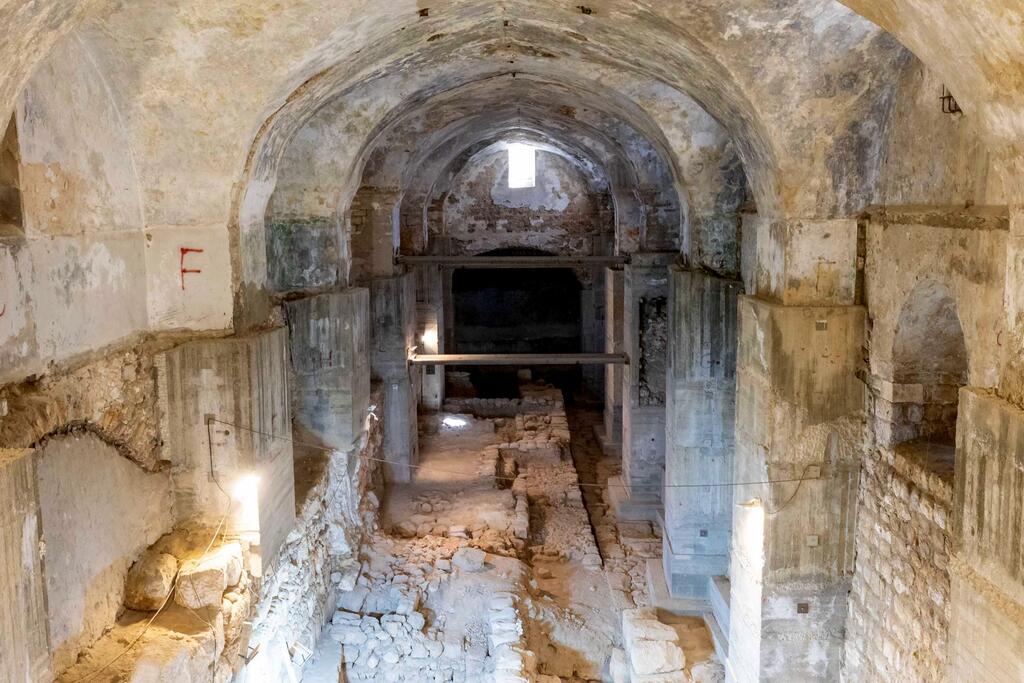
Excavation of the Israel Antiquities Authority in the Kishle
(Photo: Dor Pazuelo/Tower of David Jerusalem Museum)
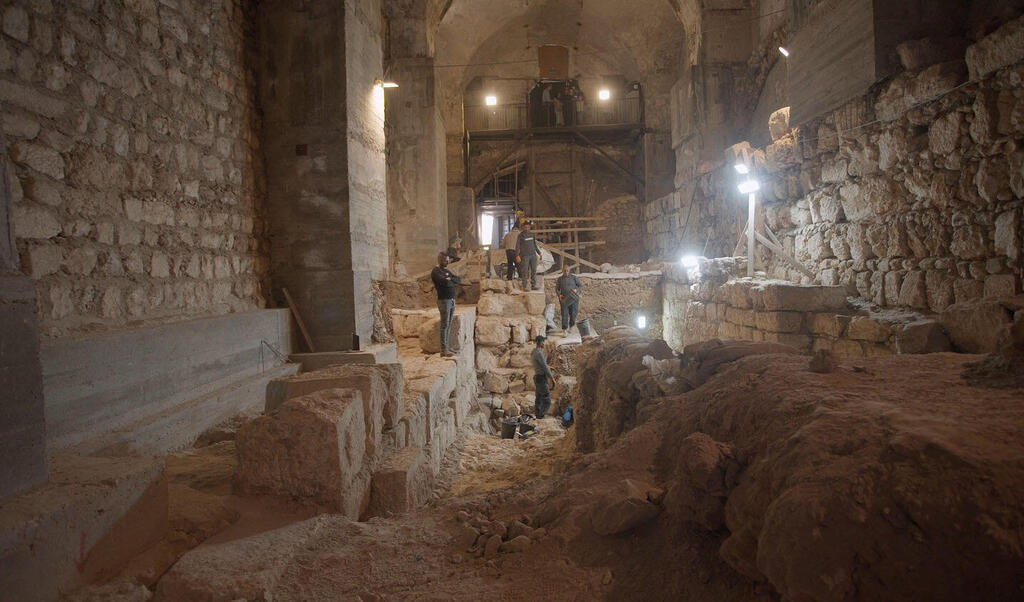
Uncovering of the Hasmonean wall segment in the Kishle
(Photo: Gabriel Volcovich)
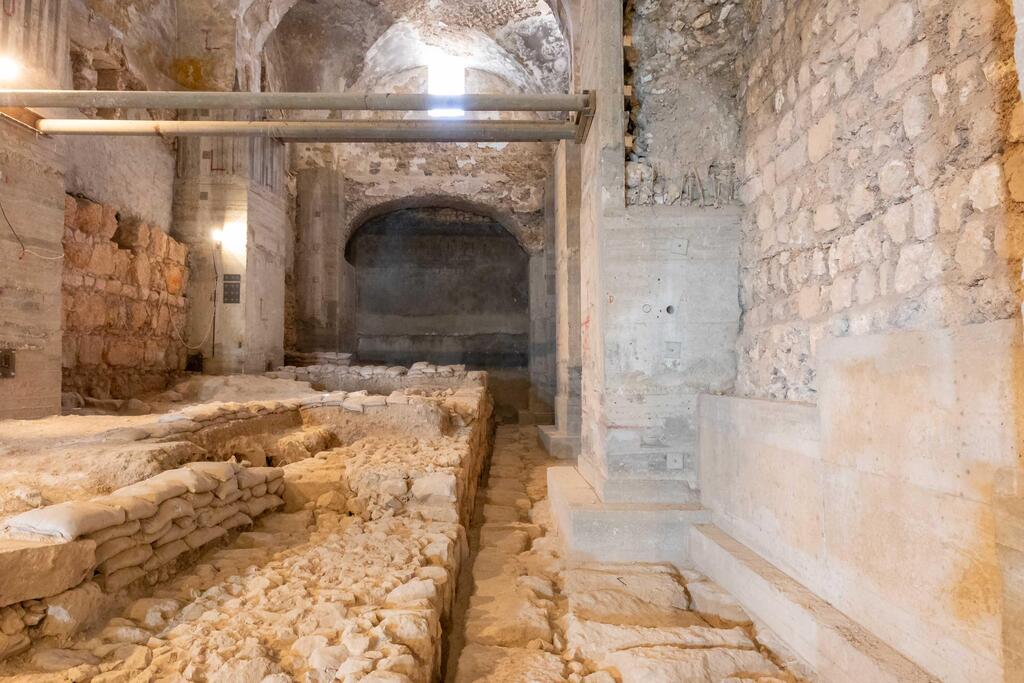
The Kishle prior to the excavation work
(Photo: Dor Pazuelo/Tower of David Jerusalem Museum)
Another possibility, they said, is that King Herod ordered the demolition decades later to distance his rule from his Hasmonean predecessors and to assert his own authority, a policy they noted is reflected elsewhere in Jerusalem’s archaeological record.
Material evidence of the earlier Hasmonean–Seleucid conflict was found near the site in the 1980s, when archaeologists Renee Sivan and Giora Solar uncovered hundreds of Hellenistic-period catapult stones, arrowheads, slingstones and lead bullets at the base of the same wall segment. The artifacts—now displayed in a new Tower of David exhibition—were identified as weapons used during Antiochus VII’s siege that failed to breach the fortification.
Eilat Lieber, director of the Tower of David Jerusalem Museum, said the excavation was carried out in preparation for the museum’s new Schulich Wing. She said the museum intends to preserve and display the wall section and that visitors will eventually view it from above through a transparent floor, accompanied by artistic interpretations highlighting the city’s heritage.
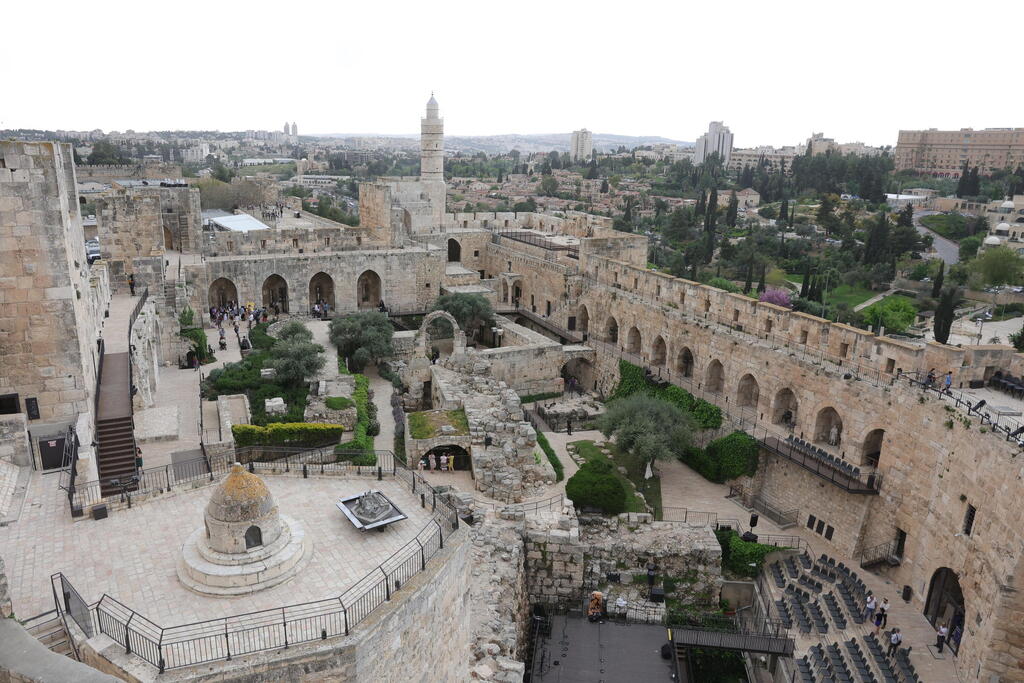
Tower of David at the Jerusalem Museum
(Photo: Courtesy of the Tower of David Jerusalem Museum)
The Schulich Foundation, based in Toronto and founded by philanthropist Seymour Schulich, is funding the new wing. The foundation, one of Canada’s largest, supports cultural and educational initiatives in Israel and Canada.
Israel’s heritage minister, Rabbi Amichai Eliyahu, said the discovery is “tangible and moving evidence of Jerusalem’s might and stature during the Hasmonean period,” adding that it reinforces a sense of historical continuity connected to Hanukkah traditions.
During the holiday, the Tower of David Jerusalem Museum will host “Hanukkah of Heroes,” offering family activities and guided tours throughout the historic citadel. Information and registration are available on the museum’s website.