

The departures hall at Ben Gurion Airport did not look like an emergency scene Thursday morning. Flight boards blinked green, lines snaked toward security counters, and the scent of duty-free perfume mingled with talk of hotels, suitcases and airport transfers.
Outside, there was talk of a tense weekend and the possibility of an attack in Iran. Inside, people clutched boarding passes.
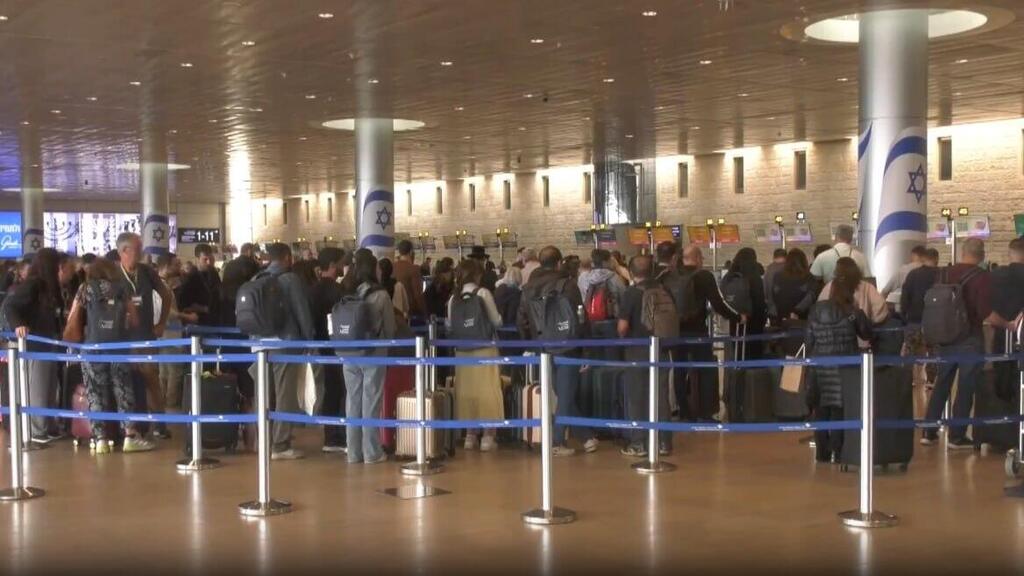
Anat, standing with a suitcase on her way to Athens, acknowledged she had heard the warnings. “We knew there were alerts and assessments of escalation,” she said. But she and her friend had booked the flight in advance, with no real option to change it. “There was no possibility to cancel or postpone. We didn’t have many options. If we had, I believe maybe we would have considered it.” She left her children in Israel. “They’re grown,” she said. And if the airspace closes? She shrugged. “We already live in our country. We already know what’s going on. So we understand that if we’re delayed, we’ll stay there a few more days, however long it takes, and come back when it’s possible.”
‘We can’t stop living’
During Operation Rising Lion last June, which began with an Israeli strike on Iran, the skies were completely closed and no airline could take off or land in Israel.
For now, Israeli airspace remains fully open and most airlines are operating, though some have adjusted their overnight flight policies. Years of war appear to have made Israelis less quick to cancel tickets over security alerts.
A few meters from Anat and her friend, a couple waited for a flight to Dubai. Their children, grown and independent, stayed behind in Israel.
“Of course it’s stressful,” the woman said, quickly adding, “You can’t stop life.” If there is a delay? “We’ll come back a little late.” And if war breaks out while they are there? “I’ll always feel it wasn’t the right step,” she said. “But we have to … We’ve been at war for almost three years already.”
Nearby, a group of young men in hoodies and backpacks gathered. Noa, just weeks before his military enlistment, was flying with friends to Milan. “We’re optimistic,” he said simply.
They knew about the alerts and had heard the reports, but chose to fly anyway. “Because we still want to enjoy ourselves, despite the situation.” There was hesitation, he admitted, but long-standing plans and anticipation for the vacation tipped the scale. “I feel relatively safe. I trust our country and the army.” In two months, he will be in uniform.
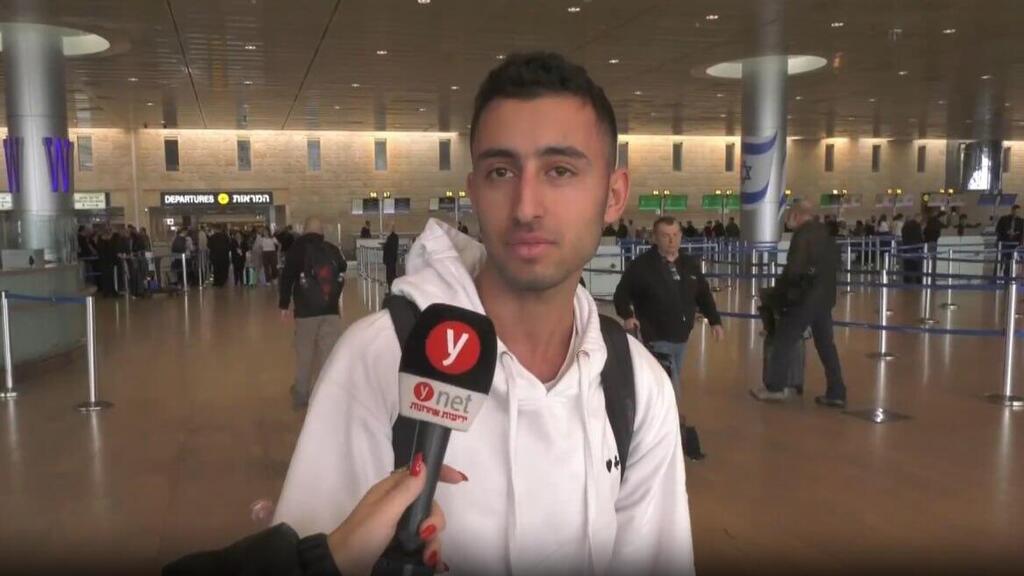
'I trust our country and the army'
(Photo: Miki Schmidt)
Eitan, traveling with friends for a short vacation, did not hide his doubts. “There’s concern … a lot of concern.” He also considered canceling. “For a moment, a little, yes.”
Still, he boarded the plane. Asked whether it was the right move at such a time, he answered candidly: “In life, you never know which step was the right one at any given moment.”
Yonatan, on his way to Germany with friends, sounded almost indifferent to the tension. “Because you have to live. Why not?” he said. He expressed no special concern about the return flight. “Things work out.” And if the situation escalates? “We’ll deal with them.”
Moti, heading to Dubai, gestured at the bustle around him. “Look how many people.” For him, the alerts have become routine. “We’ve been under alerts for two months already.” There was no hesitation about canceling. “Not at all.” If the skies close? “Let them close. We’ll be delayed. We’ll stay there.” How safe does he feel? “Completely.”
Tal, boarding a flight to Budapest with his wife, stressed that their grown children were staying in Israel and that the trip was not an escape. “God forbid, not an escape.” They booked the flight just days earlier, seeking a brief vacation. Their children encouraged them to go. “The kids told us, go.” They chose an Israeli airline both ways, believing that if there were a cancellation, “they’ll find a way to get us home.” And if war breaks out? “We need this break,” he said. “We’ll come back and hit the Iranians hard.”