

Marking the 100th anniversary of its founding, Lufthansa, Germany’s national airline, is reexamining its history in an effort to take greater responsibility for its actions during the Nazi era. In doing so, the company is abandoning past attempts to separate its prewar identity from the one that followed.
“We at Lufthansa are proud of who we are today,” CEO Carsten Spohr told reporters last week. “To ignore those difficult, dark and horrific years was simply dishonest.”
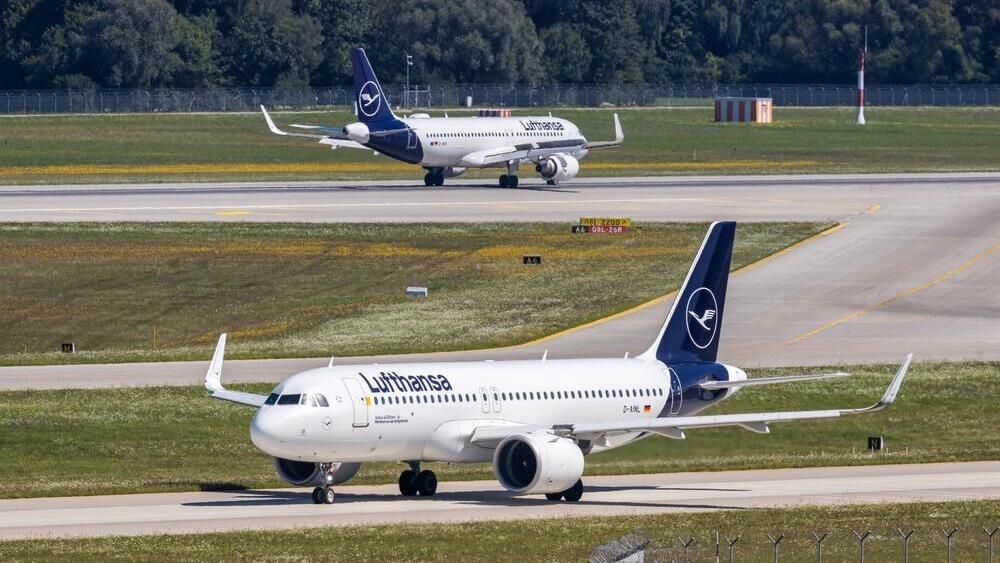
Even the decision to commemorate 100 years since the founding of Deutsche Luft Hansa, the original company established in 1926, reflects the shift in approach. For many years, the company emphasized the legal and organizational break between that predecessor, which was deeply integrated into the Nazi regime and dissolved in 1946, and the modern Lufthansa founded in 1953.
Members of Lufthansa’s management and supervisory board joined the Nazi Party beginning in 1930, and as the state airline it flew government officials. Lufthansa also played a role in the armaments industry and in the German air force, the Luftwaffe. In 1944, the armaments sector generated more than two-thirds of the company’s total revenue.
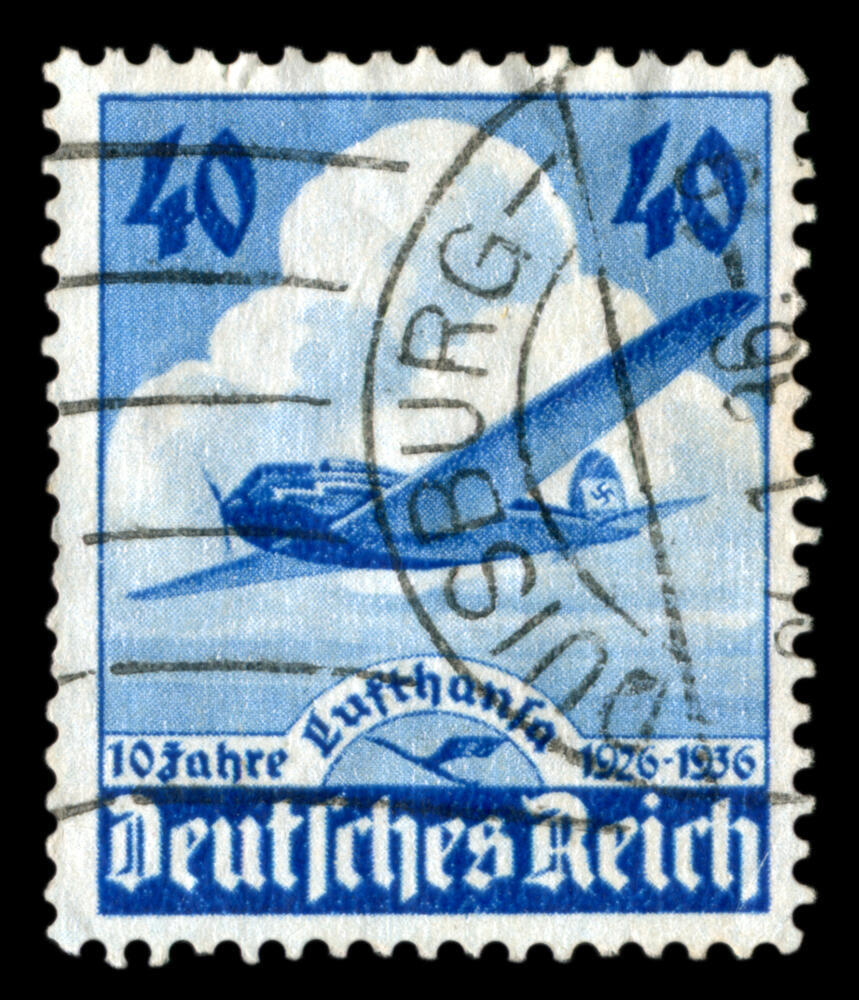
A historic postage stamp marking the 10th anniversary of Lufthansa’s founding. The stamp depicts a Heinkel He 70 passenger and mail aircraft and bears a Third Reich postmark
(Photo: Massimo Vernicesole / shutterstock)
Past executives stressed the legal separation largely for reasons of reputation and liability. Now, Spohr said, Lufthansa wants to take responsibility. One step in that direction is a new book on the company’s history that will be distributed to all 100,000 employees, along with an exhibition at the new visitor center.
Lufthansa commissioned research into its past more than 25 years ago, but at the time refused to acknowledge the findings regarding the scale of forced labor and the continuity of personnel after World War II. According to historian Manfred Grieger, who took part in writing the book, more than 12,000 people were exploited in weapons production and in the maintenance system of Luft Hansa. Only recently did it become clear that this number also included children.