

The idea of flying from London to Sydney in just three hours sounds like science fiction. But in Europe, engineers are already working on technology that could one day make such extreme travel times possible.
The European Space Agency (ESA) has launched the INVICTUS program, a hypersonic research platform designed to reach speeds of Mach 5 — more than five times the speed of sound. At this stage, the project is not focused on passenger travel, but on testing core technologies that could later underpin a new generation of ultra-fast aircraft.
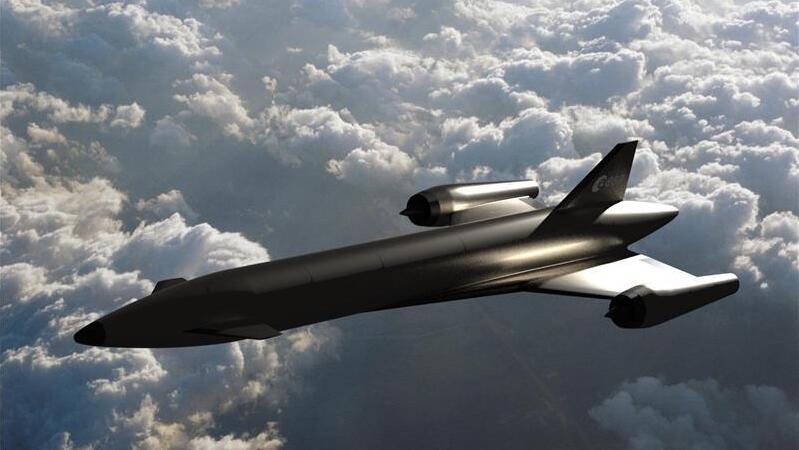
If successful, those technologies could eventually contribute to aircraft capable of drastically reducing long-haul flight times and even support future reusable spaceplane systems.
One of the biggest engineering challenges is heat. At Mach 5, air compresses and heats up dramatically around the aircraft, while friction with the atmosphere generates extreme temperatures across the vehicle’s surface and within its engines. That requires entirely new materials and propulsion systems far beyond those used in today’s commercial aviation.
ESA researchers are also developing an advanced cooling system, based on earlier experimental work, designed to rapidly cool superheated air entering the engine. The system is intended to keep engines operational under hypersonic conditions and could later be adapted for future high-speed aircraft and space-access vehicles.
Despite the ambition, the timeline remains long. ESA expects to complete the initial design phase this year, followed by small-scale engine testing. The first experimental flight of INVICTUS is planned for 2034, initially at lower speeds, with full hypersonic testing expected closer to 2036.
INVICTUS is not the only project pushing toward faster-than-sound travel. In the United States, NASA is developing the X-59 experimental aircraft, designed to tackle one of supersonic aviation’s biggest obstacles — the sonic boom. The aircraft’s unusual shape is intended to reduce noise impact on the ground, a key step toward lifting restrictions on supersonic passenger flights over land.
The latest NASA aircraft
(Video: NASA)


China is also entering the race. State-owned aerospace company Comac has unveiled plans for the C949, a conceptual passenger jet designed to cruise at around Mach 1.6 and cut long-haul travel times dramatically, including flights such as Shanghai to Los Angeles in roughly five hours. The design is expected to rely heavily on advanced automation and AI-assisted flight control systems.
Meanwhile, private companies are pushing closer to commercial reality. US-based Boom Technology has already tested prototypes of its Overture aircraft, aiming to carry passengers at speeds of up to Mach 1.7 by the end of the decade, powered by sustainable aviation fuel.
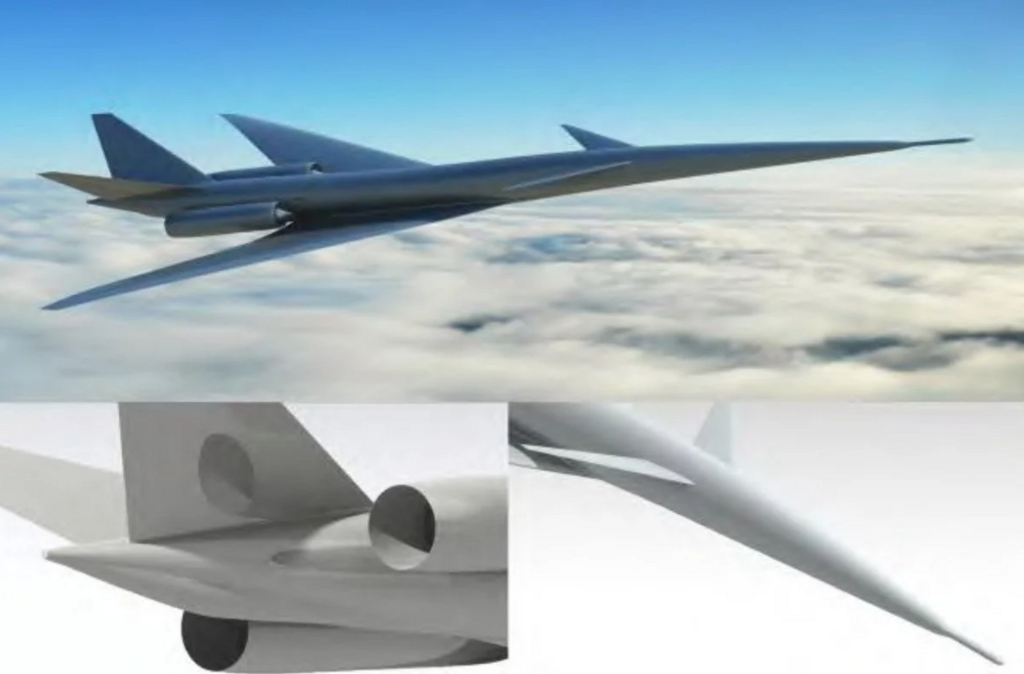
Rendering of the Comac C949 aircraft
Still, despite rapid progress across multiple countries and companies, a three-hour Europe-to-Australia flight remains far beyond current capabilities. The Concorde era ended more than two decades ago, leaving a gap in supersonic passenger travel that engineers are only now beginning to address again.
The maiden flight of Boom Technology’s XB-1 aircraft
(Video: Boom Technology)
For now, INVICTUS represents not a revolution in commercial aviation, but a critical testing ground. Whether it eventually leads to passenger hypersonic travel remains uncertain — but the global race to shrink the world is clearly underway.