

Dreaming of a new life abroad? A new global ranking that assessed 192 countries and territories across 24 indicators — from the cost of living and taxation to health care, security and settlement options — has named a small and somewhat surprising European destination the world’s best country for relocation in 2026. Estonia narrowly claimed the top spot ahead of Singapore, followed by Malaysia and Portugal. So what made the Baltic nation the leading choice, and where did Israel rank?
The 2026 Global Relocation Index was published by consulting firm Rumavi. It compares countries using 24 indicators divided into four main categories: finance and taxation, quality of life and health, safety and stability, and settlement and employment opportunities.

The criteria included the cost of living, housing prices, the quality and accessibility of health care, air quality, climate, digital infrastructure, personal safety, political stability, visa options, pathways to permanent residency, education and the business environment.
It is important to note, however, that this is not a general quality-of-life ranking. Rather, the index seeks to assess how suitable each country is for people considering moving there. Alongside the overall ranking, five specialized rankings were published, weighting the same data according to the needs of retirees, digital nomads, families and entrepreneurs, as well as the tax-friendliness of each country.
Why Estonia?
Estonia received a score of 72.8 points, edging out Singapore, which scored 72.6, by just two-tenths of a point. The Baltic country also ranked first in the world for families, second for entrepreneurs, fifth for tax-friendliness and sixth for digital nomads.
Among Estonia’s most notable strengths were its banking and currency infrastructure, which received a score of 98.9, and its business opportunities, with a score of 96. Protections for the property rights of noncitizen buyers also received a particularly high score of 90.
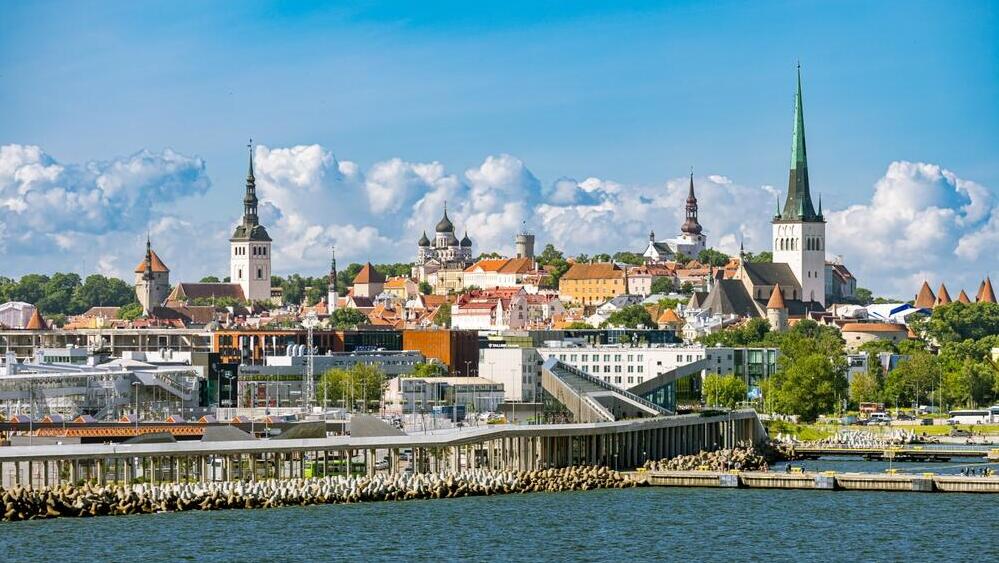
The skyline of Tallinn, Estonia’s capital
(Photo: Xseon/Shutterstock)

Saaremaa Island, Estonia
(Photo: Tomasz Wozniak/Shutterstock)
One factor contributing to Estonia’s position is its long-standing investment in digital services. It was among the first countries in Europe to introduce a digital nomad visa and operates the e-Residency program, which allows entrepreneurs from around the world to establish and manage a company in the European Union online. The program does not, however, grant residency rights or citizenship.
Even the top-ranked country has drawbacks. Estonia received a particularly low score of 20.1 for climate comfort because of its cold, dark winters and a score of only 62 for cost of living. Its position at the top was therefore not driven by pleasant weather or low prices, but by a combination of stability, security, a developed business environment and accessible public and digital services.
For Israelis, a high ranking does not guarantee that the relocation process will be simple. Each country has its own immigration policies and entry requirements, and relocation may depend on finding a local employer, establishing a business or obtaining an appropriate residence permit. Even when a country ranks highly, the feasibility of moving there depends on individual circumstances and immigration rules.

Singapore, ranked second
(Photo: Richard Whitcombe/Shutterstock)
Where did Israel rank?
Israel ranked 65th out of 192 countries and territories, with an overall score of 63.9 points. According to the index, its main strengths were its startup ecosystem, which received a score of 94.3, digital infrastructure with 89.5 points and banking and currency systems with 89.3 points.
On the other hand, Israel received a score of just 11 for conflict risk, 33.9 for cost of living and 37.9 for the availability of green spaces.
Israel’s best result was in the ranking for entrepreneurs, where it placed 39th. It ranked 74th for tax-friendliness, 86th for families, 94th for digital nomads and 116th for retirees.
A starting point, not a recommendation to pack
The index’s authors say it combines data from international databases with Rumavi’s expert assessments in areas where no comprehensive global database exists or where the available figures do not, in their view, accurately reflect the realities facing people considering relocation.
The quality of the data is also uneven. About 127 countries have data coverage classified as strong or complete, while the level of certainty is lower for 65 countries. The index’s authors therefore emphasize that it should be viewed as a tool for comparing countries, not as a substitute for thorough research before making a relocation decision.