

The war entered its fourth day Tuesday, and Ben Gurion Airport and Israel’s airspace remained closed. By the afternoon, however, it appeared that Ben Gurion could reopen early Thursday morning.
For now, the airport is operating under heightened security, with U.S. refueling aircraft and Israeli Air Force activity present in recent days, while all civilian flights remain suspended.
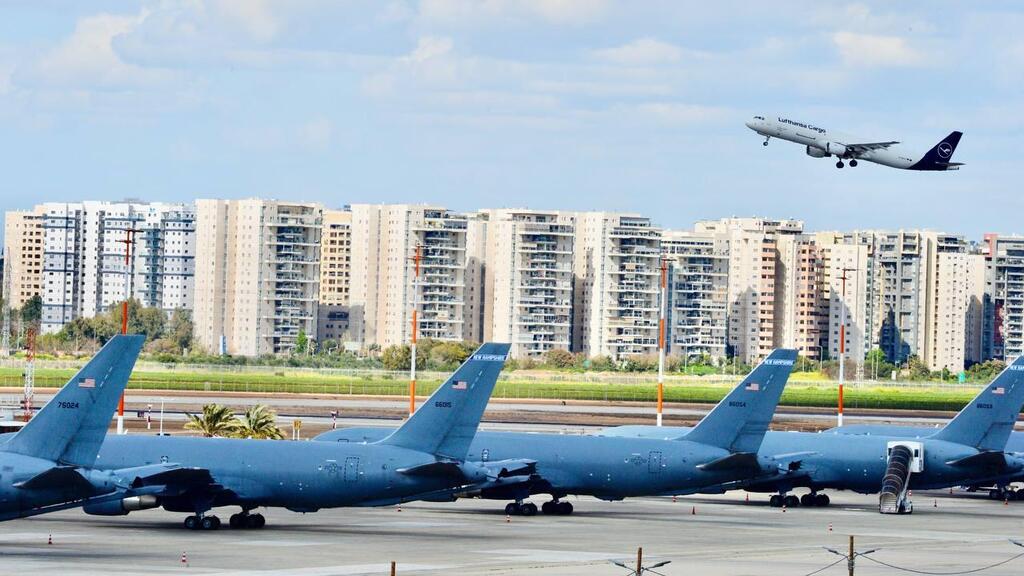
Transportation Minister Miri Regev said Monday that airlines had been asked to prepare for the possibility of a gradual reopening starting next week. By Tuesday afternoon, officials indicated that the phased reopening could begin Thursday, with discussions ongoing at the Transportation Ministry.
Under the emerging plan, authorities are preparing for an intensive airlift to return Israelis stranded abroad. The outline calls for up to two full flights per hour, operating around the clock, with a preference for wide-body aircraft to speed the pace of returns. Aircraft landing at Ben Gurion would depart shortly after disembarking passengers, flying out empty to avoid prolonged ground time.
Ten percent of passengers on each flight would be Israelis with humanitarian cases.
The plan differs from the framework used during Operation Rising Lion, when only one flight per hour was permitted, at half capacity, during designated daytime hours and using narrow-body aircraft. This time, if approved, officials intend to operate on a much broader scale, approaching an air bridge.
At the same time, repatriation flights are already operating via Taba and Sharm el-Sheikh in Egypt. Airlines have been authorized at this stage to operate “dry leases,” meaning foreign aircraft and crews. Discussions are underway with Egyptian authorities to approve “wet leases,” which would allow Israeli airlines to operate their own aircraft with Israeli crews. Such a move requires detailed security approvals and stringent aircraft protection measures. If approved, it would significantly increase the number of flights to Sharm el-Sheikh and Taba.
Several airlines are already operating alternative routes. TUS Airways is running daily flights from Athens and Larnaca to Taba. Arkia has expanded operations from Athens, Larnaca, Rome and Sofia using leased foreign aircraft. Blue Bird Airways is operating a daily flight from Athens, and Israir is returning passengers via Trade Air and HelloJets.
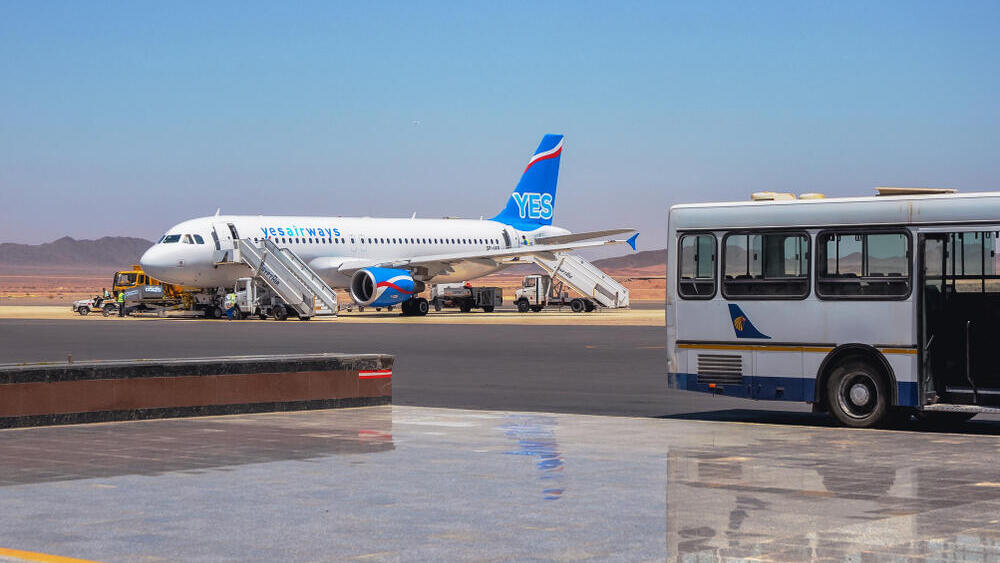
Taba Airport
(Photo: Fotokon / shutterstock)
El Al said it would not operate flights to Taba at this stage, citing a lack of security approval and Israel’s severe travel warning for Egypt. The airline said it is preparing to operate large-scale rescue flights from multiple destinations once Israeli airspace reopens.
Wizz Air announced that beginning March 6 it would significantly expand service to Sharm el-Sheikh International Airport as an alternative for passengers affected by the suspension of direct routes to Israel, increasing frequencies from Budapest, Rome Fiumicino, London Luton, Milan Malpensa and Bucharest.
Arkia is also marketing a dedicated Paris–Sharm el-Sheikh flight operated by Hi Fly using an Airbus A330, scheduled to depart Wednesday from Charles de Gaulle Airport.
Sharm el-Sheikh is about a three-hour drive from Eilat, making it an indirect option that requires independent overland travel. Passengers must reach the Taba border crossing on their own and continue into Israel. Israel’s travel warning for the Sinai Peninsula remains at its highest level, advising against travel to the area and urging those there to leave as soon as possible, raising questions about the alternative’s suitability for some passengers.
All flights to Taba and Sharm el-Sheikh are coordinated with security authorities in cooperation with the Transportation Ministry, and the scope of operations is expected to expand as additional approvals are granted.
Unlike Operation Rising Lion in June 2025, when airports in Aqaba and the United Arab Emirates served as logistical alternatives for relocating Israel’s aircraft fleet and supporting Israeli Air Force activity, the current situation is more complex. Airports in Aqaba, Dubai and Abu Dhabi are not considered operational options due to regional missile threats and because some have themselves been affected, leading to airspace closures there as well.
The closure of airspace in the United Arab Emirates since Sunday has also left Israelis stranded there, following reported strikes on airports and the suspension of civilian traffic. One option under consideration, should the crisis continue in line with regional attack patterns, is to conduct evacuations using Israeli aircraft designated as military-style flights operating from bases or military airfields once Israeli airspace reopens.
The security escalation is affecting aviation across the Middle East. In recent days, around 10 countries in the region — including Iran, Iraq, Israel, Jordan, Kuwait, Qatar, Saudi Arabia, Syria, Bahrain and the United Arab Emirates — have fully closed or significantly restricted their airspace to civilian flights.
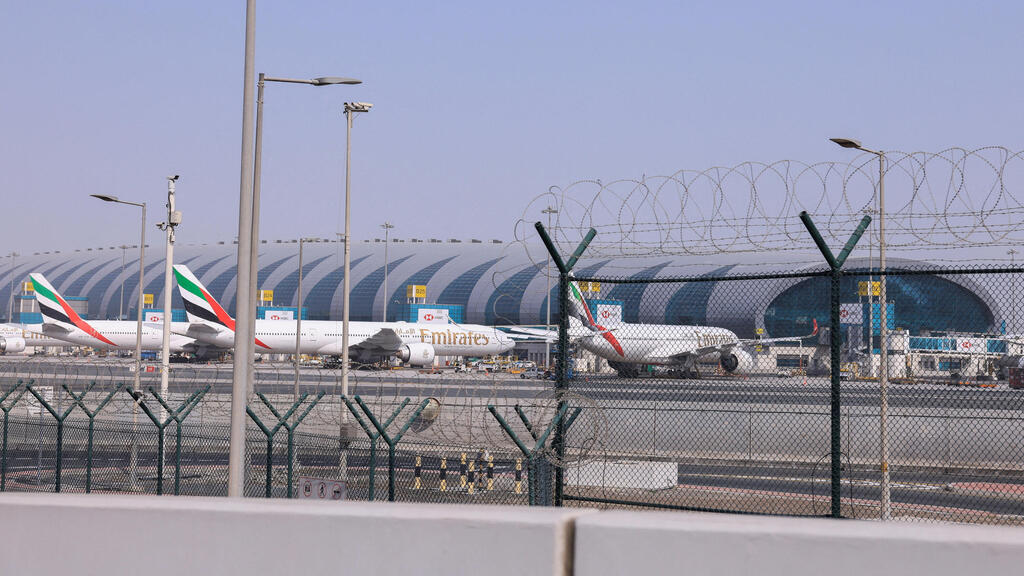
Emirates aircraft at Dubai International Airport
(Photo: REUTERS/Raghed Waked)
The result is that aircraft cannot fly over large swaths of the region, forcing airlines to cancel flights or take lengthy and costly detours. The European Union Aviation Safety Agency has issued an unusual warning recommending that flights avoid the area until further notice, a recommendation adopted by many carriers worldwide, amplifying the global impact.
Major Gulf hubs — Dubai International Airport, Abu Dhabi International Airport and Hamad International Airport in Doha — are operating only partially. Some flights have been canceled entirely, while others are operating as special or repatriation flights. Etihad Airways is running a limited number of exceptional flights in coordination with authorities, but regular schedules remain far from normal.
According to international flight-tracking data, more than 3,000 flights were canceled in a single day at seven major Gulf airports. At the same time, European and Asian airlines are suspending flights to the region or rerouting aircraft to avoid closed airspace, creating a ripple effect on intercontinental routes worldwide.