

Early morning. A few rays of sunlight peek through the curtain. One eye opens halfway, and the brain immediately remembers: last night, when we arrived at the hotel, it was too dark to see anything. Now the horizon is visible. And what a horizon it is. A step and a half toward the window, the curtain slides aside, and a breathtaking bay is revealed, glowing in the sunlight. Good morning, Vietnam.
Vietnam travel
(Video: Guy Bar-On)


A weeklong visit through the enchanting landscapes of northern Vietnam proves that every morning is a good morning in this country, rich in green fields, flowing rivers and magical bays. With all the indulgences it offers, it can also be described quite simply: a trip to paradise.
The city in red
Let’s start with the flight. Israeli airline Arkia recently launched a weekly direct flight to Hanoi, Vietnam’s capital, making it possible, for the first time, to reach the country without any connections. The price is not low, ranging from about $1,550 to $2,000 and sometimes more for a round-trip ticket, including a carry-on, a checked suitcase and two hot meals.
The direct route is good news not only for young travelers but also, and perhaps especially, for families and older travelers. Vietnam, despite its slightly backpacker image, is suitable for all audiences.
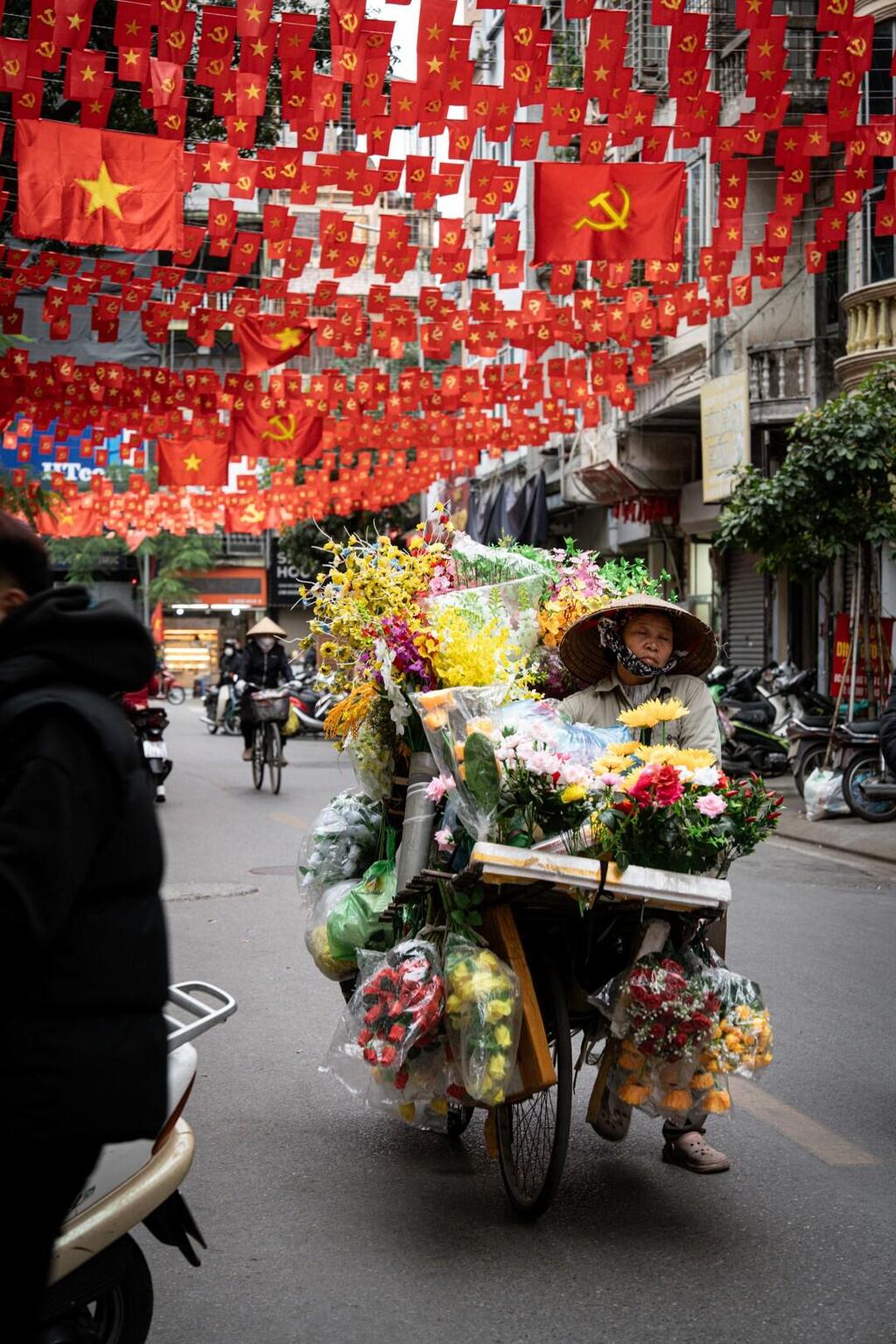
Hanoi is a charming, colorful city filled with red flags and millions of motorbikes. It has the slightly chaotic charm of the Far East, but it is not like Bangkok, Shanghai or Delhi. It manages to feel like a major city while remaining accessible.
You can hop between restaurants and try dishes that have gone viral on TikTok, such as Pho soup. You can go shopping, with Uniqlo offering some of the lowest prices around. You can visit museums and historical sites, or simply sit with a cup of coconut coffee, (yes, there is such a drink, and it's delicious), and take a break from the bustle.
The most touristy area in the city is the Old Quarter. Narrow streets packed with shops, trendy cafés alongside small street stalls that block the sidewalks and offer everything, from fruit and grilled meat to trendy dolls, you name it.
One of the area’s most popular attractions is Train Street, where a train passes twice a day just inches from the surrounding buildings. The street is picturesque, lined with cafés designed to let tourists watch the passing train without putting themselves at risk, and of course, to take photos. According to TikTok, this is Hanoi’s No. 1 attraction. In reality, it is a cute experience that photographs beautifully, nothing more.
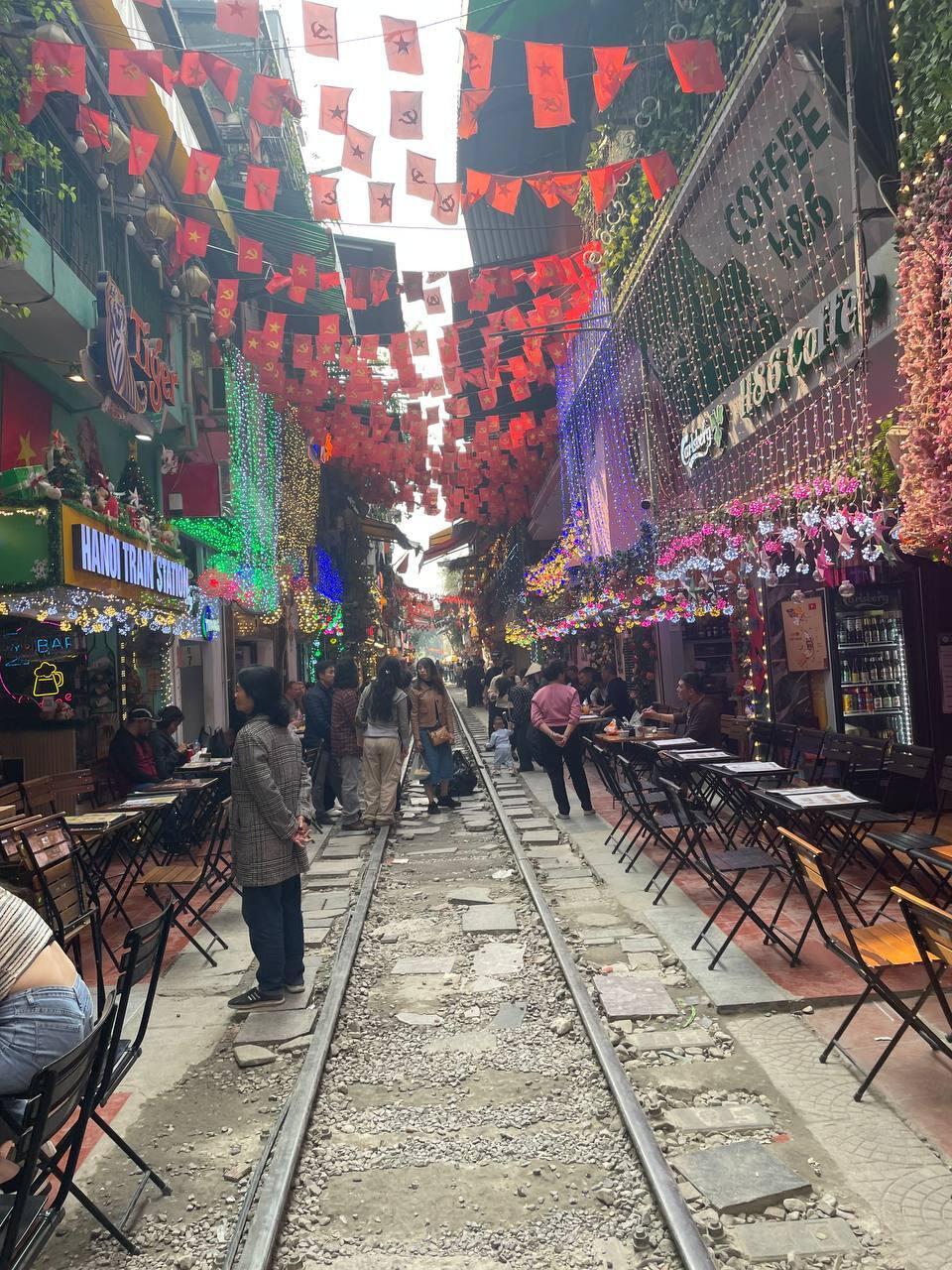
Train street in Hanoi
(Photo: Nily Levin)
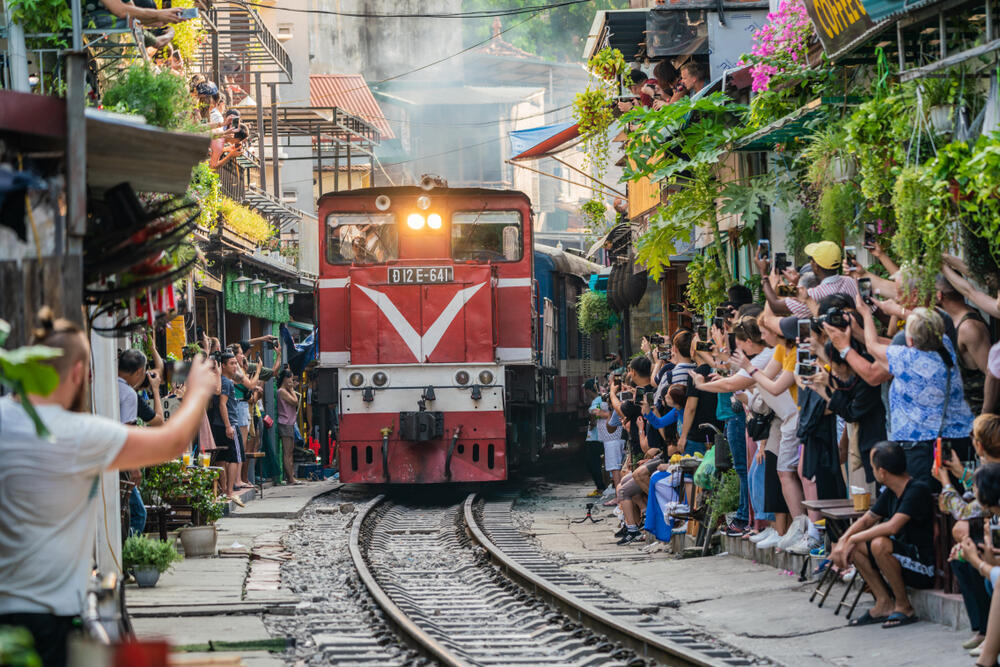
As the train approaches, cameras are raised
(Photo: Bule Sky Studio / shutterstock)
Nature enthusiasts should head to Hoan Kiem Lake in the city center. A pleasant promenade surrounds the lake, and a bridge leads to Ngoc Son Temple. We visited shortly before the Vietnamese New Year, and along the lake’s shores, Vietnamese women were posing for photos ahead of the celebrations. This is not a quick selfie; they arrive in traditional dress, with equipment worthy of a professional studio and enthusiastic assistants, and pose for hours, or so it appears. Either way, the sight is delightful.
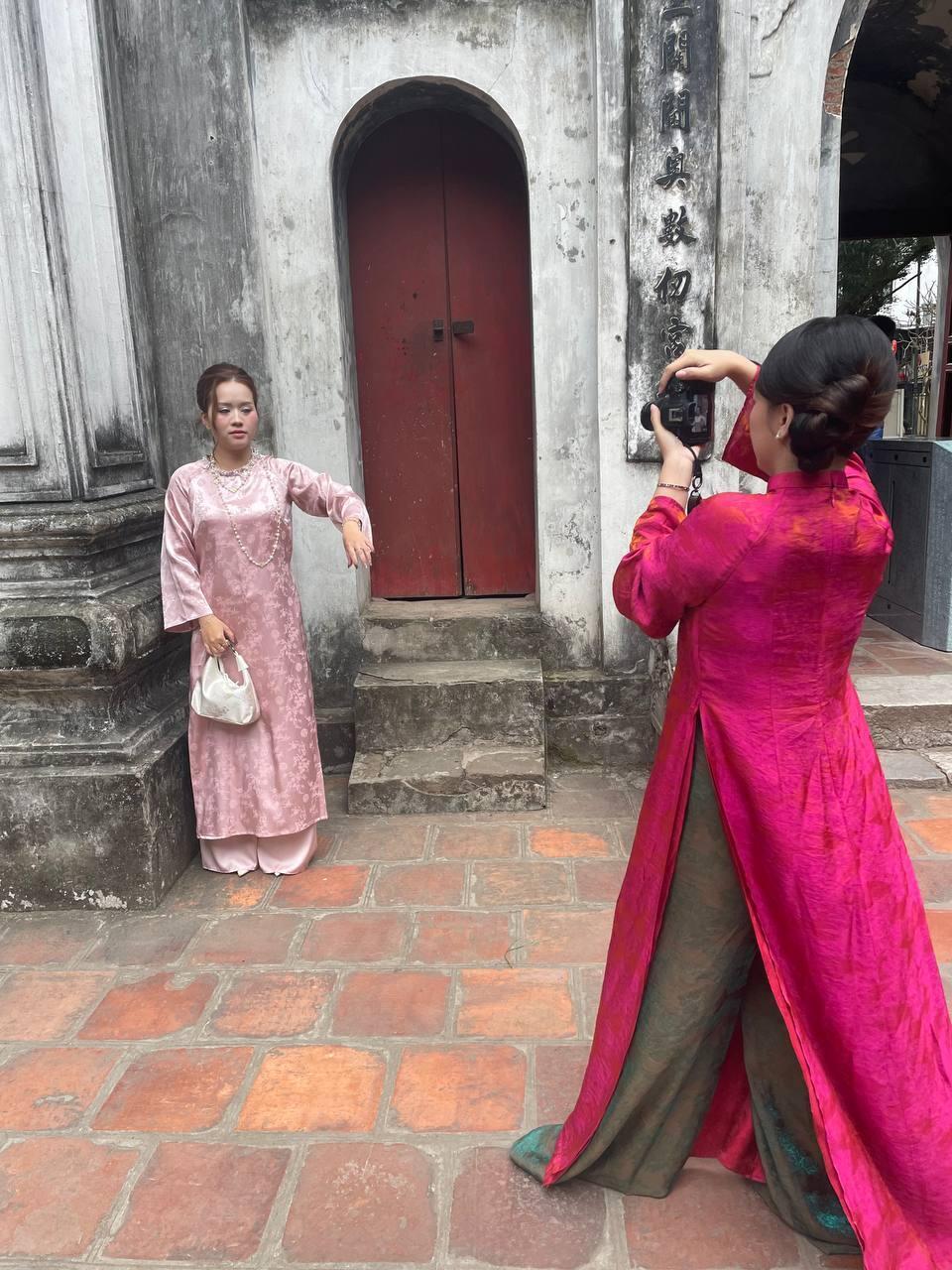
Women arrive fully equipped for photo shoots in Hanoi
(Photo: Nily Levin)
Another recommended site is the Temple of Literature, Vietnam’s first university, founded in the 11th century. Inside, there is a beautiful garden, statues, stone structures and a temple dedicated to Confucius, whose teachings were studied here. It is a peaceful, beautiful place.
History enthusiasts can visit the mausoleum of the revered leader Ho Chi Minh, whose face still appears everywhere in the communist country and who is considered its founder and liberator from foreign rule. More history can be absorbed at the War Museum, which displays remnants of the Vietnam War.
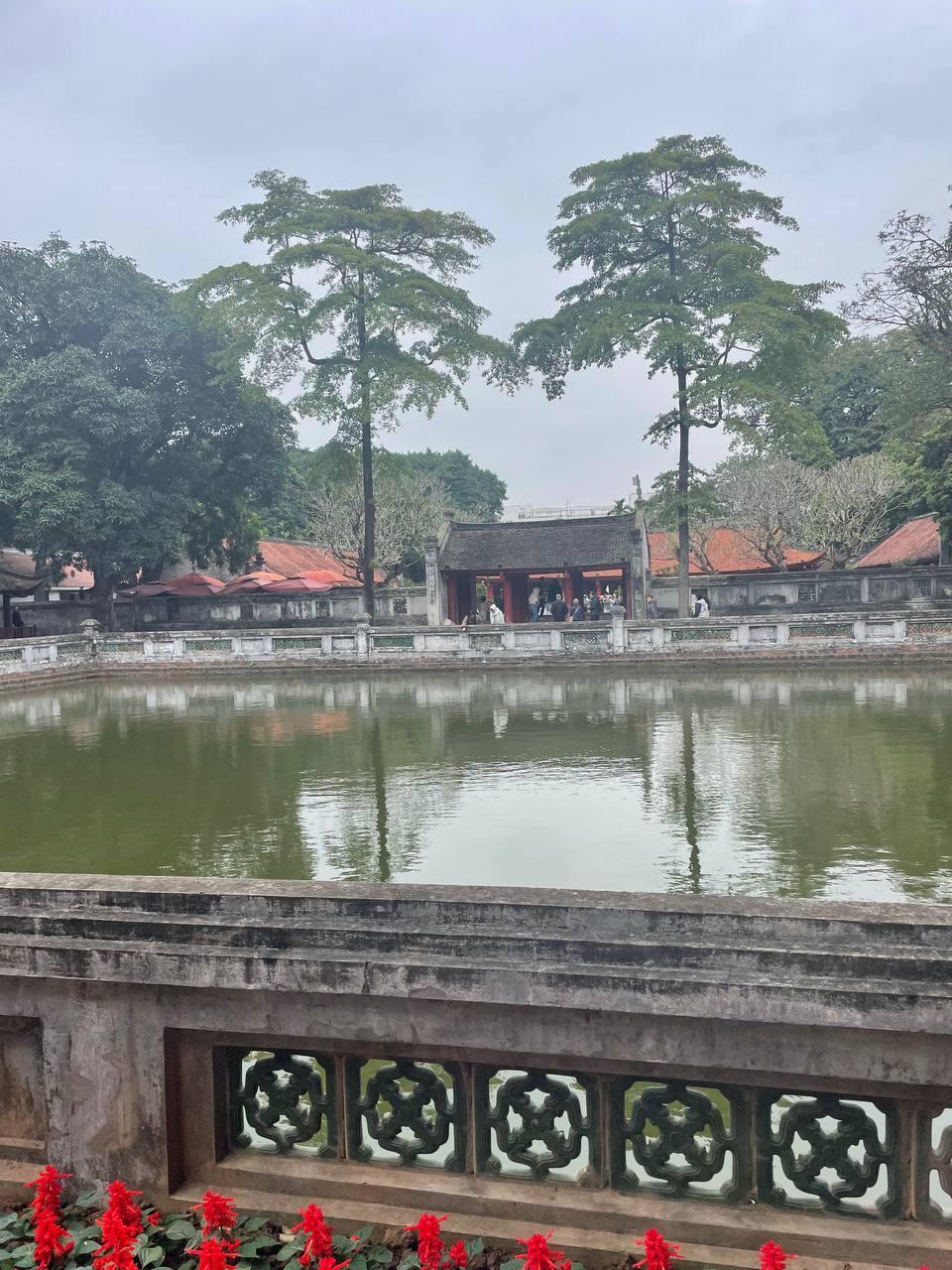
Temple of Literature, Hanoi
(Photo: Nily Levin)
Between fields and bays: Touring the north
From Hanoi, it is worth setting out to explore the spectacular landscapes of northern Vietnam, painted in shades of green and blue. Mai Chau Valley, an area of green fields and traditional local communities, is about a three-hour drive from the capital. In the valley, you can walk among rice fields and observe the local White Thai community, who engage in traditional crafts and live in wooden stilt houses.
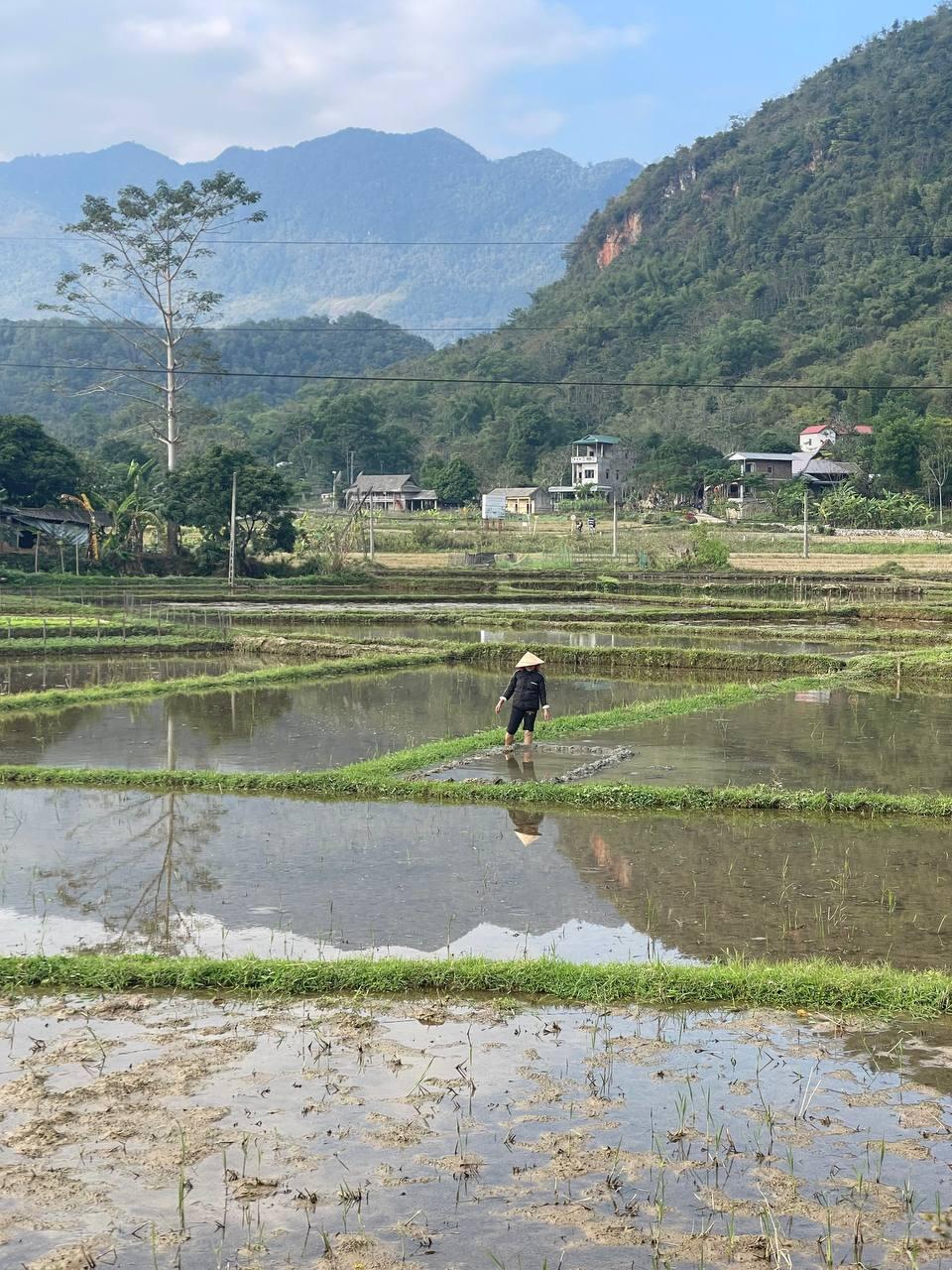
Mai Chau rice fields
(Photo: Nily Levin)
Another recommended trip is to the Pu Luong Nature Reserve, a mountainous area about a 90-minute drive from Mai Chau. The road there is winding but beautiful. Visitors can wander among rice terraces and quiet villages.
The fields are irrigated using water wheels and pipes, and the workers, or more accurately the women, as women do most of the labor in Vietnam, cultivate the fields largely by hand, with the help of water buffalo. You will not see combine harvesters here. The green fields, farmers in conical hats and flowing rivers create a magical experience, which can also be enjoyed from a calm bamboo raft ride.
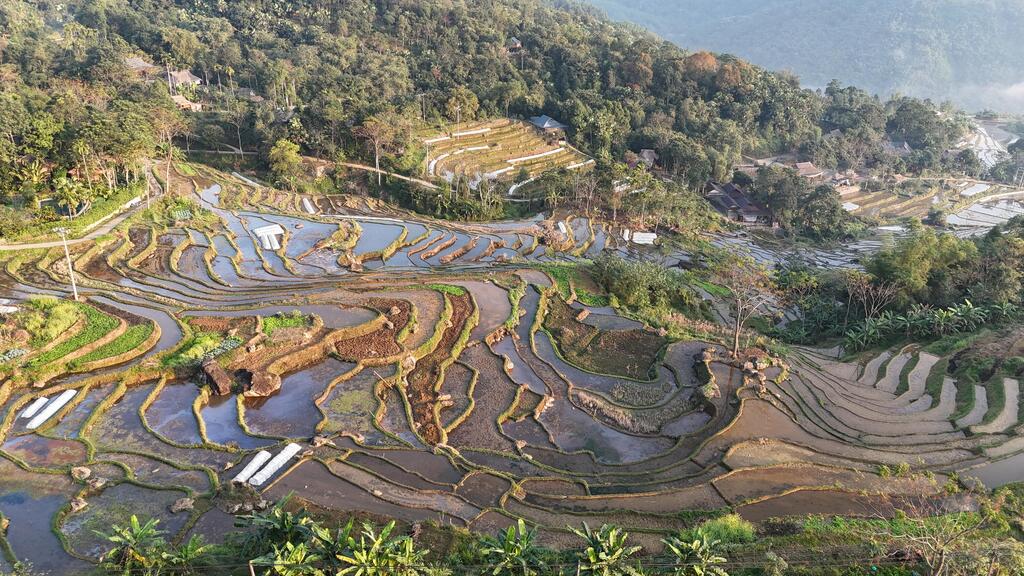
An aerial view of Pu Luong
(Photo: Guy Bar-On)
Another highly recommended area is Ninh Binh province, about a two-hour drive from Hanoi, featuring cliffs, rivers, caves, temples and, of course, rice fields. The central town is Tam Coc, a beautiful and fairly touristy spot where you can enjoy both river views, cocktails and massages.
A boat ride here is a must, watching how the rowers, again mostly women, propel the boats using their feet while passengers enjoy the surrounding scenery, the picturesque caves and the water lilies.
Another nearby excursion is Hang Mua, a viewpoint offering a 360-degree panorama of the valley below. The climb involves 500 steps, but the view more than compensates.
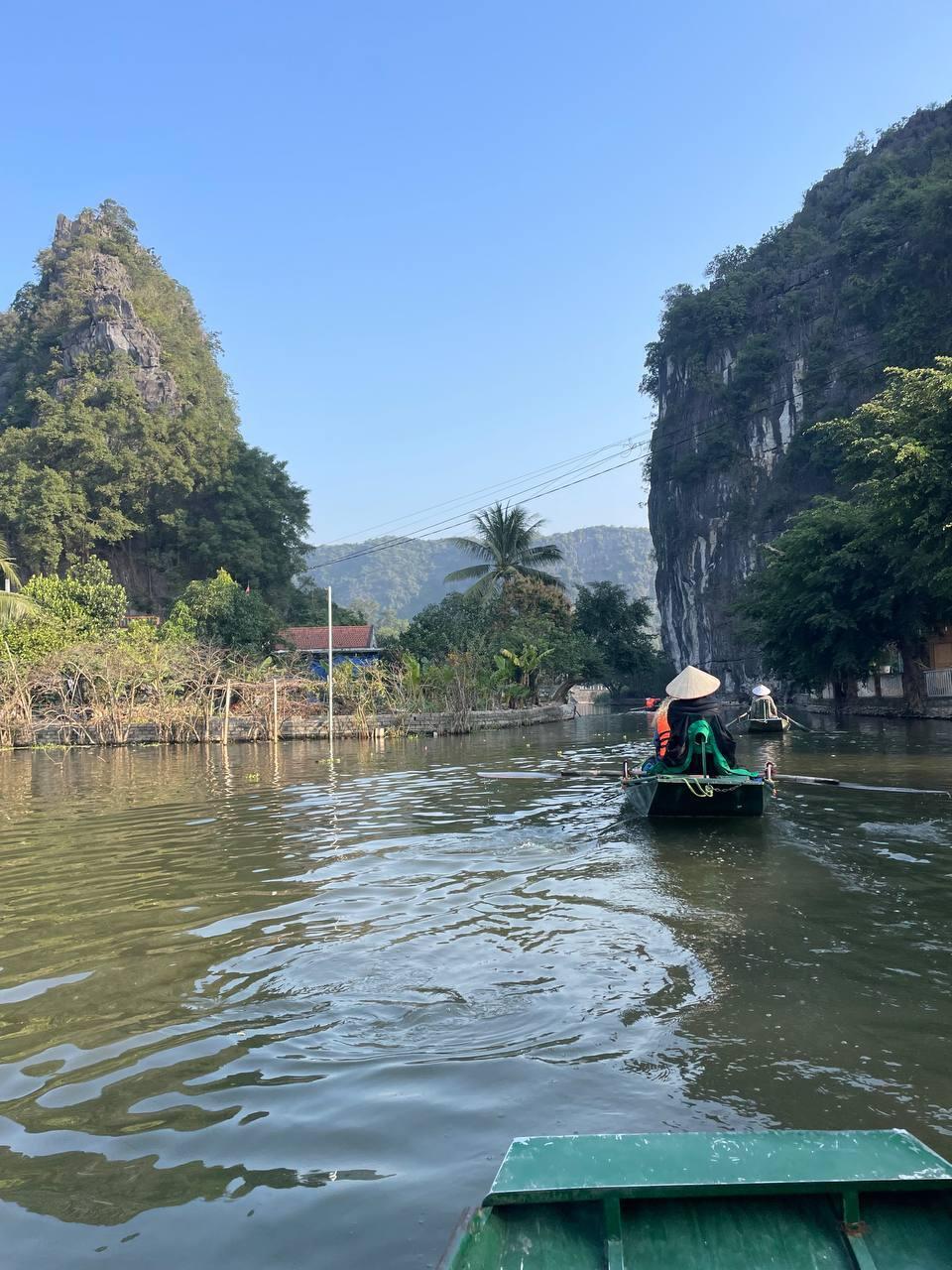
A river ride in Ninh Binh
(Photo: Nily Levin)
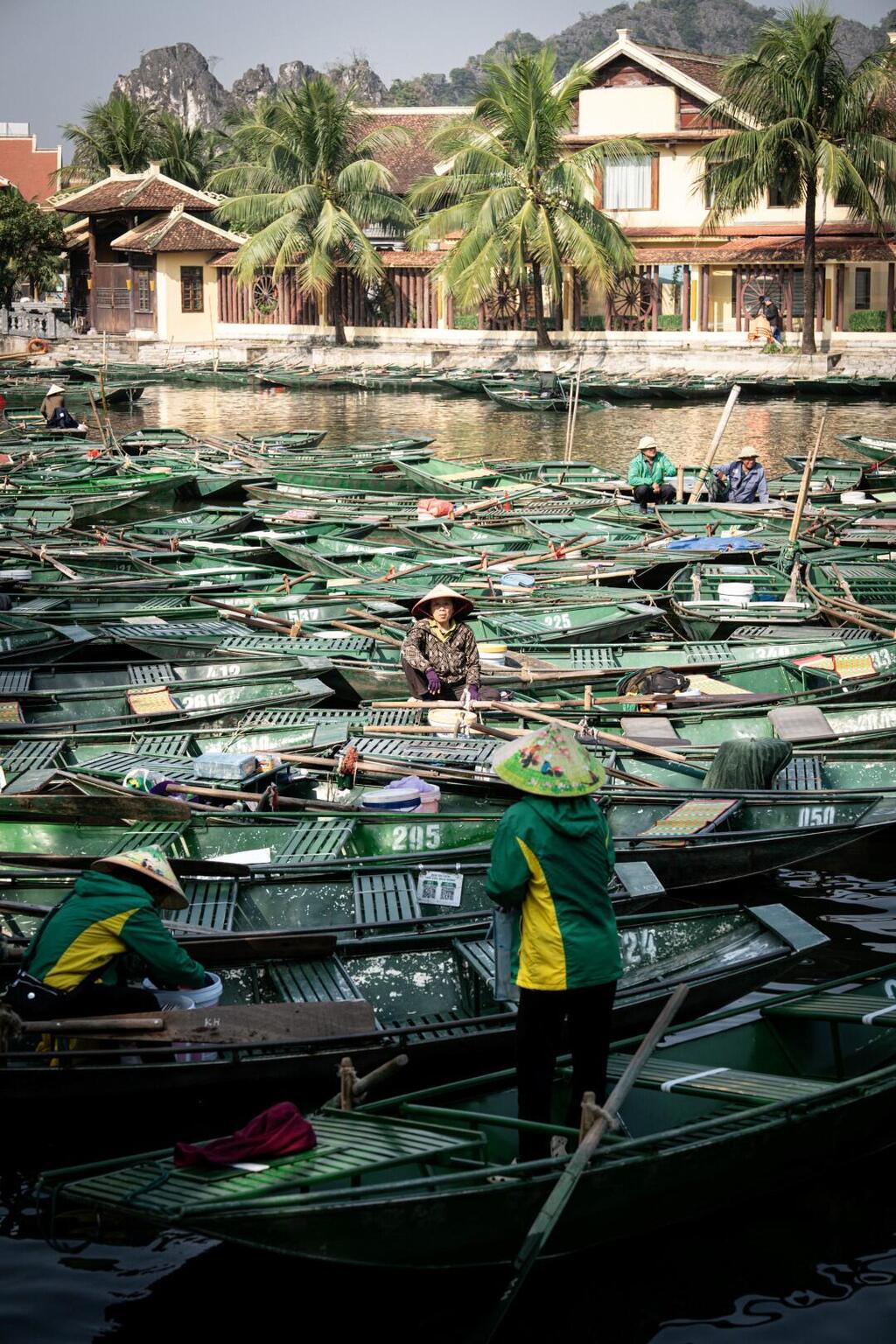
Tam Coc
(Photo: Guy Bar-On)
And from there, to the place where this story began, opening a window onto a dreamlike bay. A few hours’ drive from Ninh Binh lies Ha Long Bay, one of Vietnam’s most famous sites and one of the New Seven Wonders of Nature, for good reason.
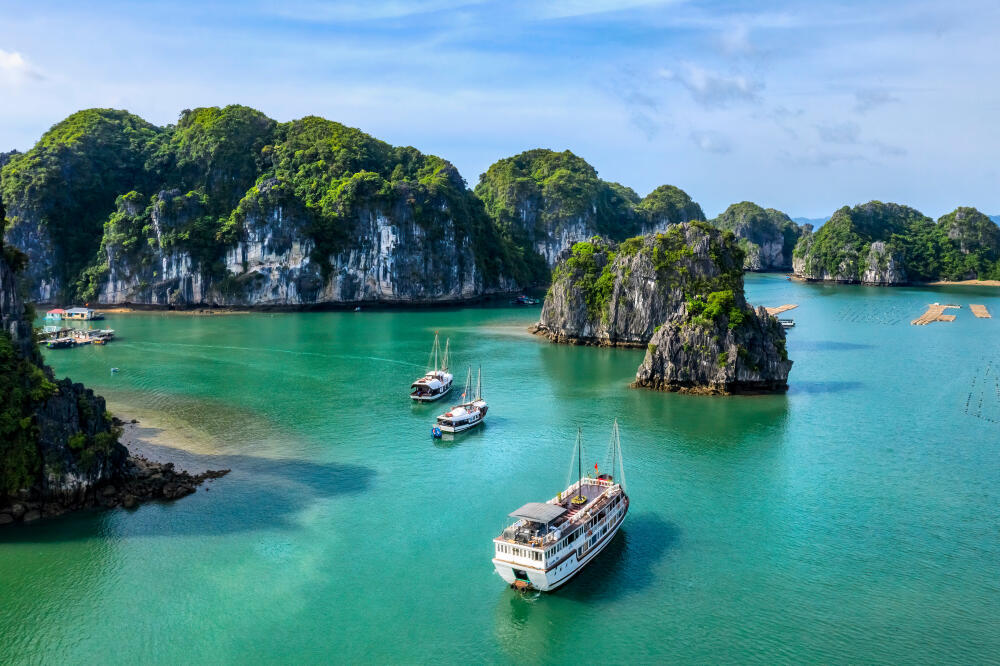
Ha Long Bay
(Photo: Nguyen Quang Ngoc Tonkin / shutterstock)
On a sunny day, Ha Long Bay looks like paradise, with blue-green waters dotted with nearly 2,000 small islands, limestone cliffs rising dramatically from the sea. Do not skip a cruise in this spectacular bay. For those interested, and you should be, the cruise includes opportunities to get into the water by boat, kayak or swimming, and fully immerse yourself in the surrounding nature. The water is calm and cool, and the beauty feels endless. Afterward, you return to the ship to recharge with a meal, a glass of wine, or both. Paradise, as mentioned.
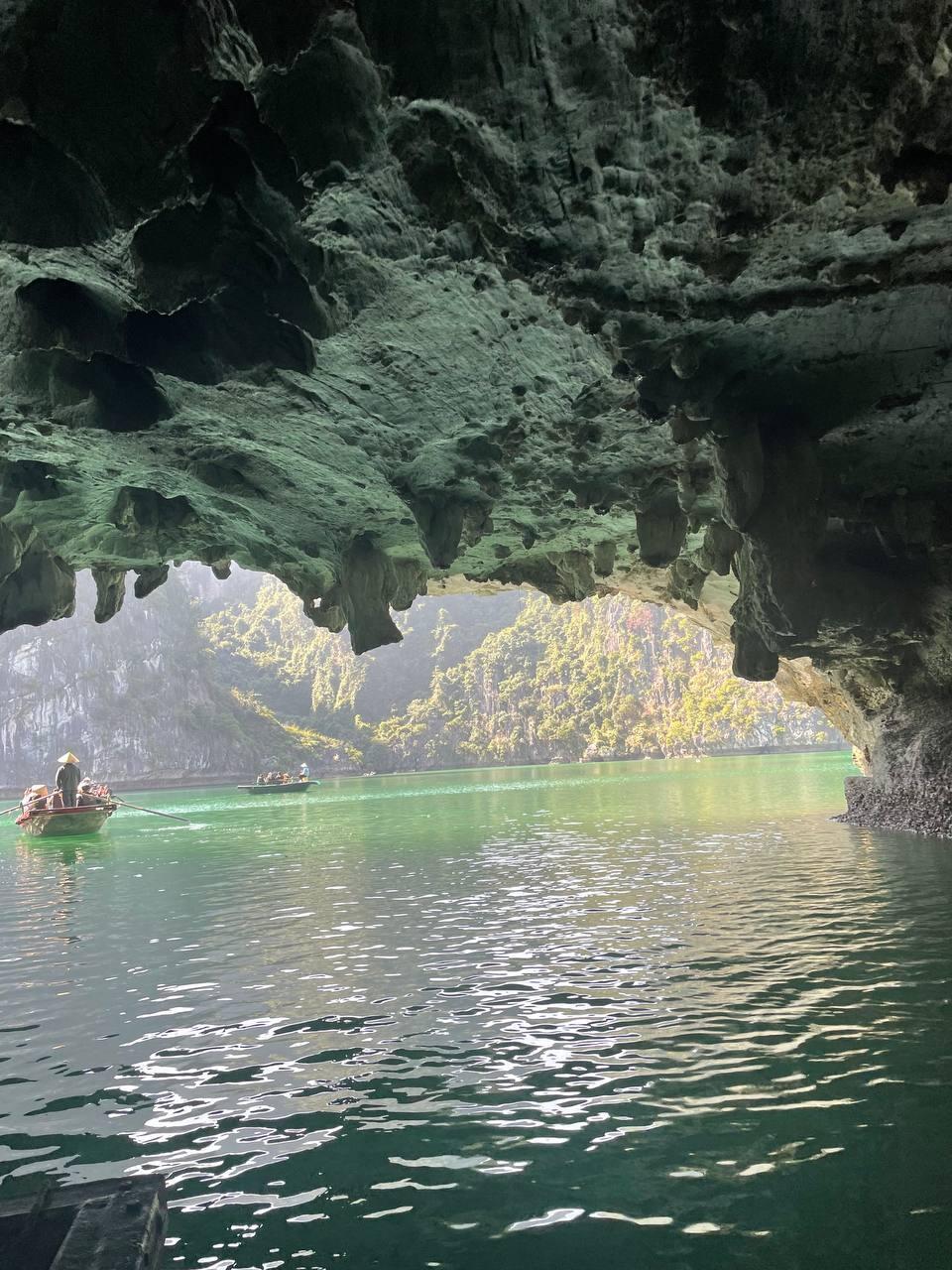
Don't skip the cruise. Ha Long Bay
(Photo: Nily Levin)
The food: Delicate, with a French twist
Vietnamese cuisine is fairly familiar to Israeli diners, though less so than Thai or Japanese food. It is a distinctive Asian cuisine, more delicate than Thai, rich in fish, seafood and tropical fruits, and also influenced by French cooking, a legacy of prolonged French colonial rule.
On the menu: sweet-spicy papaya salad, delicate nems (spring rolls wrapped in thin rice paper), noodles with various toppings, and banh mi, a baguette filled with stir-fried meat or a variety of alternatives. The dish most associated with Vietnamese cuisine is pho, available everywhere. It is a beef or chicken broth soup served with noodles and herbs. Vegetarians have nothing to worry about, with plenty of tofu-based options.
Spice lovers may be surprised to learn that food in northern Vietnam is not particularly fiery. Further south, especially in central Vietnam, dishes become spicier. One more note for Israeli diners: liquids in Vietnam are often served lukewarm. A popular and comforting sweet potato soup, for example, may arrive at room temperature. The tea served everywhere will also be lukewarm.
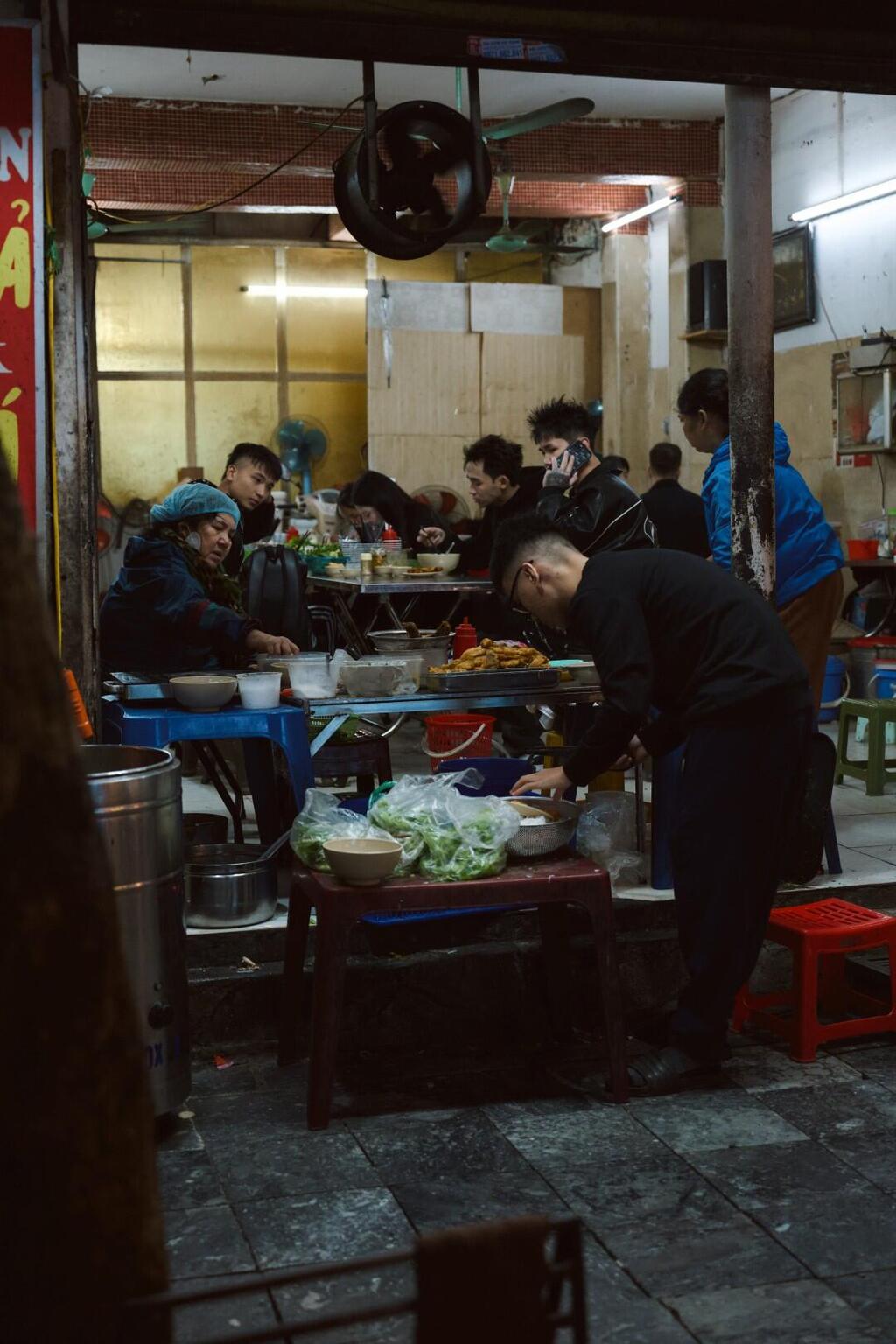
A Hanoi street eatery
(Photo: Guy Bar-On)
Coffee, on the other hand, is less gentle. Vietnam is a coffee powerhouse, both in production and consumption. Cafes offer a wide range of advanced preparations, from bitter brews to sweet versions, including the famous egg coffee. The taste is far more pleasant than it sounds, though the aftertaste can be intense. Our recommendation is to go for the coconut coffee, full of Eastern flavor.
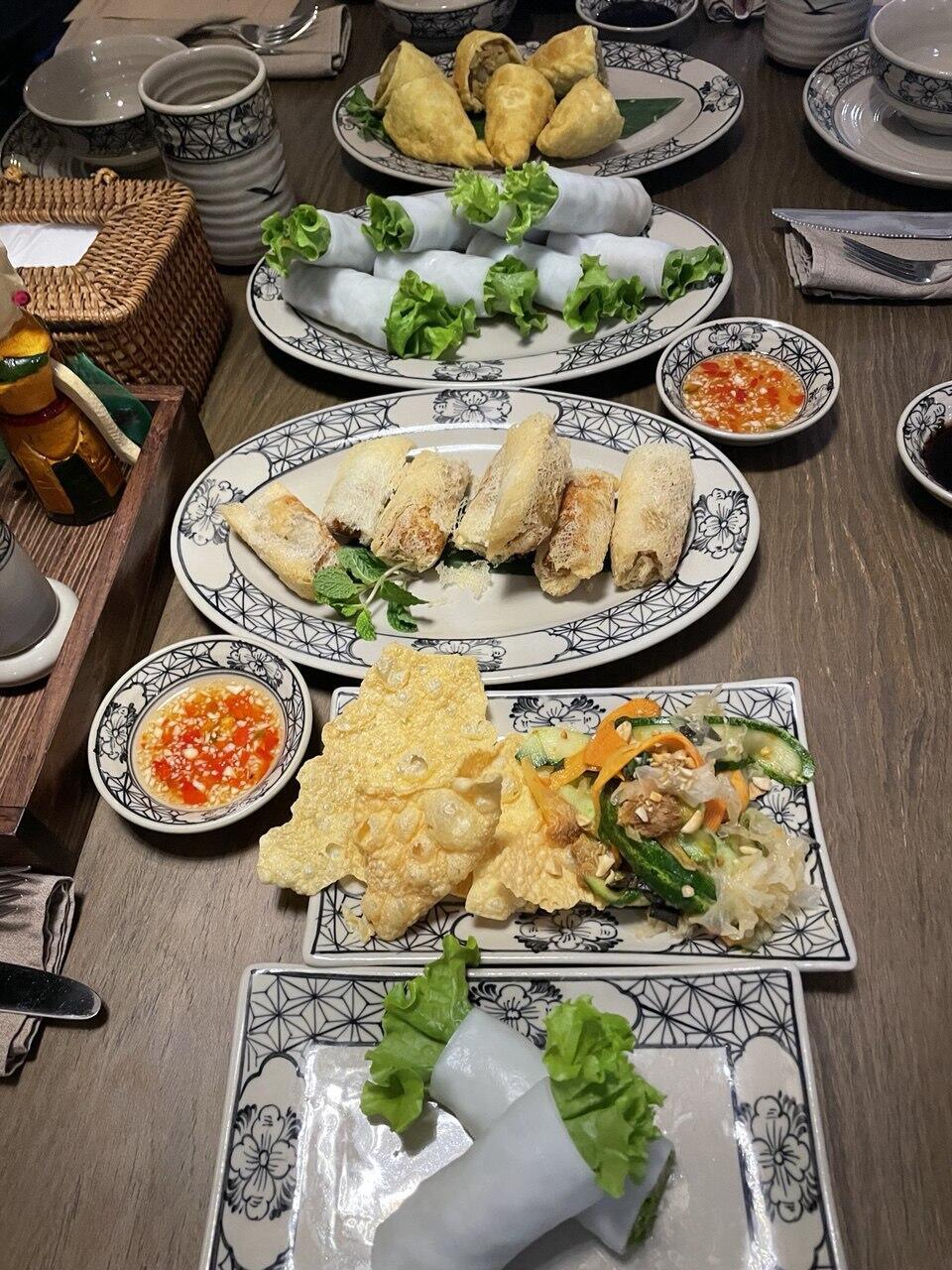
Vietnamese meal
(Photo: Nily Levin)
Prices: Indulge yourself, everything is cheap
When it comes to shopping, Vietnam is not yet Thailand, and Hanoi is not Bangkok. You will not find massive malls, but there are popular retail chains at very affordable prices, including Uniqlo. You can also have clothes tailored locally, if you have the time and patience.
More broadly, price is a major factor in choosing Vietnam. Everything is inexpensive, making it an ideal place to indulge, whether in massages, facial treatments or excellent meals. This is the place to dine at a Michelin-star restaurant for the price of a single meal at a Tel Aviv café, then finish with a rooftop cocktail, followed by another foot massage.
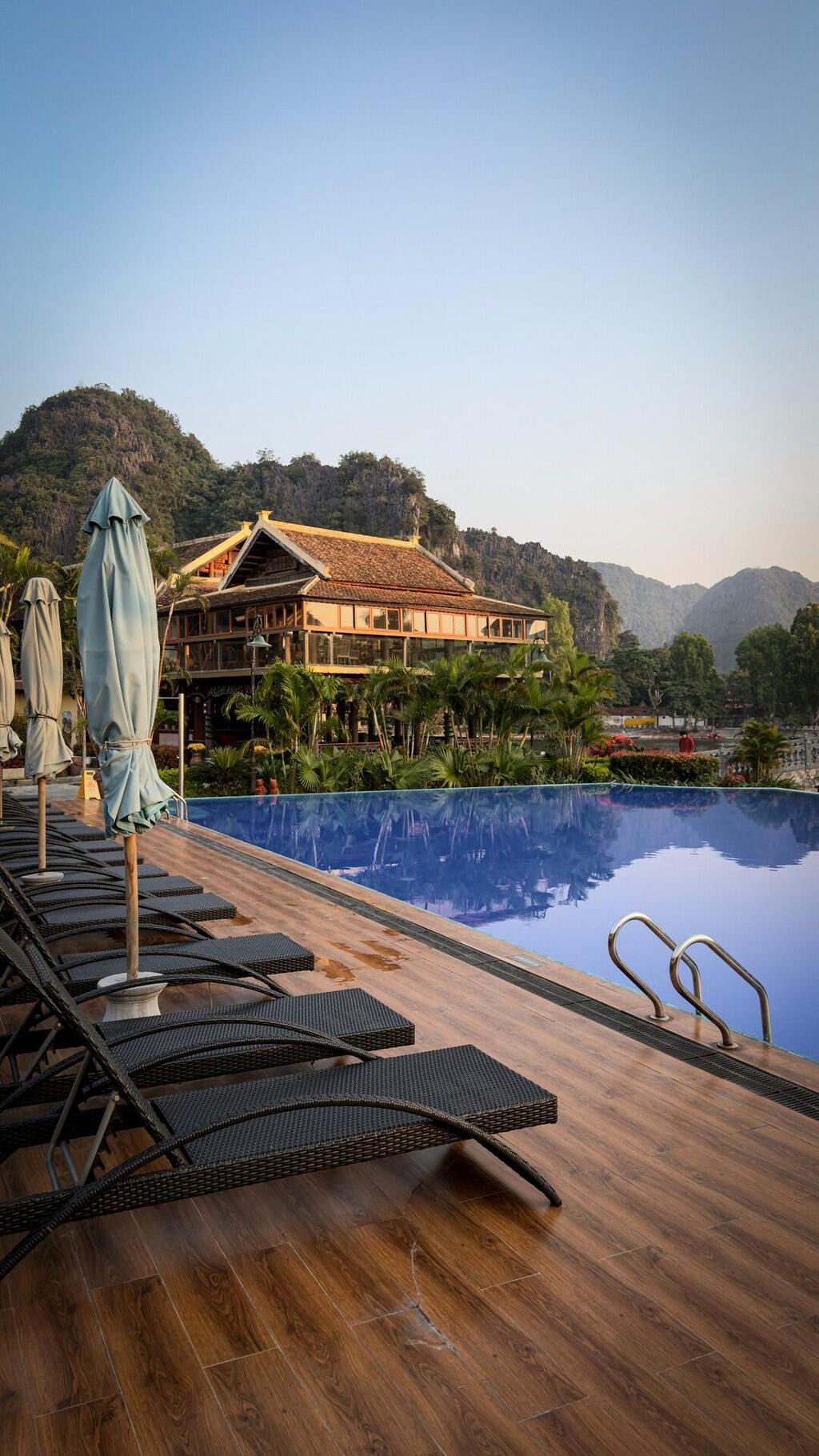
Hotel in Tam Coc
(Photo: Guy Bar-On)
The same applies to hotels. Options span the full range, but those seeking comfort will find it easily at a reasonable cost. In Hanoi, for example, a standard room at a five-star hotel such as the Grand Mercure Hanoi currently costs about 500 shekels per night. In rural areas, high-quality accommodations are also available. At the Emeralda Resort in Tam Coc, overlooking stunning river views, a spacious double room costs less than 300 shekels per night.
This comfortable infrastructure is what makes Vietnam appealing not only to young travelers. Families and older visitors can navigate the country with relative ease.
The locals welcome Israelis
Vietnam endured long and brutal periods of occupation. The Chinese, French and Japanese all ruled here, not to mention the American presence during the Vietnam War, which claimed millions of lives. And yet the Vietnamese people are kind, gentle and eager to help. Not everyone speaks English, but tourists are warmly welcomed everywhere, with genuine efforts to assist.
Do not be surprised if hotel staff run after you because you left behind an almost empty bottle of shampoo. They simply want to make sure you did not forget it.
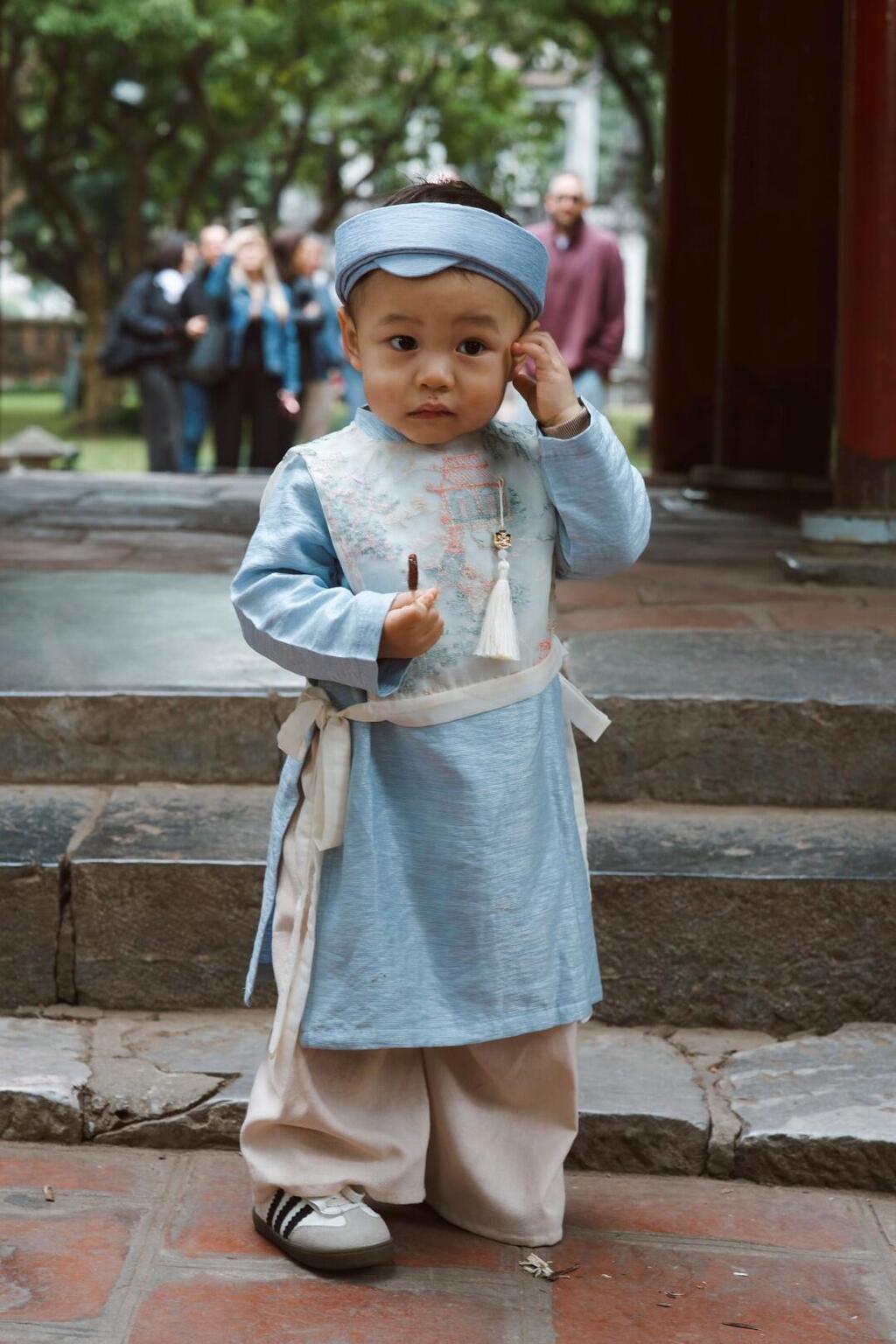
A child in traditional dress in Hanoi
(Photo: Guy Bar-On)
Israelis, incidentally, are greeted with smiles. Boycotts and protests have not reached this part of the world. On the contrary, every time we mentioned where we were from, we received compliments, from “Israelis are very smart” to “All the Israeli women are beautiful.” Always nice to hear.
The launch of the direct Tel Aviv-Hanoi route was marked by official ceremonies, reflecting Vietnam’s interest in good relations with Israel. In short, there is no reason to worry about antisemitic protests.
More generally, Vietnam is a fairly safe country. The communist government is very strict with criminals, and the streets feel safe at all hours, which is always good news for tourists.
The weather: Not only tropical
Vietnam’s weather varies throughout the year and between regions. In the north, summers are quite hot and winters relatively cold, especially in mountainous areas. The best times to visit are usually autumn and spring, when rainfall is limited and temperatures are moderate. We arrived in January and still enjoyed excellent weather.
In the south, the climate is hot and tropical, and the recommended time to visit is during the dry season, from December through April.
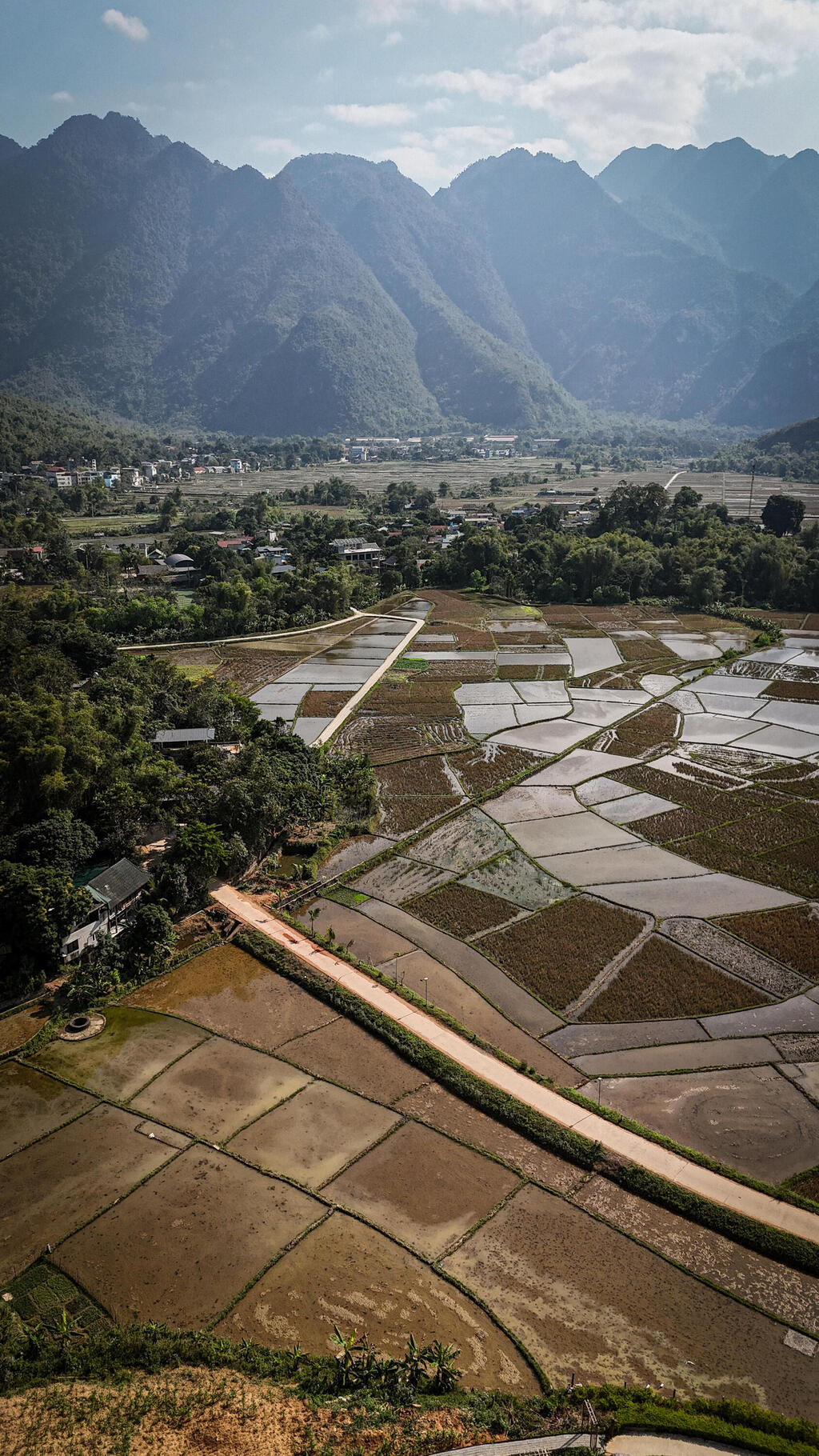
Cold winters in the mountains. Pu Luong
(Photo: Guy Bar-On)
A weeklong trip provides only a taste of this beautiful country. Vietnam offers countless additional tours and experiences, from Sapa in the northwest, with its mountainous landscapes, rice terraces and villages, to Ho Chi Minh City, formerly Saigon, and the enchanting beaches of the south. Either way, mornings are always good in Vietnam.
The writer was a guest of Arkia Airlines