

A glance at the flight map from Israel to popular vacation destinations around the world does not reveal many surprises. Travelers looking for a quiet corner to clear their heads, enjoy green landscapes or experience a slightly different urban atmosphere often find themselves choosing from the same familiar list.
Again and again, packed planes take off from Ben-Gurion Airport to the same destinations: Athens, London, Paris, New York, Prague, Bangkok, Rome, the Greek islands, Berlin and Budapest.
Gallery
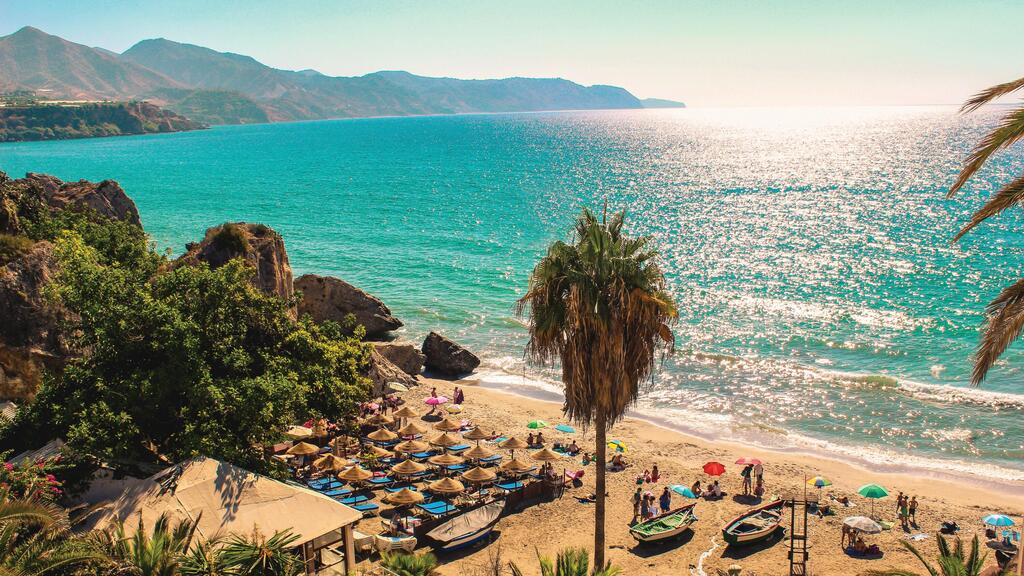
Costa del Sol, southern Spain. Beautiful sun-soaked beaches
(Photo: Shutterstock/ASAP Creative)
But what about the rest of the world?
For anyone willing to open both their mind and the map, there are plenty of destinations that offer something different. Some are not especially remote, and some are not even very far away. What they do require is a willingness to step away from the automatic choices and try a vacation that feels less predictable.
Here are six destinations that offer a different kind of escape.
Europe: Vilnius, Lithuania
Where are we?
Vilnius is the largest city in Lithuania and the country’s capital, with about 645,000 residents. Founded in the 14th century, the city has a long and layered history shaped by periods of Polish and Russian rule, influences that are still visible today in its architecture and culture.
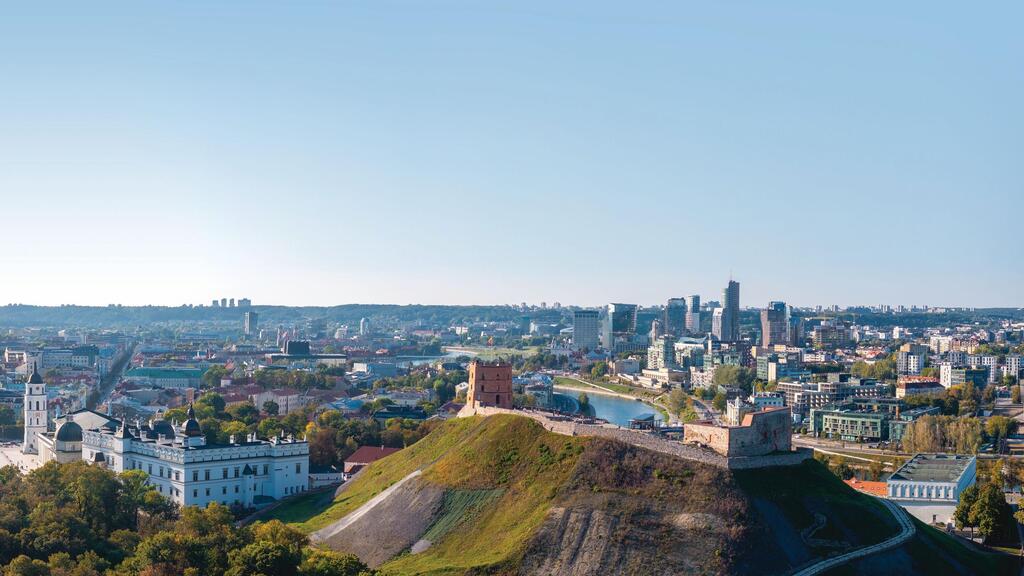
Vilnius, Lithuania
(Photo: Shutterstock/ASAP Creative)
Before World War II, about 30% of the city’s residents were Jewish, and Vilnius was known as the “Jerusalem of Lithuania,” a reflection of its status as a spiritual and cultural center for Eastern European Jewry. Lithuania joined the European Union in 2004 and has seen significant economic growth since. In 2015, the euro became the country’s official currency.
Why go?
Lithuania, like its Baltic neighbors Estonia and Latvia, is regularly considered one of the safer countries in the world for tourists. Visitors will find modern infrastructure, public transportation that works well, many English speakers and a generally welcoming atmosphere for travelers.
Vilnius is also a manageable city. It is compact enough to explore without feeling overwhelmed, but rich enough in history, architecture, food and culture to justify more than a quick stop.
What to see and do
Start with the Old Town. Although many of Vilnius’ “ancient” buildings were damaged or destroyed during World War II and later reconstructed, the result is still one of Europe’s most charming historic quarters. Its narrow streets and picturesque alleys are filled with shops, galleries, boutiques, cafés and restaurants, all contributing to a calm and enjoyable urban experience.
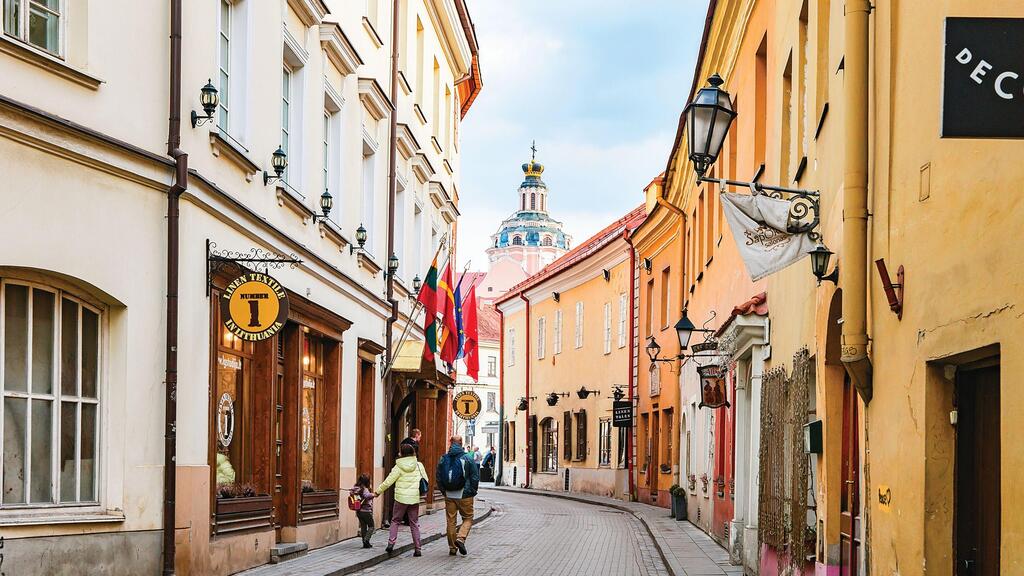
Vilnius Old Town, beautifully restored after the destruction of World War II
(Photo: Shutterstock/ASAP Creative)
Key sites include Cathedral Square and its bell tower, the view over the city from Gediminas Castle Tower, and the artists’ district of Užupis, a bohemian neighborhood with its own playful identity and creative atmosphere.
For those interested in darker chapters of history, the Museum of Occupations and Freedom Fights, often referred to as the KGB Museum, offers a sobering look at Soviet repression. The city’s Jewish history is also essential to understanding Vilnius, and visitors can tour the former Jewish quarter, sites connected to the ghetto and the Choral Synagogue, the only synagogue in the city that survived the Holocaust.
For a more contemporary experience, visit Paupys Market, a food hall with stalls offering a wide range of cuisines, or the Station District, now considered one of the centers of the city’s nightlife.

Vilnius, Lithuania. The Jewish quarter
(Photo: Shutterstock/ASAP Creative)
Beyond the city
A short trip outside Vilnius brings travelers to Trakai Castle, a striking medieval fortress set on an island about half an hour from the city. Kaunas, Lithuania’s second-largest city, is another worthwhile stop, with impressive architecture, museums and galleries. At times, direct flights from Israel also operate there.
Farther away, the Baltic coast offers a different landscape altogether. Highlights include the Curonian Spit, a narrow strip of forests, sand dunes and fishing villages, as well as the port city of Klaipėda, where German architectural influence remains visible in the old buildings.
How to get there
Wizz Air usually operates regular flights to Vilnius. During peak travel seasons, Arkia and Israir may also add flights. Another option is to combine Vilnius with neighboring Latvia and its beautiful capital, Riga, which is served by direct Air Baltic flights from Ben-Gurion Airport.
Europe: Bratislava, Slovakia
Where are we?
Bratislava is the capital of Slovakia, set on the banks of the Danube River. About half a million people live there, and it holds a unique distinction: It is the only capital in the world that borders two countries, Austria and Hungary.
Why go?
Like nearby Vienna and Budapest, Bratislava was once part of the Austro-Hungarian Empire, and that history is visible across the city. Its streets are full of buildings, towers and church spires influenced by medieval and baroque architecture.
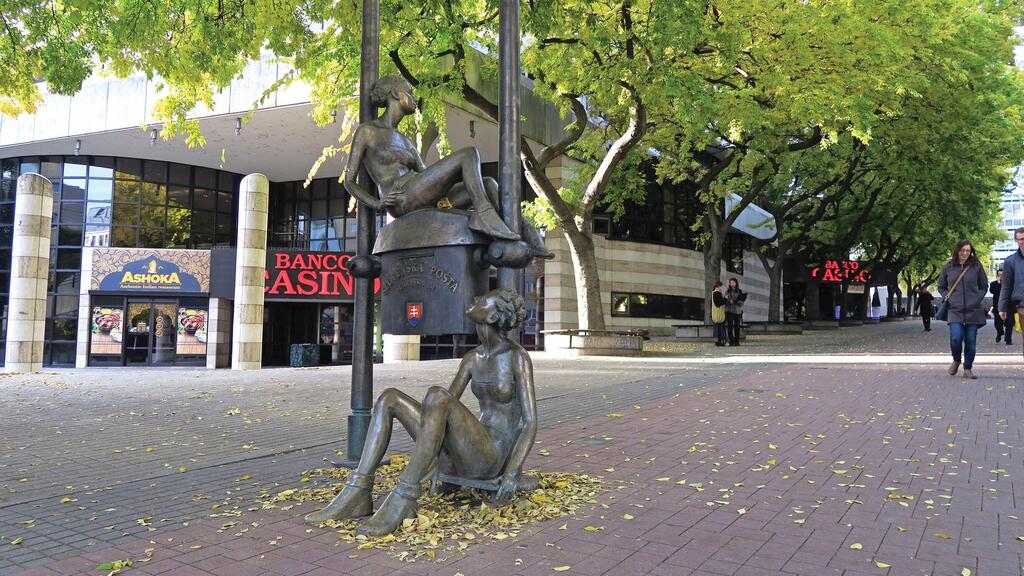
Bratislava, Slovakia. Street art
(Photo: Shutterstock/ASAP Creative)
Travelers who enjoy the look and atmosphere of classic Europe, but want something smaller and less crowded than Vienna or Budapest, are likely to enjoy Bratislava very much. It is walkable, accessible and easy to combine with a broader Central European trip.
What to see and do
The heart of the city is its historic center, with small streets, charming alleys, boutiques, galleries and cafés. Across the city, visitors will also find beautiful churches, impressive bridges, green parks and wooded areas that connect naturally with the nearby Carpathian Mountains.

Bratislava, Slovakia. Inside Pálffy Palace
(Photo: Shutterstock/ASAP Creative)
Bratislava Castle is the city’s most recognizable landmark. It stands on a hill overlooking both the city and the Danube, offering one of the best views in the area.
Another recommended site is Devin Castle, located slightly outside the city on a cliff at the meeting point of the Danube and Morava rivers. The castle itself is partly ruined, but the scenery is dramatic and the visit is worthwhile for the view alone.
Beyond the city
For nature lovers, the Tatra Mountains are one of Slovakia’s great treasures. The range forms a natural border between Slovakia and Poland and includes the highest peaks in the Carpathians, reaching about 2,650 meters. The area is about 300 kilometers from Bratislava and is filled with forests, lakes, hiking and cycling routes, spa towns and picturesque villages.
In the busiest months, especially July and August, the Tatras attract millions of travelers from across Europe. To make the most of the region and reach its more beautiful corners, a rental car is recommended.
How to get there
The easiest route is to fly to Vienna, Austria, and continue to Bratislava by public transportation. The train ride takes about an hour.
Europe: Málaga, Spain
Where are we?
Málaga is located in Andalusia, in southern Spain, at the heart of the Costa del Sol.
Why go?
Málaga is known for its sunny coastline, but its real advantage is its location. Within a relatively short distance, up to about two hours by car, are some of southern Spain’s most beautiful cities: Córdoba, Seville, Ronda, Granada and Gibraltar.
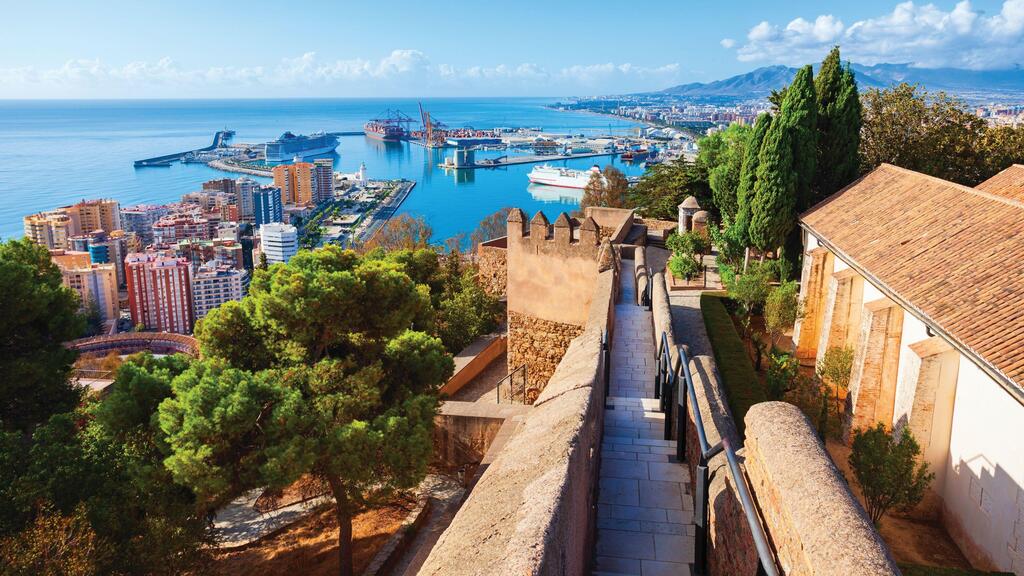
Málaga. View of the harbor area from the Alcazaba fortress
(Photo: Shutterstock/ASAP Creative)
Granada is home to the Alhambra, the extraordinary palace complex built by Spain’s Muslim rulers in the 13th and 14th centuries, and one of the finest examples of Islamic architecture in Europe.
This makes Málaga not just a beach destination, but an excellent base for exploring Andalusia’s history, architecture, food and culture.
What to see and do
In Málaga itself, the Alcazaba fortress is one of the city’s main attractions. Built in the 11th century, it is surrounded by gardens and offers beautiful views of the city and harbor.
The city is also the birthplace of Pablo Picasso, and the Picasso Museum displays hundreds of works by the artist. Another major cultural stop is the Centre Pompidou Málaga, a branch of the famous Paris museum, easily recognized by the colorful glass cube above it.
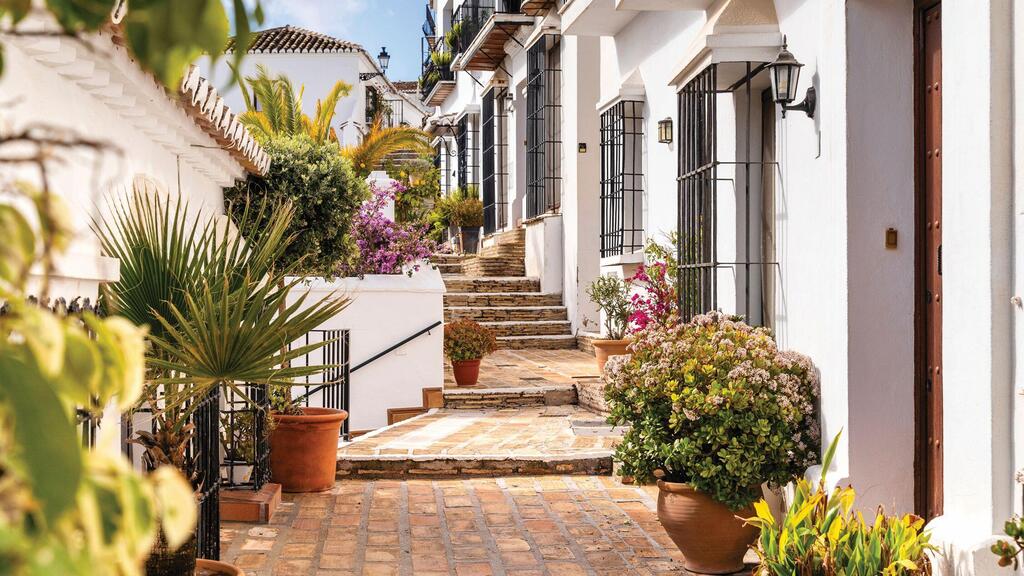
Mijas, a beautiful town not far from Málaga
(Photo: Shutterstock/ASAP Creative)
The harbor area is lively and full of restaurants, cafés and shops. Food lovers should also visit Atarazanas Market, where stalls selling fish, fruit and vegetables sit alongside tapas and seafood restaurants.
The city’s main urban beach, Malagueta, is also worth visiting, especially for travelers who want to combine culture with a few easy hours by the sea.
What to keep in mind
Southern Spain can be extremely hot in summer, with temperatures similar to Eilat. Travelers who struggle with heat may prefer to visit outside the peak summer months.
It is also important to remember that a visit to the Alhambra requires booking tickets in advance, sometimes long before the trip.
How to get there
Arkia has planned direct flights to Málaga during the months of July through September. Another option is to fly through Barcelona or Madrid, both of which have direct flights from Israel.
Africa: Seychelles
Where are we?
The Seychelles are located in the Indian Ocean, about 1,600 kilometers east of the coasts of Kenya and Tanzania. The country is made up of more than 100 islands, some of them small and uninhabited.
The largest and best-known islands, Mahé, Praslin and La Digue, are full of hotels, tourist sites and attractions built around the tropical climate, the sea and the island landscapes.
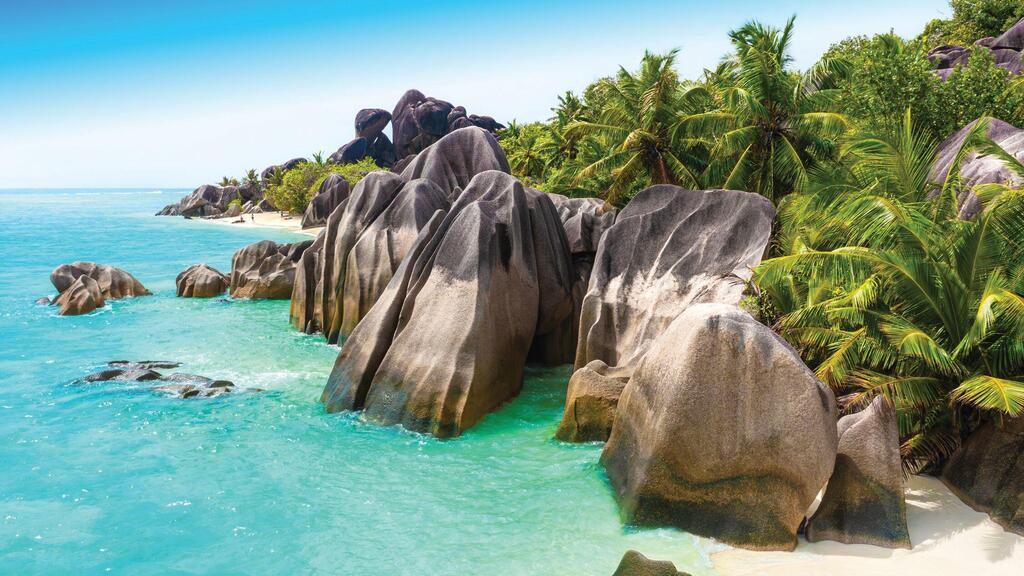
Seychelles
(Photo: Shutterstock/ASAP Creative)
Why go?
The Seychelles look almost like a postcard designed to sell the dream of a tropical vacation: white sand beaches, coconut palms growing nearly to the waterline and a turquoise ocean surrounding everything.
For travelers who want to disconnect, rest and step away from the stress of life in Israel in recent months, the Seychelles offer exactly that kind of escape. The islands combine luxury resorts with nature, small communities, marine life and a slower pace.
What to see and do
Much of the Seychelles’ appeal lies outdoors. Nature reserves cover nearly half of the islands’ land area, and the beaches are the obvious starting point. Visitors can dive, sail, surf, windsurf or simply spend long hours by the water.
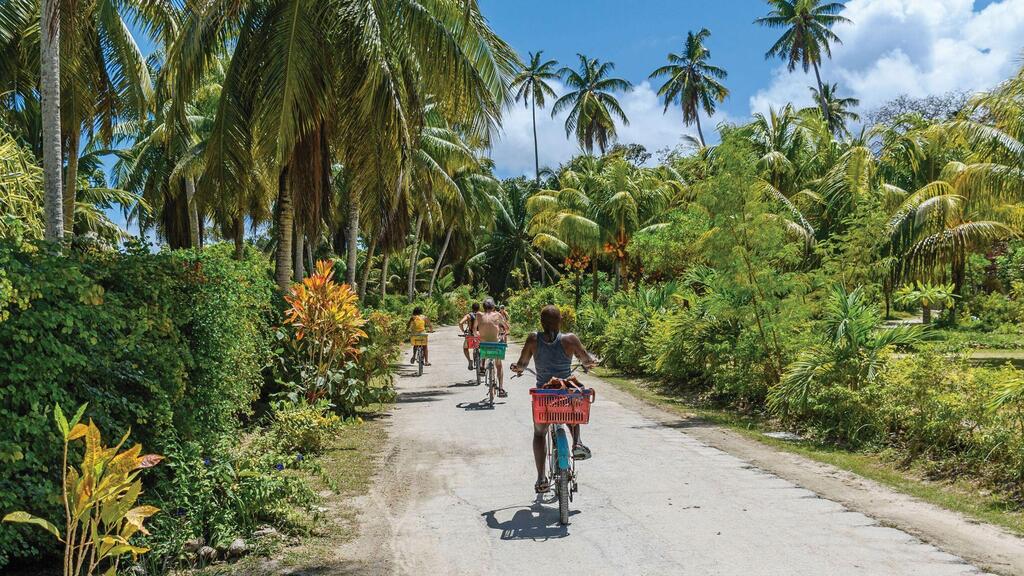
Seychelles. Cycling on La Digue Island
(Photo: Shutterstock/ASAP Creative)
The capital, Victoria, is also worth visiting. Its architecture, culture and food reflect the many peoples who influenced the islands over the years, including the Portuguese, French and British.
La Digue is one of the most atmospheric islands, known for its relaxed rhythm, cycling and some of the country’s most photographed beaches.
Do not miss
The food is part of the experience. Seychelles cuisine blends influences from France, Portugal, India and Asia. Hotel restaurants can be excellent, but it is worth seeking recommendations for places outside the resorts as well.
How to get there
In ordinary times, Air Seychelles operates two or even three direct weekly flights between Ben-Gurion Airport and Victoria, the capital of the Seychelles. Other options include connections through Addis Ababa, Dubai or Abu Dhabi. Arkia may also operate flights during the summer season.
Asia: Taiwan
Where are we?
Taiwan, officially the Republic of China, is distinct from the large communist state of the People’s Republic of China. It is considered a remnant of pre-communist China and remains a rival of Beijing.
The island is highly developed and wealthy, known in part for its enormous semiconductor and electronics industries. It has a high standard of living and can be described as a kind of Western Chinese experience: culturally Chinese in many ways, but with a level of infrastructure, order and public life that often feels closer to the West.
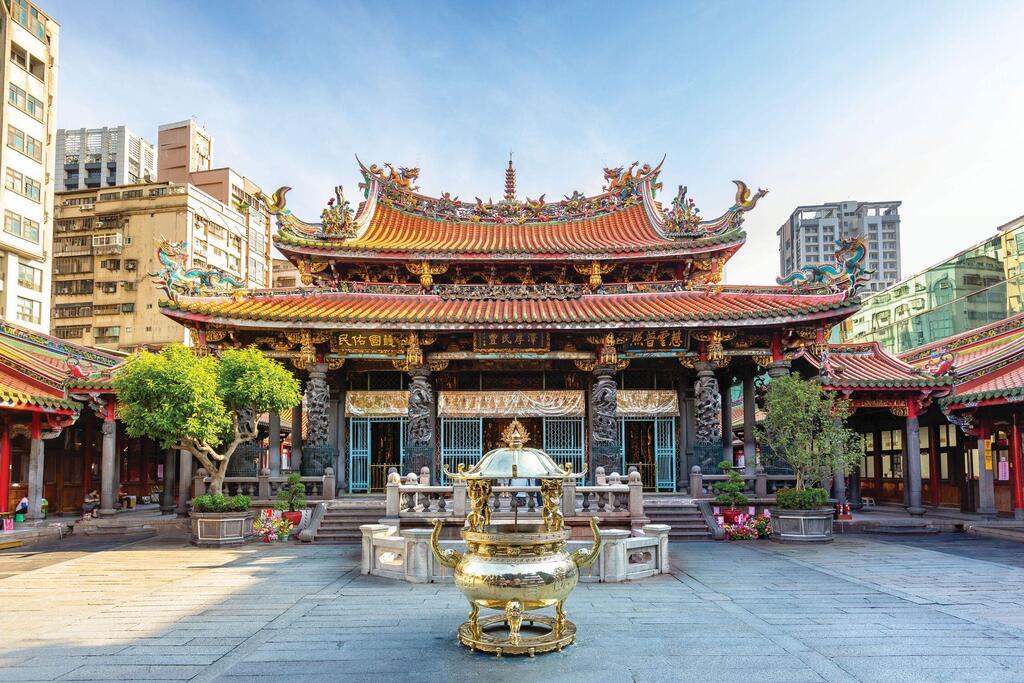
Taipei, Taiwan. The beautiful Longshan Temple
(Photo: Shutterstock/ASAP Creative)
Why go?
Taiwan allows visitors to experience many aspects of Chinese culture, from temples and markets to festivals and food, but within an almost fully Western-style framework. It is clean, safe, well organized and has excellent infrastructure. Many people speak English, especially in the cities and in tourist areas.
For travelers who want East Asia but prefer a destination that feels easy to navigate, Taiwan is an excellent choice.
What to see and do
Taipei, the capital, is a large, modern city with several outstanding traditional night markets, including Shilin, Raohe and Ningxia. Each is a culinary adventure in its own right and one of the best ways to experience local life.
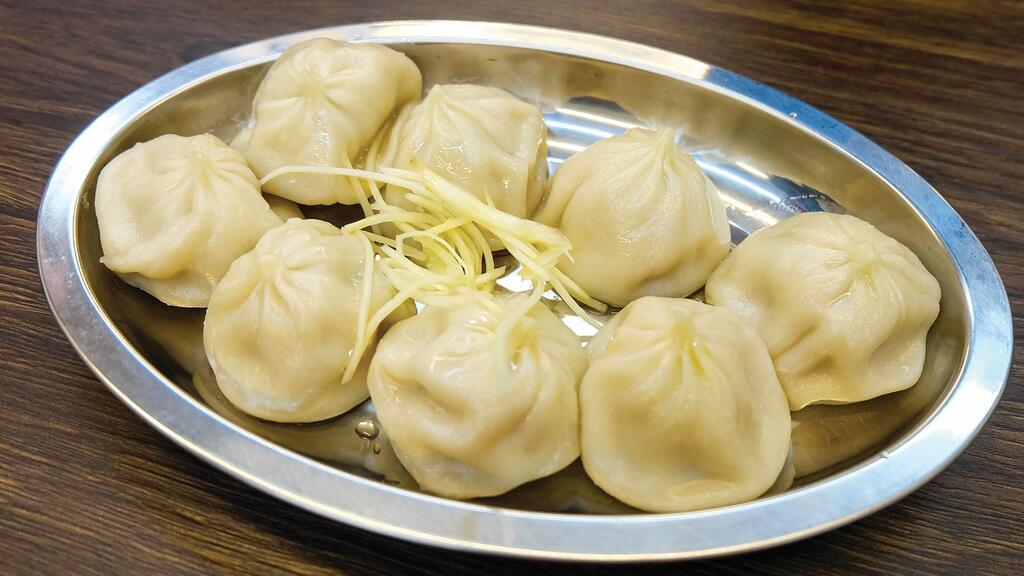
Taiwan. A street food dish at Taipei’s Shilin Market
(Photo: Shutterstock/ASAP Creative)
The National Palace Museum is another major attraction, with nearly 700,000 items of Chinese art and historical artifacts. Longshan Temple, active almost around the clock, offers a window into Taiwan’s religious traditions, while Taipei 101 remains one of the city’s most impressive landmarks. From 2004 to 2010, it was considered the tallest building in the world.
Beyond the city
Taiwan’s nature reserves are rich in unique vegetation, butterflies and birds. Taroko Gorge is a must-see, with cliffs, carved walking trails, waterfalls and dramatic canyon views.
The Alishan mountain range is known for tea plantations and sunrise views from its peaks. Sun Moon Lake, surrounded by mountains, small villages and temples, is ideal for cycling around the lake or taking a boat ride.
Do not miss
Taiwan’s food scene is one of the strongest reasons to visit. Restaurants and markets offer almost every kind of Asian cuisine imaginable, from Chinese and Japanese to Vietnamese and Malaysian influences.
How to get there
There are no direct flights from Israel, but Taiwan is easy to reach through Bangkok, Dubai or Abu Dhabi, followed by a connecting flight. It is also possible to fly through major European airports served by Taiwan’s two major airlines, EVA Air and China Airlines.
South America: Uruguay
Where are we?
Uruguay may be South America’s best-kept travel secret. It is so far off the usual tourist map that the only regular direct flight from Europe to its capital, Montevideo, departs from Madrid.
That is a global missed opportunity. While travelers often focus on Uruguay’s more famous neighbors, including Brazil, Argentina, Chile, Peru and Colombia, Uruguay offers a more developed, wealthier, cleaner and, above all, safer version of South America.
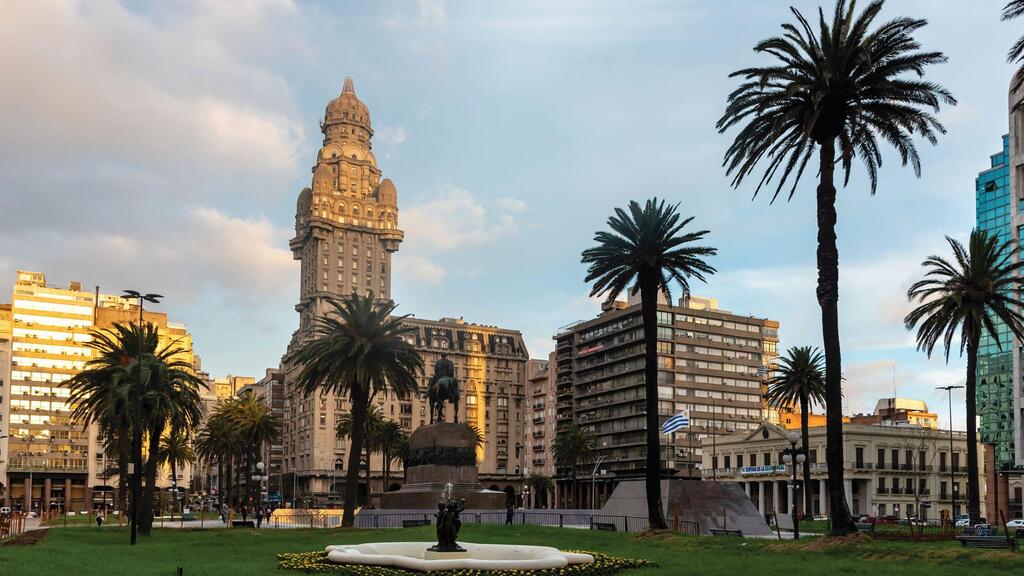
Montevideo, Uruguay. Independence Square
(Photo: Shutterstock/ASAP Creative)
Why go?
Montevideo has beautiful colonial architecture and a long coastal promenade, the Rambla, stretching for about 22 kilometers. The country also has unusual beaches, some so isolated that they do not even have cellular reception, along with small fishing villages that feel far removed from the usual tourist trail.
Then there is the food, especially the meat. Devoted carnivores often claim that Uruguayan beef is even better than Argentina’s.
What to see and do
In Montevideo, visit Mercado del Puerto, the port market known for excellent meat restaurants. Another essential stop is Colonia del Sacramento, a beautiful town founded by the Portuguese in the 17th century. Its colonial buildings, old cars and quiet streets create the feeling of a place where time has stopped.

Uruguay, famous for its meat. A food market in Montevideo’s old quarter
(Photo: Shutterstock/ASAP Creative)
Do not miss
Spend a few days in Cabo Polonio, a tiny and isolated village that is not connected to regular water, electricity or communications networks. What it lacks in comfort, it makes up for in a powerful connection to nature and the surrounding environment.
Nearby
A ferry of about two and a half hours from Montevideo will take travelers directly to Buenos Aires, the capital of neighboring Argentina. There is also a ferry route from Colonia del Sacramento to Buenos Aires, usually at lower prices than from the capital.
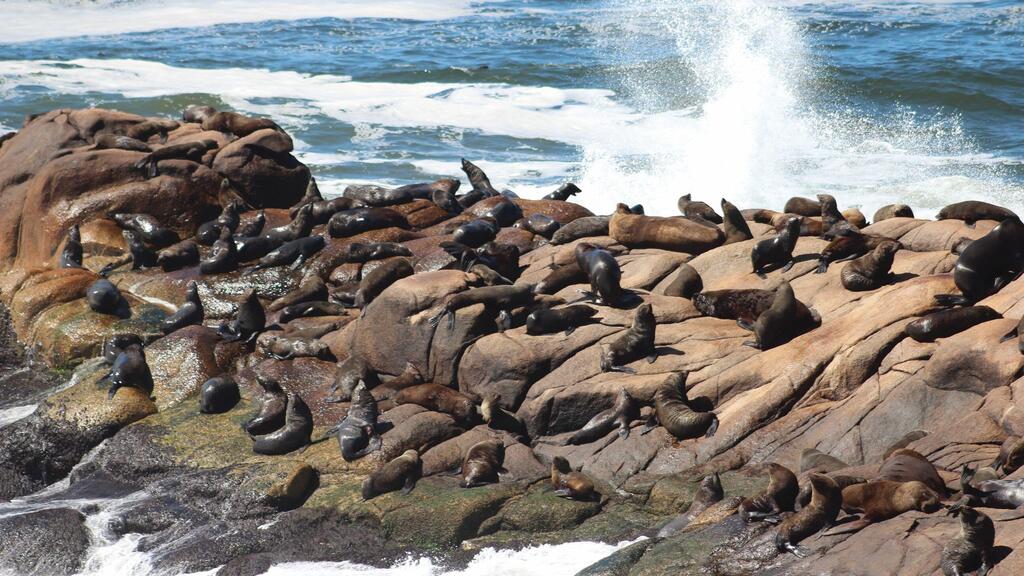
Uruguay, Cabo Polonio. Sea lions basking on the beach
(Photo: Shutterstock/ASAP Creative)
How to get there
The main route is with Iberia via Madrid. It is also possible to reach Uruguay through airports elsewhere in South America, including Rio de Janeiro, Lima or São Paulo.
For travelers used to choosing from the same shortlist of destinations, these six places are a reminder that the world is larger than the standard vacation map. Some offer beaches, others history, food, nature or urban calm. None requires abandoning comfort entirely. What they offer is a chance to return with a story that does not begin, once again, in the same familiar place.