

The religious police officers began rummaging through his bag. Hidden deep inside an inner pocket was the last thing he wanted anyone in Saudi Arabia to find: his Israeli passport.
"They caught me in Medina, the city sacred to Muslims," adventurer Adam Jano, a resident of the northern Israeli community of Klil, told ynet. "They're not particularly pleasant people. They started searching through my things, and I was an idiot for bringing it with me," he recalled. "I had to move between hotels, so I thought, fine, I'll take it along. I hid it, and luckily they didn't see it."
(Photo: Courtesy of Adam Jano)
The encounter took place in the courtyard of the Prophet Muhammad's Mosque in Medina, one of Islam's holiest cities. "The religious police asked me, 'Are you Muslim?' I said, 'No, I'm not Muslim.' Then they started saying, 'Give us your bag.' They began searching, and my heart just sank."
Fortunately for the Israeli traveler, whose identity could have landed him in serious trouble, the officers never opened the inner pocket, and his Israeli passport remained undiscovered.
"It was a pretty frightening moment," Jano said. "Your heart starts racing, the adrenaline kicks in, and I have a wife and a child. Looking back, I think, wow, that was really stupid and dangerous. I should have handled things a little differently."
It was Jano's second trip to Saudi Arabia, which he entered using a foreign passport. This time, he was determined to explore far beyond the modern capital, Riyadh. He embarked on long drives deep into the country's wild desert landscapes, reaching even the region bordering Yemen.
One stretch of road that left a particularly strong impression followed the Red Sea coastline. "It's a beautiful road, and when you're driving north, the sea is always on your left, just like driving through Sinai, only from the other side."
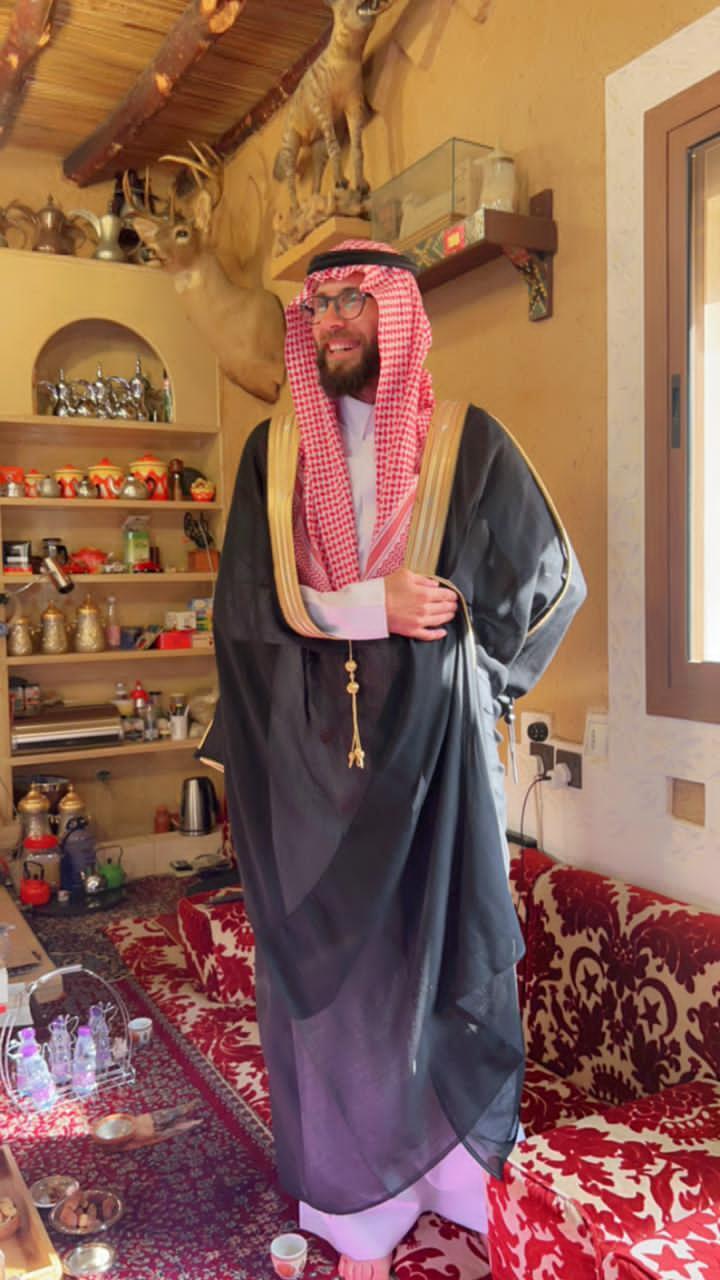
Most of the men Jano encountered wore the traditional white thobe, while the few women he saw were dressed in black. "They dressed me in a robe, and they were very proud of it," he laughed. "There are so many laundries on practically every corner. Because they constantly have to wash all those white clothes, it looks like the dry cleaners are making an absolute fortune."
Ironically, it was the relative absence of tourists that made Jano's challenging journey so rewarding. "You meet people, you make friends," he said enthusiastically. "Suddenly, someone you met the day before calls you and says, 'I want to introduce you to my friend.'
"Why did I meet so many people specifically in Saudi Arabia? If I went to Thailand, I'd just be another tourist, and the locals wouldn't find me particularly interesting. In Saudi Arabia, there aren't many tourists, so when you're a different face, you attract attention."
One memorable encounter took place at a Western-style coffee shop in Riyadh, where several Saudi women approached him. "I'm standing in line, and these women wearing veils come up to me. You can only see their eyes. They ask, 'Where are you from?'"
It was a perfectly ordinary question with an answer he could not afford to give. "I don't say Israel," he laughed. "Then they ask, 'Can we please pay for your coffee?' They were closed off for so many years, and now things are opening up. When unfamiliar faces start appearing, it sparks curiosity, and it's funny.
"They take selfies with me while wearing their veils, and I'm thinking, wait a minute, what's going on here? You're taking a picture with someone whose face is covered, so what exactly can you see in the photo?"
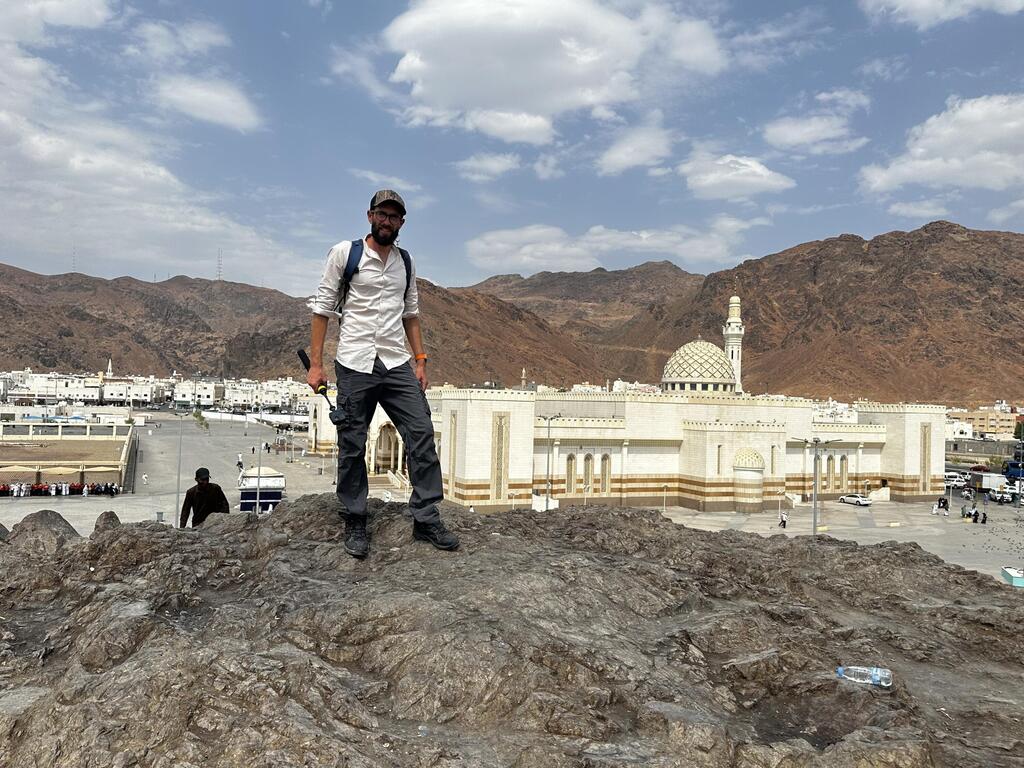
Adam with the Old City in the background
(Photo: Courtesy of Adam Jano)
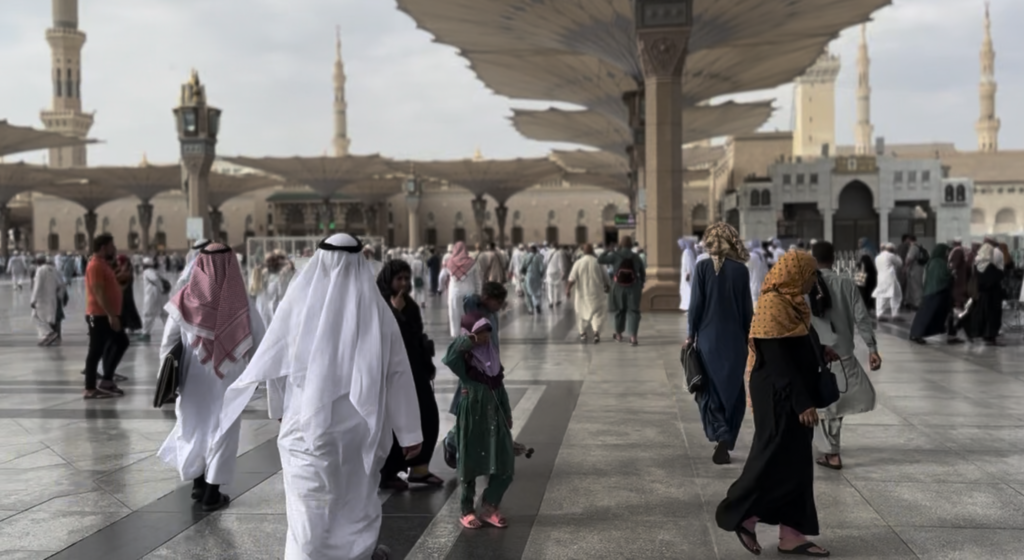
The mosque courtyard bustling with visitors
(Photo: Courtesy of Adam Jano)
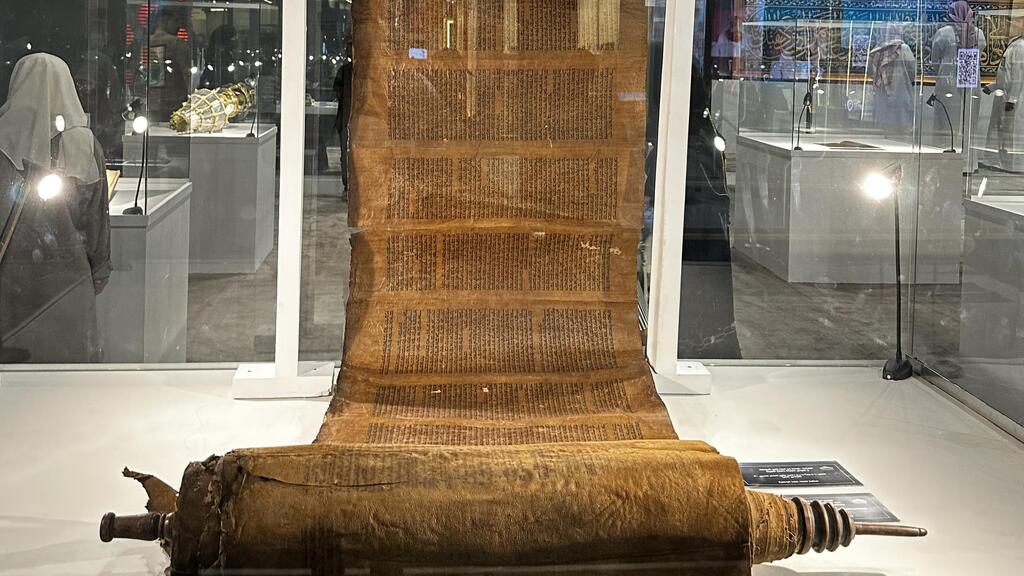
An ancient Torah scroll on display in Riyadh
(Photo: Courtesy of Adam Jano)
One of the highlights of Jano's journey was AlUla, one of Saudi Arabia's leading tourist destinations. Located in the country's northwest, the region is surrounded by dramatic sandstone cliffs, canyons and an ancient oasis. It was once an important stop along the Nabataean incense trade route connecting the Arabian Peninsula with the East and the Mediterranean.
In recent years, AlUla has become a flagship project of Saudi Arabia's tourism ambitions, with luxury hotels, cultural attractions and extraordinary architecture emerging amid the desert landscape.
Jano checked into one of the region's luxury resorts and discovered a swimming pool in the middle of the desert, gourmet restaurants, golf carts and impeccable five-star service. Almost everything was there, except the guests.
"I was alone. There was nobody there," he laughed. "I was sitting alone in the restaurant, surrounded by waiters, and you're the only person there. They have golf carts to take you around because the hotel isn't just one building, it's an entire complex.
"They ask you, 'Which restaurant would you like? There's a Thai restaurant or a Middle Eastern restaurant.' And whichever one you choose, you're the only guest. Everything is five-star. It's the top of the top."
The hotel itself was designed to blend seamlessly into the surrounding desert. "The rooms are built into the mountain, and the swimming pool is there too. Even the stairs blend into the rocks. It's a very impressive, very special hotel, but being the only guest there feels strange."
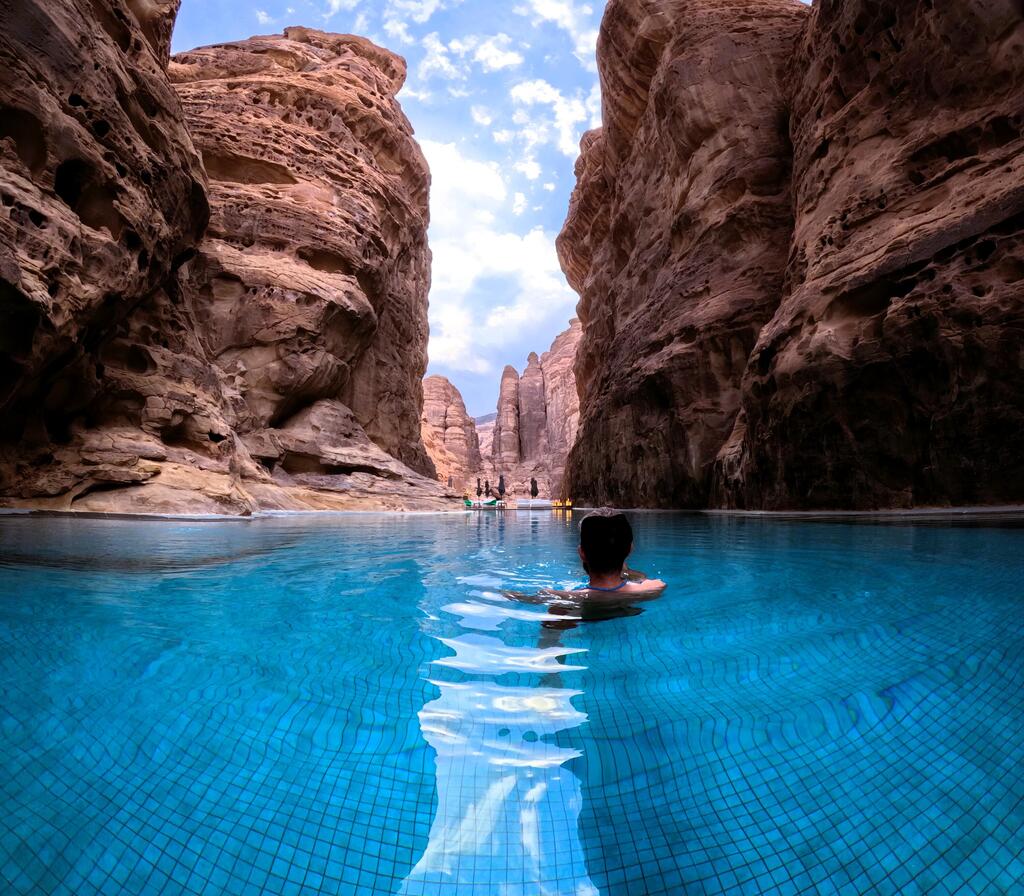
The jaw-dropping hotel in AlUla
(Photo: Courtesy of Adam Jano)
So where were all the tourists? "The employees tell me, 'Oh, they're coming.' They're coming. We want tourists." And what about the sightseeing bus? "I was the only passenger. Why would they even send out a bus? Can you imagine? An entire bus, and I'm riding in it alone."
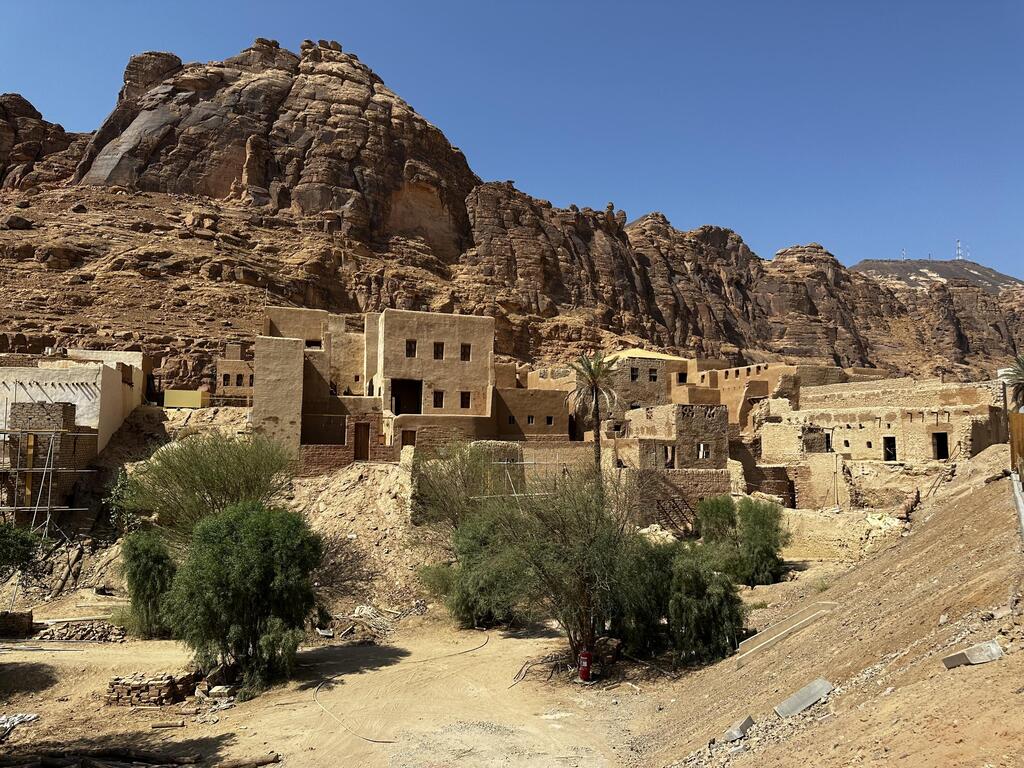
Beyond the luxurious hotels, the region is home to Nabataean archaeological sites and ancient tombs carved directly into the rock.
"These are the same people who built what you see in Petra," Jano explained. "They carved straight into the rock, and it's incredibly impressive. Absolutely amazing."
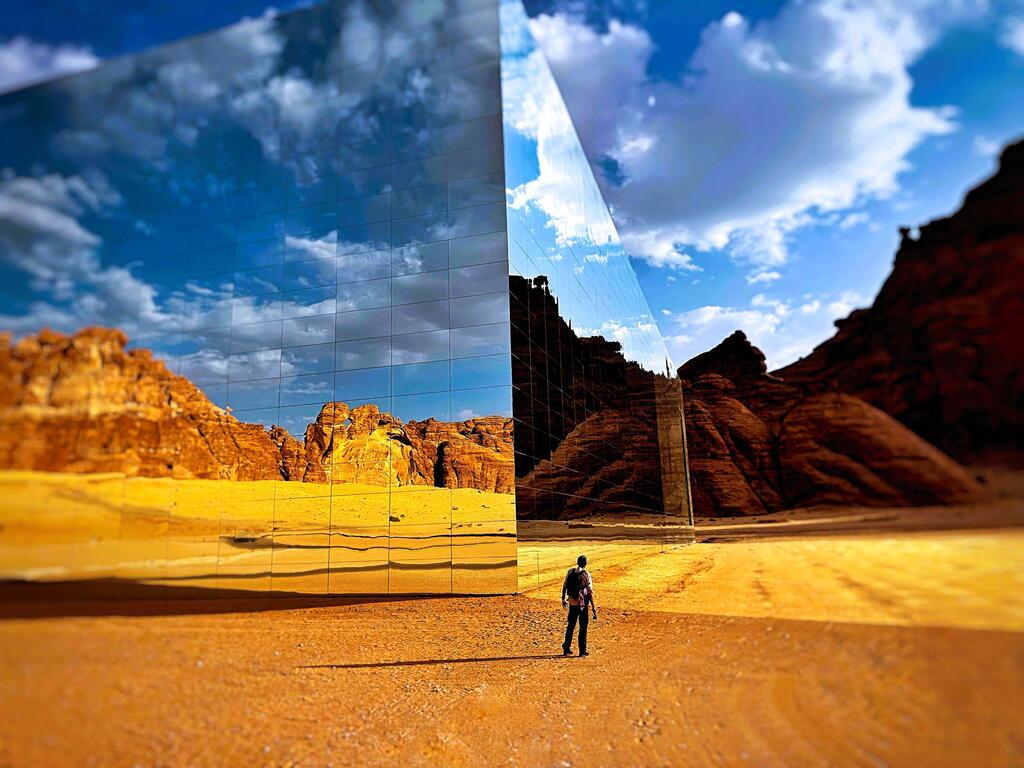
In AlUla, Jano also encountered a striking symbol of Saudi Arabia's ambitious transformation: Maraya, an enormous mirrored building that seems almost to disappear into the surrounding landscape, like a mirage reflecting the desert.
"You can't see it," the veteran traveler said enthusiastically. "When you're walking through the desert and suddenly come across it, it tricks your eyes. It's like an optical illusion. It's a huge, square mirrored building, surrounded by mountains and desert, and the building reflects all the colors."
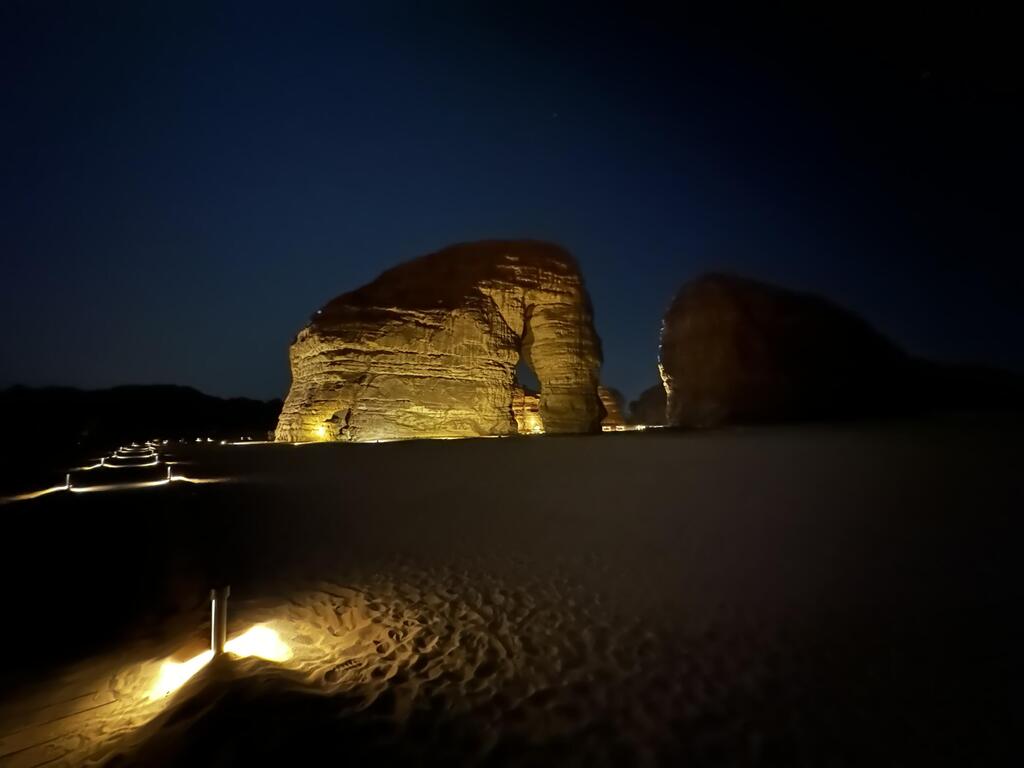
Elephant Rock
(Photo: Courtesy of Adam Jano)
(Photo: Courtesy of Adam Jano)
Outside AlUla's lavish resorts, some of Jano's most memorable experiences took place around the dinner table.
"Saudi food is very delicate and very good," he declared with the confidence of someone who has sampled plenty of it. "Think of Bedouin food, but imagine having a five-star chef prepare the meal and refine it," he laughed. "I particularly loved the lamb, slow-cooked with rice and spices."
But the meal that stayed with him most was at the home of a Saudi friend he had met during his travels. "Arab hospitality is hospitality done properly," Jano said appreciatively. "When you're under someone's protection and they're responsible for you, you're treated like royalty."
To protect his host's personal safety, we'll limit the description to the fact that he lives on a magnificent estate with a separate area designed specifically for entertaining guests.
"He has this tent outside for visitors, and that's where they serve the food. He shows you photographs and things. He loves hunting, so he has stuffed animals and things from Africa. You sit on the carpet and eat with your hands."
Yet beyond the hypnotic desert landscapes and luxury hotels, Jano had arrived in the mysterious kingdom with another, more discreet mission.
"The Jewish story, wherever it exists, fascinates me," he said. "Everywhere I go, I try to put together another piece of the puzzle of Jewish history. And the very idea that there are 'hidden Jews' in Saudi Arabia made me curious to go looking for them and meet them."
In a country where he himself had been forced to conceal his Israeli passport, the search for Jewish roots took on an entirely different level of significance.
"You arrive there, you meet someone, and it's as if you're bringing them treasure," he said excitedly, recalling a discreet meeting with a person who identified as a secret Jew in Saudi Arabia.
"You're bringing something into a place where it doesn't exist. And then they say, 'Wow, thank you for the siddur and the tefillin. How did you manage to bring those in?' It was incredibly moving."
A siddur is a Jewish prayer book, while tefillin are small leather boxes containing biblical passages, traditionally worn during weekday morning prayers.
The dusty city of Tabuk recently made headlines in Israel following the emergency landing of a flydubai aircraft carrying Israeli passengers. Jano, however, had traveled to the remote city for an entirely different reason: information about a Saudi citizen who secretly maintained a Jewish identity.
After a four-hour drive to the edge of the desert, the man apparently got cold feet, and the much-anticipated meeting was called off. From there, the Israeli adventurer continued to an intriguing archaeological site near Al-Bad, known as the Split Rock of Horeb.
The unusual natural formation is identified by proponents of the theory that Mount Sinai is located in Saudi Arabia as the rock from which Moses brought forth water for the Israelites, according to the biblical account. The identification is disputed and is not an established archaeological finding.
"I felt, wow, if the Israelites really were here, and I've managed to make it all the way here, what now? What am I supposed to do?" Jano recalled. "So I said, let's do the Jewish thing. I put on tefillin in front of the rock, and I felt something incredibly powerful there. You're in a different desert, and you feel that you're different."
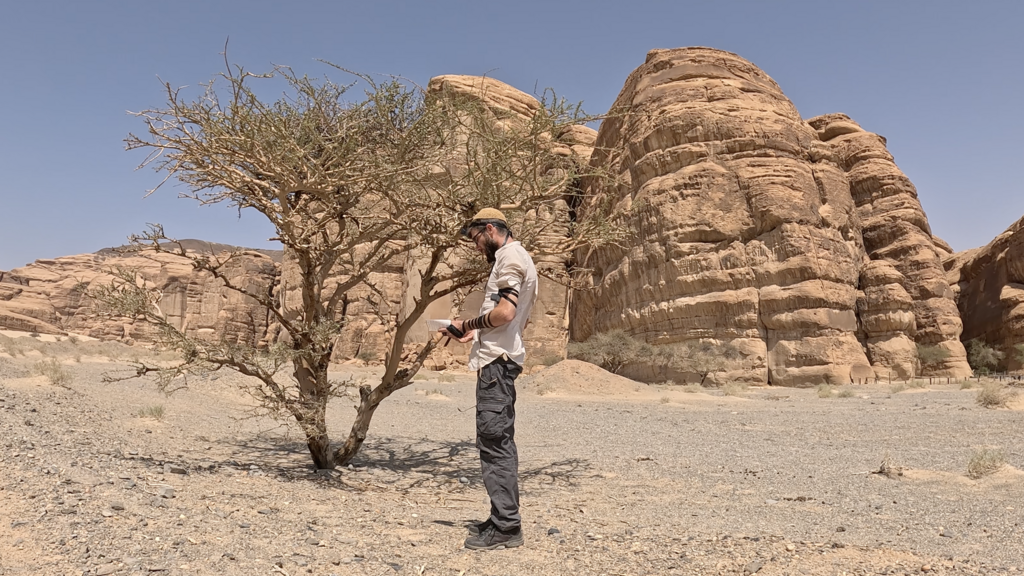
Adam putting on tefillin in the field
(Photo: Courtesy of Adam Jano)
Through connections he developed during his travels, the energetic Israeli also managed to meet Saudi citizens who introduced him to a contemporary Jewish story in the kingdom.
One encounter was with a wealthy couple in Riyadh. "There are people living in Saudi Arabia who say they have Jewish connections," he said with a smile. "They say they're Jewish and that there's a Jewish community in Saudi Arabia. These are very wealthy people who lived in England and Europe and then returned to Saudi Arabia, but their Jewish identity is still hidden."
Outwardly, he explained, they are part of mainstream Saudi society. "They live like modern people in Saudi Arabia," he said. "The man wears the traditional white clothing, and I didn't ask whether he goes to pray at the mosque. He looks like a modern person dressed in traditional clothes, but he's secretly Jewish."
Then came the most emotional part of the encounter. "And then you bring him a gift, a Hebrew prayer book," Jano said, struggling to conceal his excitement. "It's as though you're unexpectedly bringing someone a treasure. 'Wow, thank you so much, a siddur.' The couple understood the value of the gift and what I had gone through to bring it to them. It was incredibly moving."
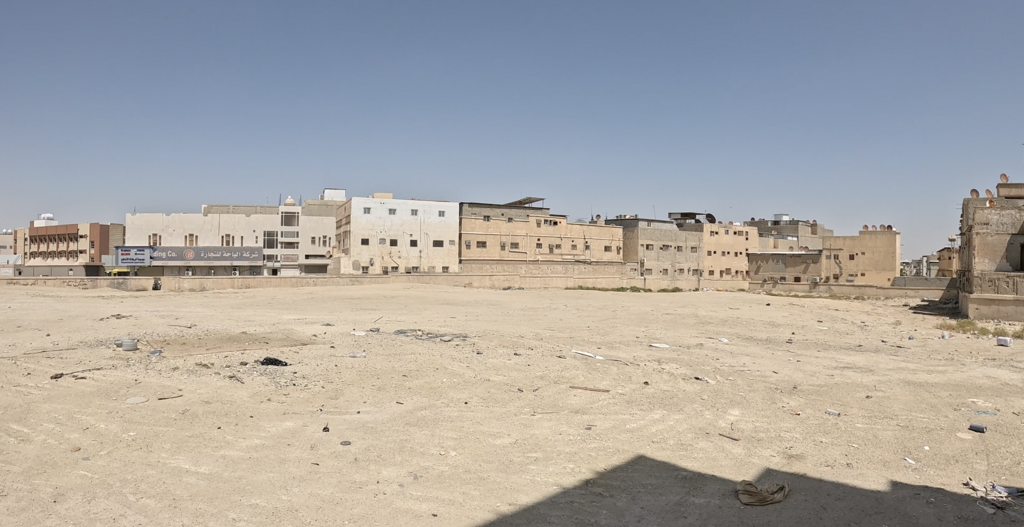
The abandoned Jewish cemetery in Al-Hofuf
(Photo: Courtesy of Adam Jano)
Jano's search for Jewish roots in Saudi Arabia also brought him to an abandoned Jewish cemetery in the city of Al-Hofuf. "You imagine you're going to see gravestones, but all there was was this white sand that had been packed down by sandstorms," he recalled.
"You're actually walking over the graves and can't see anything because the desert has covered everything. But the local Muslims still respect the place and don't build on it. It's still fenced off and recognized as a Jewish cemetery, a no-go zone."
For Jano, visiting the cemetery was more than another stop on an extraordinary journey. "I'm not a religious person," he explained. "But if there's a hidden Jewish cemetery that really hasn't been visited in a very long time, then I feel that part of my responsibility is to go there and pay my respects."