

Dana Elazar, 30, an actress and theater teacher, did not plan to find herself in a Buddhist monastery in the middle of the Thai jungle. But after the war broke out, her flight was canceled and she was left without a clear way home — and that is exactly what happened.
To save money while waiting for an evacuation flight, she entered a monastery that provides free food and lodging — and discovered a very different kind of journey.
Gallery
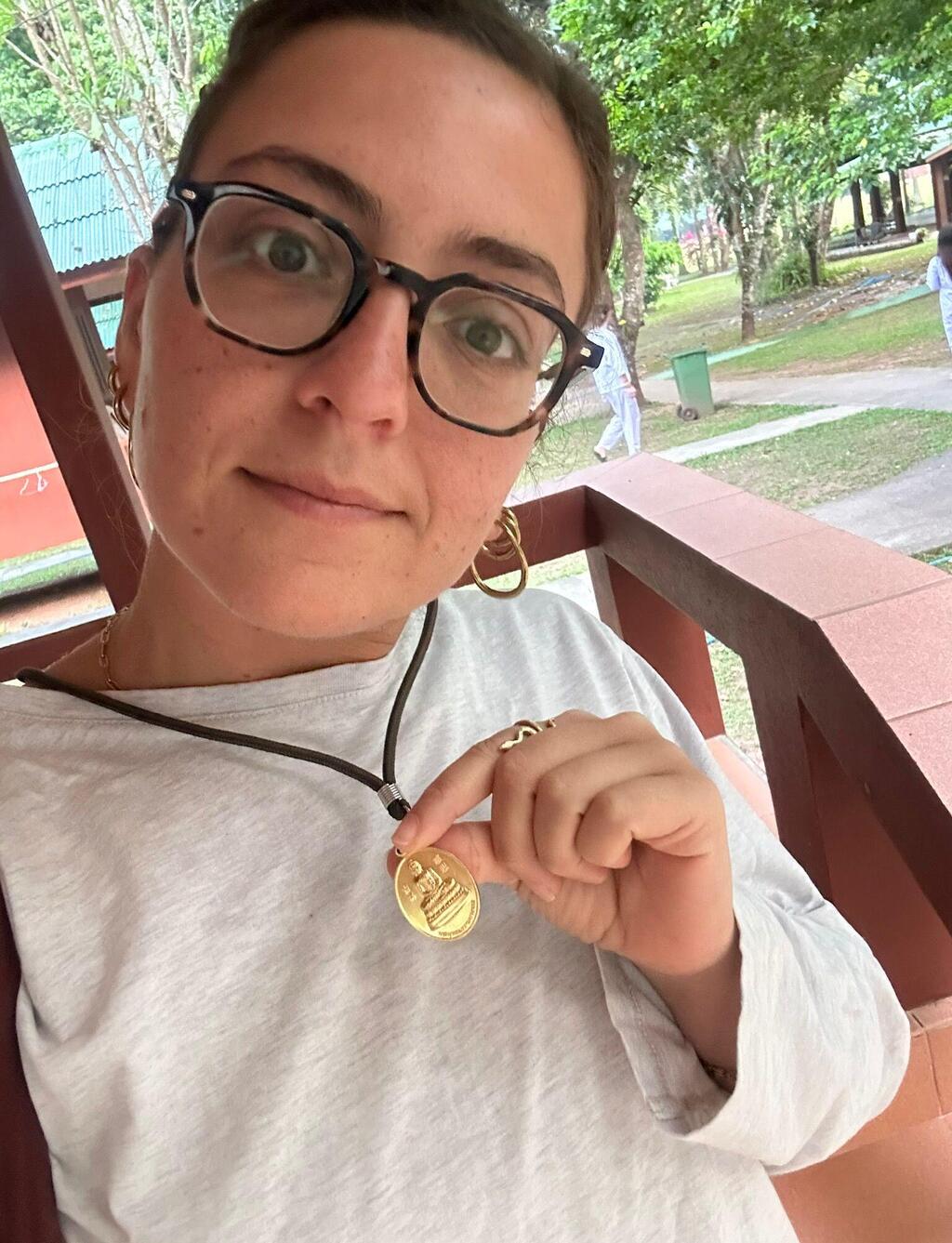
Dana wearing the necklace she received from the head monk after telling him she is from Israel
(Photo: Dana Elazar)
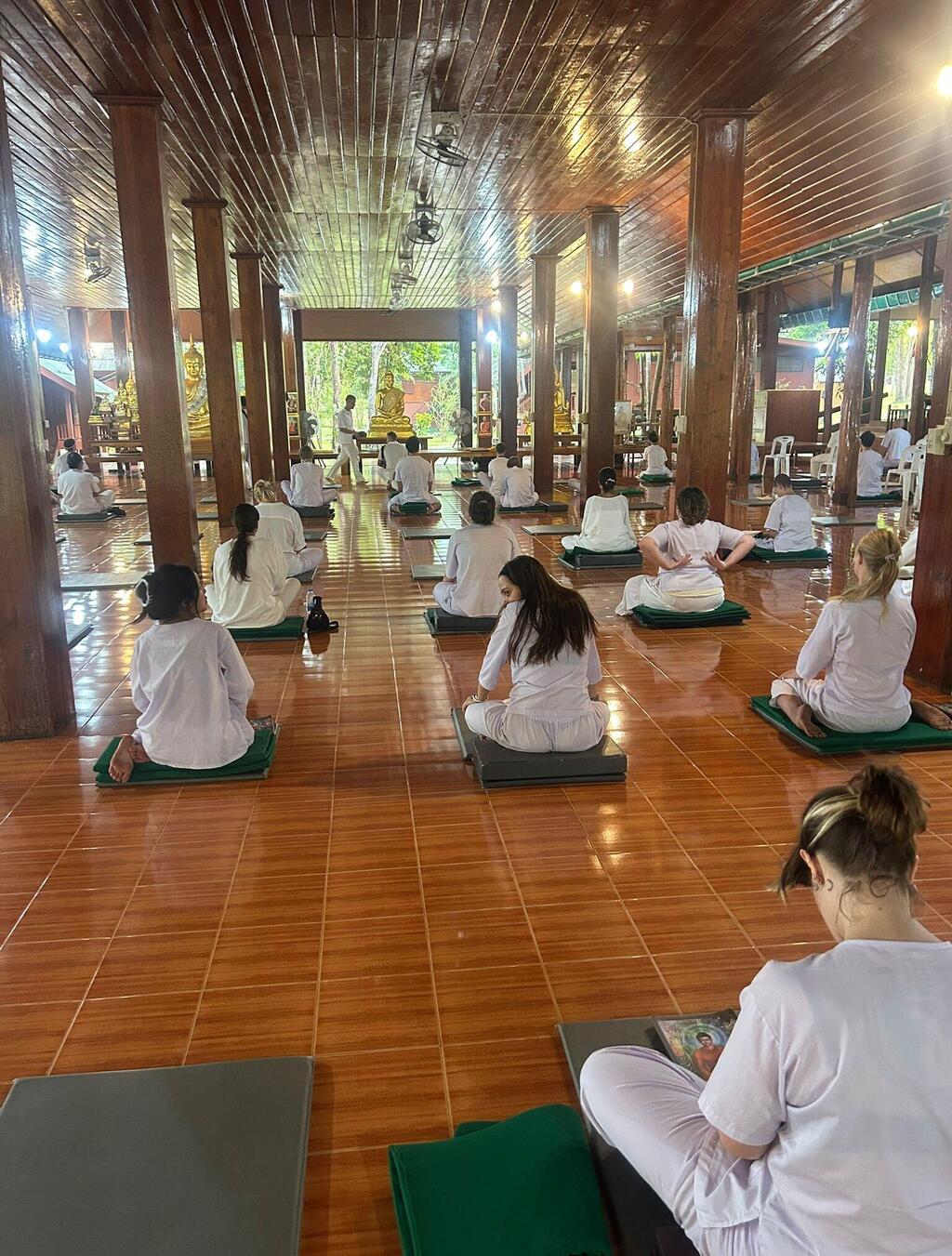
The meditation hall in the monastery
(Photo: Dana Elazar)
“It sounds like some kind of dream — to be stuck in Thailand,” she told ynet. “But the truth is much more complicated. I was supposed to fly for three weeks, and somehow I’m still there.”
The trip began as planned but quickly unraveled: her return flight was canceled, a refund never arrived, and Elazar was left without assistance.
“There was no one to talk to. I bought the ticket through a third party. Everything fell apart.”
Even buying a new ticket did not solve the problem. “I bought a flight for 3,200 shekels (about $850). I thought it was an evacuation flight, but it was completely regular.” While waiting, she moved between destinations — from crowded Koh Phangan to the quiet town of Pai — but her sense of unease remained.
“My mind tells me, ‘You’re in Thailand — enjoy it,’ but my heart isn’t there. I’m not present. I don’t know when or how I’m getting home.”
Even attempts to “escape” the situation did not help.
“It’s not a vacation — it’s a strange in-between state. You’re constantly following the news from Israel.”
As the pressure grew, her solutions became less practical and more spiritual.
“My mom told me, ‘Go meditate,’ and my ex also heard about some monastery and recommended it.”
A chance encounter with a Croatian traveler reinforced the idea.
“She told me she stayed there for nine days. The place is called Wat Pa Tam Wua Forest Monastery, and she said it’s special.”
That is how another unplanned chapter in Elazar’s journey began.
“In Pai there’s a pickup point for the monastery’s yellow vehicle,” she said. “You get on a truck, no reservations. You arrive, they take you in, give you white clothes, a room, a mattress — and that’s it.”
“I was scared. I didn’t know what I’d encounter, how I’d manage in silence without a phone. But once I realized it was relatively relaxed and not rigid, the pressure eased.”

The shuttle vehicle that takes visitors to the monastery
(Photo: Dana Elazar)
For those stuck in Thailand and looking to save money with free lodging at a Buddhist monastery, Elazar described the daily routine:
“At 5 a.m. you’re supposed to meditate in your room. I didn’t,” she admitted with a smile. “My French roommate didn’t either — that was our secret. We kept sleeping.”“At 6:30 a.m. you stand in line with a bowl of rice and serve food to the monks. Then there’s a simple breakfast, and from there you enter a loop of seated meditation, silent walking in the forest, more meditation. At noon you walk to a cave where the monk who founded the monastery once lived.”
“After lunch, it’s the same cycle again — sitting, breathing, thoughts rising and falling — then chores: grass, kitchen, tables. In the evening, Buddhist texts are recited in a monotone until your body just gives in.”
“By 9:30 p.m. I was already asleep every night. I was exhausted from those days.”
“It’s like a high school courtyard. There are the Russians, the Germans, the French. The German woman in charge was really intimidating — tall, cold, exactly what you’d imagine.”
She recalled a small delay that turned into an especially awkward moment.
“I got to the food distribution for the monks at 6:29, completely disoriented, and she shoved a plate at me and told me to make sure I arrived on time, with this freezing look. I felt like everyone was already prepared except me.”
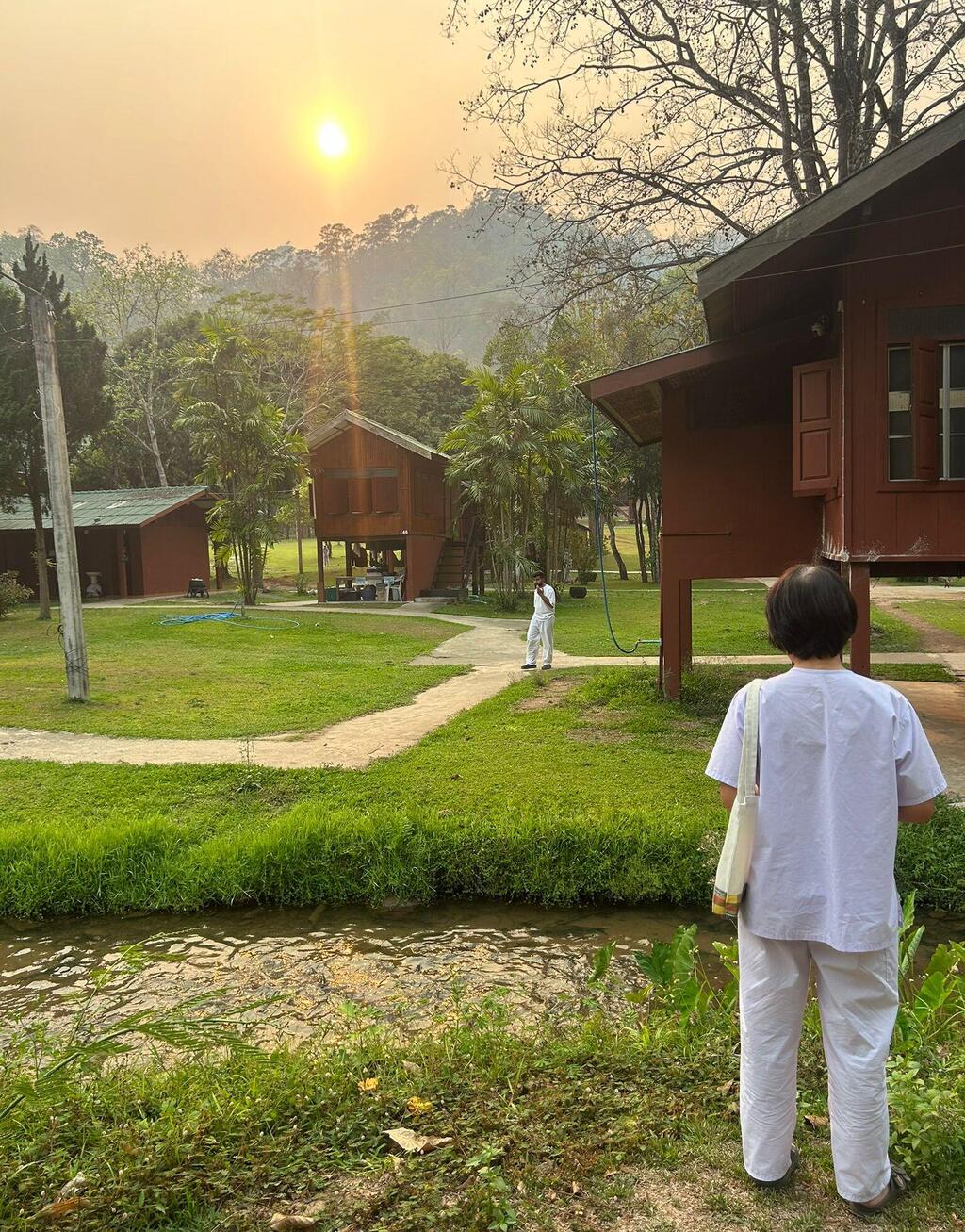
(Photo: Dana Elazar)
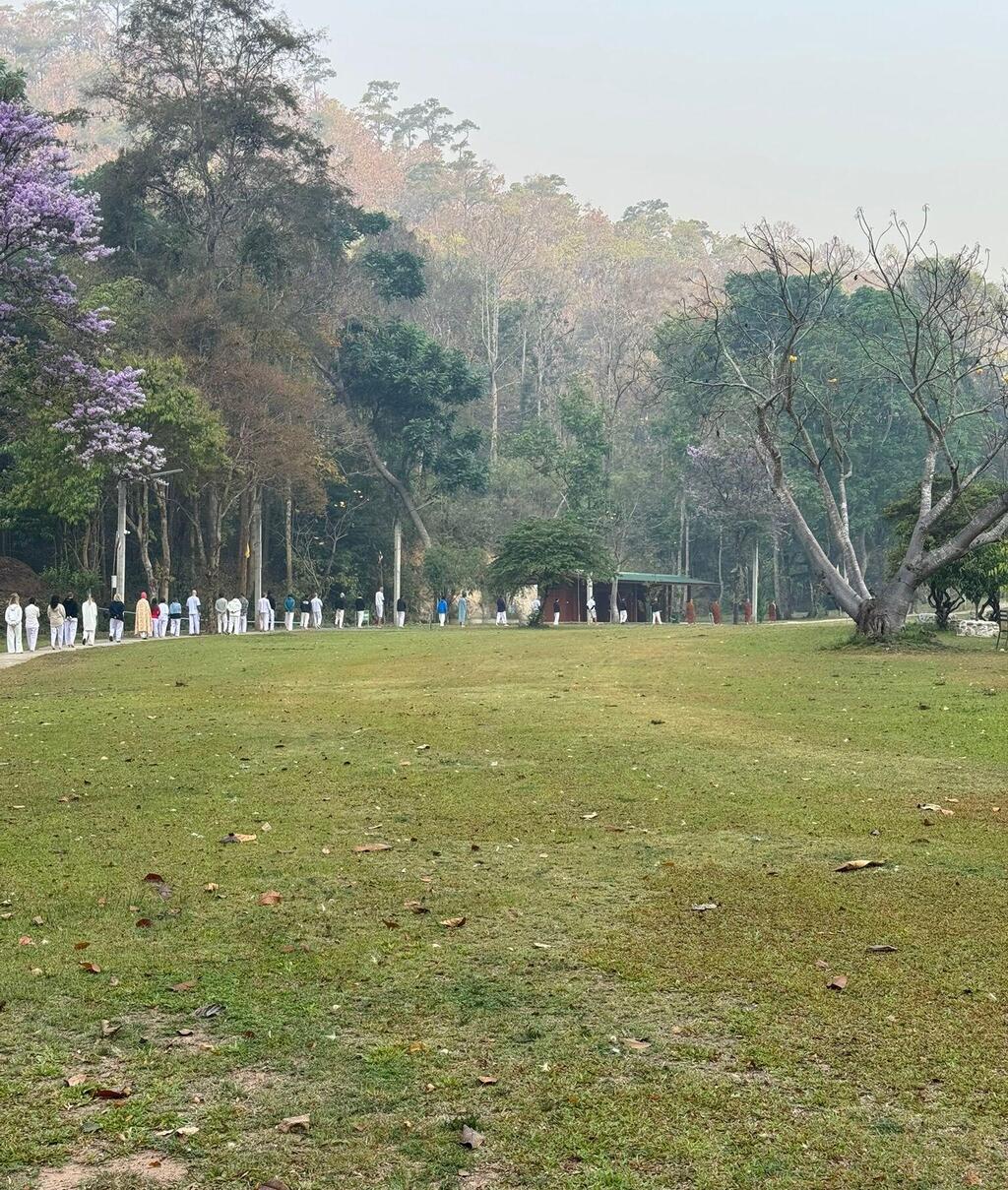
(Photo: Dana Elazar)
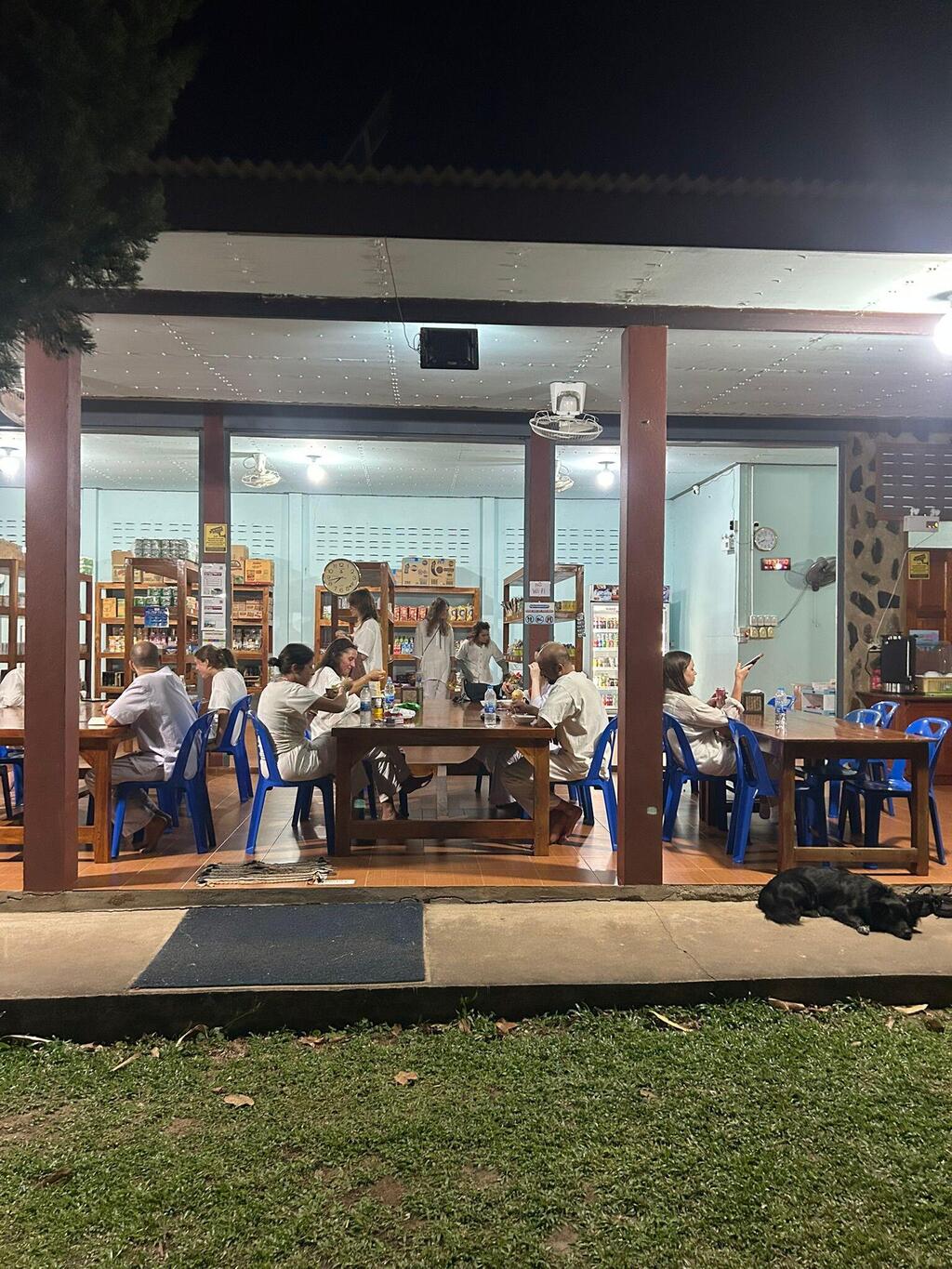
The monastery cafeteria
(Photo: Dana Elazar)
Within the international group, Elazar was the only Israeli. At one point, she approached the head monk and told him where she was from.
“He blessed me, my family and the country — that all the suffering should end as soon as possible.”
Then, at a moment of spiritual clarity, reality intruded again.
“I opened my phone and saw that my new, expensive flight home had been canceled. My stomach just dropped. I told myself, ‘That’s it, I’m not going back. I’ll travel for five months, quit my job, let everyone deal with it.’”
But something shifted during the meditation.
“I tried to understand what I want, what my gut is asking for,” she said. The answer surprised her. “Even though everyone told me not to go back, I realized I want to go home.”
After a week at the monastery, Elazar left with new insights and bought another ticket to Israel.
“I’m coming back on a ridiculous route,” she said, laughing. “Bangkok to Abu Dhabi, Abu Dhabi to France, a 12-hour layover there, then to Sharm el-Sheikh.”
“I’ll admit I’m stopping in Sinai for a week — a kind of proper Exodus,” she added, referring to the biblical story of the Israelites’ departure from Egypt.