

Founded around 2000 BCE in Mesopotamia, Babylon was once the largest city on Earth—and a major cultural center whose literature helped shape human civilization.
Located about 85 kilometers (53 miles) south of modern-day Baghdad, the ruins of ancient Babylon were declared a UNESCO World Heritage Site in 2019, in part due to their extraordinary archaeological significance.
Gallery

The cuneiform tablet with the discovered hymn
(Photo: A. Fadhil, Department of Archaeology, University of Baghdad)
Now, in a breakthrough collaboration between scholars at the University of Baghdad and Prof. Enrique Jiménez of Ludwig Maximilian University in Munich, a long-lost Babylonian hymn has been rediscovered and reconstructed. The text, believed to have been lost for nearly 1,000 years, offers a vivid portrait of the city’s splendor and its inhabitants.
“It's a fascinating hymn that describes Babylon in all its majesty and gives insights into the lives of its inhabitants, male and female,” said Jiménez, a specialist in ancient Near Eastern literature.
Babylonian texts were written in cuneiform on clay tablets, many of which survived only in fragments. One of the goals of the project was to decipher hundreds of tablets from the famed library of Sippar, believed by some ancient legends to have housed texts hidden by Noah before the biblical flood.
Jiménez has led the digitization of all known cuneiform fragments through the Electronic Babylonian Library platform. Using artificial intelligence, the team was able to match fragmentary tablets that previously could not be connected.
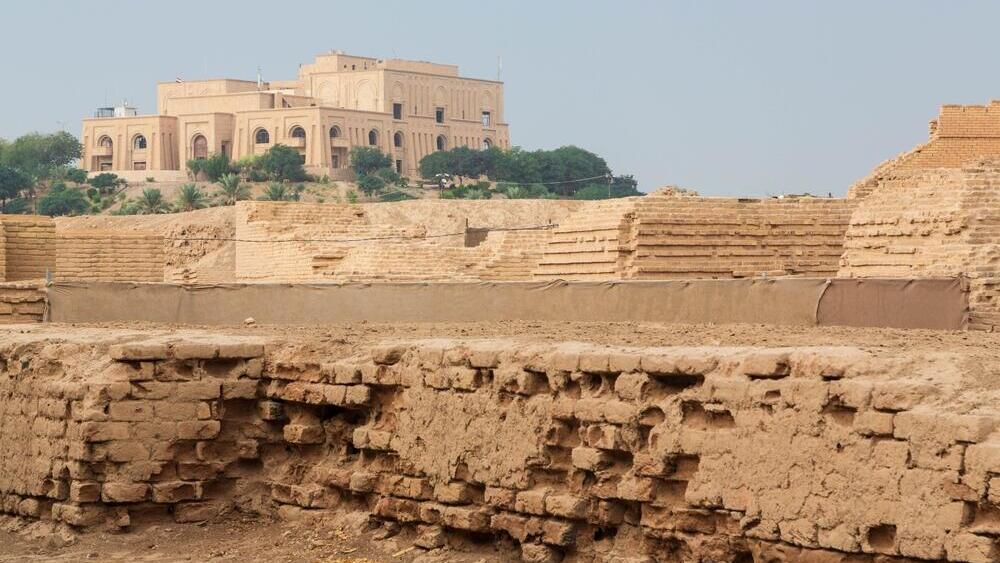
Ancient remains from Babylon
(Photo: Nastya Smirnova RF/Shutterstock)
Get the Ynetnews app on your smartphone: Google Play: https://bit.ly/4eJ37pE | Apple App Store: https://bit.ly/3ZL7iNv
“With our AI-supported platform, we identified 30 additional manuscripts that belong to the rediscovered hymn—something that would have taken decades in the past,” Jiménez explained.
The completed work, published in the Iraq journal, allowed researchers to fully reconstruct the hymn, which was once widely copied but had never been known in its entirety. “The hymn was copied by children at school. It's unusual that such a popular text in its day was unknown to us before now,” Jiménez noted.
The hymn, likely composed in the early first millennium BCE, contains 250 lines and appears to have been written by a proud Babylonian praising his city. The text describes the grandeur of its buildings but also includes pastoral imagery of the Euphrates River irrigating the surrounding fields—an unusual detail, as most surviving Mesopotamian literature rarely comments on natural phenomena.
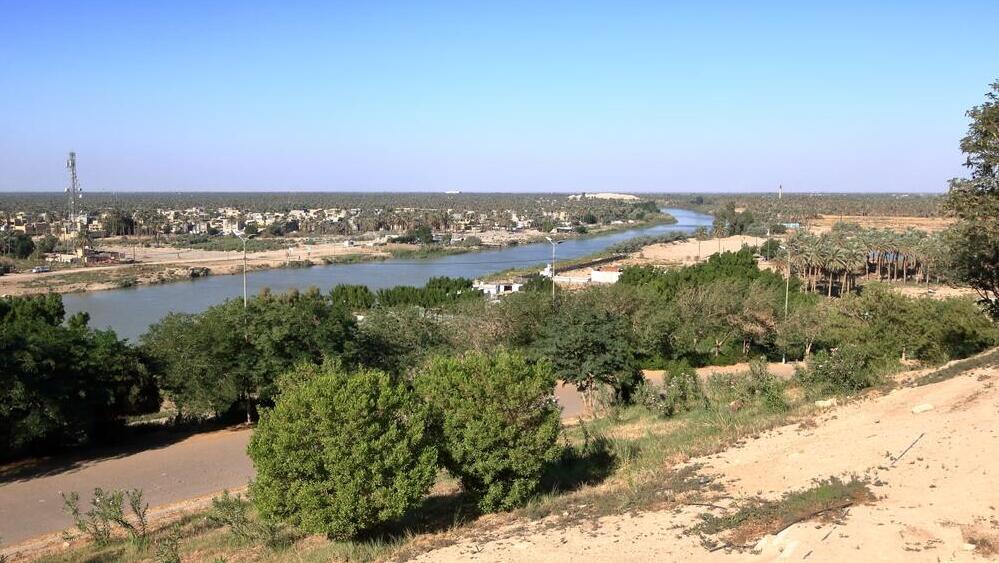
Euphrates river
(Photo: Dynamoland/Shutterstock)
One of the most striking aspects of the text is its references to the role of women, including descriptions of priestesses and their functions—an area not previously clarified in other texts. The hymn also offers glimpses into urban social life, depicting residents as hospitable and welcoming to strangers.
“This is a rare literary discovery,” said Jiménez. “It enriches our understanding not just of Babylon’s architecture or politics, but of its human dimension—how people lived, worked and related to one another in the world’s first metropolis.”