

Spanning the entire length of Israel, the Israel National Trail weaves together forests, rivers, deserts and coastlines into one continuous journey. we picked ten hikes that stitch together short, easy sections of the country’s signature trek. From Mount Hermon to Eilat, the trail runs about 1,080 kilometers and is divided into 56 segments. It is marked in white, blue and orange, and it can be walked end to end or enjoyed one section at a time. National Geographic listed it among the world’s 20 best hiking trails for its blend of nature, history and everyday Israeli life.
Below are ten routes that work for families and casual hikers. Distances, markings and logistics are included for each stop.
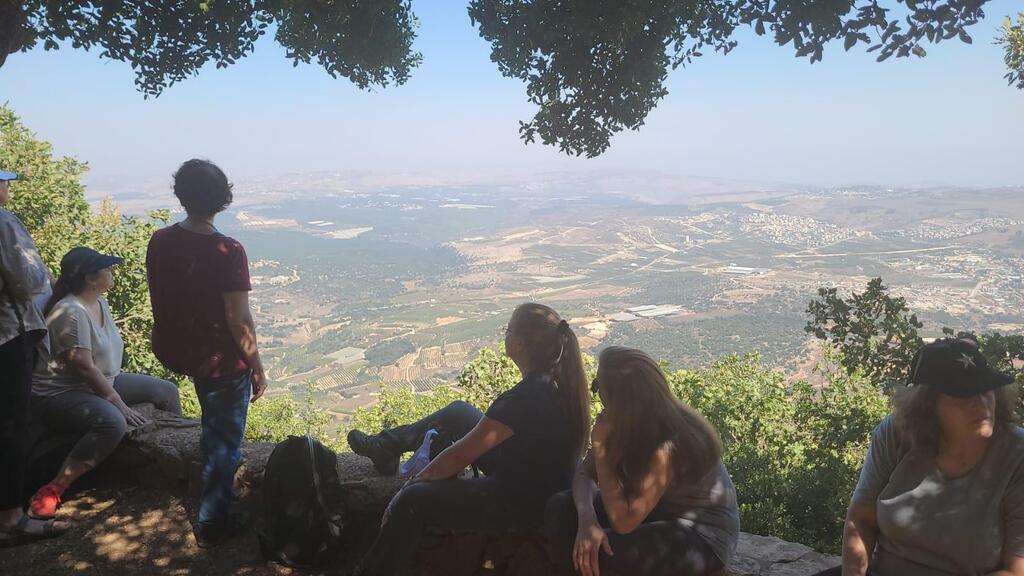
Mount Meron summit
Hikers on a full thru-hike reach Mount Meron around day six, but you can get the views on the circular Summit Trail. The loop overlaps part of the Israel Trail and circles the peak, with lookouts toward the Upper Galilee and Lebanon, the Golan Heights and Mount Hermon, the coastal plain, and parts of the Lower Galilee.
Distance: about 2.5 km, easy
Trail marking: red
Access: Waze “Summit Trail, Mount Meron.” From Route 89 between Hurfeish and Sasa, follow signs to Meron Field School, park at the summit lot and start the loop
Notes: free entry, no reservation required; seasonal wildflowers from autumn through spring, shade in summer
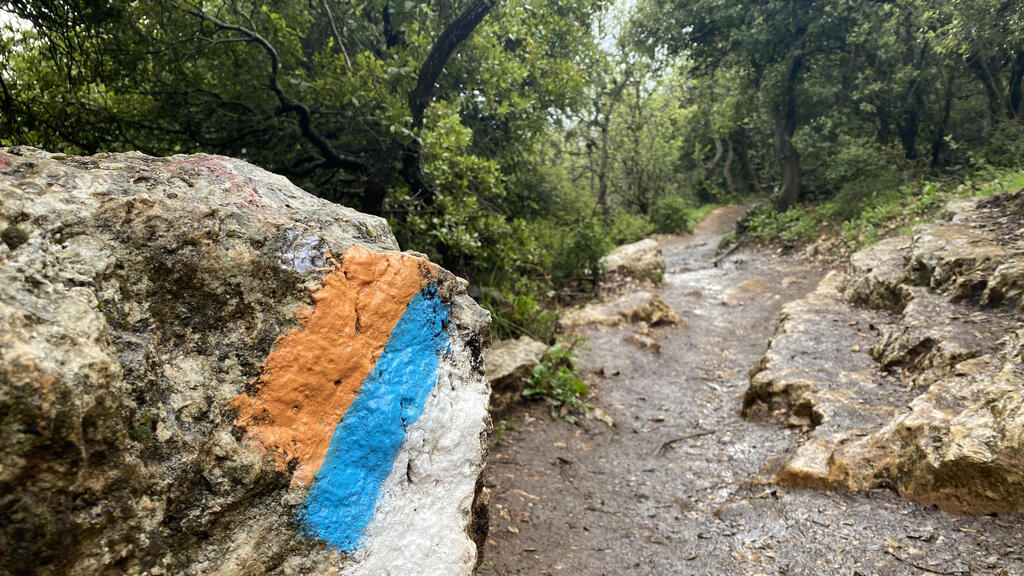
Israel National Trail marker at the summit of Mount Meron
(Photo: Gilad Carmeli)
The summit trail is pleasant year-round. From autumn to spring, beautiful and rare flowers bloom one after another; in winter, the mountain is sometimes covered with snow, and in summer, most of the path is shaded by dense, green woodland.In autumn, hikers can spot the yellow-flowering Sternbergia (known in Hebrew as the large autumn daffodil) and the early-blooming white autumn crocus, named for being the first of its kind to flower.
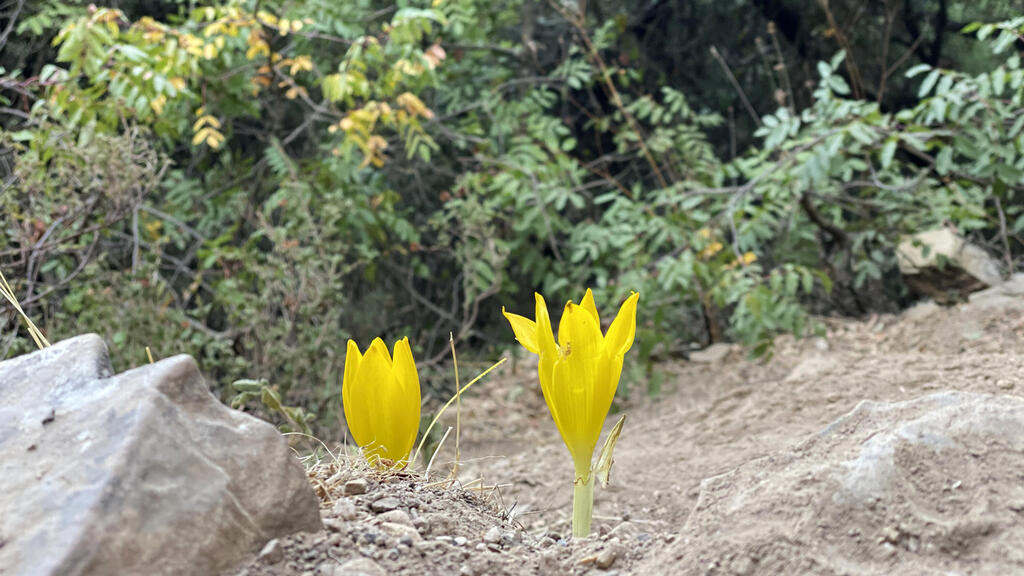
Sternbergia flowers blooming in autumn along the Summit Trail on Mount Meron
(Photo: Gilad Carmeli)
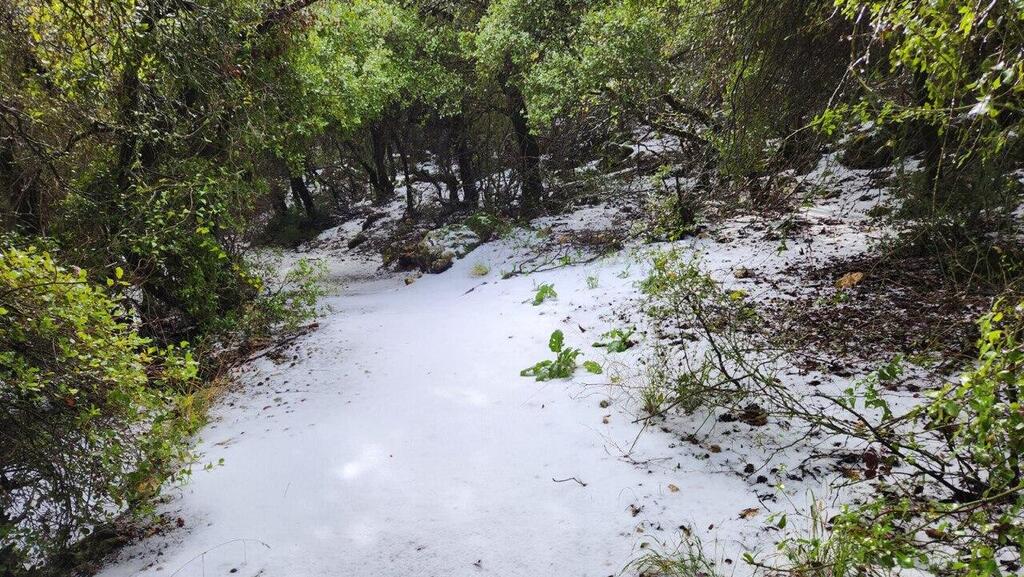
Snow along the Summit Trail on Mount Meron
(Photo: Shay Massika)
As winter approaches, they are replaced by the delicate purple crocus. In midwinter, the trail comes alive with the blue blossoms of the Lebanon iris and eastern hyacinth, along with the pink Greek cyclamen, whose shape is distinct from the common cyclamen found elsewhere in Israel. As spring approaches, the sides of the trail are covered with anemones in bloom, soon joined by tulips, several species of orchids, the rare Galilee garlic, and even the forest peony.
The circular trail is about 2.5 kilometers long and is considered easy, following a red-marked path.
Upper Nahal Amud
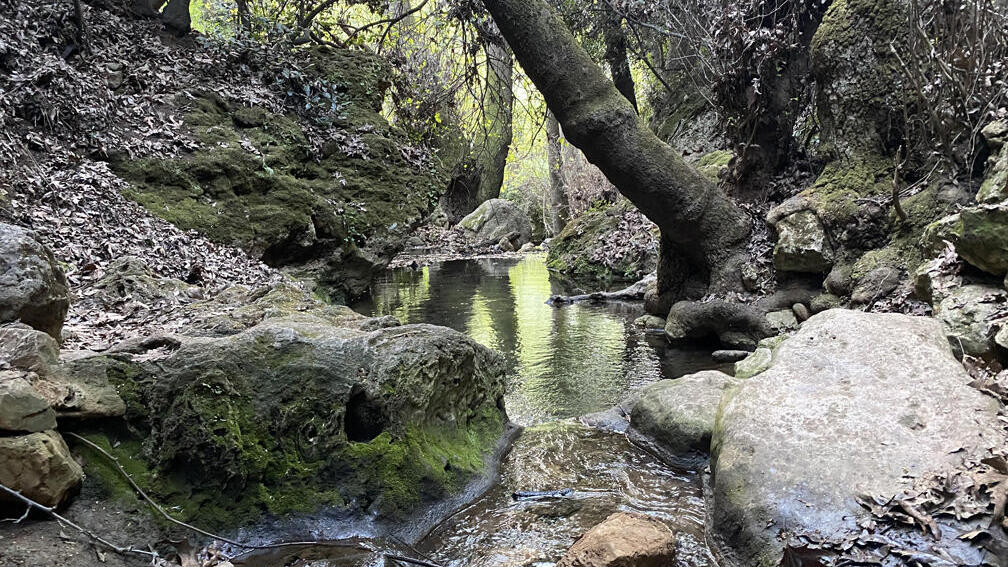
Pastoral scenery along the upper section of Nahal
(Photo: Gilad Carmeli)
From Meron the trail descends to the Nahal Amud Reserve. The upper section offers a gentle walk through shaded slopes of oak, pistacia, laurel, willow and plane trees, with springs, an ancient aqueduct and restored orchards.
Highlights include the abandoned Ein Tina police post from the British Mandate period, Ein Yaqim Spring with a large walnut tree, remnants of flour mills and fulling workshops linked to Safed’s 16th-century textile trade, and the clear Shokhvy Pools.
Entry and booking: reserve entry, 31 NIS adult, 16 NIS child, advance reservation required via the Israel Nature and Parks Authority
Access: Waze “Nahal Amud Nature Reserve – parking and information”
Notes: Family friendly year-round except rainy days
From Mount Meron, the Israel National Trail descends through Nahal Meron into the Nahal Amud Nature Reserve. While thru-hikers continue almost to the Sea of Galilee, the upper section offers an easier, family-friendly route through a shallow stream shaded by oaks, laurels, willows and plane trees. From the reserve entrance, a red-marked path leads toward the abandoned Ein a-Tina police station, built during the Arab Revolt to protect the nearby water pumping station at Ein Yaqim Spring, which supplied Safed with drinking water until 1995.
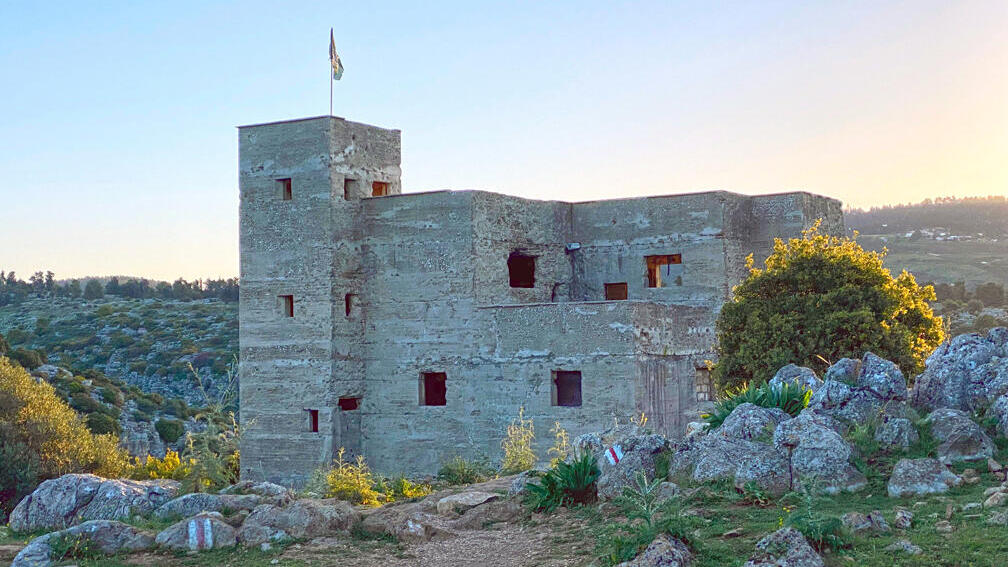
Ein a-Tina police station
(Photo: Gilad Carmeli)
From there, a black-marked trail that overlaps the Israel Trail leads to Ein Yaqim itself, identifiable by a large walnut tree. An ancient aqueduct flows from the spring and connects to a blue-marked path, where rangers restored an old orchard that demonstrates traditional mountain farming once common in the area. The aqueduct ends in a stone pool that stored water for irrigating nearby fruit trees, including lemons that gave this stretch its Arabic name, Wadi Lemon. The area also features the remains of a farmhouse and more than 20 historic flour mills powered by the stream, earning it another name, Wadi Tawahin—the Valley of the Mills. Archaeological remains of terraces, channels and Crusader-era dams can still be seen, and some structures later served as fulling mills for Safed’s wool and textile industry, brought by Jews expelled from Spain in the 16th century.
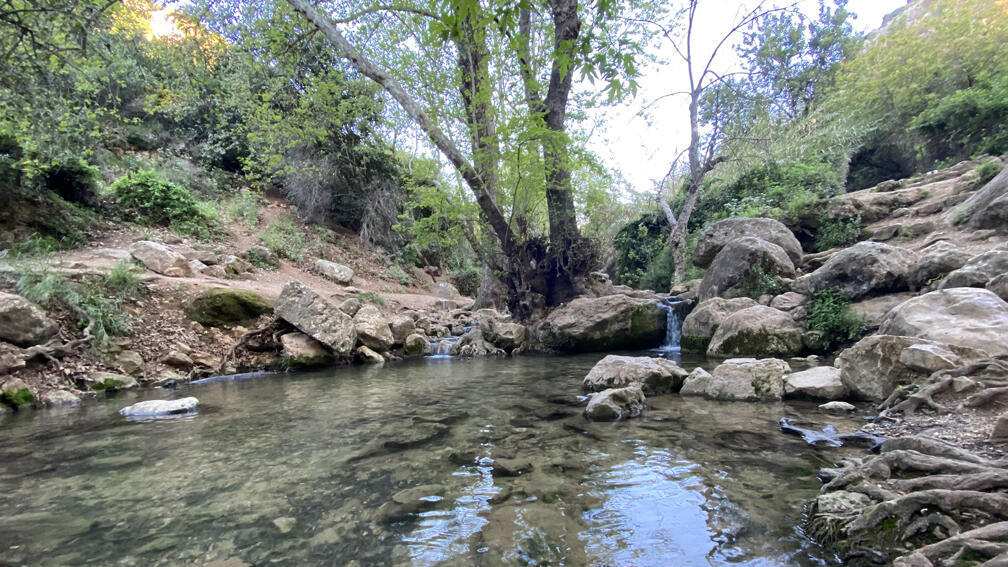
Sekhvi Pools
(Photo: Gilad Carmeli)
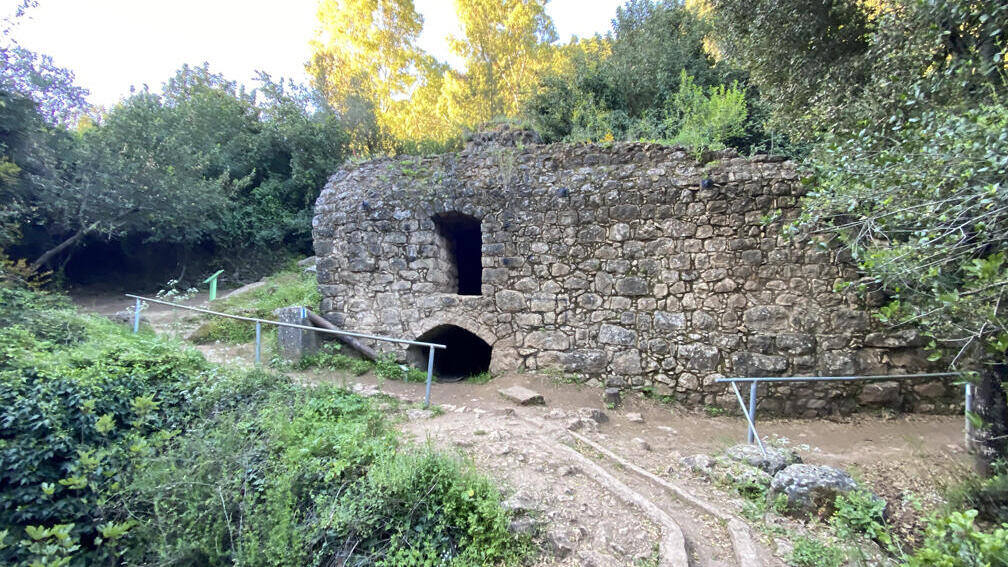
The Fulling mill
(Photo: Gilad Carmeli)
The trail continues past the restored orchard, descending toward a large stone building that once housed another fulling mill, and then along the blue-marked path to the clear Shokhvy Pools, a perfect spot for a shaded rest or a dip. From the pools, hikers can follow the black trail upstream past the junction of Nahal Amud and Nahal Meron, eventually returning to Ein Yaqim and the red-marked path back to the entrance. The route is pleasant year-round except on rainy days, with seasonal blooms from autumn’s narcissus and crocuses to spring’s cyclamens, tulips and anemones, creating one of northern Israel’s most beautiful hiking experiences.
Arbel cliffs and fortress
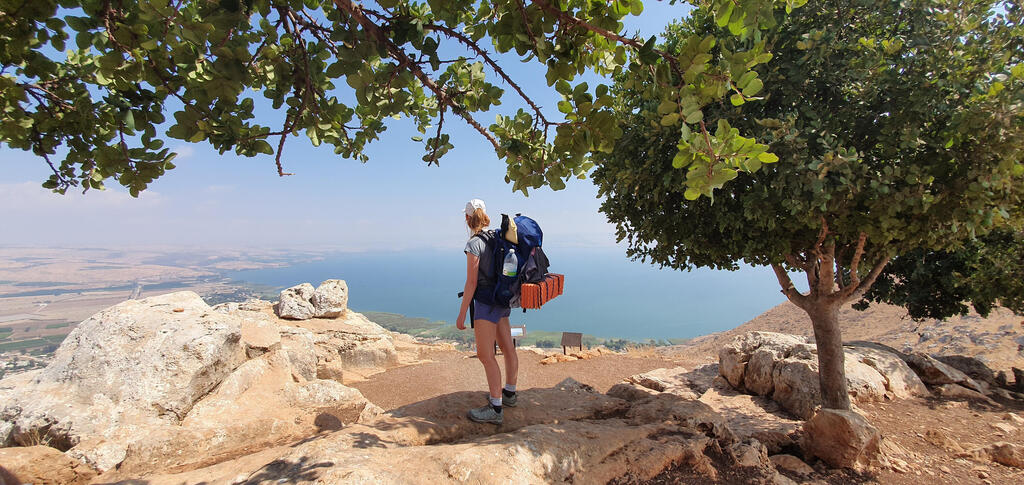
Hiker on the Arbel cliff
(Photo: Elad Gershgorn)
Day nine showcases sweeping views of the Sea of Galilee. At the top of Mount Arbel are three lookouts: Facing the Kinneret, with views of the Sea of Galilee and southern Golan Heights; the Carob Lookout, overlooking the Galilee, Hermon and Golan; and Mount Nitai Lookout, facing Mount Nitai to the north. An easy trail from the parking area connects them all.
From the entrance, follow the black-marked path to the Carob Lookout, then continue to Facing the Kinneret. Instead of descending with the Israel Trail, turn back slightly to choose between two loops. You can choose an easy clifftop loop that links three viewpoints, or a short, steeper route that descends with handholds to the Arbel Fortress.
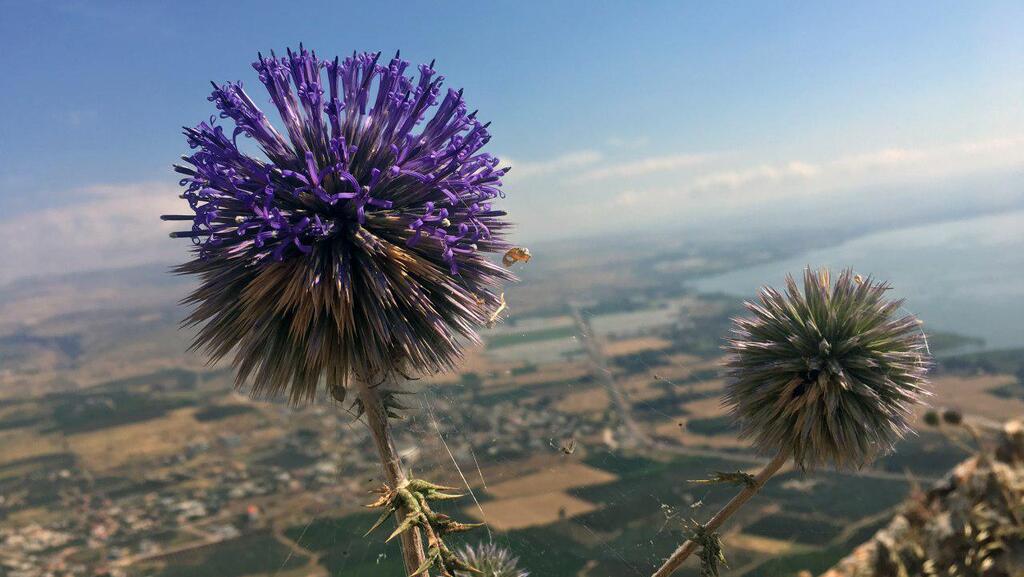
View from the Arbel cliff with blooming echinops flowers
(Photo: Gilad Carmeli)
Easy loop: Easy loop (2 km): After passing the Carob Lookout, take the green-marked trail along the cliff edge to Mount Nitai Lookout, named for the sage Nitai the Arbeli from the “Era of the Pairs” in the second and first centuries BCE. Return to the parking area on the red-marked trail.
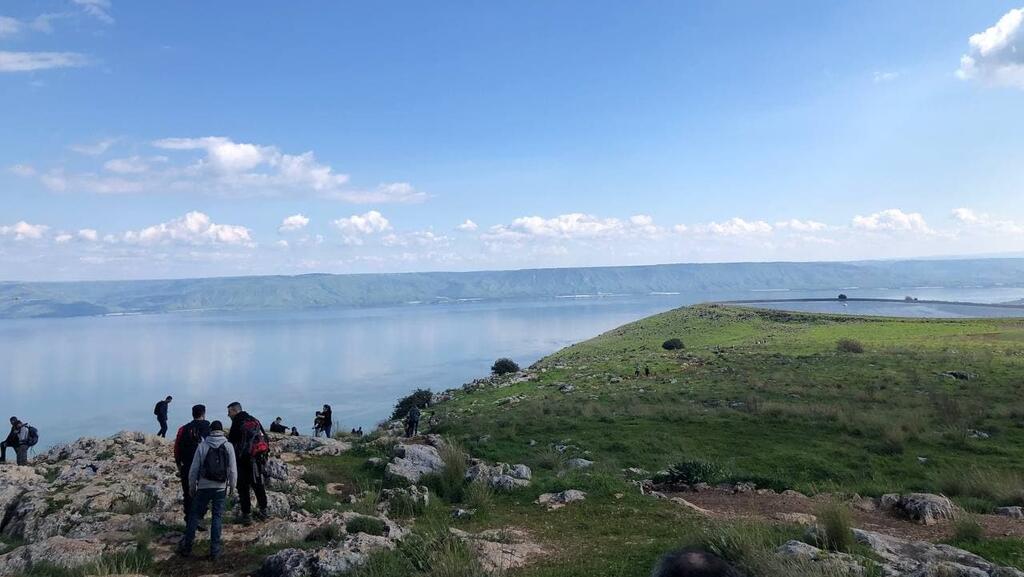
Arbel cliff
(Photo: Maor Layzer)
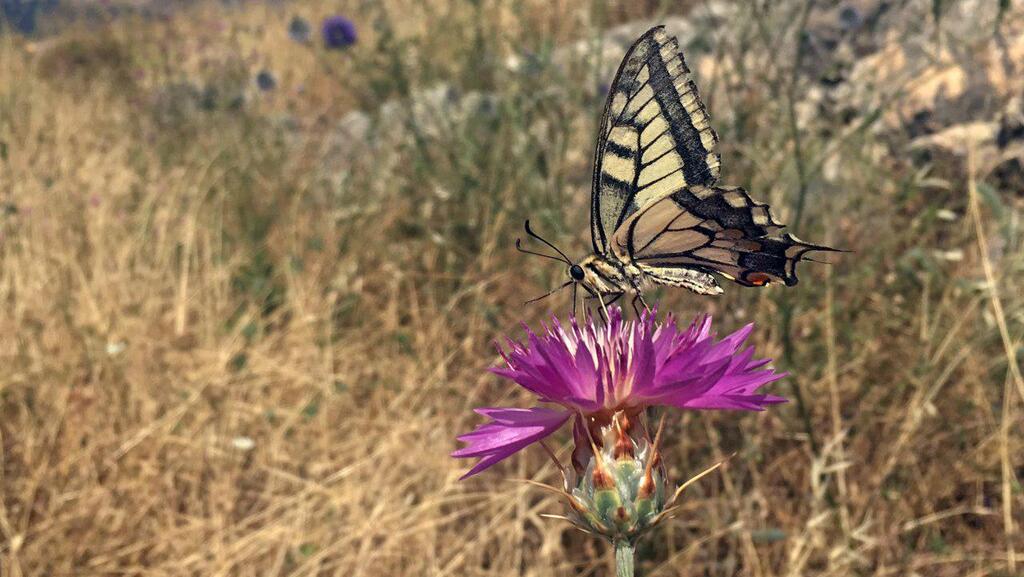
Scarce swallowtail butterfly on the Arbel cliff
(Photo: Gilad Carmeli)
Challenging loop: Turn right at the first junction onto the black-marked path leading down to Arbel Fortress, using the fixed handholds installed by the Israel Nature and Parks Authority. The fortress, built in the 17th century by Ali Bek, son of Druze ruler Fakhr al-Din II, was constructed into caves that once served as Roman and Crusader strongholds. Archaeological finds include ritual baths, coins and evidence of Jewish rebels who fought Herod in 37 BCE.
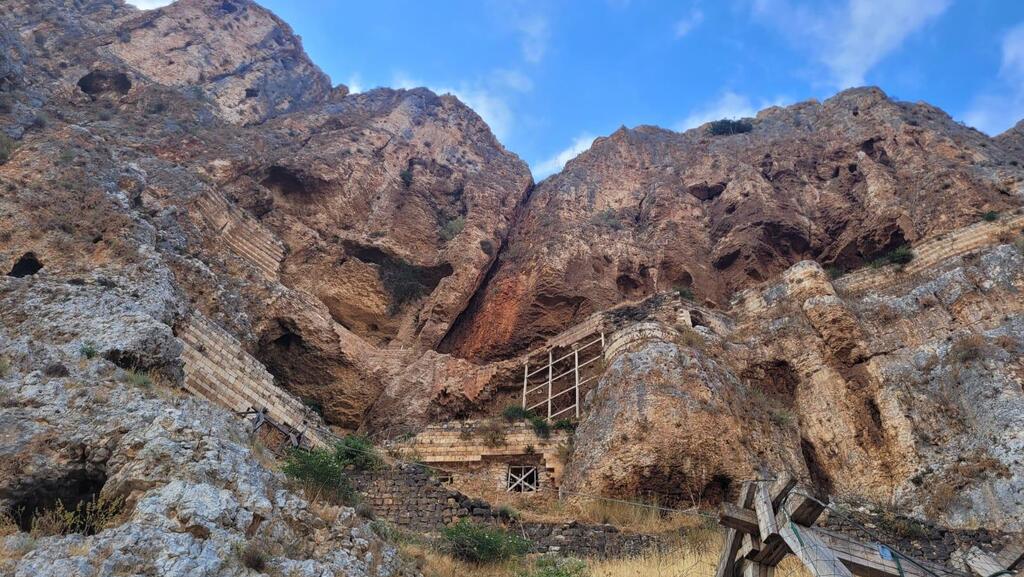
Arbel Fortress
(Photo: Asaf Dori)
Continue for about 400 meters to the sign marking the climb to the refuge caves. After visiting, return via the red
-marked trail up to the top and the parking area. Hike with care and use the cables and handholds along the way.
Access: Waze “Arbel Nature Reserve”
Iris Nazareth Nature Reserve
On the slopes of Mount Yona near Nof HaGalil, the reserve protects the Nazareth iris, a large, speckled iris that blooms in early March.
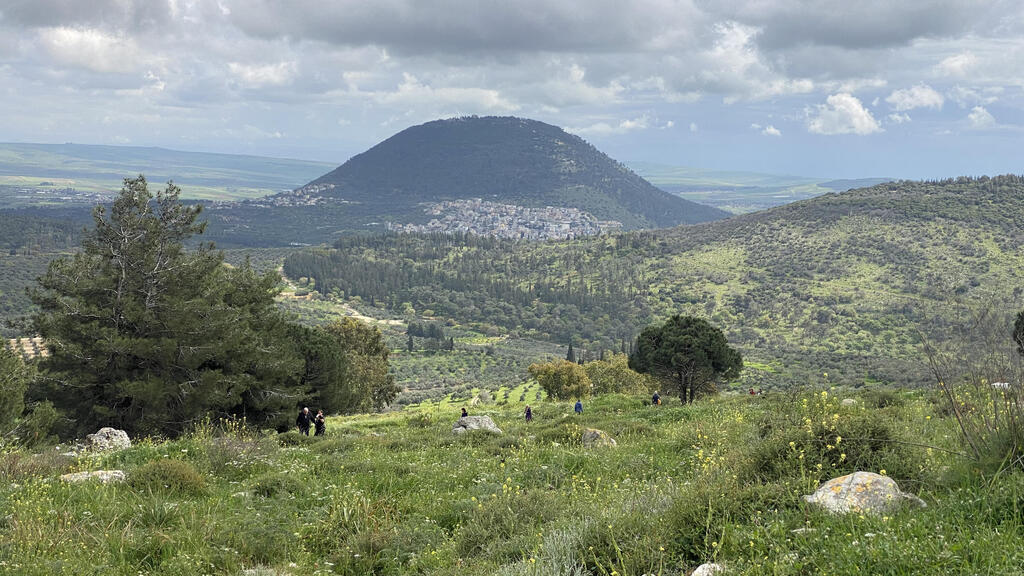
Beautiful in late winter, but the view lasts year-round. The Israel National Trail in the Iris Nazareth Nature Reserve
(Photo: Gilad Carmeli)
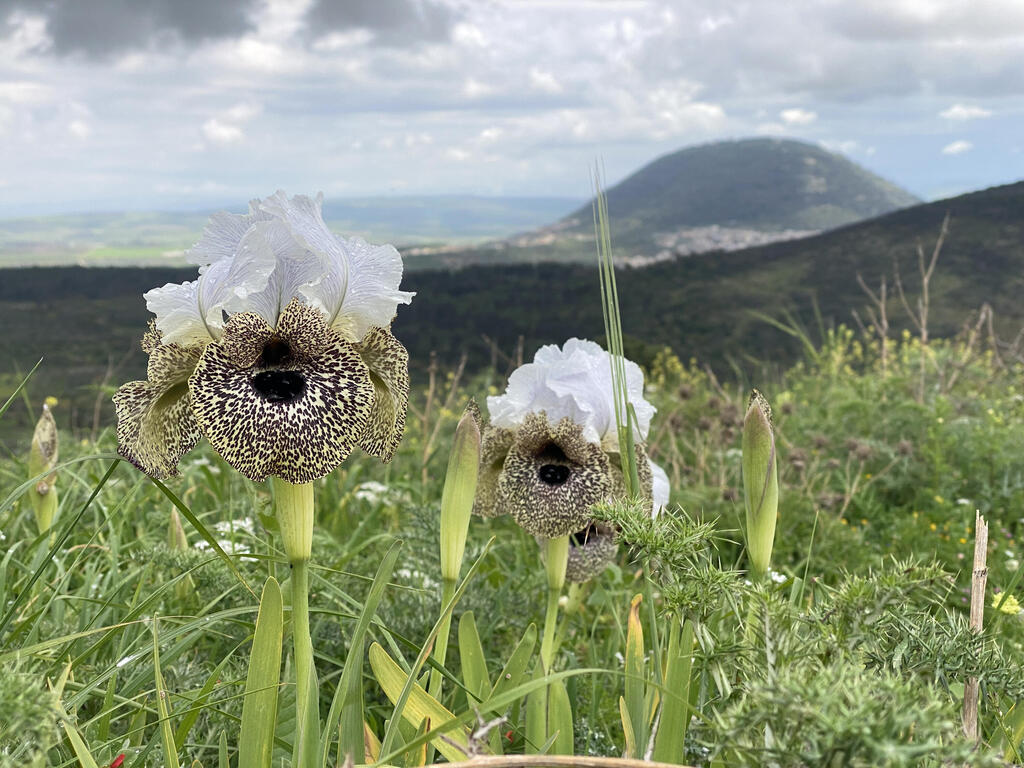
Nazareth irises in bloom in Nof HaGalil
(Photo: Gilad Carmeli)
From the small reserve, whose entrance is next to Nof HaGalil’s cemetery, there is a dramatic view of Mount Tabor, Mount Dvorah and Nahal Barak ben Avinoam. The reserve is an easy walk on a paved path and is recommended year-round. In late winter and early spring, beyond the irises, it fills with blooms of cyclamens, yellow asphodel, Syrian thistle, split-leaf cottonrose, mountain tulip, Persian buttercup and more.
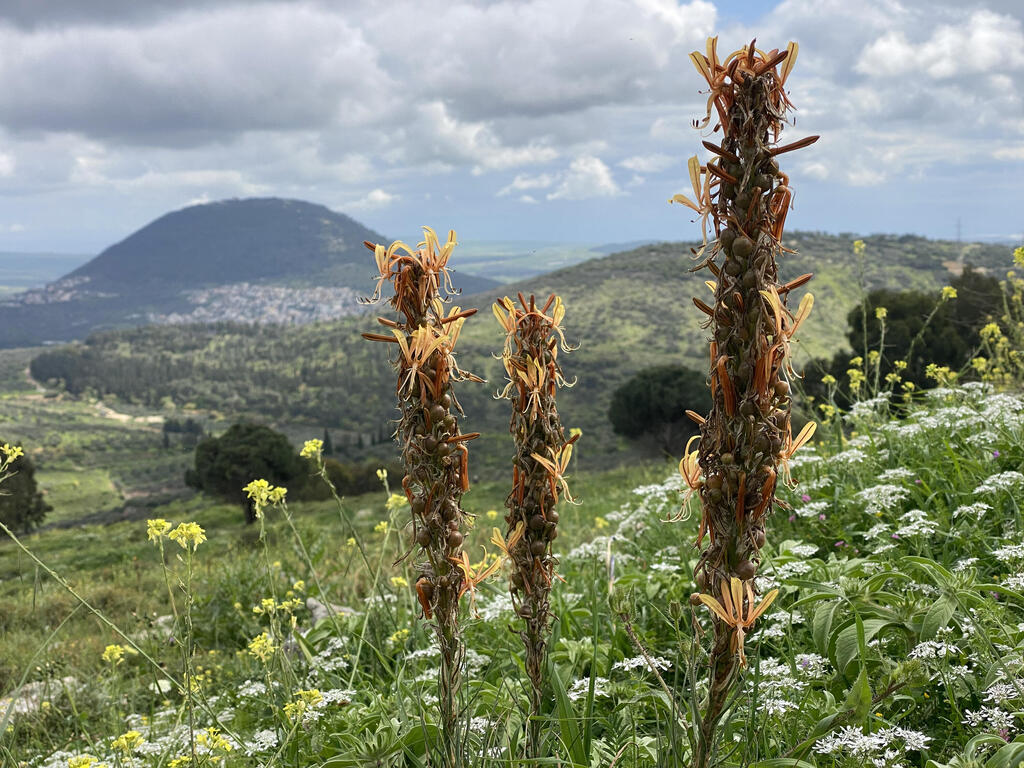
Yellow asphodel in bloom in the Iris Nazareth Nature Reserve
(Photo: Gilad Carmeli)
Best season: late winter to early spring, but open year-round with varied blooms
Access: Waze “Iris Nazareth Nature Reserve,” near the municipal cemetery
Entry: free
Fishermen’s village and the aqueduct
Around day 17 the trail meets the Mediterranean between Beit Hananya and Beit Yanai. A flat coastal walk runs from the Taninim River estuary through the picturesque fishing village of Jisr al-Zarqa to Caesarea’s aqueduct beach.
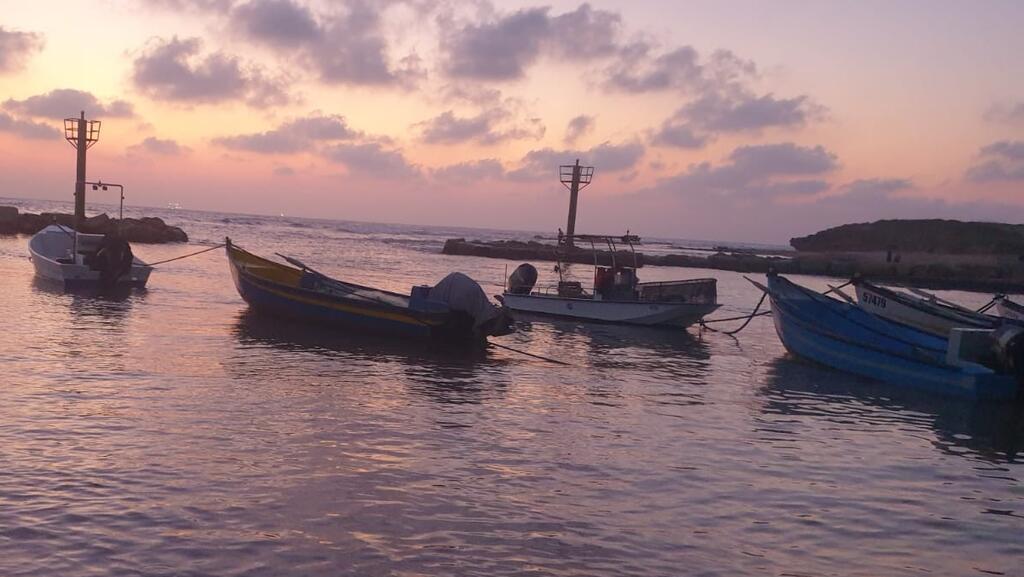
Sunset at the fishermen’s village of Jisr al-Zarqa
(Photo: Orna Ben Haim)
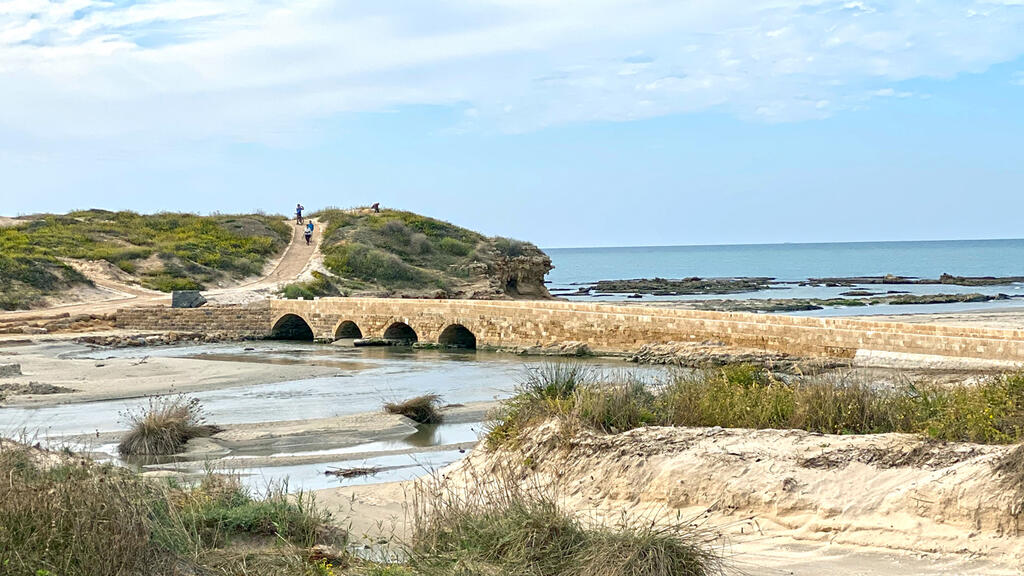
The restored Wilhelm Bridge at the Taninim River estuary, with Tel Taninim in the background
(Photo: Gilad Carmeli)
You will pass Wilhelm Bridge, rebuilt for safe crossing during floods, and Tel Taninim, identified with ancient Crocodilopolis. The route also traces regional history, including the drying of the Kabara swamps and the founding of Kibbutz Ma’agan Michael, alongside the story of Jisr al-Zarqa.
In 1922, the Jewish Colonization Association, funded by Baron Rothschild, bought the land, and over the next two decades pioneers worked to drain the swamps. In August 1949, the kibbutz was established there, with a vision of becoming Israel’s first community devoted to marine agriculture. The story of Jisr al-Zarqa is inseparable from the fish ponds of nearby Kibbutz Ma’agan Michael.
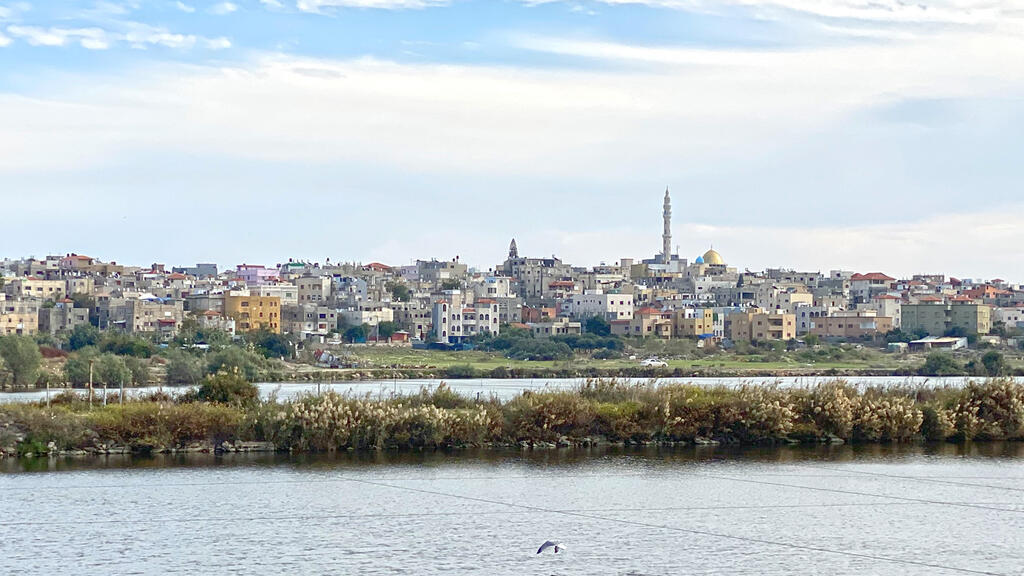
Jisr al-Zarqa behind the fish ponds
(Photo: Gilad Carmeli)
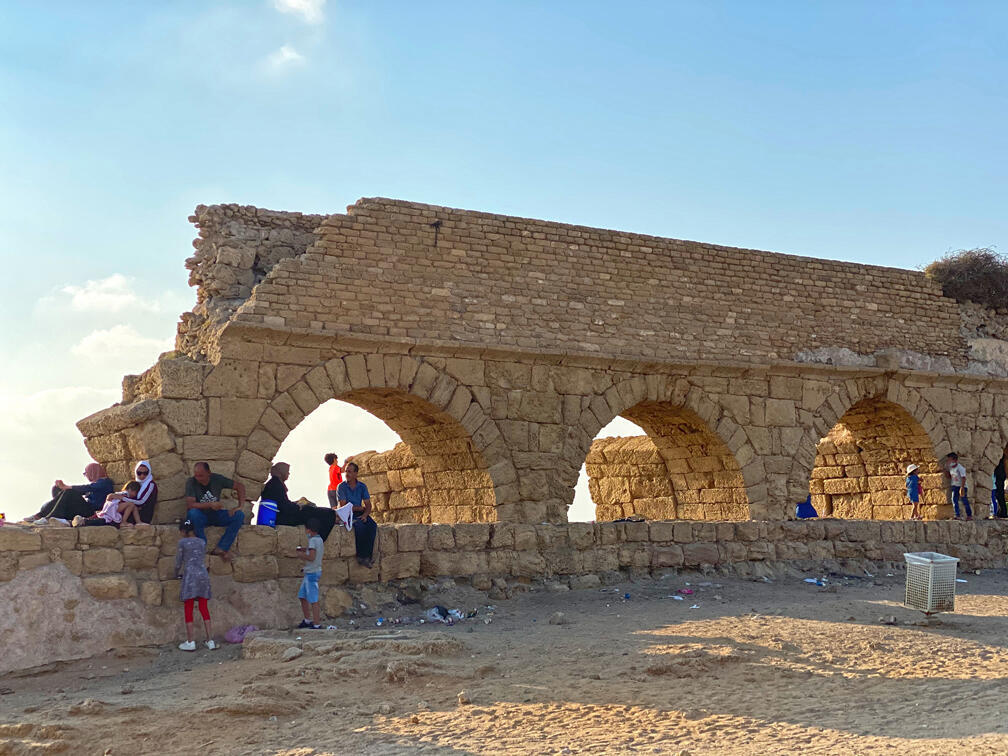
The aqueduct at Aqueduct Beach in Caesarea
(Photo: Gilad Carmeli)
When swamps still covered the area, a small Bedouin settlement of the Arab al-Rawarneh tribe lived along their edges. Its residents made their living mainly from fishing in the marshes and along the nearby shore, herding water buffalo, and weaving goods from reeds and papyrus. After drainage work began, Bedouins joined laborers brought from Egypt and Sudan. As compensation for the loss of the tribe’s swamp-based livelihood, the workers were given alternative farmland on the kurkar ridge, in a new village whose name in Hebrew means “the bridge over the blue stream.” Each family received about 30 dunams of land.
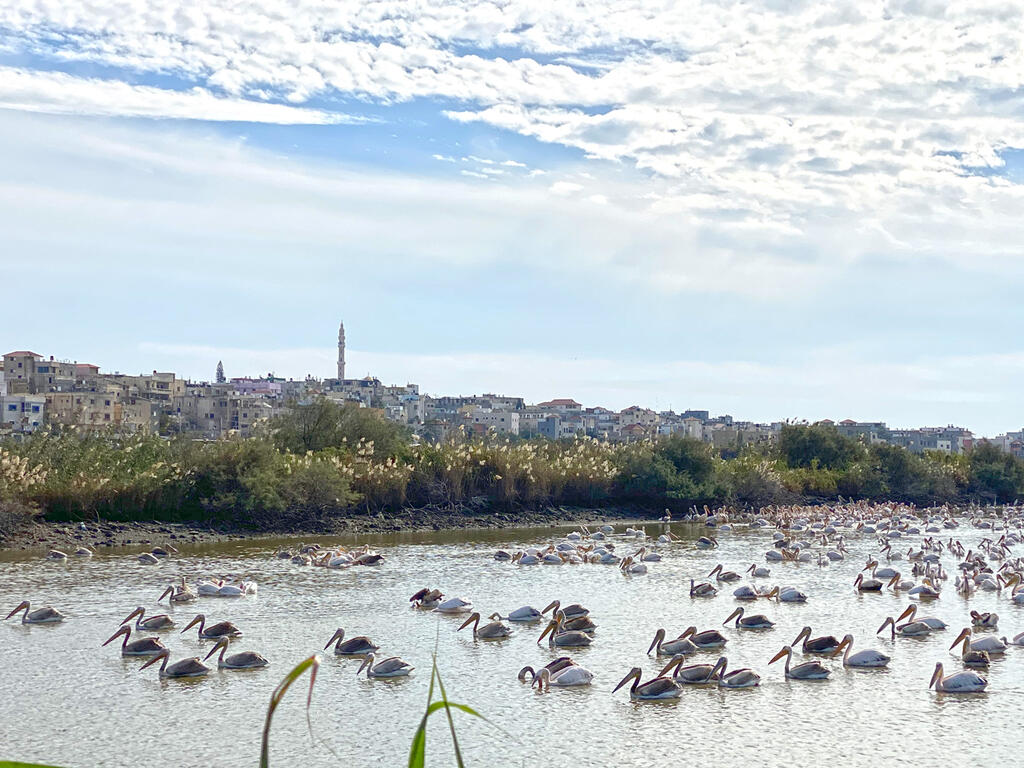
Pelicans at the Ma’agan Michael fish ponds
(Photo: Gilad Carmeli)
Distance: up to 3.5 km each way, out and back
Access: Waze “Tel Taninim (Crocodilopolis)”
Entry: free
The clean stretch of the Yarkon River
Day 20 follows the Yarkon from Tel Aviv to its springs near Tel Afek. A lesser-known upper stretch near the “Hidden Waterfall” is clean and suitable for a dip. Start above the confluence with Nahal Kana. The waterfall pool and the upstream flow are spring-fed and clean, unlike the waters downstream from the confluence.
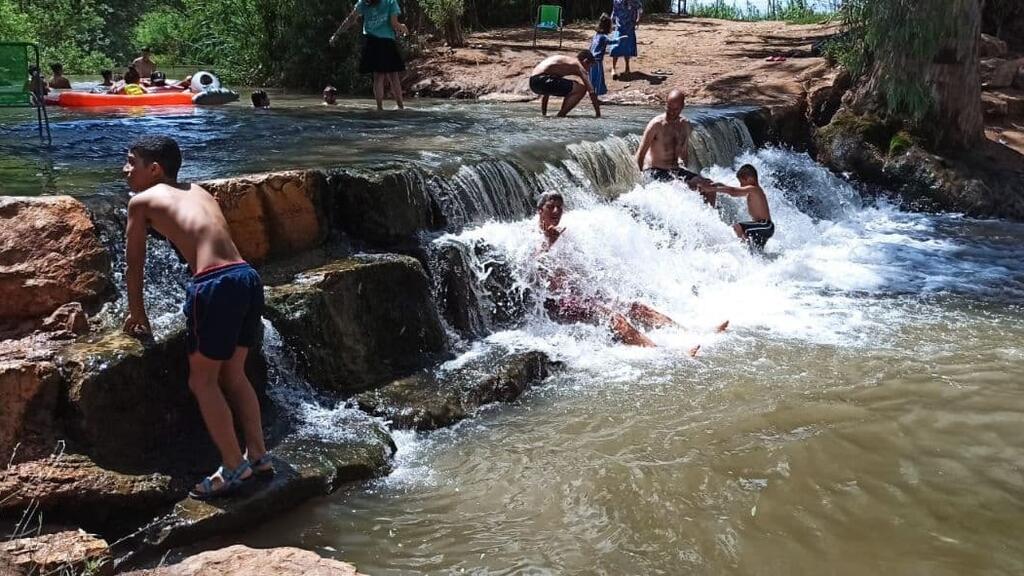
The “Hidden Waterfall” on the Yarkon River
(Photo: Ori Davidovich)
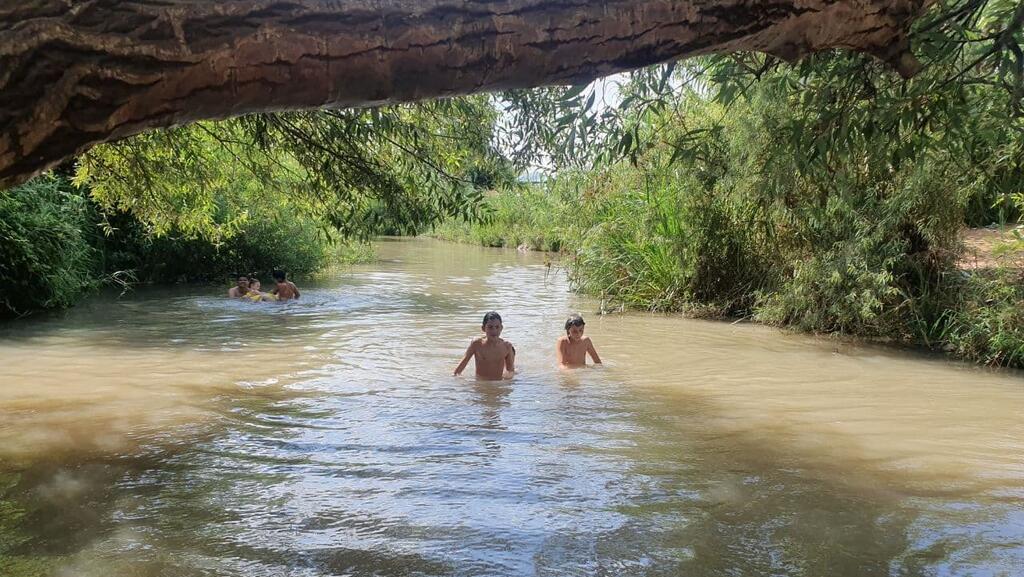
The pool above the “Hidden Waterfall” on the Yarkon River
(Photo: Assaf Kamar)
The route reaches Abu Rabah Mill, restored farm structures, eucalyptus groves and fields, then a historic two-story orchard house near Neve Yarq. There is an easy river access point for wading.
Distance: about 3.5 km one way, out and back
Access: Waze “Hidden Waterfall, Sharonit”
Entry: free
After spending time at the waterfall, follow the path along the southern bank of the Yarkon. After about 850 meters, it connects with the Israel National Trail and reaches Abu Rabah Mill, an old flour mill. In the 1880s, Sheikh Ibrahim Abu Rabah built a new mill on the site. He served as an official in the Ottoman administration in Jaffa and also provided protection to the residents of Petah Tikva in exchange for payment. The mill ceased operating in the 1950s, and the impressive structure was restored and renovated in 2004.
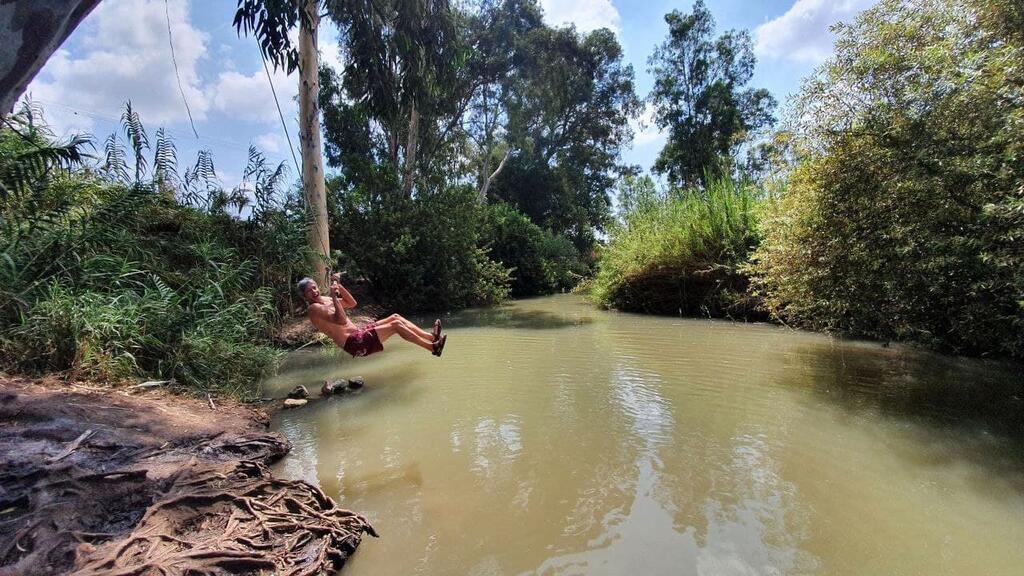
“Tarzan” rope swing on the Yarkon River near Beit Leah
(Photo: Meshi Ben Ami)
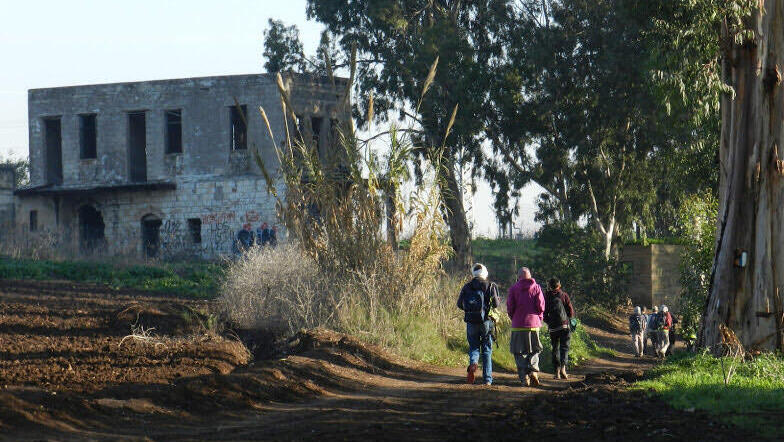
Hikers on the Israel National Trail near Beit Leah
(Photo: Miriam Ben Dov)
The trail continues through tunnels of reeds, past tall eucalyptus trees and agricultural fields, and leads to a historic two-story orchard house built in the 19th century near the Neve Yaraq dam. The building is known as Beit Leah, although the name actually comes from graffiti sprayed on one of its walls in the 1990s. The ground floor housed a pumping facility used to irrigate the nearby orchard, while the upper floor, likely added later, appears to have served as a holiday home. Next to the building is a pleasant spot to rest and an easy access point for swimming in the river. From here, return along the same route to the Hidden Waterfall.
Tel Socho
On day 25, between Tzur Hadassah and Ela Junction, the Israel Trail crosses evergreen hills with views over the Judean foothills. Tel Socho is famous for blue lupine blooms in late winter, but the views are strong year-round. Remains include walls, structures and cisterns. The lookout faces the Elah Valley, traditionally linked to the David and Goliath story between Socoh and Azekah.
Distance: about 2.5 km loop
Trail marking: blue, overlapping part of the Israel Trail
Access: Waze “Tel Socho.” From Route 38, turn left at Ela Junction onto Route 375, then after about 2.5 km turn right onto a dirt road near the hill
Entry: free
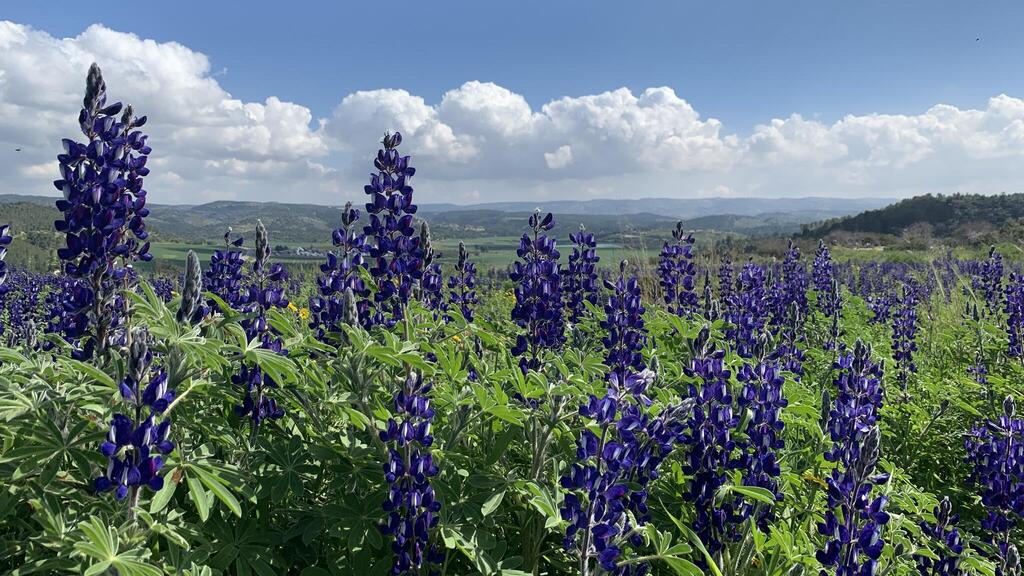
Landscape and blooming lupines at Tel Socho
(Photo: Yael Zilberstine)
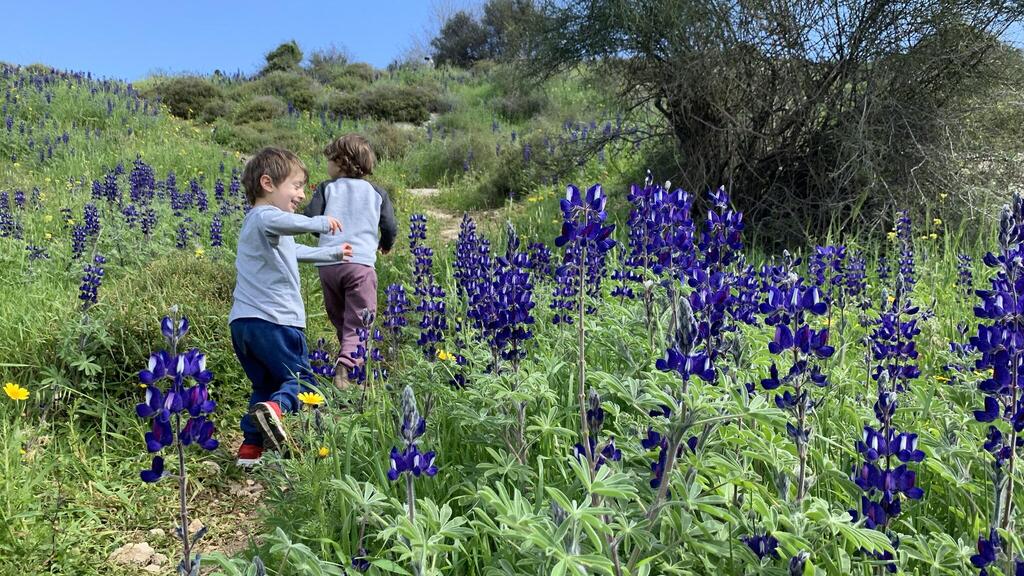
(Photo: Yael Zilberstine)
Ein Yorkeam
Around day 38, the trail reaches Ein Yorkeam east of Makhtesh Yeruham. This is a large seasonal desert pool, sometimes full through late spring and even summer after wet winters. Steps carved into the northern bank likely helped camel caravans reach water. Nearby stand the remains of a Byzantine-era fort.
Distance: about 1 km from the overnight lot on a green-marked trail that overlaps the Israel Trail
Access: Waze “Ein Yorkeam.” From Route 25, take Route 206 south, then turn left toward the overnight lot
Entry: free
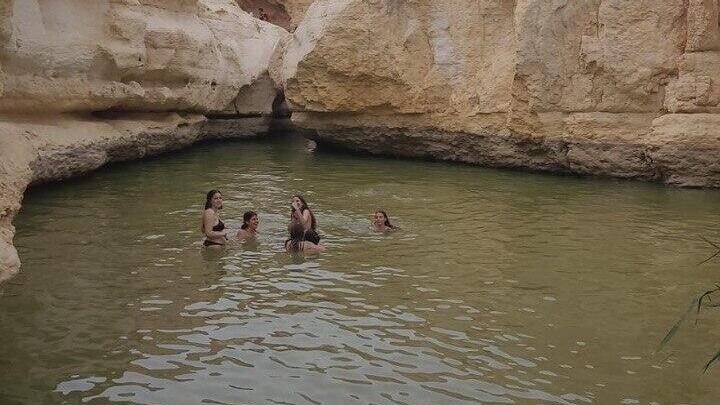
Ein Yorkeam filled with water
(Photo: Rinat Russo)
The pool is unusually large for the Negev, with a maximum depth of about five meters. Along the northern bank of the stream are ancient rock-cut steps, believed to have been used by travelers to lead camels down to drink. Nearby stand the remains of the Yeruham fort, which served as a security outpost during the Byzantine period.
Nekarot Horseshoe
On day 44, leaving Makhtesh Ramon toward the Arava, the route crosses the Nekarot Horseshoe, a wide bend that channels floodwater into a deep pool after rare heavy rains. Most years it is dry, but the geology and history are compelling.
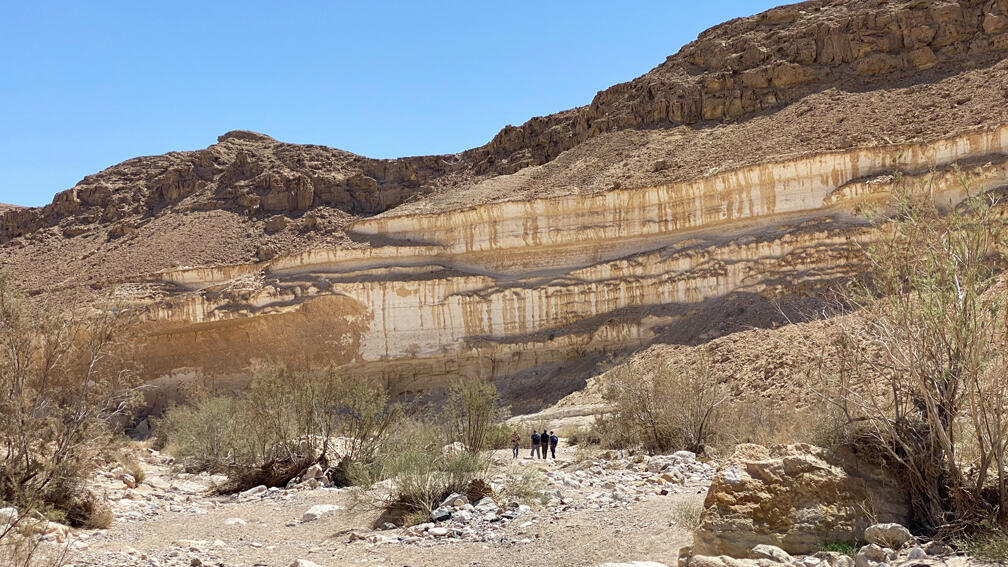
Massive stone walls in Nahal Nekarot
(Photo: Gilad Carmeli)
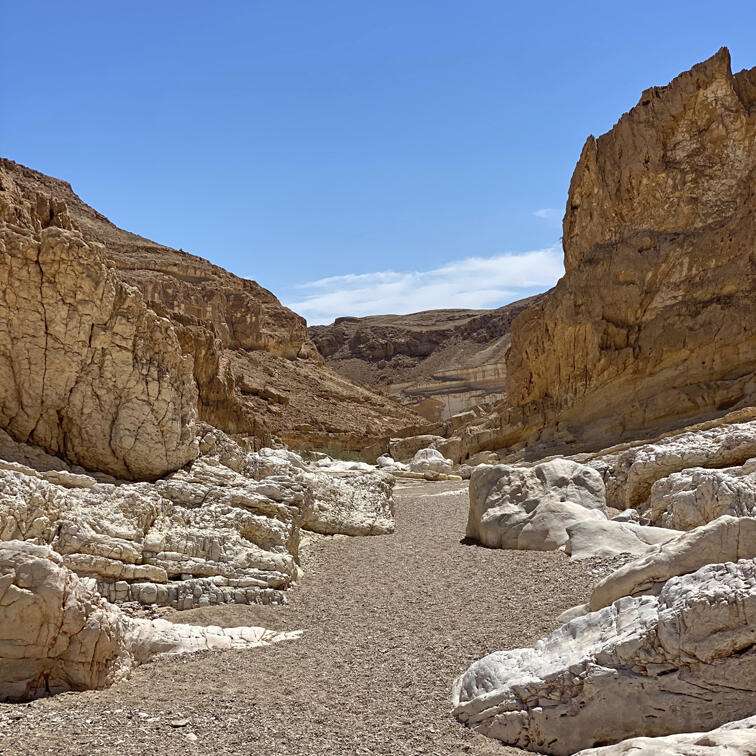
The confluence of Nahal Ramon and Nahal Nekarot
(Photo: Gilad Carmeli)
This area sits along the Incense Route, the Nabataean and later Roman trade corridor that ran from southern Arabia to the Mediterranean. Near Ein Saharonim you can see the remains of the Saharonim fort, a caravanserai, and sections of the Roman road. Wild onagers are often seen here in spring, when desert broomrapes bloom.
Distance: about 5 km loop, family friendly
Start: “Ein Saharonim Day Parking,” follow blue along Nahal Ramon, then exit the crater at “Ramon Gate” to meet the Israel Trail and enter Nahal Nekarot. Return via green to a red-marked jeep road back to parking
Access: via Ramon Colors Road to Khan Be’erot, then signed dirt road suitable for all vehicles
Entry: free; no swimming in the spring
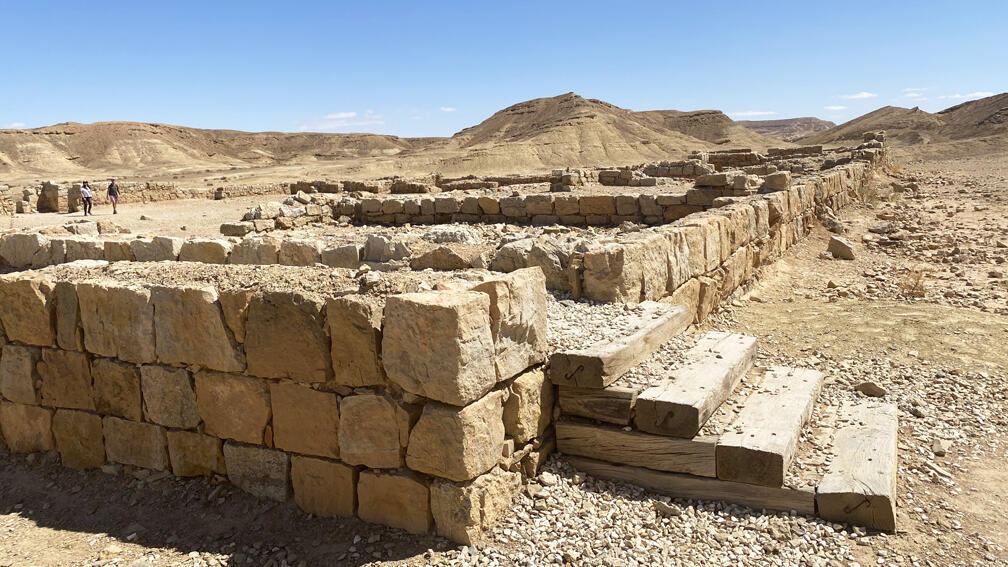
Saharonim Fort
(Photo: Gilad Carmeli)
Long before eBay and AliExpress, the ancient Western world of Greece and Rome sought goods from the East. The Incense Route was one of the most important trade routes of antiquity, stretching about 2,000 kilometers from southern Arabia to the port of Gaza on the Mediterranean coast. It took its name from the precious incense, mainly myrrh and frankincense, carried along it by camel caravans. The goods were destined largely for temples in Europe, where incense was needed to mask the unpleasant odors produced by animal sacrifices.
The route and the sites along it flourished during the Nabataean kingdom, from the third century BCE to the second century CE. After the Nabataean realm was absorbed into the Roman Empire, activity along the Incense Route reached its peak. Nabataean caravans continued to transport the goods, but the Romans controlled the road, improving its infrastructure and stationing soldiers permanently at the forts, camps and towns that lined the way.
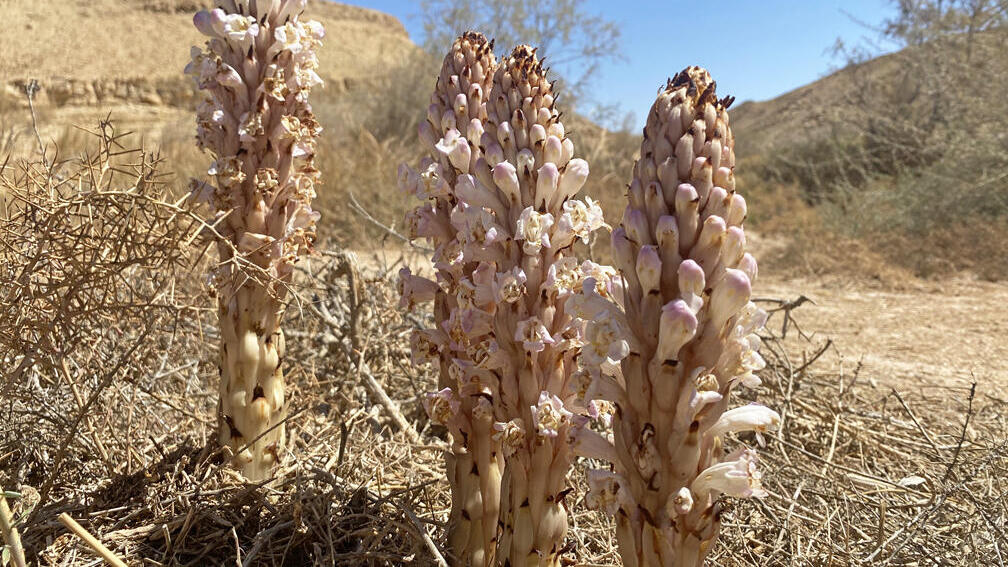
Salt broomrape in bloom at Ein Saharonim
(Photo: Gilad Carmeli)
The Ein Saharonim area is also home to a large population of onagers, wild asses that disappeared from Israel’s landscape in the 19th century but have since been successfully reintroduced. In spring, desert broomrapes bloom around the spring. These parasitic desert plants produce striking flower spikes about half a meter tall. Salt broomrape, with pink or purple flowers, usually grows near tamarisk trees, while desert broomrape, with yellow flowers, is typically found near saltbush and zygophyllum shrubs.
Kasuy Dunes
On day 50, between Shizafon Junction and Shaharut, soft limestone sands form high, photogenic dunes in the southern Negev. Sunrise and sunset are best, since midday heat is intense. You can make a loop or simply roam the dunes. Three nearby free camping areas serve the site. A short drive south reaches the prehistoric “Tiger Temple,” where archaeologists found 15 stone figures of tigers and one oryx.
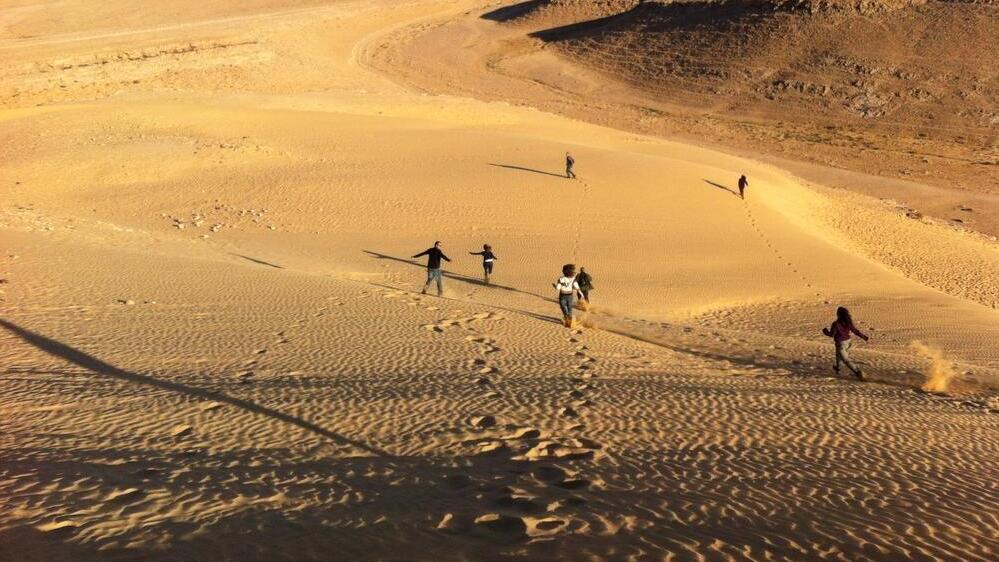
Playing in the Kasuy Dunes
(Photo: Yossi Sade)
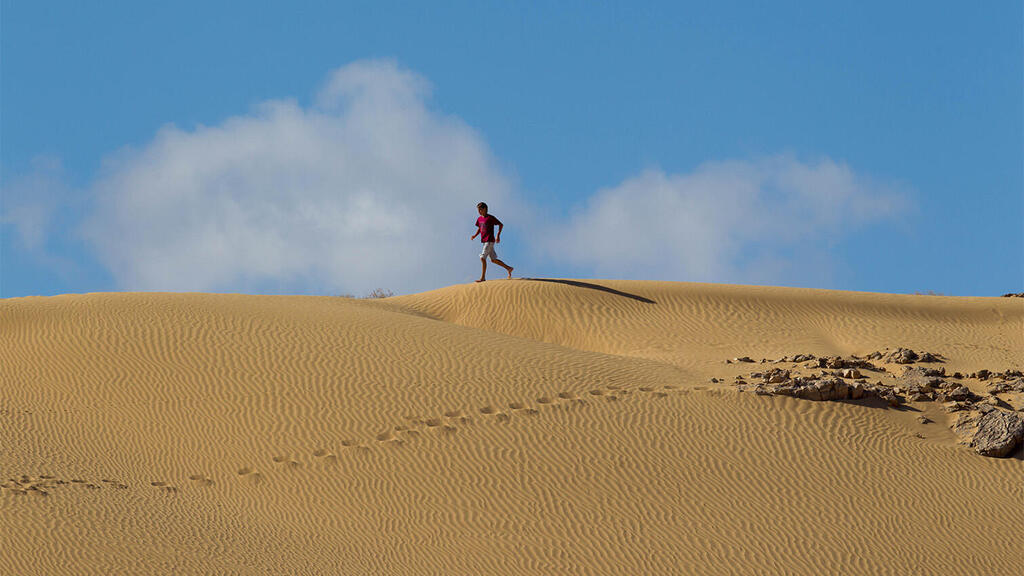
(Photo: Doron Nissim)
Distance: optional 8 km loop. Walk north along the Israel Trail, return on the red-marked path that skirts the dunes and camping rings
Access: Waze “Kasui Dunes.” From Route 40, turn right at Neot Semadar onto Route 12, then left toward Shaharut and follow the dirt road to the dunes
Entry: free
Before you go: Carry ample water, sun protection and a map or reliable navigation app. Check weather and reserve entries where required. Respect seasonal closures and safety signage, especially on cliff sections that use fixed handholds.
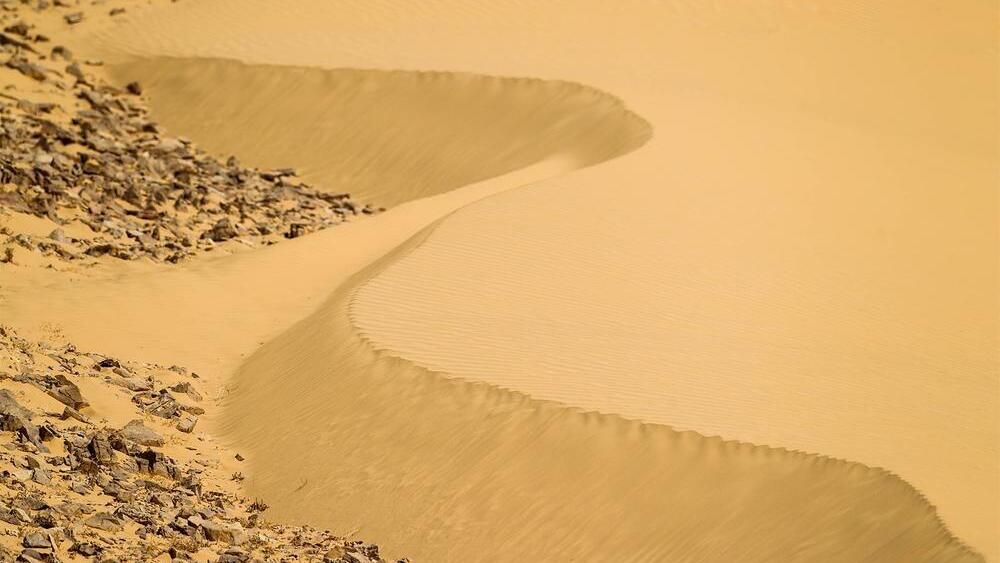
Sand ripples in the Kasui Dunes
(Photo: Doron Nissim)
First published: 09:49, 01.23.26