

I stop. I breathe. I try again. One more step. And again. Nothing. The feeling is like a battery left with exactly three percent. You press the button and nothing happens. Another attempt. And another. The system is simply empty.
Athletes call it “the wall”: the moment when the body refuses to continue even though the mind still wants to. I had imagined this exact crisis dozens of times in training, but no amount of mental training can fully prepare you for the moment it arrives, when you are hanging on blue ice at a 50-degree incline. About 50 meters remain to complete the climbing section, but the legs stop pushing.
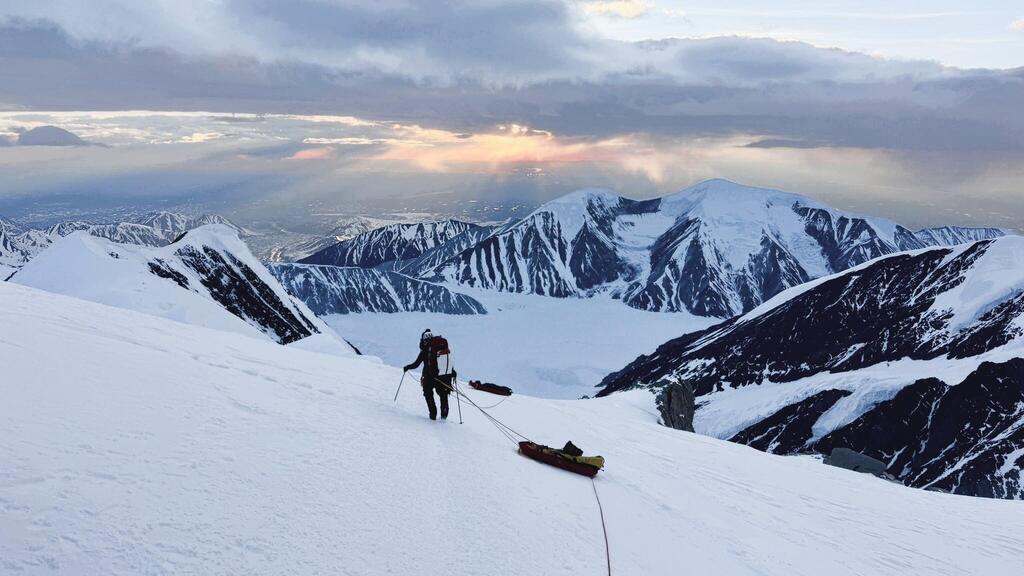
I looked at Med, our American guide. I knew exactly what I was about to tell her, and I knew that the moment those words left my mouth, the journey would end. But to understand how I reached the edge of human capability, one has to go back, to the toughest mountain in the world.
Denali (McKinley), rising to 6,190 meters (20,310 feet) in Alaska, is the highest peak in North America. Although lower in elevation than Everest, it is widely considered a more difficult challenge by many in the climbing world. The reason is simple: everything is on you. There are no Sherpas, no yaks, and no porters to carry the heavy loads.
You carry a 24 kg (53 lb) backpack and a 30 kg (66 lb) sled yourself. Add to that the fact that, due to its far northern location, oxygen availability on Denali feels like being at around 7,500 meters (24,600 feet), and the weather is among the harshest on Earth. Success rates stand at only 52% (of 25 Israelis who have climbed it since 2005, only 10 reached the summit).
An evening with friends in the tent


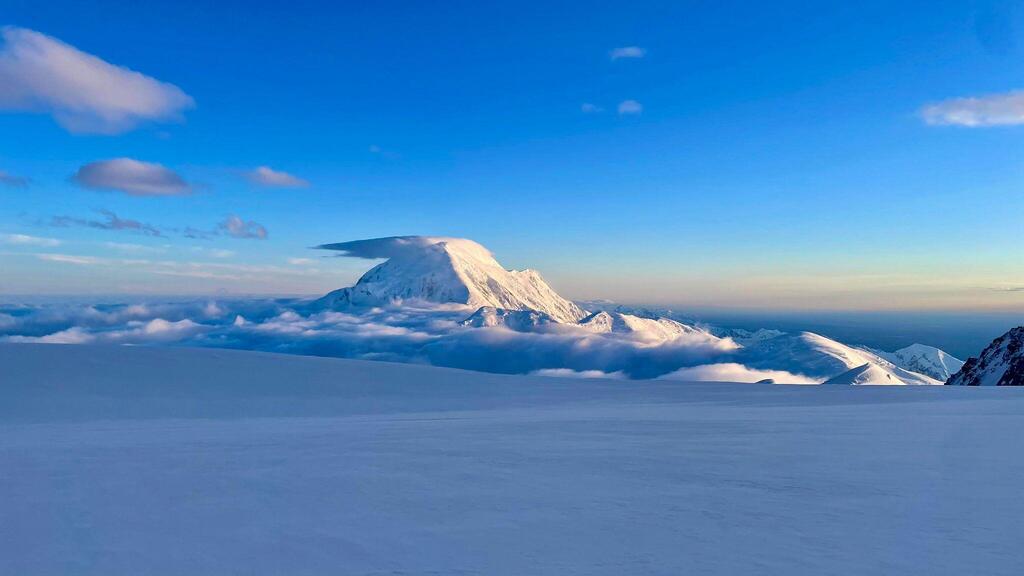
Moments of unimaginable beauty
(Photo: Shay Lachowitzer)
For six months I trained specifically for this expedition. I built aerobic capacity and developed the ability to carry heavy loads. It is hard to forget the looks on people on the beach when they saw me dragging a tire with weights. In one of the hardest sessions, I climbed the 70 floors of the Moshe Aviv Tower in Ramat Gan. Three times in a row, with 23 kg on my back. Tough.
But all the stairs in Ramat Gan and all the mental preparation in the training camp in Chamonix could not prepare me for the moment when the small aircraft left us alone on the glacier.
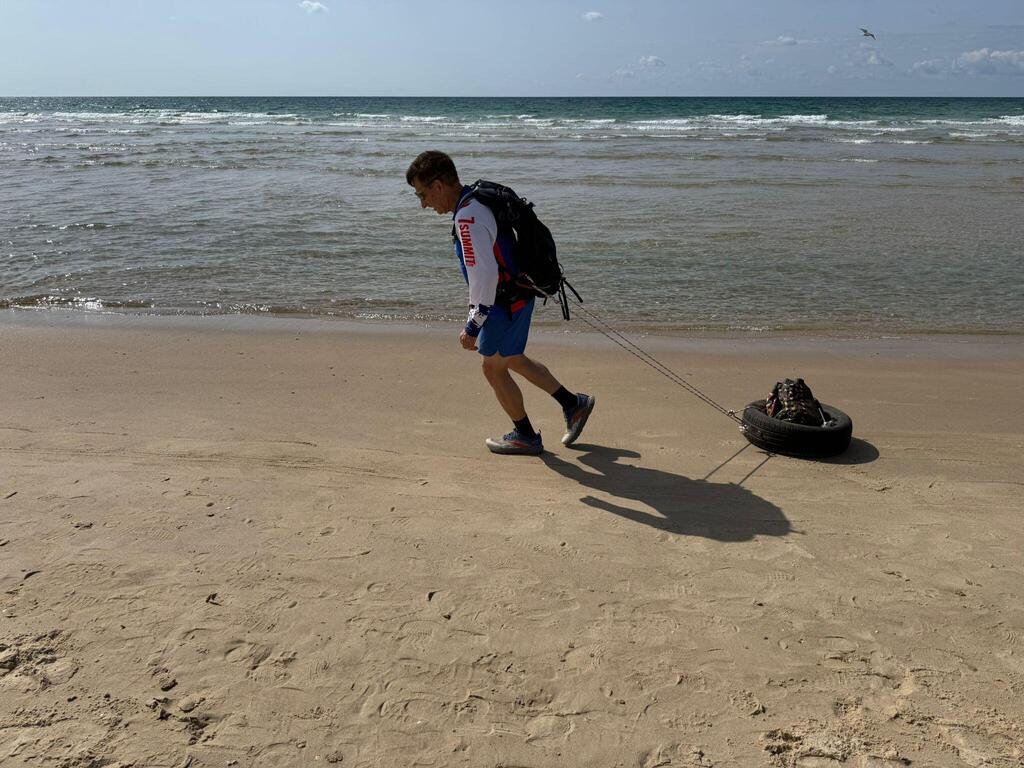
Hard in training – and just as hard on the mountain
(Photo: Shay Lachowitzer)
The real journey began when we arrived in Talkeetna, a real frontier town in Alaska with a single street, which serves as the gateway to Denali. From there we boarded a small plane with experienced pilots who gently descended onto the white landing strip of the Kahiltna Glacier.
The plane lands. We unload equipment, and within minutes the plane takes off again. The moment the noise disappears, absolute silence takes over. We are five in the expedition: Claudia from Poland, Austin from New York, Rick from the Philippines, Gimel, an Israeli and former naval commando, and me, alongside three guides from the veteran AMS company.
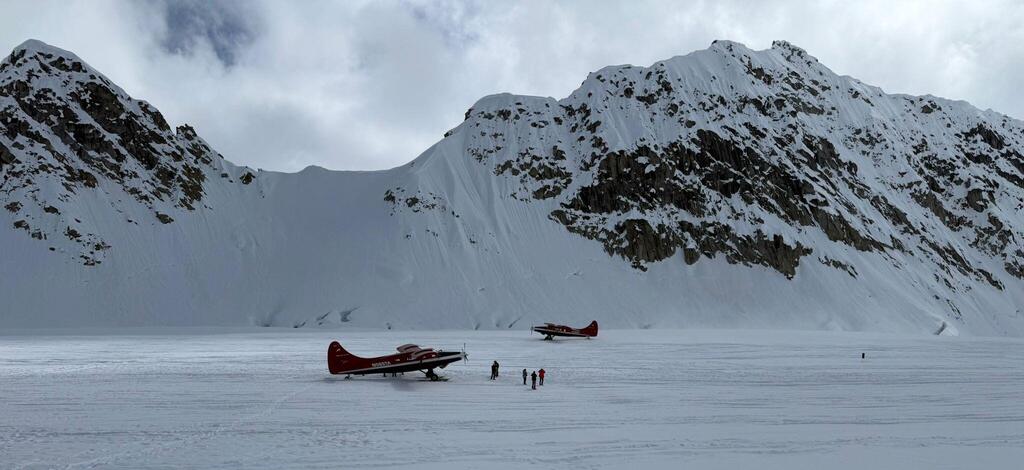
Landing on the ice. Base camp on Denali
(Photo: Shay Lachowitzer)
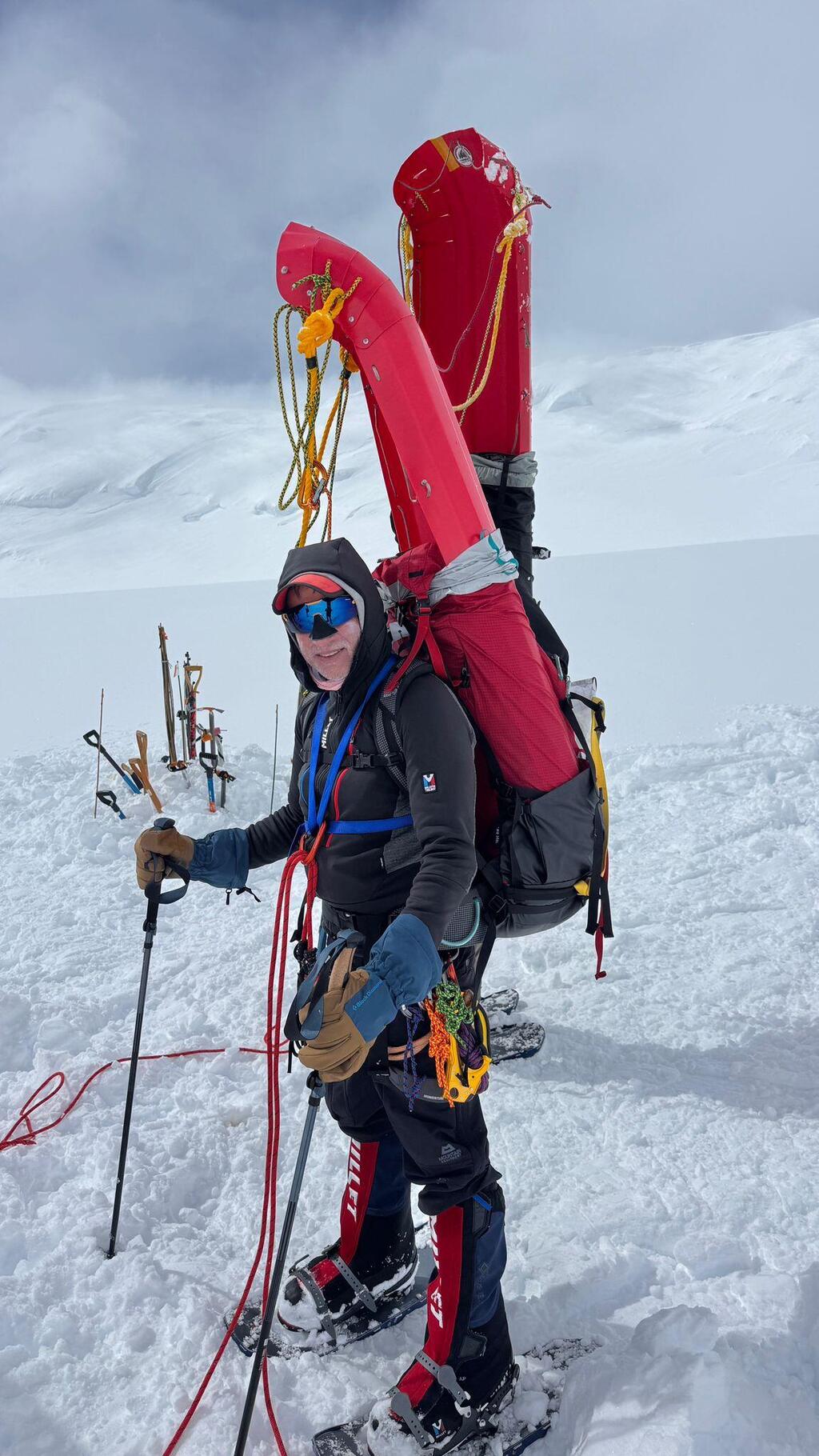
Yes, I packed everything myself
(Photo: Guy Klomak)
On most mountains I’ve climbed over the past decade, you start on dirt trails, pass through forests, and only near the summit encounter snow. On Denali it’s different. From the moment you land until you fly out again, you don’t see the ground. 360 degrees of cold, ice and peaks.
We began walking with snowshoes that look like giant tennis rackets, the sled pulling backward and the backpack pushing from above. We entered a draining routine of building camps, but it quickly became clear that the real challenge of camp is not climbing, but the simplest act of human existence.
Every time a camp is set up, the exhausting work of melting snow begins. It takes ten liters of snow to produce one liter of water. Without water there is no drinking, no cooking, and no recovery. But there is something else that drains energy and is rarely discussed – the toilets.
This is what the toilets look like on the way to the summit
On Denali, nothing is left on the mountain. Nothing. For “number one,” there is a designated area or personal bottles inside the tent, but “number two” is the real challenge. Throughout the entire expedition, climbers carry ten “portable toilets”, i.e., sealed buckets used to collect waste. After each use, the bucket is tapped to compact its contents, then buried in snow, and when moving to the next camp, it is dug up and carried onward. Despite thousands of climbers each season, the mountain remains pristine thanks to this strict procedure.
This routine continues until around 8 p.m., when the sun begins to set and the real cold, which can reach −25°C (−13°F), starts to bite. Then, inside the tent, the biggest battle begins: the battle against time. You fall asleep, wake up, convinced that half the night has passed, only to check your watch and realize it’s 11 p.m., and barely two hours have gone by.
Outside it is still bright, but inside the tent time moves unbearably slowly. And when it’s time to head out for another climbing day, the mountain is already testing you physically in ways you cannot imagine.

Just as hard as Everest
(Photo: Shay Lachowitzer)
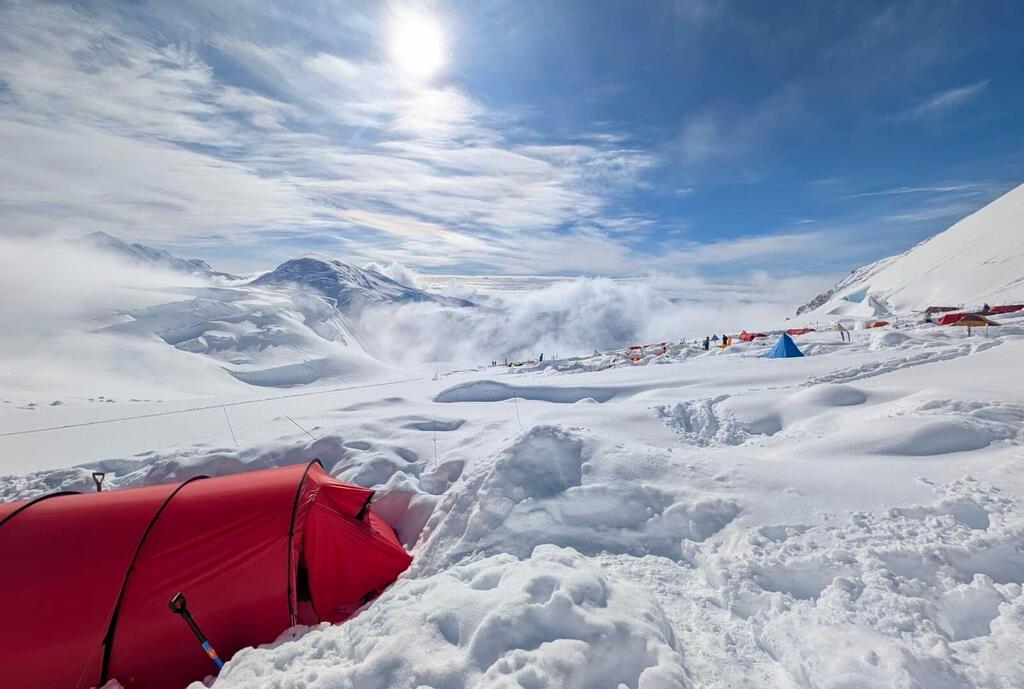
The tent buried after a snowstorm
(Photo: Shay Lachowitzer)
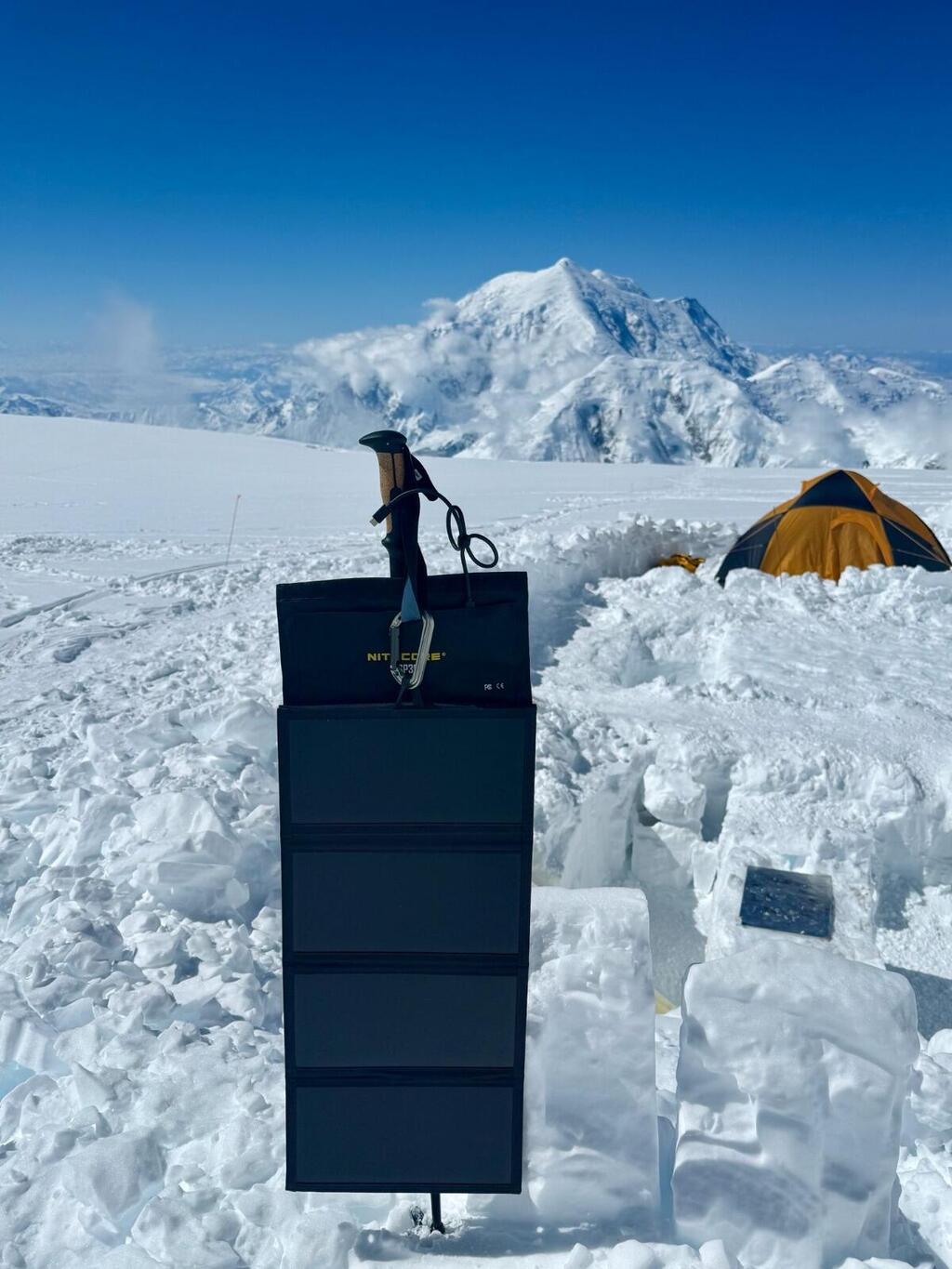
A solar panel charges phones and equipment almost 24/7
(Photo: Courtesy of Shay Lachowitzer)
The climb is done in a “carry high, sleep low” system. You go up with gear, cache it, go down to sleep, and the next day climb again. No shortcuts. The first major challenge on the route is Motorcycle Hill. About 245 vertical meters of struggle against gravity and the sled pulling downward.
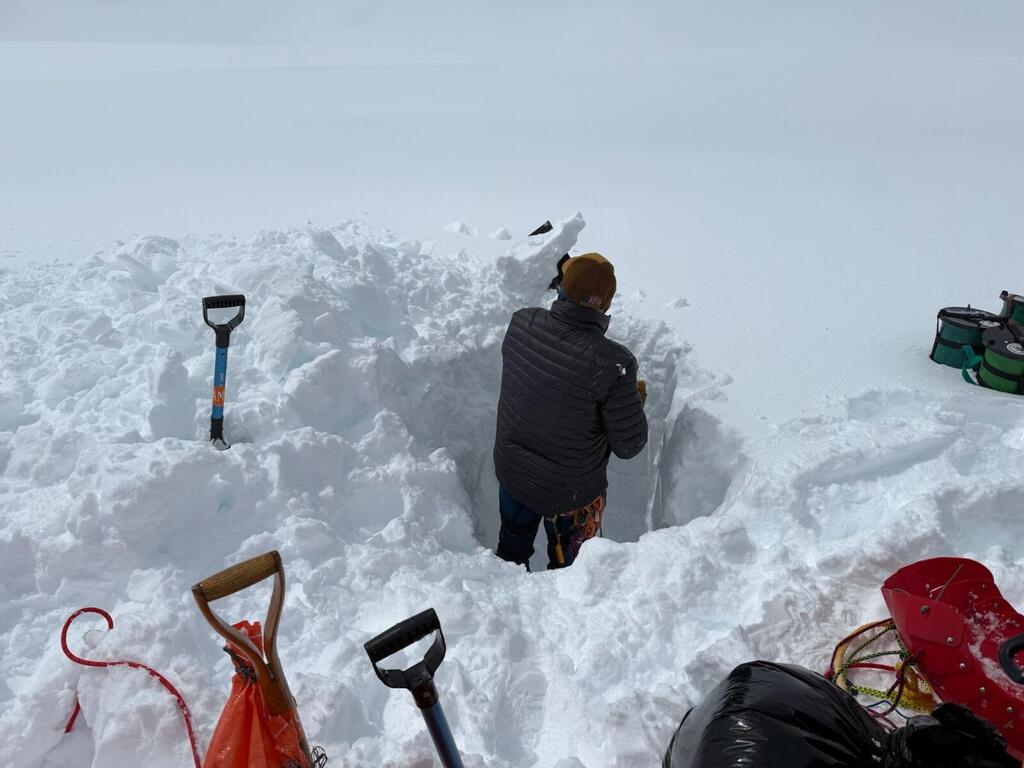
Snow cache pit for gear
(Photo: Courtesy of Shay Lachowitzer)
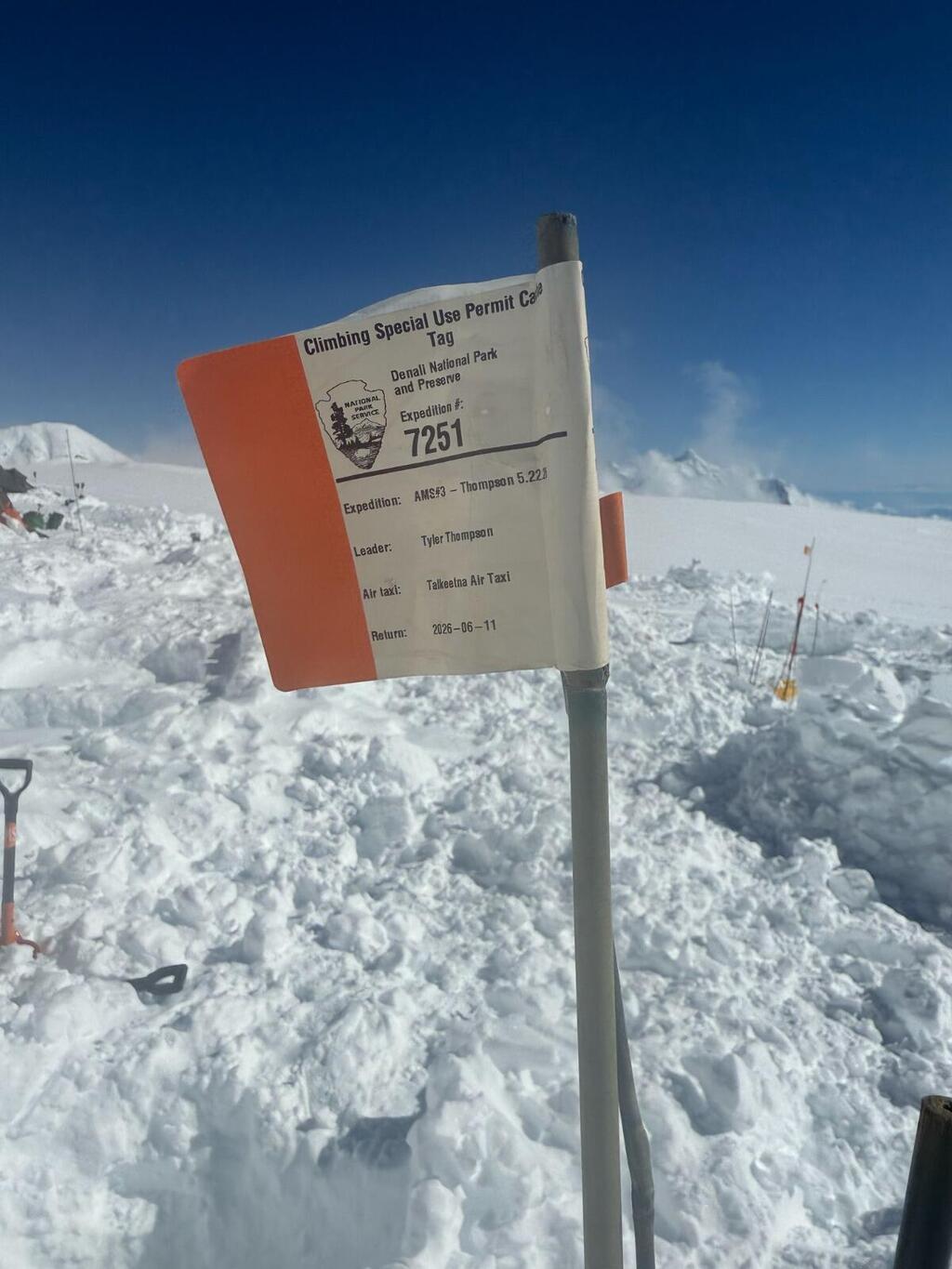
After caching in the ice, a flag is placed with the team’s name and details
(Photo: Courtesy of Shay Lachowitzer)
After an hour and a half of exhausting effort, you reach the top completely drained and your body is soaked in sweat. This is where one of the most famous mountaineering sayings comes in: “If you sweat, you die.” The moment you stop, the sweat cools rapidly and the body loses heat at a dangerous rate. The first action is to immediately put on a down jacket, and only then try to drink frozen water.
If that wasn’t enough, there was Windy Corner at 4,050 meters (13,300 feet). Long traverses and powerful winds of up to 60 mph tried to push you, and your heavy pack, off the slope, with an immediate risk of frostbite to the face. We struggled, we survived, and we reached Camp 3. But Denali made it clear this week would take no prisoners, and reality was about to hit us in the most brutal way.
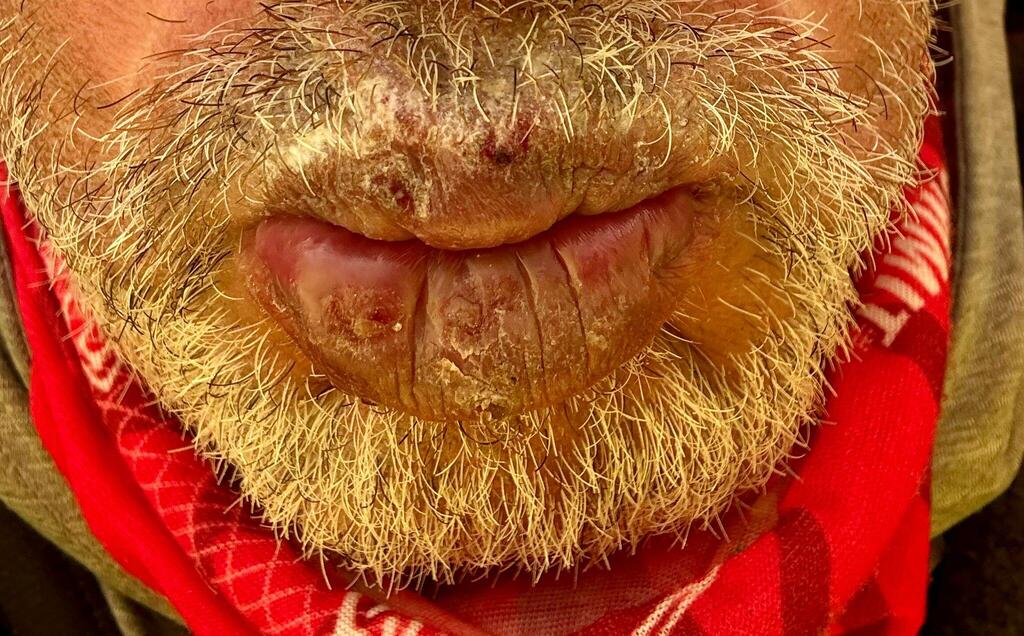
UV rays and cold penetrated all UV protection
(Photo: Shay Lachowitzer)
The week when the mountain claimed five lives
The season we arrived in was one of the most difficult in recent years. Within a single week, five people died on the mountain, while another climber was miraculously rescued after losing his way in a night of total darkness and extreme cold. Three climbers roped together fell into a deep crevasse and were unable to escape in temperatures of -35°C (-31°F). Another suffered cardiac arrest, and a ski patrol guide was killed during a descent in a section normally considered safe.
Until that moment, I knew these figures only as statistics, an average of three deaths per year. But then I saw it with my own eyes. One day, we watched a rescue helicopter lower the body of a climber from the mountain, suspended beneath it on a cable. Later, his teammates collected his gear and brought it down on a sled. It was a painful, chilling sight that made one thing brutally clear: the beauty here is deceptive. One small mistake, and you don’t come back. With that fear, we set out to face the wall that broke me.
The transition from Camp 3 to Camp 4 marked the hardest section of the climb. Ahead of us lay 1.2 kilometers (0.75 miles) of ascent, including a final 300 meters (985 feet) on a 50-degree incline secured by a fixed rope. It wasn’t only the physical effort but also the awareness that the air thins with every step, and that even a small mistake on blue ice could lead to an uncontrollable fall.
Hours of breathing, step, step, breathing. With every moment, I felt my strength draining from my body. My leg muscles began shaking uncontrollably, my breathing grew too rapid, and I realized I was no longer really climbing—I was fighting for every centimeter. The camp we had left behind now looked like a distant Lego-like toy in an endless white expanse.
And then, 50 meters before the end, I shut down again. It wasn’t just fatigue, it was total emptiness. My legs simply refused to obey my commands. I tried to take another step, to grip the gear, but my mind already understood what my body had been trying to signal all along: the fuel was gone.
I stopped, hanging there on the ice, and looked at Med, our guide. I knew that if I kept pushing, I could endanger not only myself but the entire group behind me. I told her: “I’m turning around.”
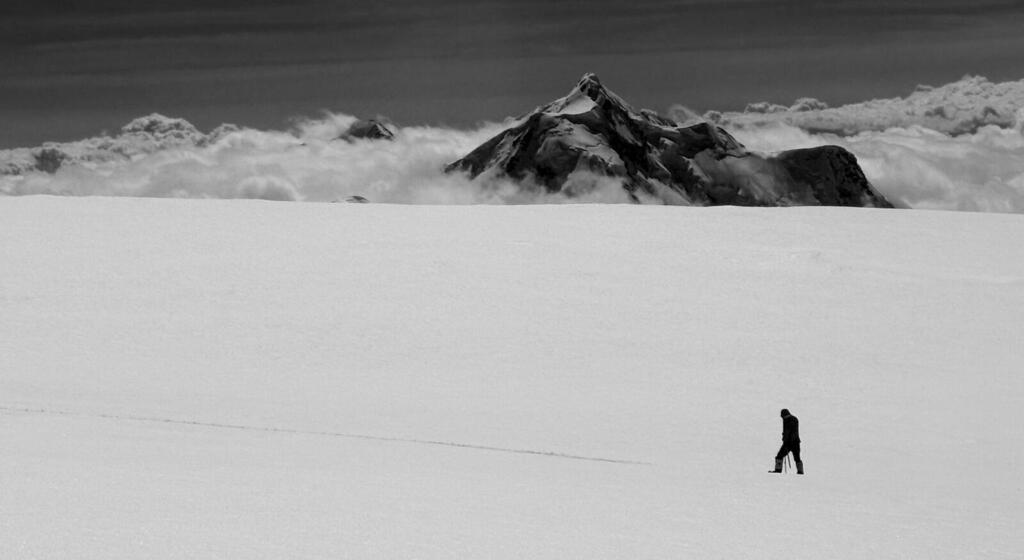
Nature in all its glory
(Photo: Shay Lachowitzer)
Not because I wanted to, but because I had to. At that altitude, there is no room to fight reality. We carried out the complex process of reversing direction on the rope and began descending. On the way down, the guides asked to take my heavy gear to lighten the load, this time not as a suggestion, but as an instruction. I explained in English that it was “the remainder of my dignity” to descend under my own power, with the gear still on me. I came down in disappointment, but also in acceptance.
When you share a tent, cold, exhaustion and fear for 16 days, you discover who is really standing next to you. Gimel, a giant of a man, a former naval commando who still serves in reserves, did not give up. He was strong, calm and determined, and continued to the summit. An impressive achievement that I am proud of as if I stood there myself. I had enormous respect for sharing this extreme experience with him.
I didn’t reach the summit. For me, it feels like disappointment, almost like earning respect without the victory. But at 62, I stood in front of one of the toughest challenges in the world. People often ask why take the risk and endure the cold.
Those who have been there understand. The struggle, the ability to get up again every morning, and overcome challenges when it feels like there is no more strength left. For me, the summit is still the goal; it is the peak moment of mountaineering. But over time, I’ve come to understand there is something else too. There is the journey.
Before we parted, Med said one of the most famous lines in mountaineering: “The mountain will always be there.” I smiled, hugged her and said: “Not going to happen. But if there is an afterlife, I’ll come back in the next life.”
Denali, this time you won. But the experiences no one can take away from me.