

When Lital Bell, 26, walks down an airplane aisle, she is hard to miss. Not because of the El Al uniform, but because of one small detail on her face: her eyes. One is green and the other is brown. But Bell is not just “the flight attendant with the unusual eyes.” In recent months, she has become a prominent voice on TikTok, where she exposes the less talked-about sides of the flight attendant profession, shatters myths about “snobbery” and sets clear boundaries for Israeli passengers.
It is probably one of the few professions in which the service provider shares the same enclosed space with customers for long hours, sometimes half a day. In that situation, boundaries blur very quickly. Some passengers see flight attendants as auxiliary staff whose role is simply to fulfill requests. Others view them as travel companions they can strike up a personal conversation with. Most of us simply forget that, above all, they are there to keep us safe.
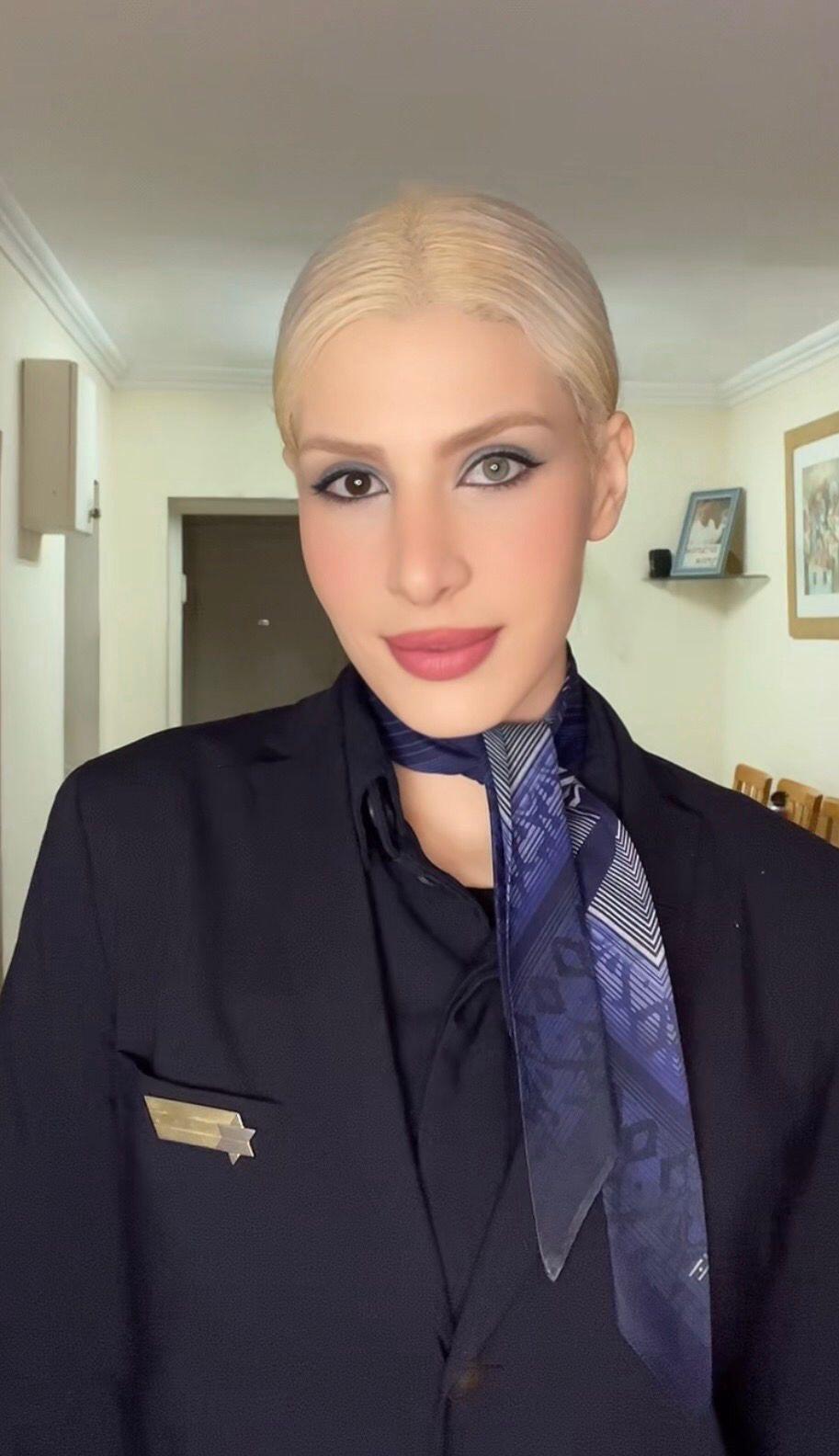
First, I have to ask about your eyes. I assume there isn’t a flight where you don’t get comments from passengers.
“Honestly, almost all the reactions I get, close to 100 percent, are positive. It usually happens on night flights, when it’s dark and I come over to serve coffee or tea, and suddenly the passenger notices my eyes and says, ‘Wow.’ It’s a genetic condition, thank God it doesn’t affect my vision and I see perfectly well. It’s called heterochromia, which means I simply have more melanin in one eye than the other, and that affects the color. The green is exactly my mother’s eye color and the brown is exactly my father’s, so it came out half and half.”
How did you become a flight attendant? Was it a classic childhood dream or something you stumbled into by chance?
“Yes, it was a childhood dream. In fact, it was also my mother’s dream. She went through the selection process and was supposed to start the course, but then my sister was born and she had to stop. Previously, I served as a project manager in military intelligence, and then transitioned directly into high-tech. At 22, I found myself working at a startup, sitting with CEOs and senior executives, with good salaries and bonuses, but over time I felt like I was losing my joy.
I would wake up in the morning and not want to go to work. Sitting in front of a computer drained me, and I was missing interaction with people. I’m a people person, someone who lives outside. Right when I was at my lowest energy point, an El Al ad popped up on my Facebook feed one Thursday afternoon. I said maybe this was my sign from heaven. Three years later, I’m very happy to be here.”
On social media it really looks glamorous — New York, Thailand, hotels. But how physically demanding is the job in reality?
“It’s not a simple job. I’d be lying if I said it was easy. You have to come from a place where you really love the job and love people. You need to be very dynamic, because on every flight we have a different manager, a different crew, sometimes people we don’t know, and different passengers. There’s no other job like this in the world, and that’s also what’s beautiful about it. During the flight itself there are moments when it’s more physically difficult for me, because it can be repetitive and exhausting. But most of the time, because I enjoy it and love meeting the passengers and the crews, it makes up for it. Over time you get into a routine, you start to understand how the flight flows, and then you don’t feel the difficulty the way you do at the beginning.”
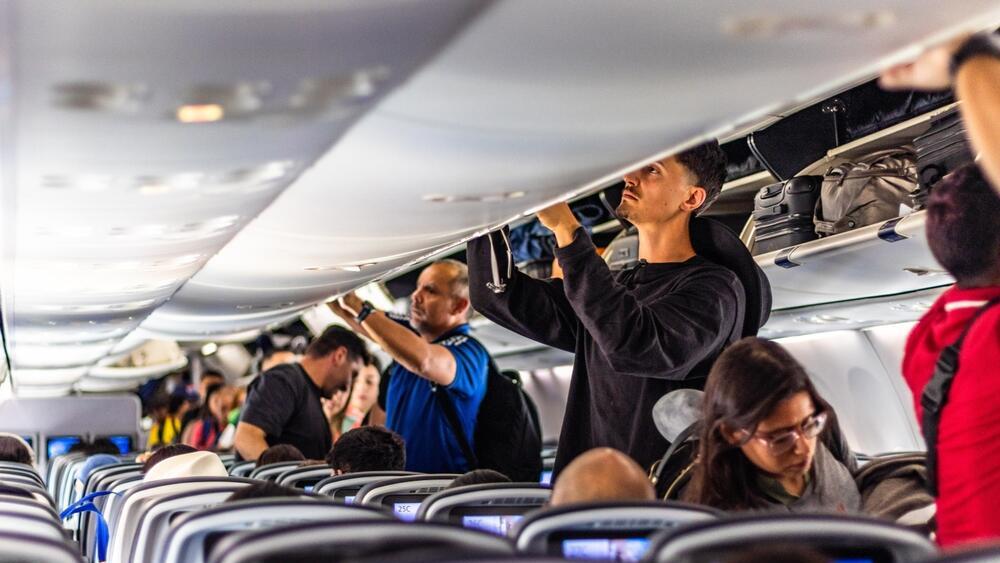
One of the most contentious issues Bell has raised online is passengers’ expectation that flight attendants lift carry-on suitcases into the overhead bins for them. In a video that sparked significant debate, she explains why flight attendants are not required to do so. “The physical damage that could have been caused to me would be irreversible,” she said, delivering a line that has become closely associated with her: “We are flight attendants, not porters. That’s important to remember.” The message was clear: The crew’s health comes first, and discretion is reserved for exceptional cases only.
How does the Israeli passenger actually respond when you tell them you can’t lift it?
“That’s exactly why I say I love El Al passengers and Israeli passengers. When I offer to lift it together and help, many times the passengers around already help before I even get there. It usually doesn’t get to the point of an argument. When I explain where this comes from, they look at me with understanding. I don’t say a flat ‘no.’ I explain, just like in the videos. It’s important to me that they understand the reason.”
Another topic that occupies her followers is romantic interaction, or the lack of it, with the crew. In one video, Bell responds to a provocative question about flight attendants being perceived at times as “aloof or unfriendly.” She explains that it is often a misunderstanding or the result of workload that prevents them from responding to every request. “Don’t forget that there are only a few of us and hundreds of you. We always have good intentions,” she says in the video, trying to dismantle the stereotype.
In another video, she addresses flirtation directly. “We don’t live under a rock,” she says, acknowledging that it can be flattering, but she stresses: “Any action that can interfere with us while we’re working is not welcome on a flight. And if you do decide to do it — please make sure it’s respectful.”
You’ve said your focus has to be on service and safety, but you also encounter passengers who try to flirt. Can you give an example of a particularly awkward pickup line you’ve heard?
“I personally try not to offend anyone, unless it crosses into rudeness. I was very embarrassed in that situation, and I felt it was time to address it. It’s very flattering when someone flirts with me. I don’t have a partner, and it warms the heart. It also takes a lot of courage to approach a woman, and a flight attendant in particular. But there’s a time and a place. If I’m on a Dreamliner and need to serve 200 passengers who are waiting for me, I can’t give my full attention to one person trying to approach me. It was important for me to clarify that, because my work and the passengers matter to me. If it made even one person think twice about approaching during cart service, or waiting until the end of the flight to hand over a note with a number, that’s enough.”
(Photo: LadyLensArt / shutterstock)
When did you realize you weren’t just a flight attendant, but also a content creator? When did you suddenly say, ‘OK, I want to turn all these questions into videos’?
“The decision came after several encounters with passengers where I felt there was a gap between what they understand about the role and my ability to help them, and what I can actually do in practice. I, like many other flight attendants, do a lot of reflection on situations that happen during flights, to understand how to act better next time. On the plane, I feel like I’m hosting people as if they’re in my living room. I had a very complex and emotionally intense service incident, and when I reflected on it, I realized there was a very significant gap between expectations and practical ability. It started with small things, like flight recommendations, and reached the core issues and more explosive situations, like lifting carry-on bags, out of a desire to explain this to the public.”
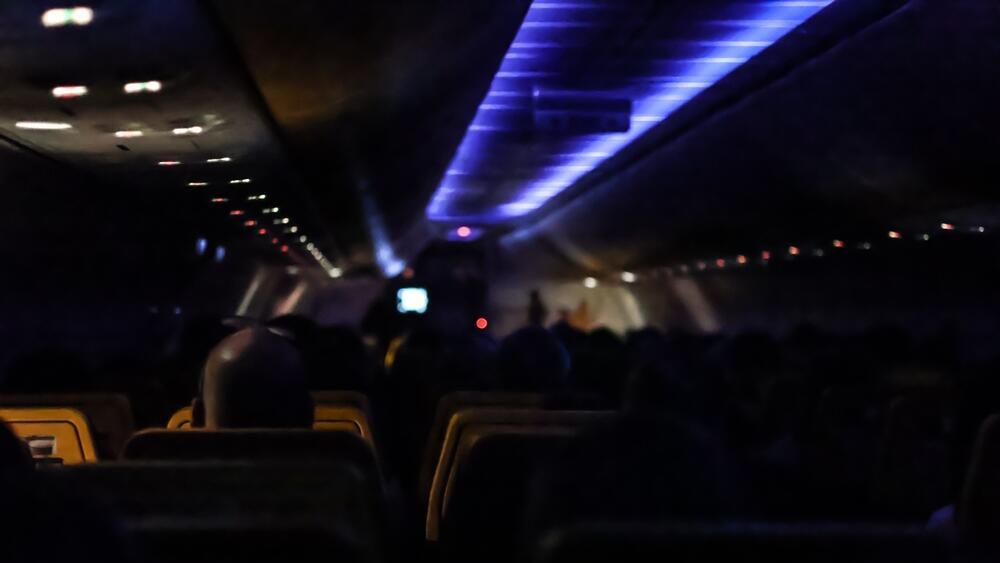
One phenomenon Bell has explained online relates to the almost mysterious conduct on overnight flights. In a video on the subject, she explained why flight attendants speak in whispers and try to move almost “invisibly.” The goal is not to wake passengers and to avoid a chain reaction in which one awakened passenger triggers requests from an entire row. “We try to go through every row and catch you with eye contact, but it’s very easy to miss someone who’s awake in a cabin that’s entirely asleep and dark,” she explained.
Do people recognize you? Do passengers ask for selfies and things like that?
“Yes. The range is wide, but it’s mostly children. I really try to create a positive experience for kids who come to the back galley. There are also many people with flight anxiety who approach me and say, ‘We saw that you make videos, tell me what to do,’ and I guide them to speak to a flight attendant. The reactions are very positive and really heartwarming. A lot of people ask me if I’m a model, and I tell them no, that I just have good genetics.”
(Photo: Zeluloidea / Shutterstock)
Night flight or day flight, and why?
“Day flight. Time just doesn’t pass for me at night. If you don’t like people and don’t like interaction, night flights are better. But on day flights I experience the passengers fully, and a 12-hour flight passes in a second. By the way, as a passenger, I hate flying.”
New York or Bangkok?
“Tokyo.”
A passenger who falls asleep immediately or one who wants to talk?
“It depends on the situation. On night flights, obviously I’m a bit more available because there’s less workload, so there’s more room to talk. On a day flight, if I’m very busy, I’ll give the maximum I can at that moment, but I don’t want anyone to feel ignored when I have other passengers who need me.”
And what tip would you give someone about to board a flight soon? Bring chocolate?
“Absolutely not. There’s no need to bring anything. The most important tip is simply to ask. So many people write to me saying, ‘I’m embarrassed to ask,’ ‘I’m embarrassed to say something.’ Ask. We don’t bite. We’re here for you. I always say it in the videos too: Approach a flight attendant. If you felt a particular attendant ignored you, it’s possible they just didn’t notice. On a Dreamliner, for example, we’re four crew members for 200 passengers, so sometimes we don’t hear everything. It’s important to me that no one leaves the plane with a bad experience or a feeling they weren’t listened to without having reached out first. That conversation resolves the misunderstanding.”