

Summer vacation has always been a time when teenagers test boundaries and discover what is permitted and what is not. In recent years, however, that process has increasingly required a passport.
Until a few years ago, the farthest many Israeli teenagers dreamed of traveling without their parents was the Arad Festival or an overnight music event near the Sea of Galilee. Today, many expect at least a week in Eilat with friends, while the more ambitious are already planning trips abroad.

Parents’ attempts to argue that this may not be the right time, either because of the possibility of war, extreme heat or long airport lines, often fall on deaf ears. Teenagers want to celebrate and enjoy themselves. They insist they are mature and responsible, and, of course, that “everyone is going.”
There are many familiar reasons to say no and keep them close, from Israel’s unstable security situation in recent years to troubling reports about groups of young Israelis behaving badly on vacation. Yet parents also understand that, at some point, children must be allowed to "leave the nest", at least temporarily.
Haya Finkel is a mother of three, ages 30, 28 and 16, and a grandmother of three. She is also a teacher, personal coach and owner of a learning and empowerment center for children and teenagers. Her experience began when her youngest daughter, Maya, announced that she and her boyfriend wanted to fly to Burgas for a weeklong vacation with friends.
“I had concerns, like any mother,” Finkel said. “I worried about antisemitism abroad, another war breaking out in Israel and the possibility of the airport closing. But I chose not to let fear dictate my decision. Alongside those worries, I trusted the daughter I had raised and the values we had instilled in her over the years.
“As an Israeli mother, I also understood that, in the reality we live in, traveling abroad can sometimes feel no less safe, and perhaps even safer, than staying in Israel. The trip was also planned shortly before her boyfriend’s military enlistment, and I did not want to take that experience away from them. I do not believe people should give up their dreams because of fear.”
How did you cope with that fear?
“The greatest challenge for me was undoubtedly letting go,” she said. “As a mother, I am used to knowing where my children are at every moment. I learned to trust her and remain available to her around the clock, while also allowing her to experience genuine independence.
“Of course, I made sure she had an international data package. I waited for her messages and felt calmer when she updated me that everything was fine. Fortunately, I did not have to face the challenge of another round of fighting or closure of Israeli airspace.”

Haya Finkel. People shouldn't give up their dreams because of fear
Despite the fears and complications, Finkel said such trips can offer teenagers significant benefits. “I think the experience helped build her,” she said. “She returned more independent, more confident and more responsible.
“She learned to manage the budget she had been given and dealt with unfamiliar situations, including a flight being moved forward and checking in and out of a hotel. In my view, those are lessons no less important than what children learn at school.”
Alone in the dark and rain
Yael Teitz, a mother of five, works in remedial education and school-readiness instruction and also owns a digital marketing business. She faced the dilemma when her youngest son, Ariel, planned a trip to Norway with a friend.
“This was not just a trip to Norway,” Teitz emphasized. “It was a hiking trip with backpacks and a tent. He and his friend sat together and planned everything with the help of ChatGPT. My son planned a journey involving 15 hours of travel: Israel to Athens, Athens to Munich, Munich to Bodø and then a ferry to the Lofoten Islands.”
How did you react to the plan?
“You have to understand that he had never joined the Scouts and usually chose to skip school trips,” she said. “This was also during the war, amid all the uncertainty, so I had endless concerns. How would they manage? Was it safe to sleep outdoors? What would they eat? What if something happened on the trail? In short, I was under enormous pressure.”
Did you try to persuade him not to go?
“Yes, but every objection I raised, including that he had never traveled alone or slept in a tent, was met with a detailed answer,” Teitz said. “He is serious, intelligent and quick-witted, and he had a response to every concern. I even called his friend’s mother, hoping she would support my case, but I found no ally there.”

Yael Teitz
Once Teitz realized the trip was truly going ahead, she changed her approach. “I understood that the trip was happening and decided to help with everything they needed,” she said. “We bought sleeping equipment, specialized hiking and thermal clothing, first-aid supplies and more. In effect, I helped pack a professional hiker’s backpack so that he would at least have everything necessary for the adventure.”
What happened during the trip itself?
“From the moment he reached the destination, everything became much simpler. It turned out to be very welcoming to independent travelers and not frightening at all. The weather was extremely challenging, with days of storms and rain, but when that happened, they moved into hostels rather than sleeping in the tent. They got very wet and ate mainly bread with peanut butter, but the experience was incredible.”
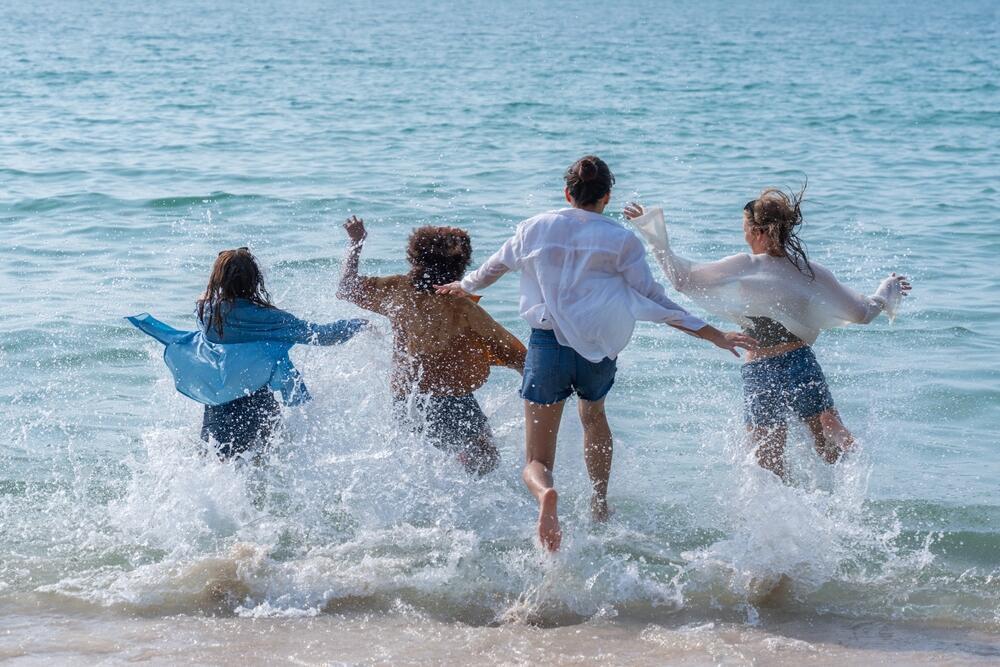
Giving them the tools to become independent, responsible and creative adults
(Photo: Shutterstock/NewJadsada)
Ultimately, Teitz said, the trip offered substantial benefits. “He took initiative, planned a trip himself, managed challenges he had never faced before and had an empowering and wonderful experience,” she said.
“From the moment our children are born, we give them the tools and guidance to become independent, responsible and creative,” she said. “Then comes the moment when we have to let go and allow them to put those qualities into practice. At some point, we have to trust them and give them the confidence they have earned.”
No judgment, no threats
Yehudith Oliver, a certified parenting counselor, said most parents experience significant anxiety when their teenagers travel without them and should hold a serious conversation before the trip. “Ask to schedule the conversation at a time that suits both you and your teenager,” she said. “Sit somewhere comfortable and quiet, without distractions, and put the phones aside.
“Begin by telling your child how much you love them and how precious and important they are to you. Share your feelings and ask how they feel about the trip, whether they have concerns and what they are looking forward to.
“The aim is to ask questions out of sincere, nonjudgmental interest. Listen without immediately responding or dismissing what they say, and with a genuine desire to understand their world. Then respond with understanding, without adding ‘but.’ Allow yourself to step into your teenager’s shoes for a few moments. After that, suggest thinking together about how to allow independence while maintaining safety.”
Oliver recommended breaking that discussion down into small, practical questions, such as, How will you stay in touch, and how often? What happens if someone drinks too much, feels unwell or gets injured? What should they avoid, and what should they be especially careful about?”
Are there subjects parents should avoid?
“It is best to avoid bringing up past incidents or making threats such as, ‘If you don’t do this, it will be the last time,’” she said. “Most importantly, parents need to understand that teenagers at this stage are seeking independence, separation and time with their peers.
“At the same time, they still need clear boundaries, guidance and support. You may not be able to control them, but you can still influence them. That influence grows out of a close relationship built on understanding, expressions of love and a shared effort to find solutions.”
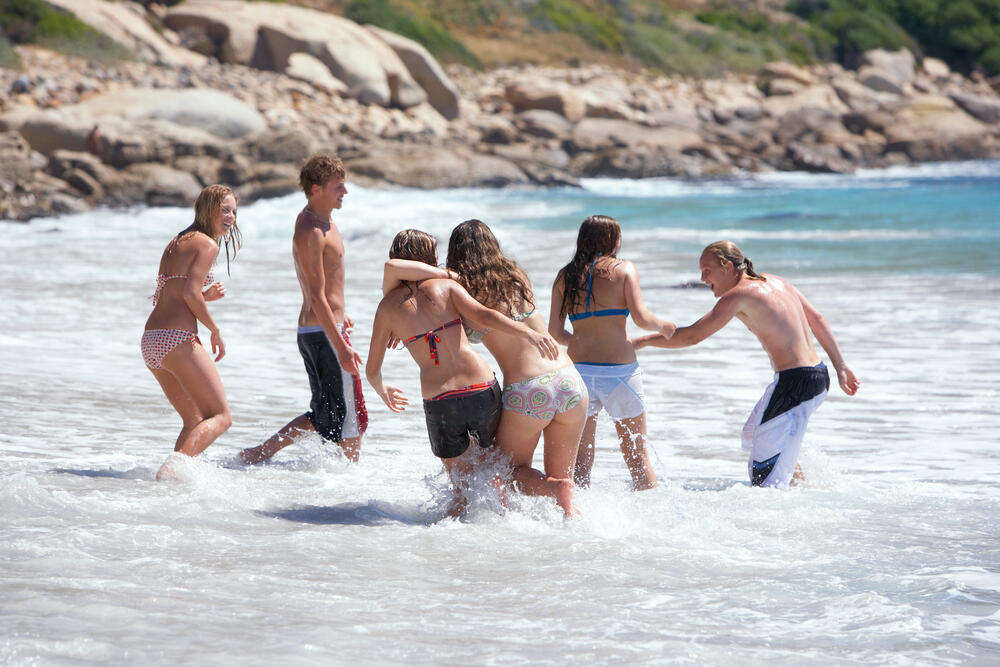
Asking small, practical questions
(Photo: Shutterstock/Air Images)
Preparation meetings and a nearby hotel room
Hila Kalfon, a business consultant and mother of two (21, 16), reached a similar conclusion intuitively. During the school year, her son Omer told her that at the end of the year he planned to attend a weeklong youth vacation in Eilat with a group of 18 friends.
Was that frightening?
“Yes. I think the natural concerns of any parent in that situation focus mainly on respecting boundaries, alcohol consumption and dealing with emergencies. What happens if someone goes too far? What happens if someone feels unwell?
“To ease my concerns, I chose to present Omer with every possible scenario. I divided our conversations into short, focused sessions, each dealing with a different subject: behavior in public places, responsible drinking and proper financial planning for the trip.
“In addition, two weeks before the trip, we held a joint meeting with his older sister, who shared her experience of parties, going out and how to have fun safely and responsibly.”
Kalfon already had experience with such trips. Five years earlier, her older daughter had traveled to Eilat with friends, and Kalfon had tried to prepare for every possible scenario. “At the time, I understood that this was a step requiring preparation, so I decided to act,” she said. “I organized a meeting for the girls at my home with light refreshments. Only one other mother attended, but we sat with the girls for an open conversation at eye level.
“We spoke about alcohol, sexual harassment and staying hydrated. The conversation was pleasant, respectful and not preachy, and the trip turned out to be an excellent and safe experience.
“This time, we did it on a larger scale. We opened a mothers’ group and held a meeting for both parents and teenagers. We agreed on the location, their stay in a villa and the framework of the trip.”
There was another key element. “Beyond preparing the teenagers, cooperation among the parents gave us tremendous peace of mind,” Kalfon said. “When parents communicate, they can set clear, consistent boundaries, and no one is left handling the situation alone.
“As part of the arrangements, one boy’s mother booked a room at an Eilat hotel for the same dates. That was especially reassuring for all of us.”

Hila Kalfon
(Photo: Michal Benedek)
Why not simply tell him he cannot go and avoid all the trouble?
“First, it is important to note that Omer worked throughout the year, saved money and paid a substantial portion of the trip’s expenses himself,” she said. “This situation also brought up childhood memories. When I was a teenager, my parents did not allow me to go on long trips like these. At the time, there were no mobile phones and we did not have the accessibility or awareness available today.
“Now, thanks to communication and technology, it is easier to remain in contact and create a sense of security. These trips have become an excellent opportunity to raise children toward independence, teach them responsibility and encourage positive thinking.
“Ultimately, we also have to look at the broader picture. In two years, our children will enlist in the military, carry weapons and have to cope independently with complex challenges.”