

Travelers hoping to spread out a towel beside the turquoise water at Sardinia’s La Pelosa beach this summer may discover that parking is not their biggest problem. Getting a ticket is.
By mid-July, reservations for one of Italy’s most sought-after beaches had already sold out deep into September, reflecting the extraordinary demand for Sardinia’s famous stretches of white sand and clear water. Recent reports said La Pelosa was fully booked for much of the remaining summer season.
Gallery
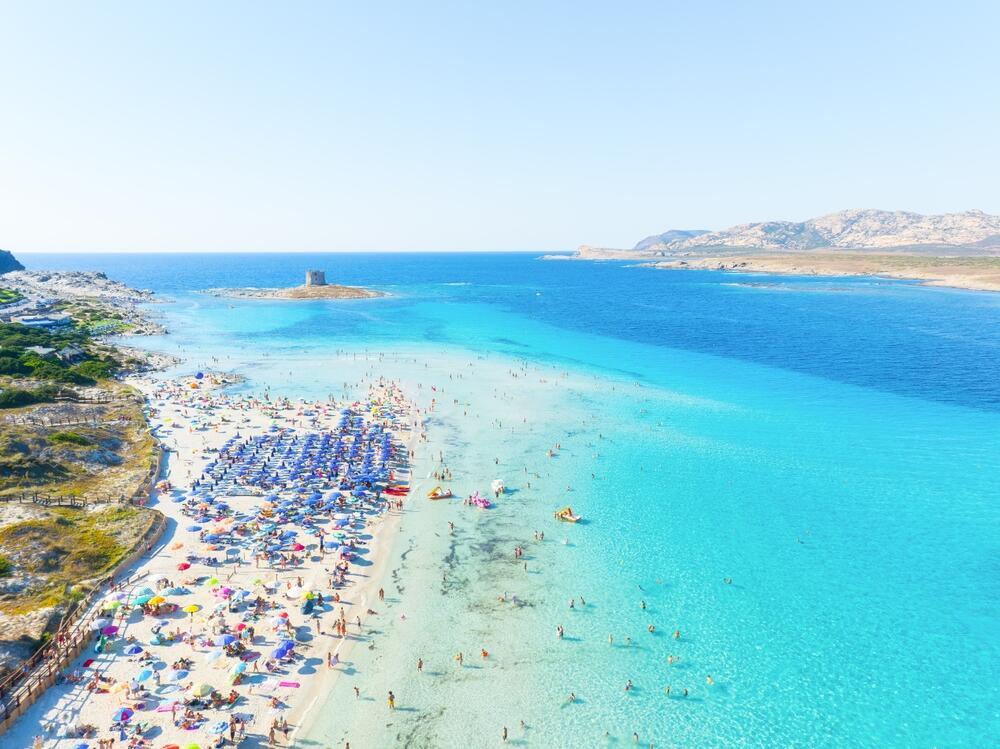
La Pelosa beach in Sardinia, where spontaneous visits are no longer possible
(Photo: biletskiyevgeniy.com / Shutterstock)
Visitor numbers at La Pelosa are capped at 1,500 a day between May 15 and October 15. Entry requires a reservation costing 3.50 euros per person, with up to four tickets available in each booking. Visitors receive a QR code that must be presented at the entrance, while children under 12 do not require tickets.
Requiring reservations for Sardinian beaches is not new. La Pelosa introduced its system several years ago, and other beaches have since adopted their own daily limits, admission fees and QR-code requirements.
What stands out in summer 2026 is the level of demand, which has made planning an essential part of a vacation on one of the Mediterranean’s most popular islands.
The ticket is not La Pelosa’s only rule. Visitors must place a mat beneath their towels to reduce the amount of sand that sticks to the fabric and is inadvertently carried away. Removing sand, stones or seashells, smoking and leaving trash are also prohibited.
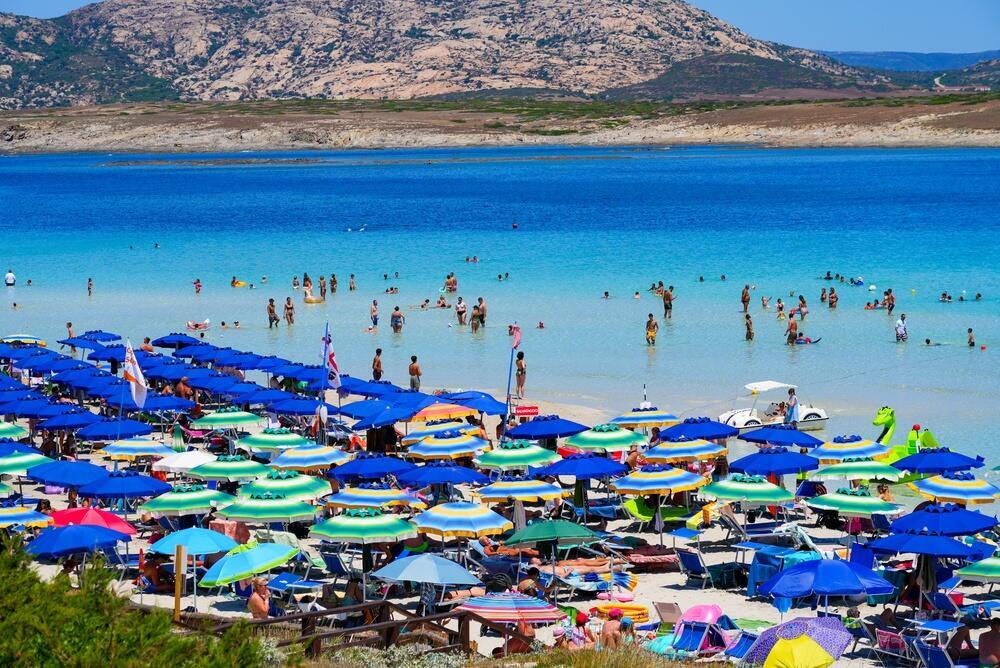
La Pelosa beach on a crowded day
(Photo: Alexandre.ROSA / Shutterstock)
La Pelosa may be the most prominent example, but it is far from the only Sardinian beach operating under strict limits. At Cala Goloritzé, a spectacular cove on Sardinia’s eastern coast, admission is restricted to around 250 visitors a day and costs 7 euros for an adult. Children under six enter free of charge. Reservations are available only shortly before the planned visit.
Securing a ticket is only the beginning. The beach cannot be reached directly by car, and visitors must hike approximately 3.5 kilometers (2.2 miles) along a route with an elevation difference of about 500 meters (1,640 ft).
The descent takes roughly 90 minutes, while the uphill return can take around two hours. Closed shoes with good grip and an adequate water supply are essential. Boats may approach the cove, but passengers are not permitted to land directly on the beach.
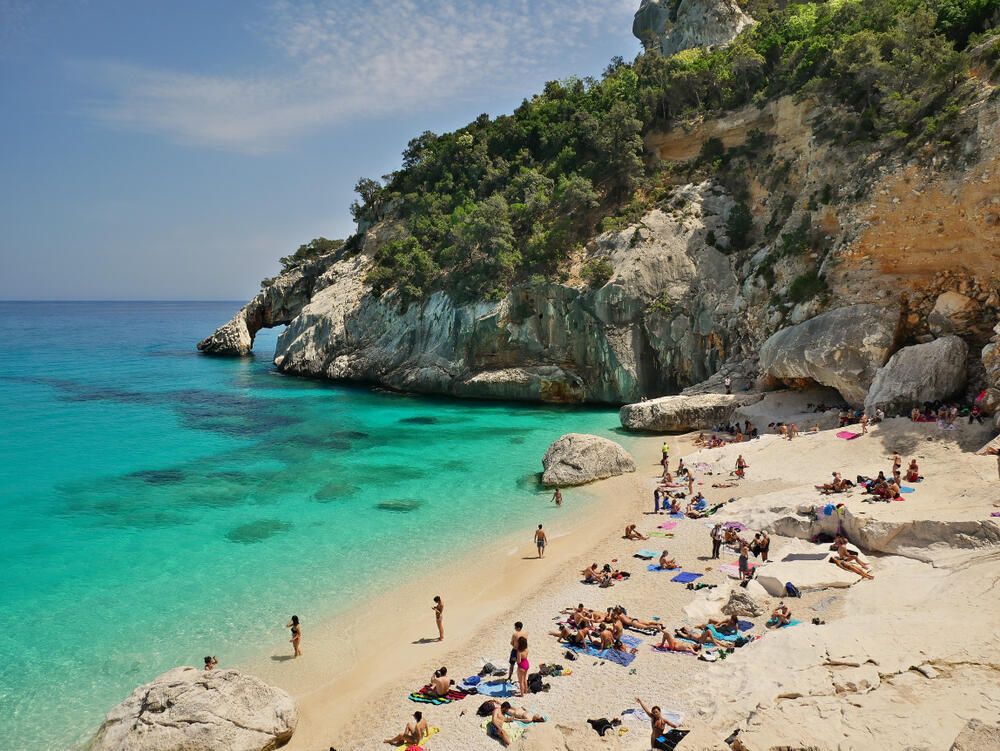
Cala Goloritzé
(Photo: Nature / Shutterstock)
At Tuerredda beach in southern Sardinia, entry is limited to 1,100 visitors a day. Reservations are required during the 2026 season from June 2 through October 15, with admission costing 3 euros. Places for the following day become available at 8 a.m., and visitors must show a QR code at the entrance. Children under 12 do not need to be included in the reservation.
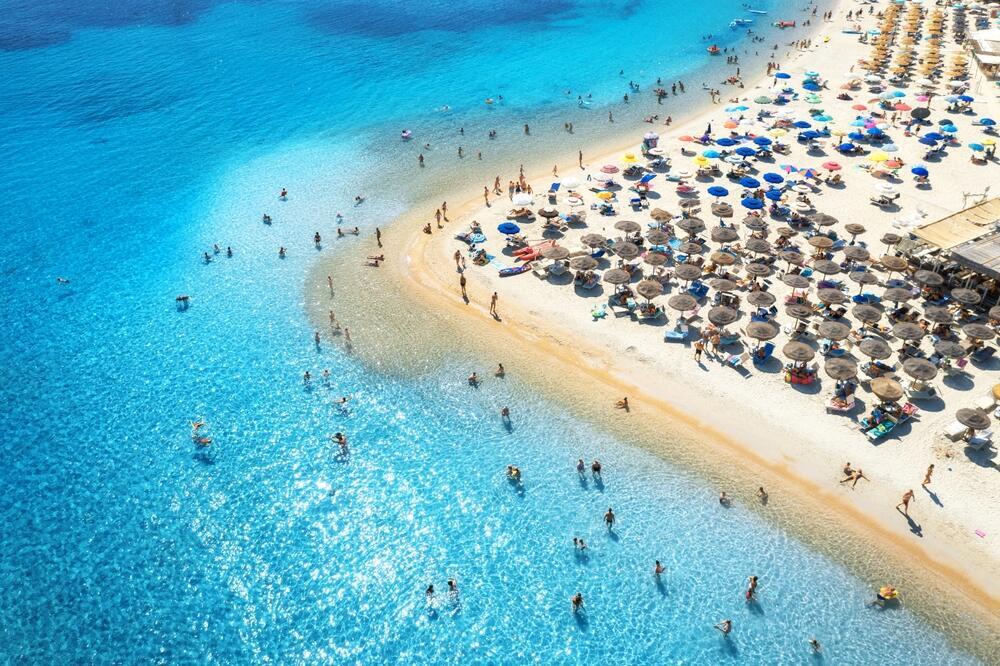
Tuerredda beach
(Photo: Denis Belitsky / Shutterstock)
Cala Brandinchi and Lu Impostu, two of the most popular beaches around San Teodoro in northeastern Sardinia, operate a reservation system from June 1 through September 30.
Admission costs 2 euros for visitors over 12, with reservations opening at 6 p.m. each day for the day after next. Children aged 5 to 12 enter for free but count toward the visitor quota, while those under 5 neither pay nor count toward the limit.
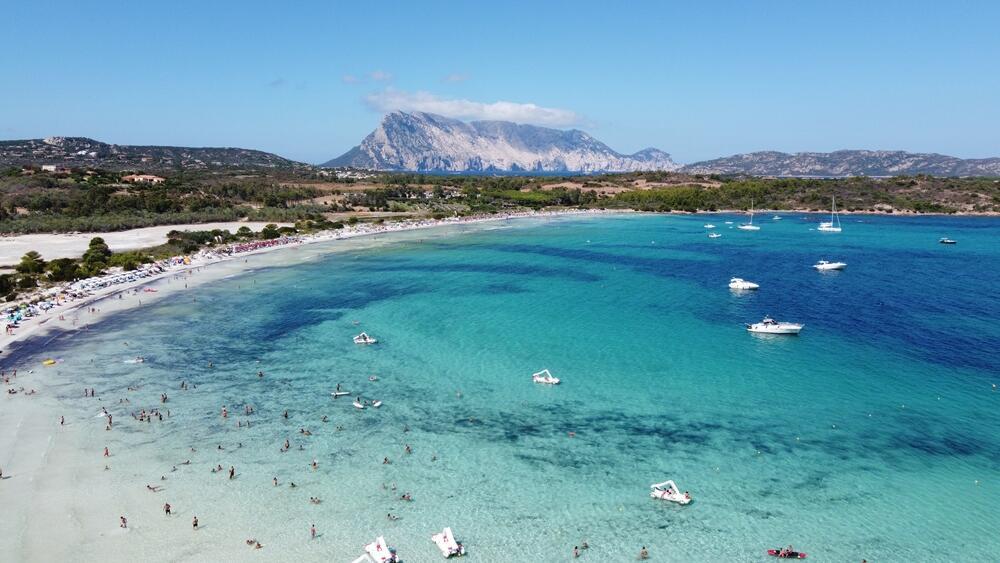
View of Tavolara Island from Cala Brandinchi beach in Sardinia
(Photo: MyDirtyLines / Shutterstock)
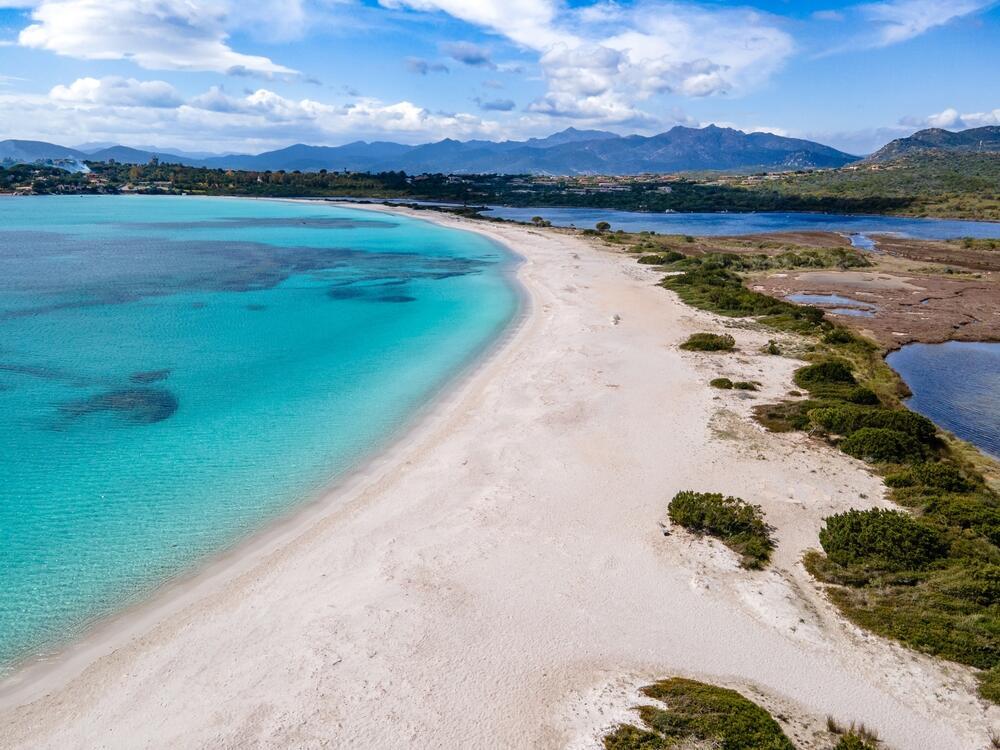
Lu Impostu beach, near San Teodoro on the Italian island of Sardinia
(Photo: Marisa Estivill / Shutterstock)
During periods of heavy demand, the booking platform may activate a virtual waiting room that admits users according to their place in line. Joining the queue does not guarantee a ticket, meaning travelers hoping to visit during peak season must be ready when reservations open.
At Su Sirboni beach in the Ogliastra region, summer access is also restricted. Between July 15 and September 15, up to 786 visitors are permitted each day, with admission costing 3 euros. Unlike at some other beaches, reservations can be made well in advance.
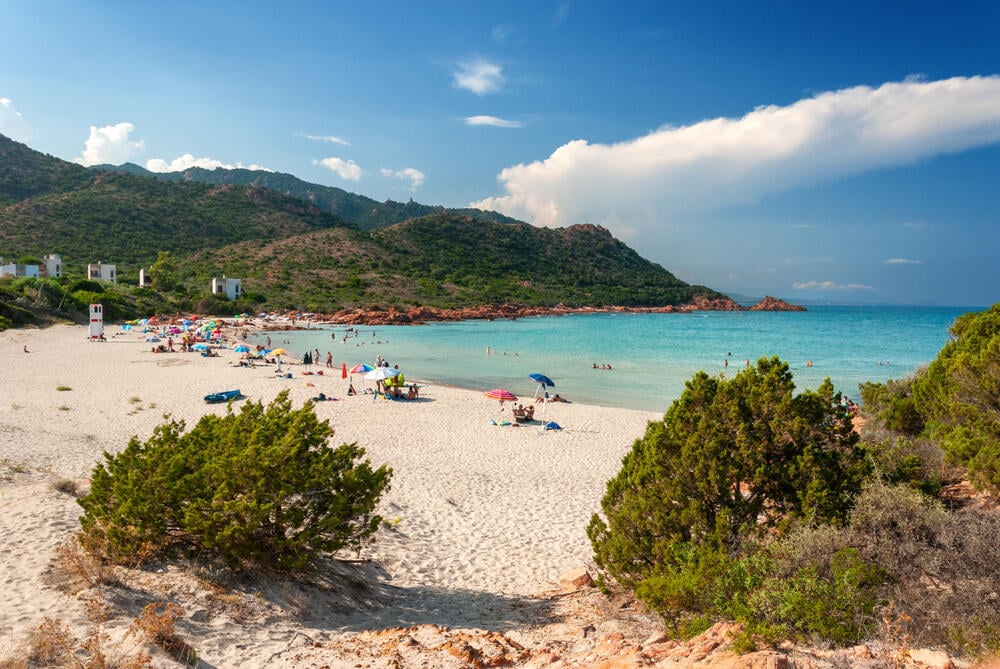
Su Sirboni beach
(Photo: Alessio Orru / Shutterstock)
Every beach has different rules. Sardinia does not operate a single, uniform reservation system. At one beach, visitors may reserve months in advance; at another, bookings open only three days before arrival. Elsewhere, the quota becomes available at a fixed time the previous evening.
Rules governing children also vary. Some children enter for free but must still be included in the reservation because they count toward the daily limit.
An entrance ticket generally does not include parking, an umbrella or a sunbed. At popular beaches, parking lots may fill early in the morning, and parking can cost more than admission to the beach itself.
Alongside visitor caps, Sardinia has also faced controversy this summer over restrictions on beach umbrellas. In early June, authorities at Punta Molentis in southeastern Sardinia issued an unusual order barring most visitors from bringing umbrellas. The initial exemption applied only to families with children under 10 and visitors aged 65 and older.
The ban lasted only a few days. Following criticism, the municipality of Villasimius revised the rules on June 15, allowing each family or group to bring one umbrella regardless of age. Visitors may not, however, place the umbrella in the sand themselves. It must be positioned under the supervision and direction of beach staff.
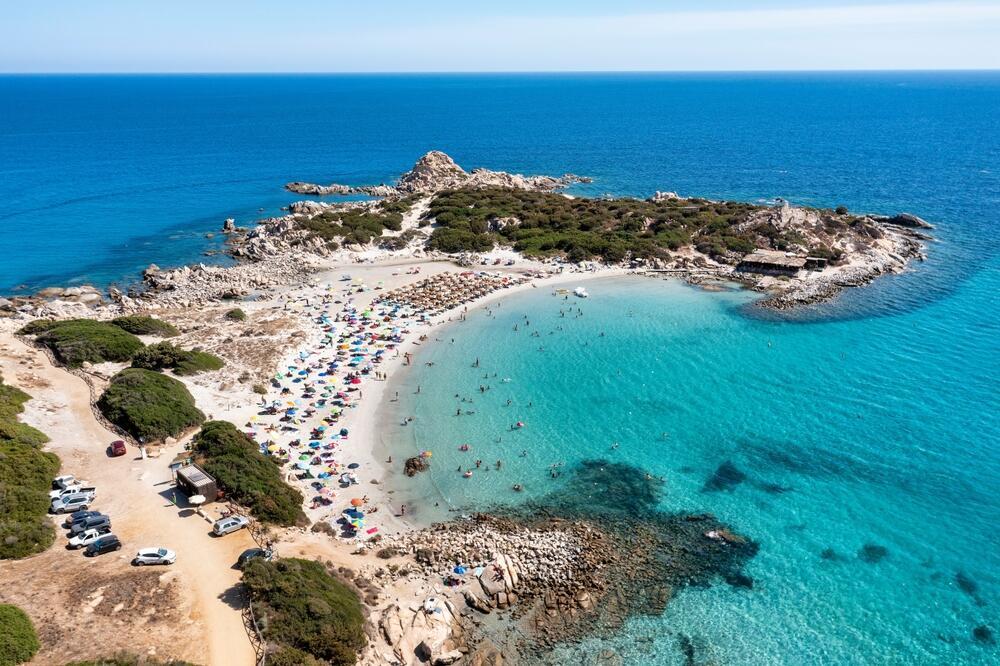
Aerial view of Punta Molentis beach, where umbrellas have become a focus of controversy this summer
(Photo: pics721 / Shutterstock)
The restrictions followed a July 2025 wildfire that forced beachgoers to evacuate by sea and destroyed dozens of vehicles, as well as winter storms that reduced the amount of usable beach space. Under the revised rules, access by land is limited to 190 people present at any one time and 90 vehicles a day. Entry still requires a reservation and a ticket.
Taking sand from Sardinia’s beaches can also carry a substantial penalty. Local law prohibits the unauthorized removal or possession of sand, pebbles, stones and seashells originating from the beach or sea. Fines range from 500 to 3,000 euros.
The requirement to place a mat beneath towels at some beaches is partly intended to reduce the amount of sand visitors unknowingly take with them.
Italy is also grappling with a separate argument over the cost of spending a day at the beach. Antonio Decaro, president of the southern Puglia region, recently criticized attempts by some private beach clubs to prevent vacationers from eating food brought from home. “The sea is a common good and must not become a luxury,” he said.
A local representative of the Assoturismo tourism association argued that the problem was not a sandwich or piece of fruit, but visitors arriving with entire meals that created difficulties involving cleanliness, waste and order.
The dispute comes as private beach prices continue to rise. Consumer group Altroconsumo said the average cost of an umbrella and two sunbeds had increased by 6% from 2025, with prices in some locations rising by as much as 16%.
Booking is not unique to Sardinia or Italy. At Praia das Catedrais in northwestern Spain, visitors must register during Easter and from July 1 through September 30, although admission and guided tours remain free.
A reservation system also operates at Calanque de Sugiton in Calanques National Park near Marseille. In 2026, bookings are required on selected weekends in June and September and every day from June 27 through August 30. Reservations are free and open three days before the visit.
For travelers, the message is clear: Do not assume that every beach is open to anyone who arrives. Before leaving the hotel, visitors should check the official website to determine whether reservations are required, when the quota opens and which access rules apply. They should also save a screenshot of the QR code on their phone in case mobile reception is unavailable at the beach.