

Some places were abandoned after a disaster. Others were emptied by war, the collapse of an industry or simply because life moved somewhere else.
What remains can sometimes be even more striking than what existed at their peak: empty hotels facing the sea, homes filling with desert sand, villages disappearing beneath vegetation and entire cities where time appears to have simply stopped.
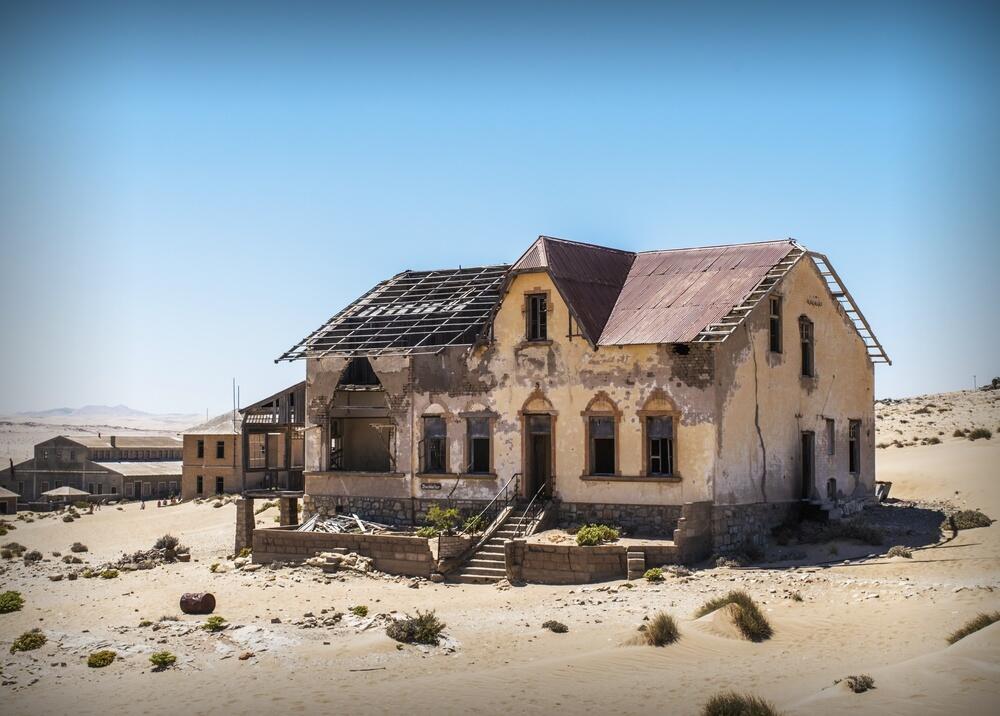
Here are 10 extraordinary abandoned places around the world, from the most famous ghost city of them all to towns and villages you may never have heard of.
1. Pripyat, Ukraine
We begin with perhaps the most famous abandoned city in the world. Images of Pripyat’s rusting Ferris wheel, empty apartment blocks and deserted classrooms have long become symbols of the Chernobyl disaster and some of the most recognizable images of a modern ghost town.
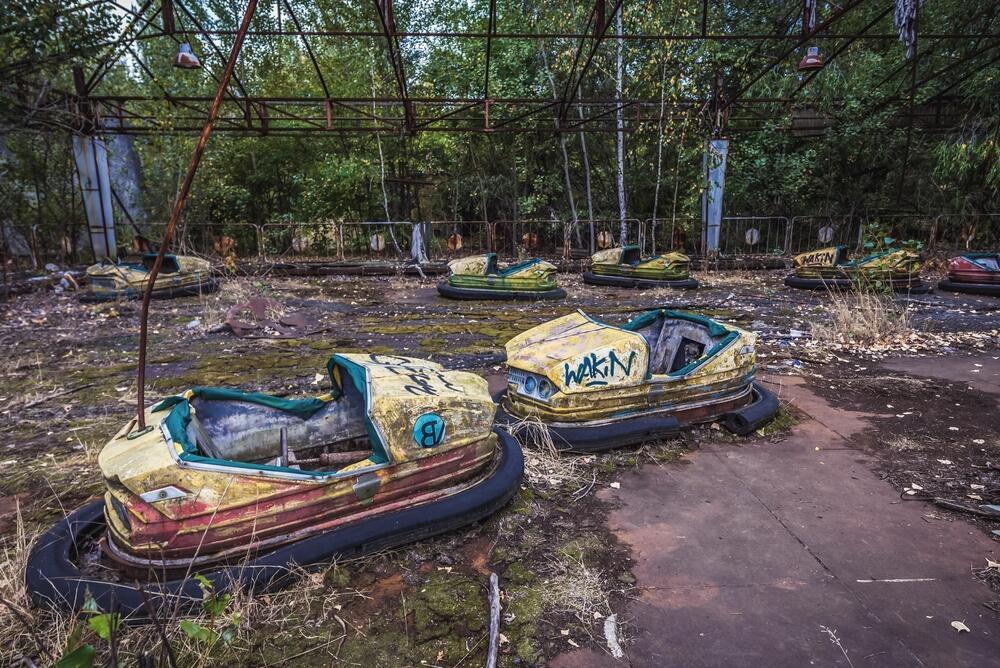
Bumper cars at the abandoned amusement park in Pripyat
(Photo: Fotokon / shutterstock)
Pripyat was founded in 1970 to house workers at the Chernobyl Nuclear Power Plant and their families. By the time of the disaster, almost 50,000 people lived there. On April 26, 1986, Reactor No. 4 at the nearby nuclear plant exploded. Residents were not evacuated until the following day, about 36 hours after the accident.
They were told to take documents, some food and essential belongings, with the expectation that their evacuation would be temporary. They never returned to live in the city. Over the decades, vegetation spread through its streets and buildings deteriorated, turning what had been a young Soviet city into one of the world’s most famous abandoned places.
Before Russia’s full-scale invasion of Ukraine in 2022, the Chernobyl Exclusion Zone was also a popular destination for organized tours. Amid the continuing war and security situation, Pripyat can no longer be treated as an ordinary tourist destination. But any journey through the world’s most remarkable abandoned places is difficult to begin anywhere else.
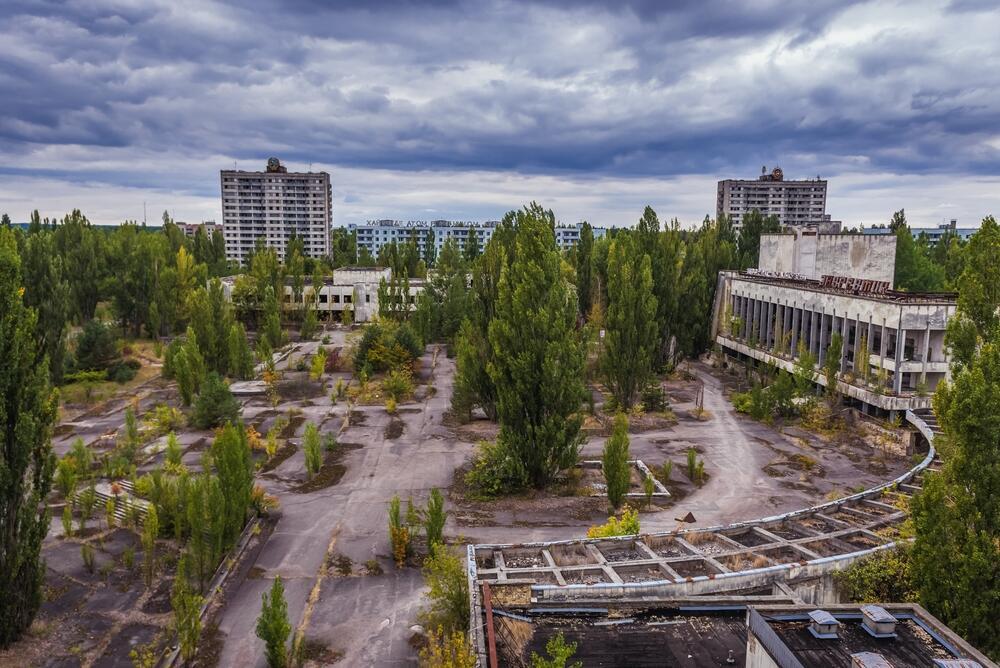
Pripyat’s central square
(Photo: Fotokon / shutterstock)
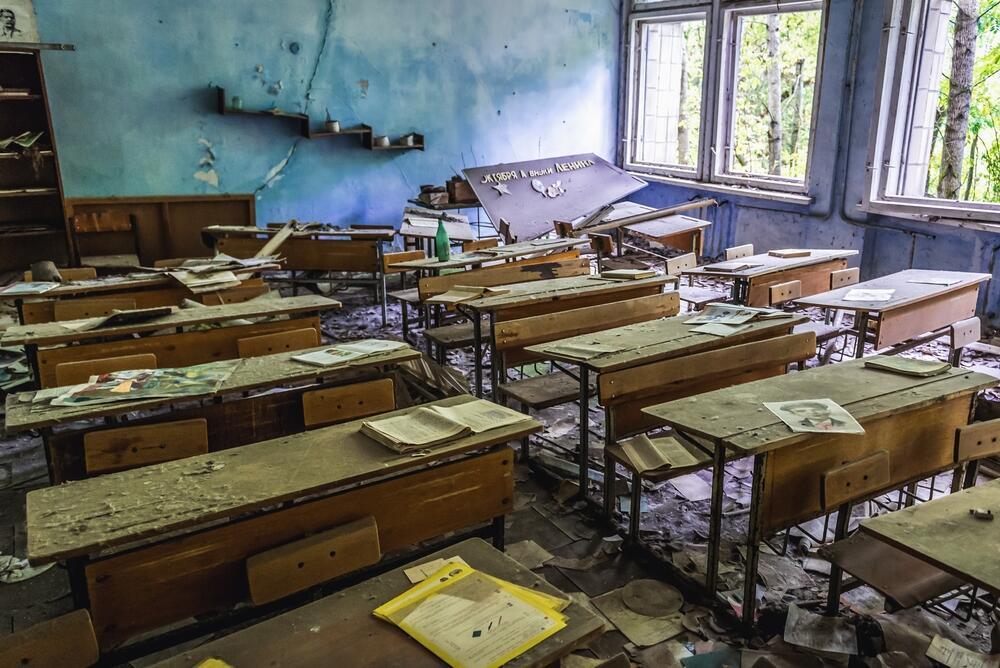
A classroom at School No. 3 in Pripyat
(Photo: Fotokon / shutterstock)
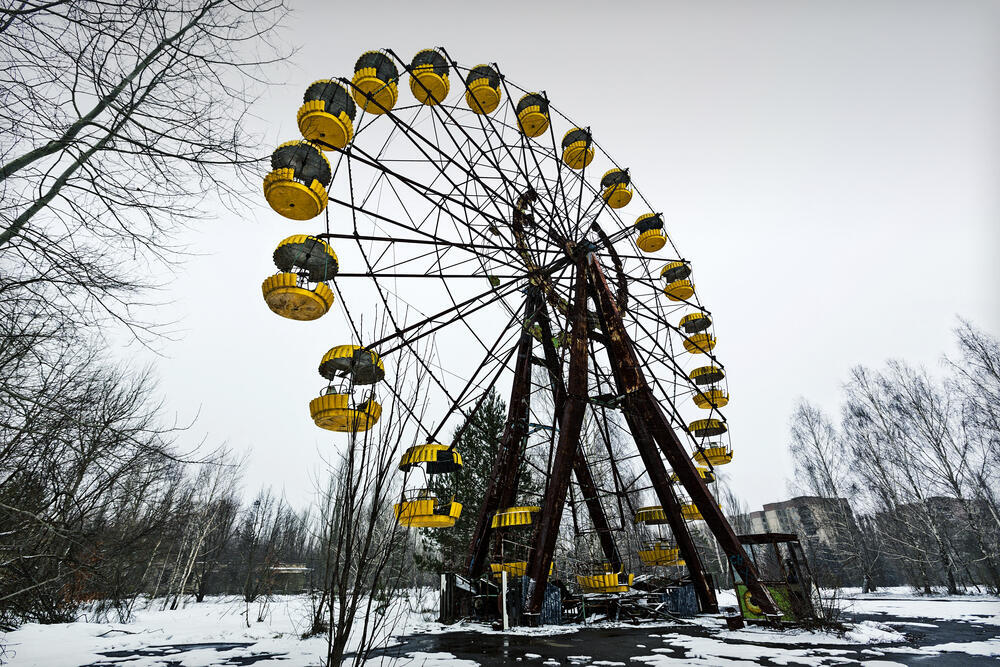
The iconic Ferris wheel
(Photo: posztos / shutterstock)
2. Hashima Island, Japan
From a distance, it resembles an enormous concrete battleship, which explains its famous nickname: Battleship Island. Hashima, a tiny island off Nagasaki, was home for decades to thousands of people employed in the undersea coal mines surrounding it.
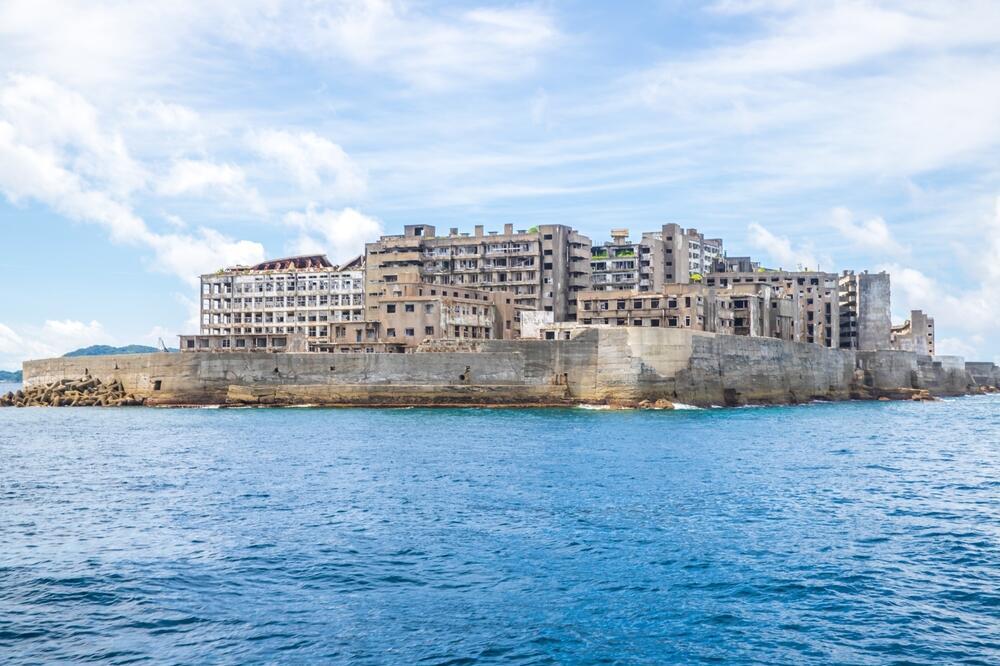
Hashima, also known as Gunkanjima, in Nagasaki Prefecture
(Photo: Spyan / shutterstock)
At its peak in 1959, more than 5,000 people lived on the island. Dense concrete apartment blocks, a school, stores and community facilities were packed into a tiny area enclosed by a sea wall. Then Japan began shifting from coal to petroleum. The mine closed in January 1974, and within months the residents were gone. The concrete remained.
For decades, the apartment towers were left exposed to wind, salt and storms, giving Hashima its almost post-apocalyptic appearance. Parts of the island opened to tourists in 2009, and in 2015 it was included as part of a UNESCO World Heritage site devoted to Japan’s industrial revolution.
Authorized tours still depart from Nagasaki, but visitors can access only designated areas because many of the buildings are unsafe.
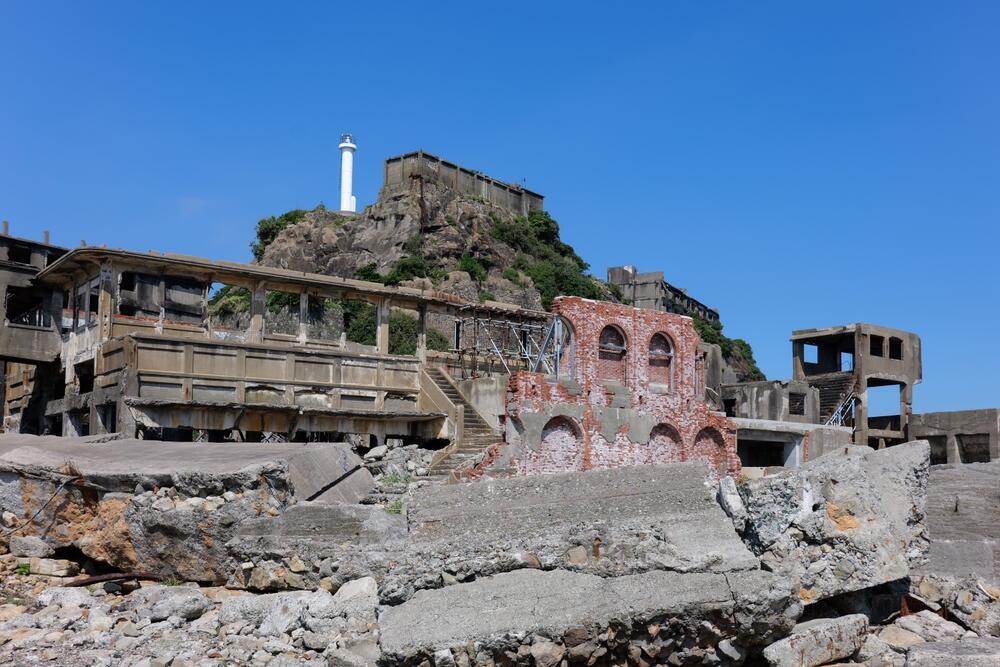
Abandoned buildings and ruins on Hashima
(Photo: Travel_Photography.m / shutterstock)
3. Kolmanskop, Namibia
If there is one place on this list that offers the most photogenic example of nature defeating human construction, it is Kolmanskop. Deep in the Namib Desert, abandoned houses are slowly disappearing beneath the dunes, with sand pouring through doorways and piling high across once-inhabited rooms.
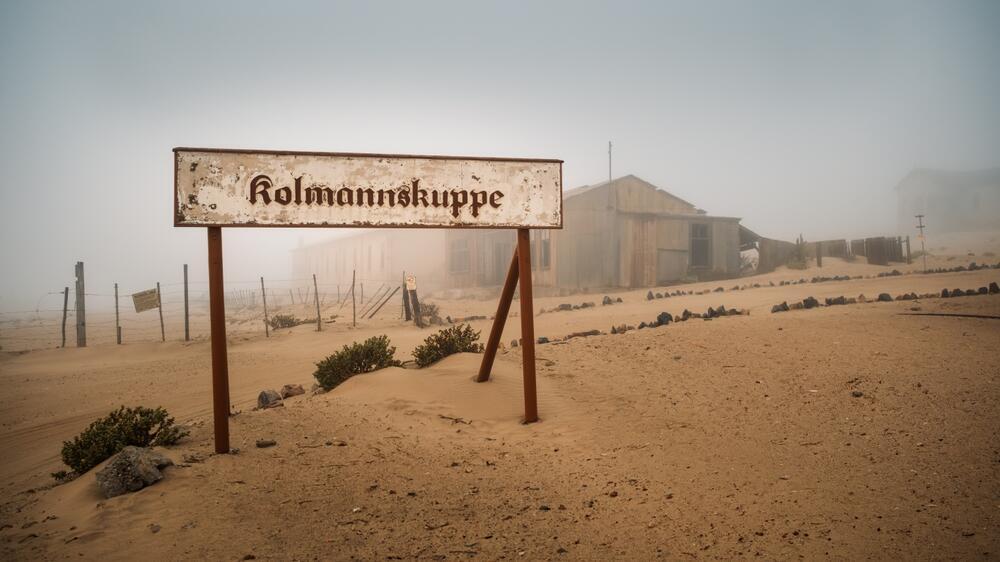
An old sign in the abandoned town of Kolmanskop in the morning fog
(Photo: Maurizio De Mattei / shutterstock)
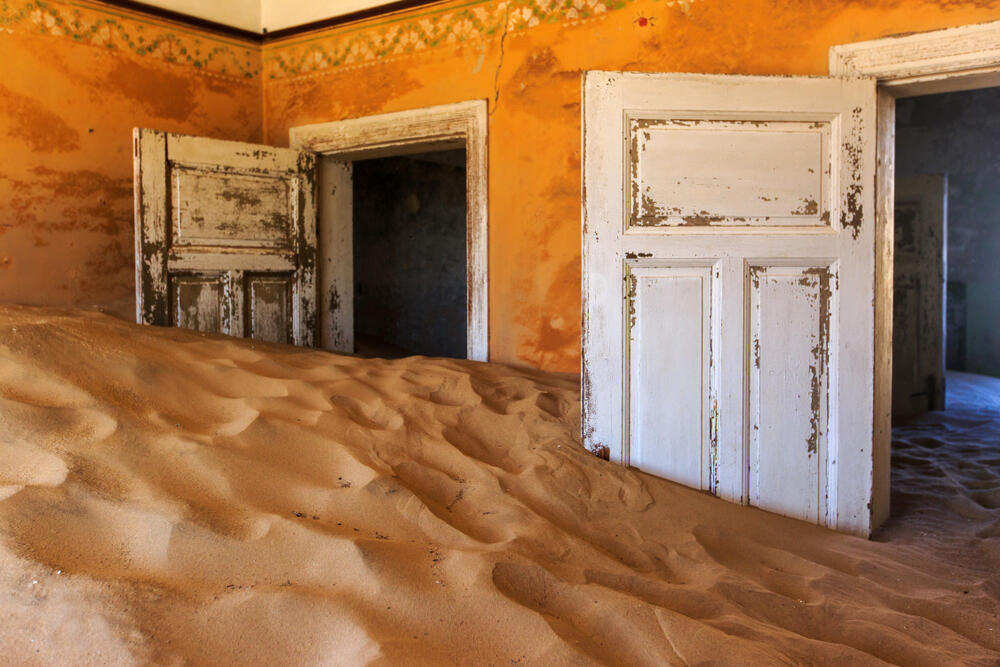
An abandoned house swallowed by sand in Kolmanskop
(Photo: Natalia Golovina / shutterstock)
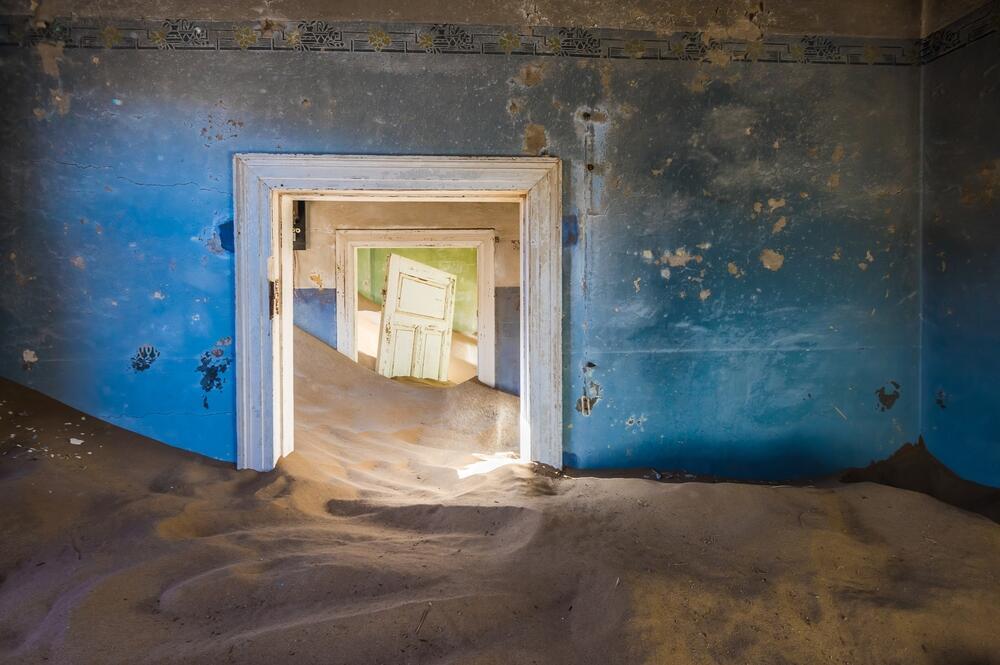
Unexpected beauty in the desert
(Photo: javarman / shutterstock)
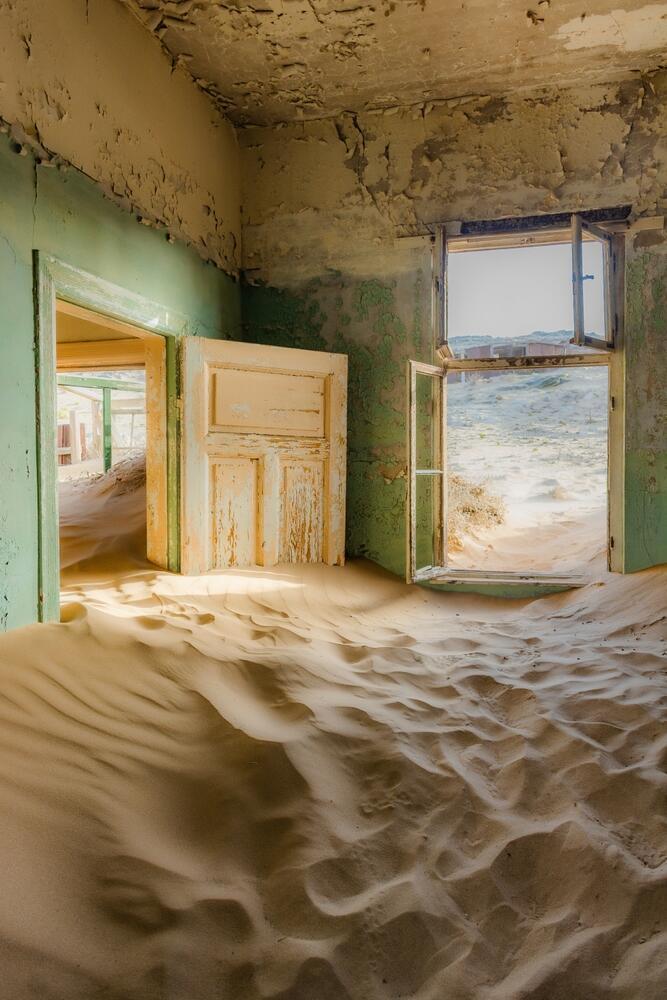
An abandoned house swallowed by sand in Kolmanskop
(Photo: chris piason / shutterstock)
The story began in 1908, when Zacharias Lewala, a local railway worker, discovered a diamond in the area. The find triggered a diamond rush, and within years an extraordinarily wealthy settlement had emerged in the desert.
Kolmanskop had a hospital, theater, bowling alley, school, casino and even an ice factory, remarkable luxuries in the middle of the desert at the beginning of the 20th century.
But the local diamond deposits began to run out, while richer deposits were discovered farther south. Residents gradually left, and by 1956 Kolmanskop had been abandoned entirely. The desert has been reclaiming it ever since.
Today it is an organized tourist site, with tours continuing in 2026 and special permits available for photographers who want additional time among the sand-filled buildings.
4. Craco, Italy
Perched above the rugged landscape of Basilicata in southern Italy is a town that appears to have been frozen in another century. Craco has medieval origins, with narrow alleys, churches and stone houses clinging to a steep hillside.
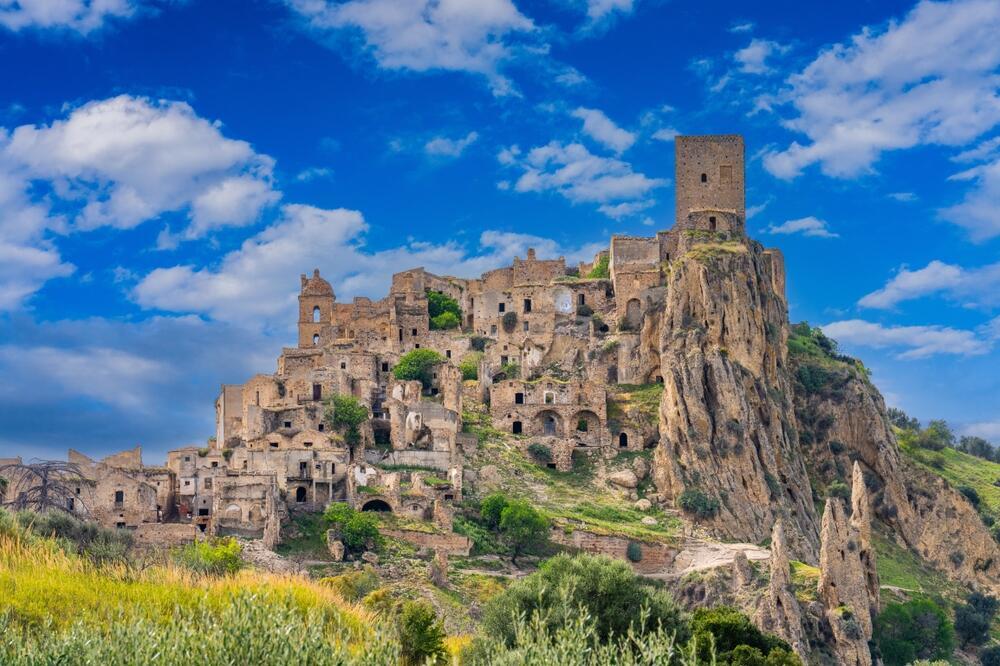
Welcome to Craco
(Photo: Ivo Antonie de Rooij / shutterstock)
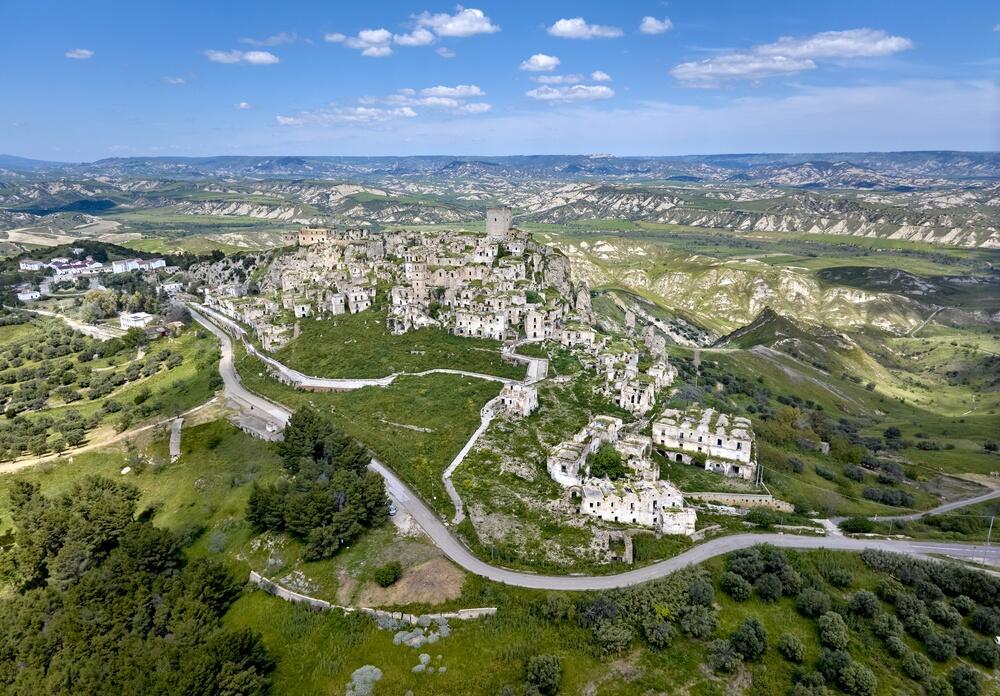
People still lived here in the 1960s
(Photo: Umomos / shutterstock)
The hillside itself proved to be the problem. The area suffered repeated landslides, and in 1963 a major slide prompted the evacuation of residents from the historic center. Flooding in 1972 and an earthquake in 1980 made the prospect of restoring normal life there even more remote.
The result is a landscape almost made for cinema, and filmmakers noticed. Scenes from Mel Gibson’s The Passion of the Christ were among those shot in Craco. The town has not simply disappeared or been sealed away. Guided visits to its ruins continue, while the buildings remain empty above the landscape of southern Italy.
5. Varosha, Cyprus
Once, this was among the most glamorous vacation districts in the eastern Mediterranean. Hotels, restaurants and apartment buildings lined the beaches of Varosha, a district of Famagusta in Cyprus, drawing vacationers to its long stretches of sand and blue water.
Then came the summer of 1974. Following a coup in Cyprus and the subsequent Turkish invasion, Varosha’s residents fled. The district was sealed off and for decades became an enormous time capsule: empty hotels facing the Mediterranean, shattered windows and vegetation slowly moving into its streets.
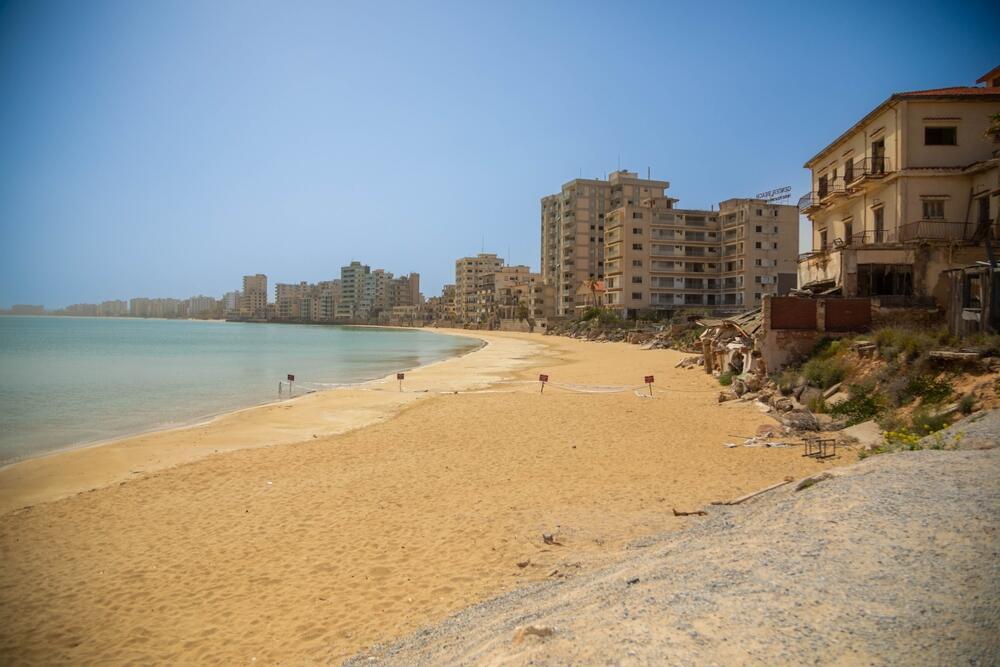
Abandoned buildings overlooking the sea in Varosha
(Photo: dr.haris / shutterstock)
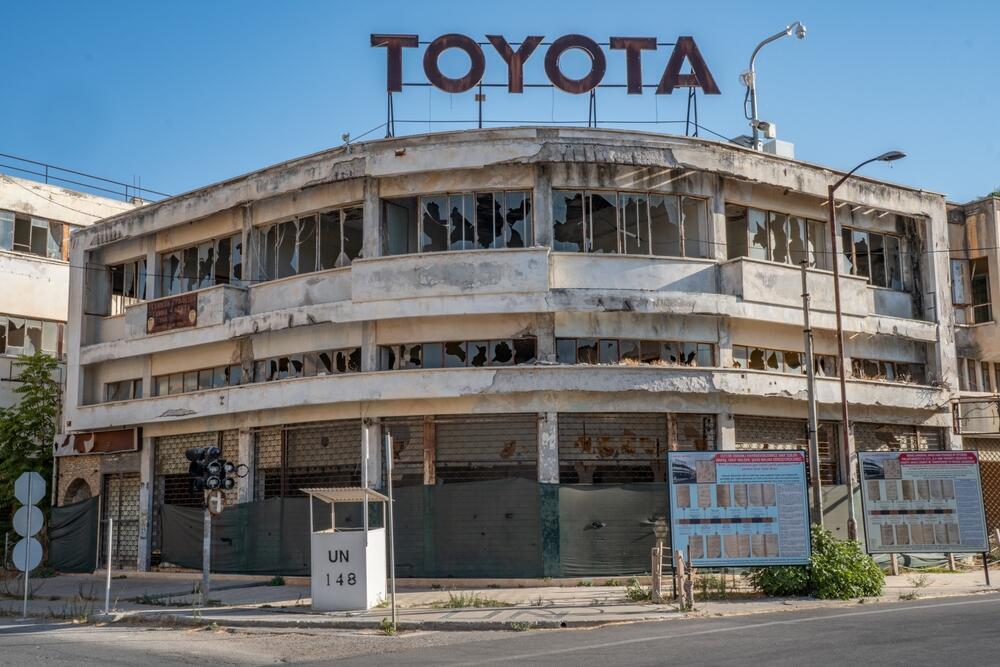
A former Toyota building in Varosha
(Photo: feelthedrone / shutterstock)
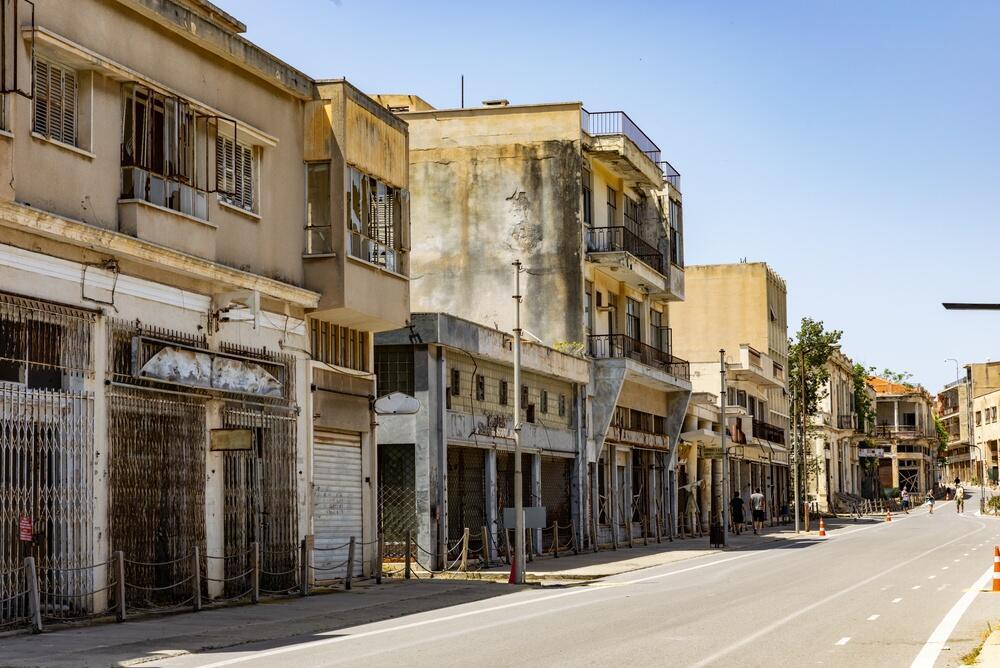
Deserted streets
(Photo: Resul Muslu / shutterstock)
But the Varosha of 2026 is no longer completely closed. Since 2020, Turkish Cypriot authorities have gradually opened sections to the public, a move that has generated international opposition and controversy.
Visitors can now walk or cycle along certain streets and routes, and portions of the beach are accessible. Other buildings and areas remain off-limits. The result is an extraordinary juxtaposition: the decaying remains of a 1970s Mediterranean resort with visitors once again moving among them.
6. Bodie, California
Gold was discovered near Bodie in 1859, but the real boom came in the 1870s after exceptionally rich deposits were found. Thousands of people poured into the area, and the small settlement transformed into a thriving mining town, virtually the archetype of the American gold rush and Wild West.
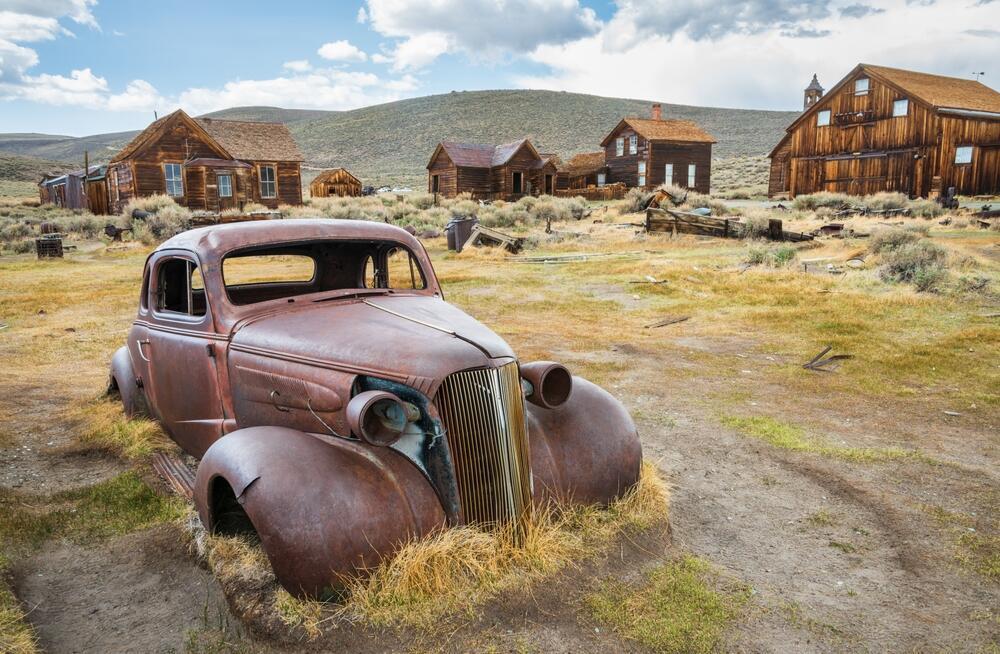
Bodie, now a California state historic park
(Photo: Zack Frank / shutterstock)
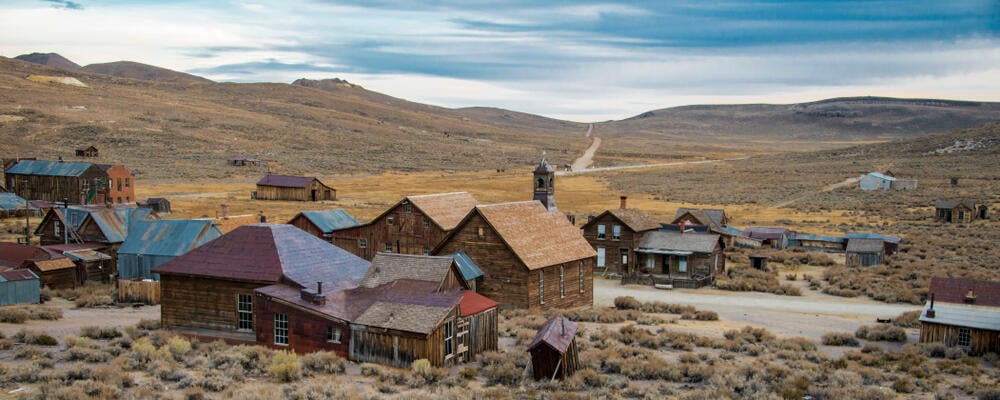
Like a movie set
(Photo: John P Kallestad / shutterstock)
As with many communities built around a single resource, the prosperity did not last. Mine production declined, the population fell and fires destroyed sections of the town. Mining activity eventually ended during the first half of the 20th century, and Bodie gradually emptied.
Today, Bodie is a California state historic park, and the unusual way it is preserved is part of what makes it remarkable. Authorities describe it as being maintained in a state of “arrested decay.” The objective is not to restore the town until it looks new, but to stabilize what remains and keep it from collapsing.
Furniture and objects are still visible in some buildings, creating the impression that residents simply stepped outside and never came back. As of late August 2026, the park remains open daily to visitors.
7. Humberstone, Chile
In the middle of one of the driest deserts on Earth stands an entire industrial settlement built around a material that was once immensely valuable. Humberstone in northern Chile was a major center for producing saltpeter, or sodium nitrate, widely used in fertilizer and other products.
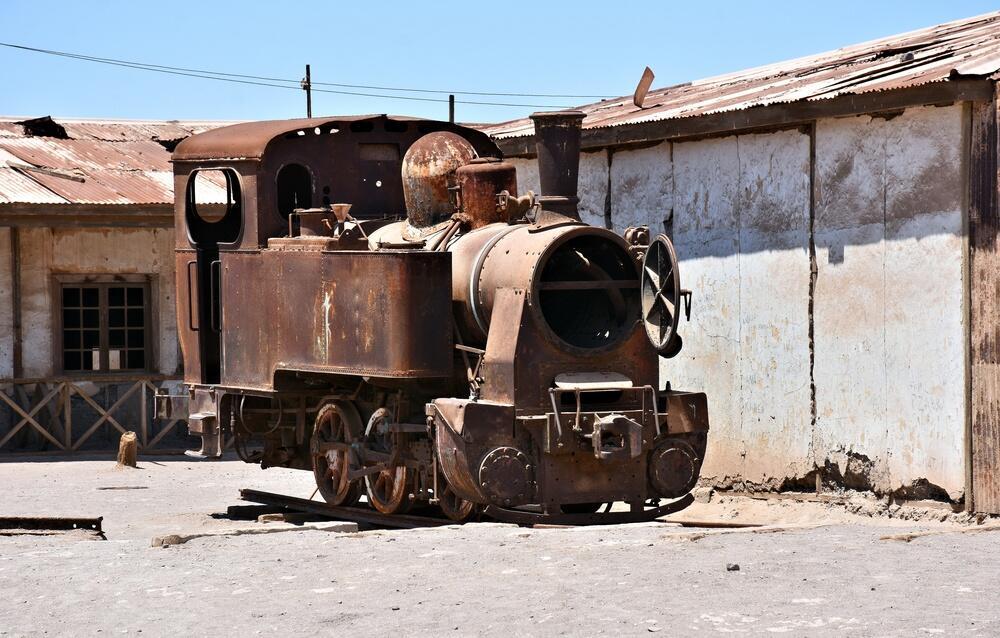
Humberstone, a preserved ghost town and UNESCO World Heritage site in Chile’s Atacama Desert
(Photo: Gennady Stetsenko / shutterstock)
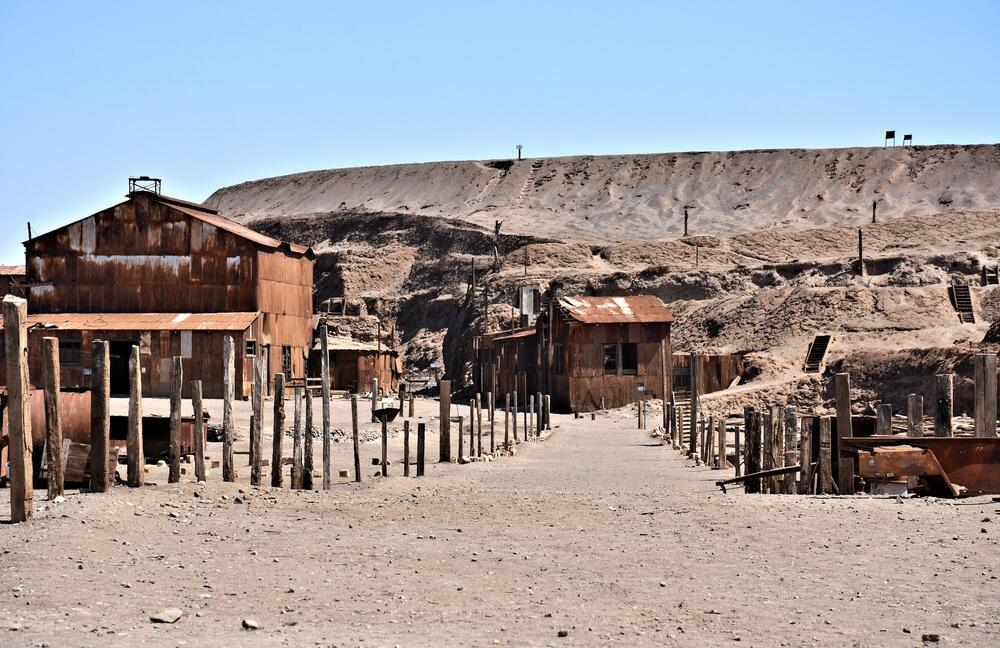
Humberstone
(Photo: Gennady Stetsenko / shutterstock)
Thousands of workers and their families lived in the area. Alongside its industrial facilities were homes, a school, theater, market and other community institutions. But the development of synthetic alternatives and the collapse of Chile’s nitrate industry sent the settlements into decline, and operations at Humberstone and nearby Santa Laura ended in the mid-20th century.
Unlike many other industrial towns, the complexes were not completely dismantled. Buildings, machinery and streets remained standing in the desert.
In 2005, Humberstone and Santa Laura were designated a UNESCO World Heritage site. Conservation and restoration work has followed, meaning today’s Humberstone is not simply a forgotten ruin but an abandoned industrial town preserved as a historic site.
8. Kayaköy, Turkey
Not far from the turquoise beaches, hotels and restaurants of Fethiye and Ölüdeniz is a dramatically different sight. Hundreds of roofless stone houses climb a hillside, interspersed with ruined churches and the streets of a settlement that was once filled with life.
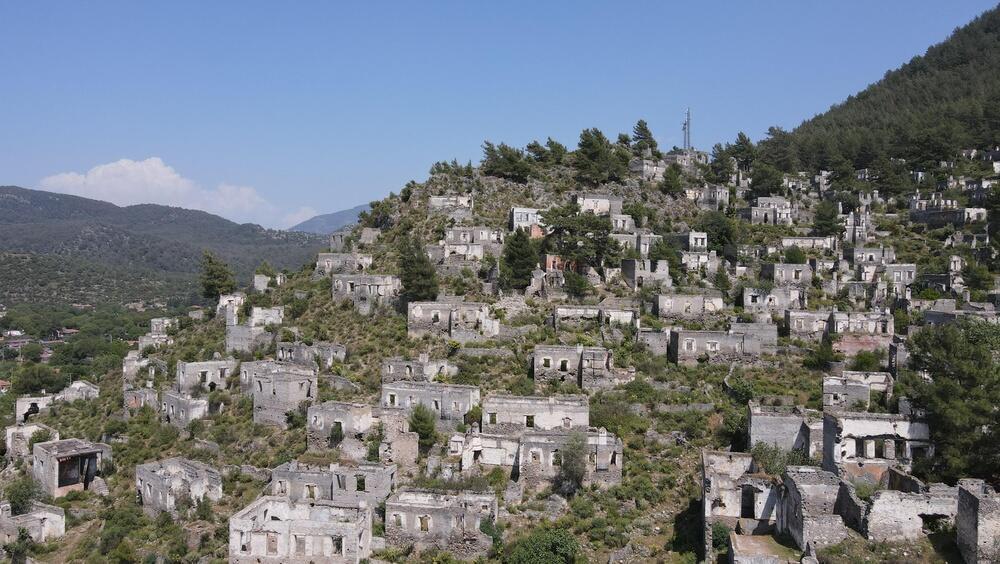
The abandoned village of Kayaköy near Fethiye, Turkey
(Photo: selcukkayapinar / shutterstock)
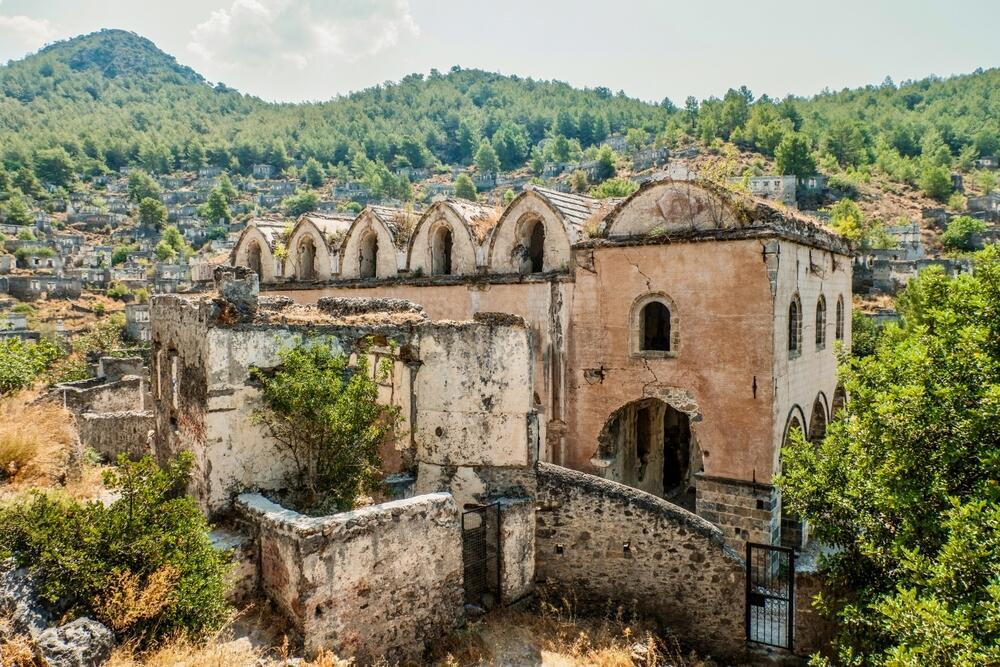
Kayaköy
(Photo: Juan Carlos Herrera / shutterstock)
Kayaköy, known to its Greek inhabitants as Livissi, was home to a large Greek Orthodox community. In the early 1920s, against the backdrop of the Greco-Turkish War and the population exchange formalized under the 1923 Treaty of Lausanne, its Christian population was forced to leave.
The houses they left behind were never repopulated on a scale sufficient to bring the historic settlement fully back to life. The surrounding area is not entirely abandoned today, and tourism businesses operate nearby, but hundreds of stone houses in the old village remain largely empty. It remains an unusual excursion just a short distance from one of Turkey’s most popular vacation regions.
9. Belchite, Spain
At first glance, the old town of Belchite might look like another settlement destroyed by some natural catastrophe. Its ruins are actually the legacy of one of the fiercest battles of the Spanish Civil War.
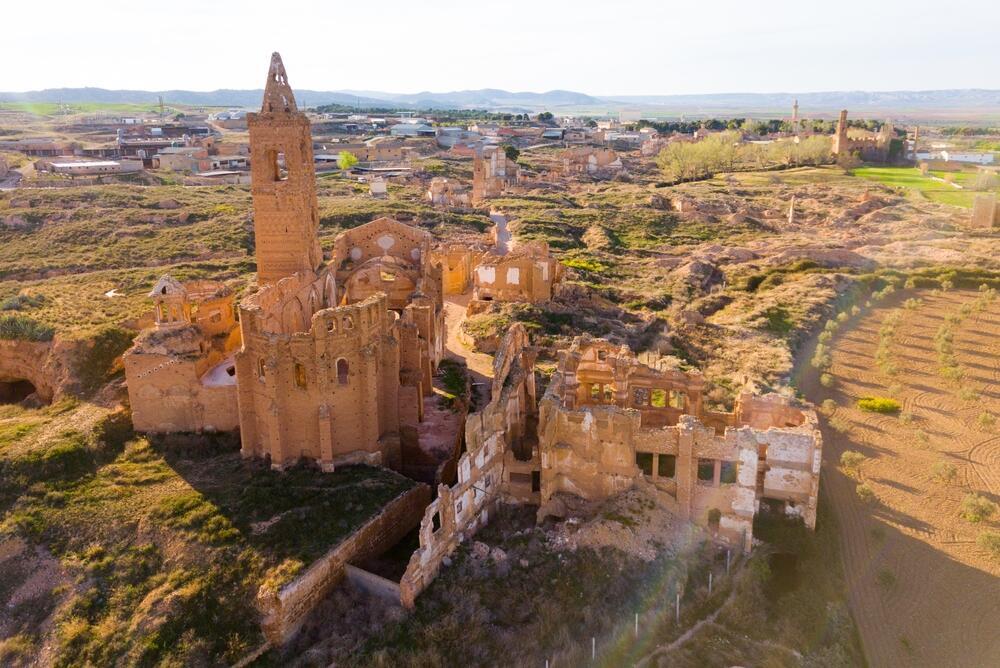
Ruins of a church damaged during fighting in Belchite, Spain
(Photo: BearFotos / shutterstock)
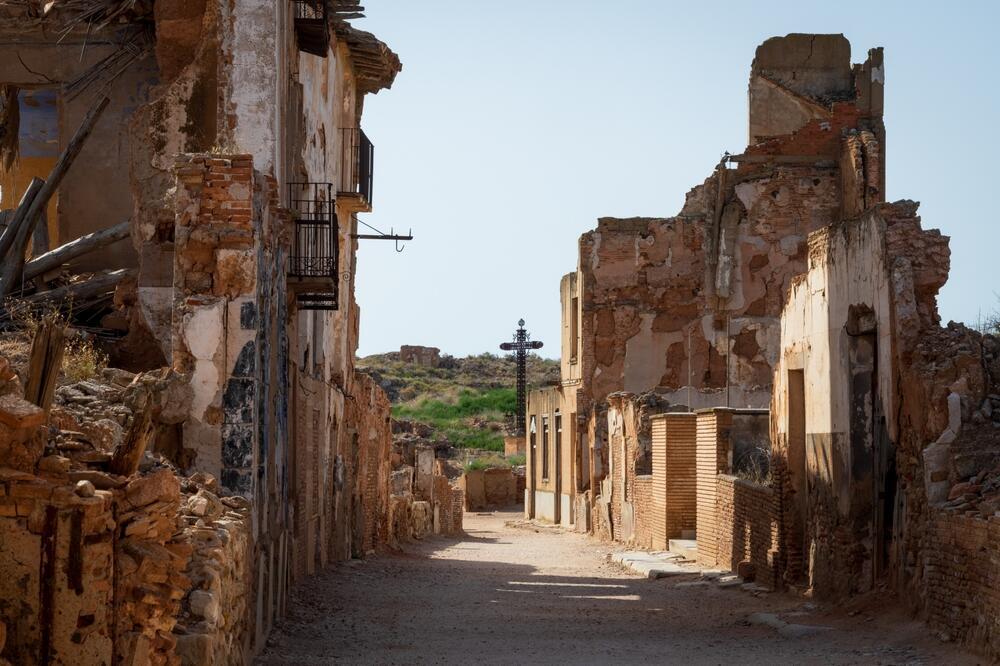
Belchite’s old town in Zaragoza province
(Photo: Zack Frank / shutterstock)
In the summer of 1937, the Battle of Belchite was fought between Republican forces and Franco’s Nationalists. The fighting and shelling caused massive destruction. After the war, the old town was left in ruins and a new town was built nearby instead.
Old Belchite was left standing: roofless churches, scarred towers, ruined houses and streets terminating in piles of stone.
It is far from forgotten. In March 2026, the government of Aragon designated the old town a site of tourist interest, recognizing its significance as a surviving testament to the effects of the Spanish Civil War. Guided visits continue during both the day and night.
The ruins remain a powerful physical record of war, while also becoming one of the region’s most important tourist sites.
10. Houtouwan, China
We end somewhere where neither desert, war nor fire took over what humans left behind. Vegetation did. Houtouwan is an abandoned fishing village on Shengshan Island in China’s Shengsi archipelago, east of Shanghai.
Established in the 1950s, the village was once home to thousands of residents who made their living primarily from fishing. But isolation, transportation difficulties and limited access to basic services increasingly made life there impractical. Families began moving away, and by the early 2000s the village was almost entirely deserted.
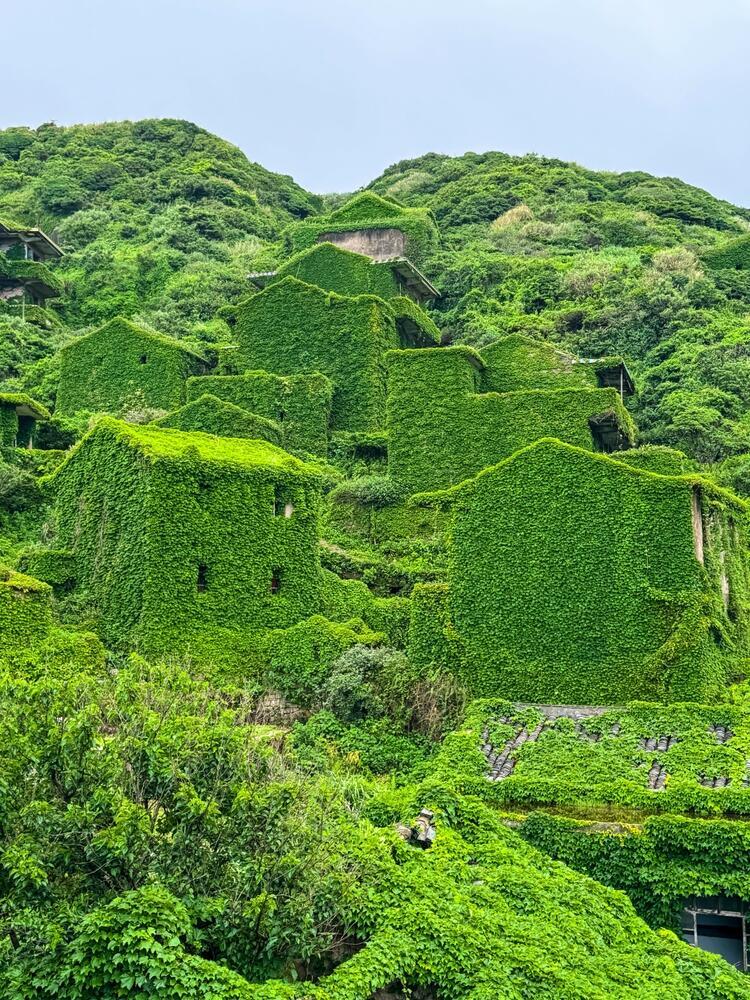
Vegetation has taken over the buildings
(Photo: HONGXU / shutterstock)
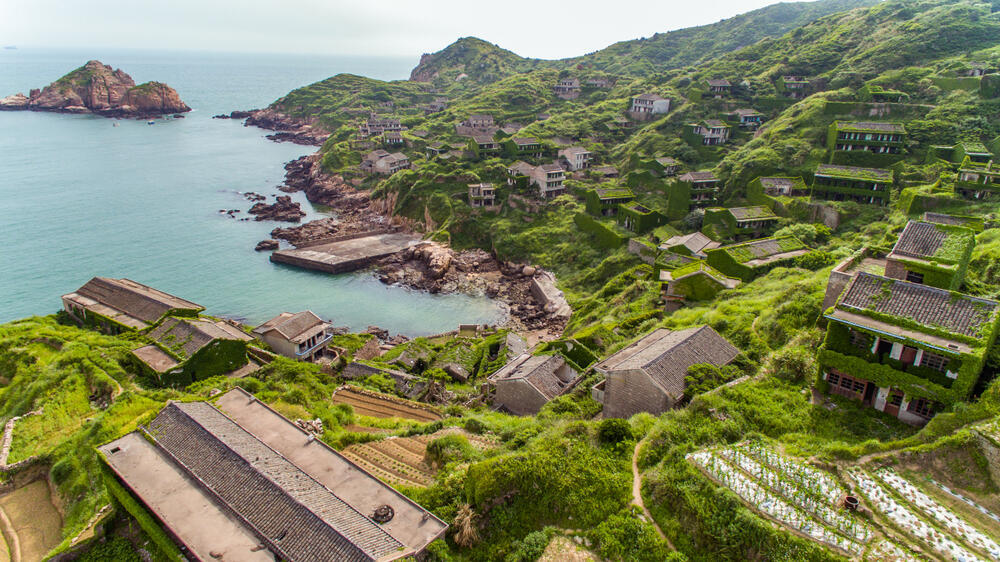
Aerial view of the abandoned fishing village of Houtouwan
(Photo: Joe Nafis / shutterstock)
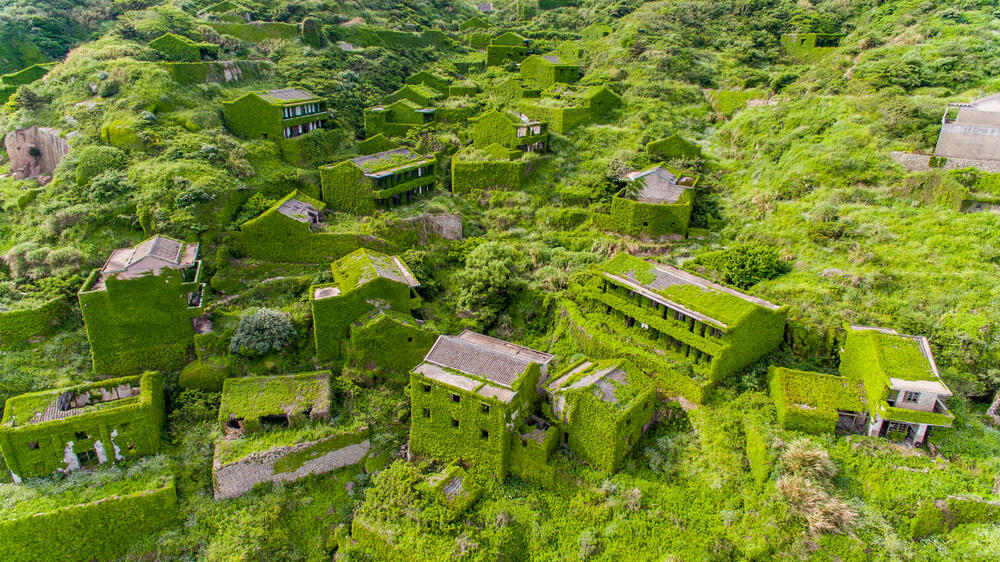
An almost surreal sight
(Photo: Joe Nafis / shutterstock)
Then came the green. Ivy and climbing plants covered the walls, spread across roofs and concealed windows and doors. In some places, it is difficult to tell where the mountain ends and the houses begin.
This is not simply a scene preserved in old photographs. In summer 2026, the village remains largely abandoned and covered in vegetation, while continuing to attract visitors.
There is an irony to Houtouwan’s second life. What was once an isolated village that residents left partly because it was so difficult to reach became an attraction precisely because they abandoned it.
Most places on this list tell stories of destruction and decay but Houtouwan tells a slightly different one. The people left, and nature moved in.