

The upcoming summer travel season could become one of the most expensive and unpredictable that Israeli travelers have seen in years. A combination of limited flight availability, the slow return of foreign airlines and pent-up demand is expected to push prices sharply higher and potentially disrupt peak-season activity.
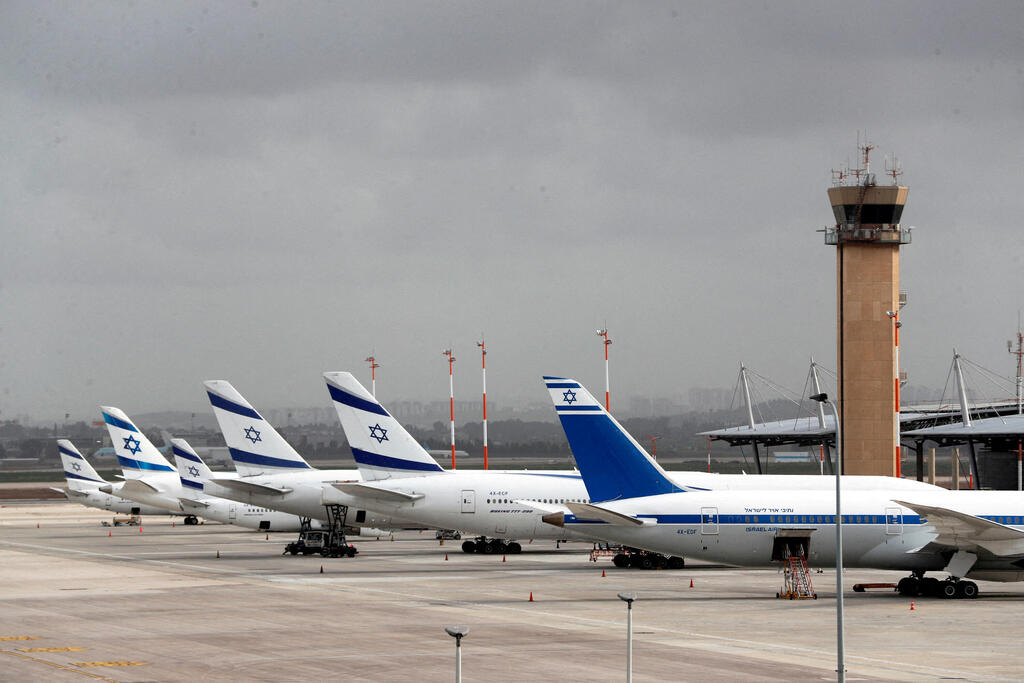
This adds to existing restrictions already tightening supply, when narrow-body aircraft are currently limited to about 120 passengers, and wide-body planes are capped at around 270, reducing capacity even before the summer rush begins.
According to Dr. Uzi Freund-Feinstein, an aviation and transportation expert at Kinneret Academic College, the outlook for summer depends almost entirely on security developments in the coming weeks.
“Realizing demand potential requires a relatively quick end to the fighting, within a matter of weeks, and stabilization of the security situation so regulators will revise flight restrictions to the region,” he told Ynet.
If conditions improve, he said, activity could gradually resume. “Easing of flight restrictions could allow airlines, at least initially, to conduct risk assessments before operating each flight, eventually leading to a full lifting of restrictions.”
However, he outlined a far more pessimistic scenario. “As long as the fighting continues and air activity remains under threat, the resumption of flights is likely to be delayed, potentially to the point of canceling operations for the entire summer season.”
Air raid siren sounded at Ben Gurion Airport this week


If restrictions ease, demand is expected to surge. Israelis, he said, will be eager to travel abroad "to clear their minds" and make up for canceled Passover vacations and the hardships of wartime. "We expect Israelis to break records in outbound tourism."
Inbound tourism, however, tells a different story. “We are likely to continue seeing low demand, due to the region being perceived as dangerous by European and American tourists,” Freund-Feinstein said.
 Dr. Uzi Freund-FeinsteinPhoto: ErezBit
He also pointed to a transitional period between Passover and summer, during which Israeli airlines are expected to dominate operations. Even if conditions improve, foreign airlines are expected to resume only limited operations at first, primarily from countries outside the EU and the U.S.
Foreign airlines face a slow return
The return of foreign airlines, he stressed, will be gradual and complex. “A complete ban may shift to a partial lifting, meaning airlines themselves will decide whether to resume operations, while exercising extreme caution,” he said. Airlines will weigh factors such as security risks, crew willingness to operate in perceived high-risk areas, aircraft leasing approvals and insurance fees.
Following October 7, 2023, several airlines, including Virgin Atlantic and easyJet, suspended operations to Israel indefinitely, while Turkish Airlines and Royal Jordanian exited the market entirely. The European Union Aviation Safety Agency (EASA) only gradually lifted its flight advisory in July 2025, and U.S. carriers returned later and in limited capacity. Therefore, full recovery of foreign airline activity could take many months, he said.
Flight routes were also affected in the past. After October 7, Oman revoked Israeli overflight rights, forcing longer routes over the Red Sea and avoiding Yemen due to Houthi involvement. For now, Freund-Feinstein does not expect route disruptions unless the conflict expands into regions bordering Iran.
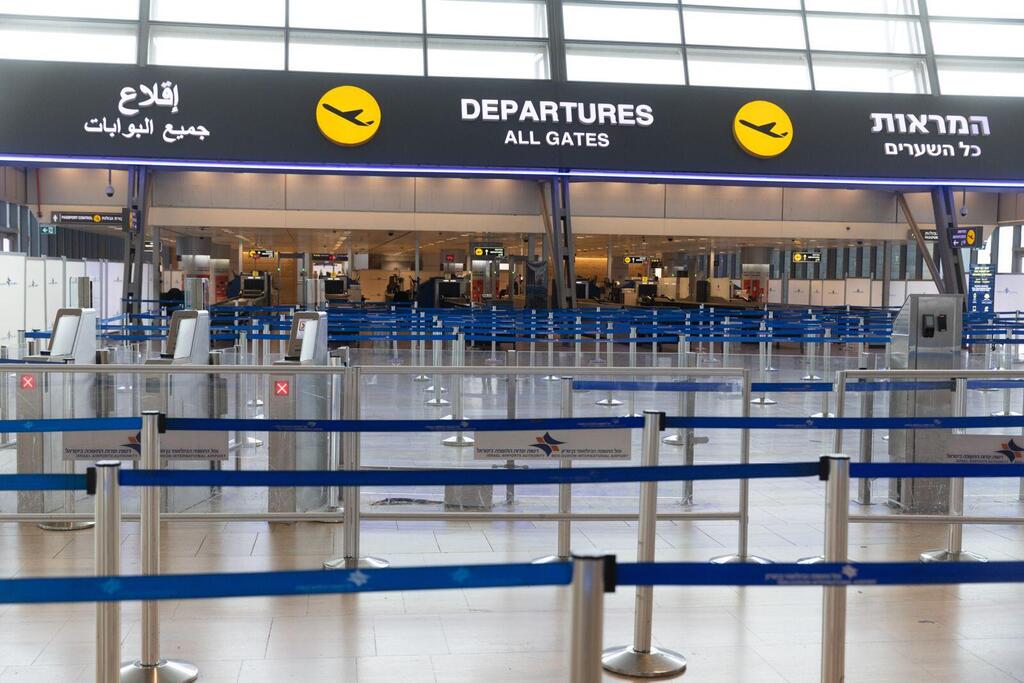
Ben Gurion airport during war
(Photo: Israel Airports Authority)
Prices: A return to near-monopoly conditions?
The pricing outlook is equally troubling. “An overpricing scenario could materialize again,” Freund-Feinstein warned, noting similarities to market conditions after October 7. Reduced competition due to the absence of foreign carriers, along with rising fuel costs, is expected to push fares higher.
In February 2026, Israel’s Competition Authority announced plans to fine El Al 121 million shekels ($63 million) for pricing policies following October 7, when its market share reached near-monopoly levels. While the fine could have a moderating effect, Freund-Feinstein said it remains too early to predict actual pricing behavior.
Gulf carriers likely to rebound, eventually
Airlines from Gulf states such as Emirates, Etihad Airways and Qatar Airways are expected to recover relatively quickly once the situation stabilizes, thanks to their strategic geographic location, allowing a single connection to reach roughly two-thirds of the world’s population, and strong government backing. “Once the war ends and security conditions stabilize over time, these airlines are likely to return to their previous scale of operations relatively quickly,” he said.
What it means for travelers
Yossi Fattal, CEO of the Israel Incoming Tour Operators Association, warned that the lack of inbound tourism will directly impact ticket prices. “Without incoming tourism, flights carrying Israelis abroad effectively return as empty ‘rescue flights’ back to Israel,” he said. “When traffic is not two-way, both outgoing and incoming, prices will inevitably rise, and Israelis will pay much more.”
He noted that in normal years, inbound tourism accounts for about 40% of overnight stays, with tourists typically spending more than locals. Tourists also tend to arrive during off-peak periods for domestic tourism, which are peak times for inbound tourism, helping balance pricing. "Without them, average prices for Israelis will rise dramatically."
Fattal also highlighted a deeper structural issue. “Even before demand and tourism challenges, Israel has a long-standing market failure in developing tourism infrastructure and hotel capacity. Demand consistently exceeds supply, a dynamic that is likely to drive prices significantly higher for Israelis in the absence of inbound tourism,” he said.
 Yossi FattalCourtesy of Israel Incoming Tour Operators Association
Eilat is expected to remain expensive
(Photo: irisphoto1 / shutterstock)
Tali Noy, VP of strategy and marketing at Issta, sought to bring some clarity to the uncertainty. “The situation ahead of Passover does not necessarily reflect what we will see in the summer, but it does point to a limited supply.
She adds that demand remains strong despite uncertainty. “The Israeli public, especially families, feels a real need to get away after a difficult period. That demand isn’t disappearing,” she said.
Practically, she expects a surge in bookings after Passover, with fewer available options and rising prices. Her advice: “Book, but do it wisely. Check cancellation and change policies in advance, and consider ‘cancel for any reason’ insurance to allow peace of mind in an unstable period.”