

A few days after flash floods swept the Judean Desert, veteran hiker Shoshi Iluz from northern Israel set out on a demanding route she calls “not known, not marked and definitely not for everyone.” The path leads to a series of surprising water holes in the middle of the desert, and she returned with stories of risk, beauty and renewal.
The channel she explored is an unnamed side ravine feeding into Nahal Yizrah and the Zohar Pools. She simply calls it “No-Name Canyon.”
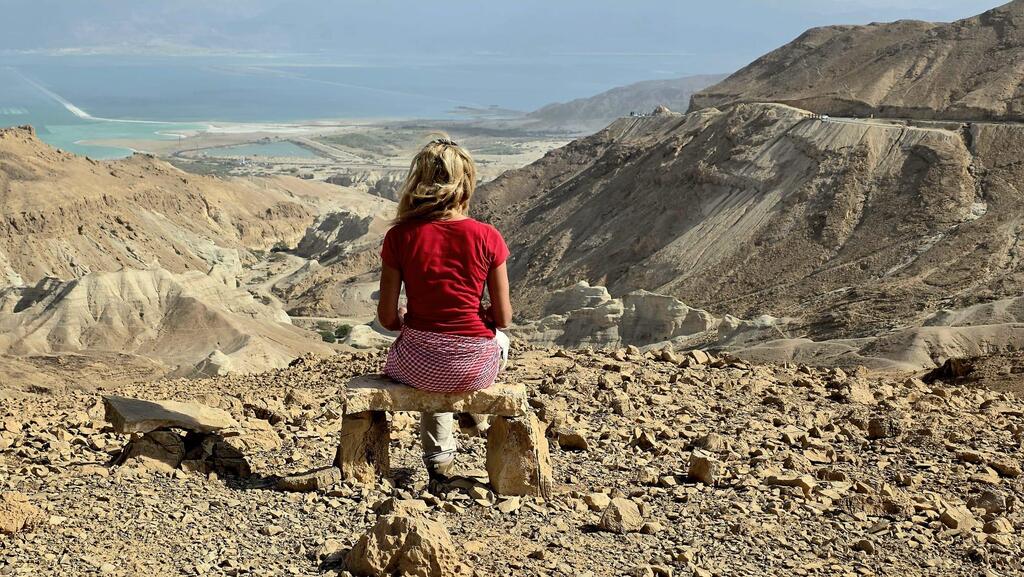
“This is an unmarked, unfamiliar route,” she told ynet. “It connects to Nahal Yizrah, and after a flood the pools fill up. It’s a challenging hike and you have to be careful.”
Iluz says she chose the unmarked route because she enjoys discovery.
“I like checking the terrain. The risk challenges me — what hides inside the desert, what I might find. The important thing is knowing how to read the landscape and how to get out. I take responsibility for myself, and when others join me, I tell them mistakes can happen along the way.”
As the desert opened up before her, she said the hike gained rhythm and wonder.
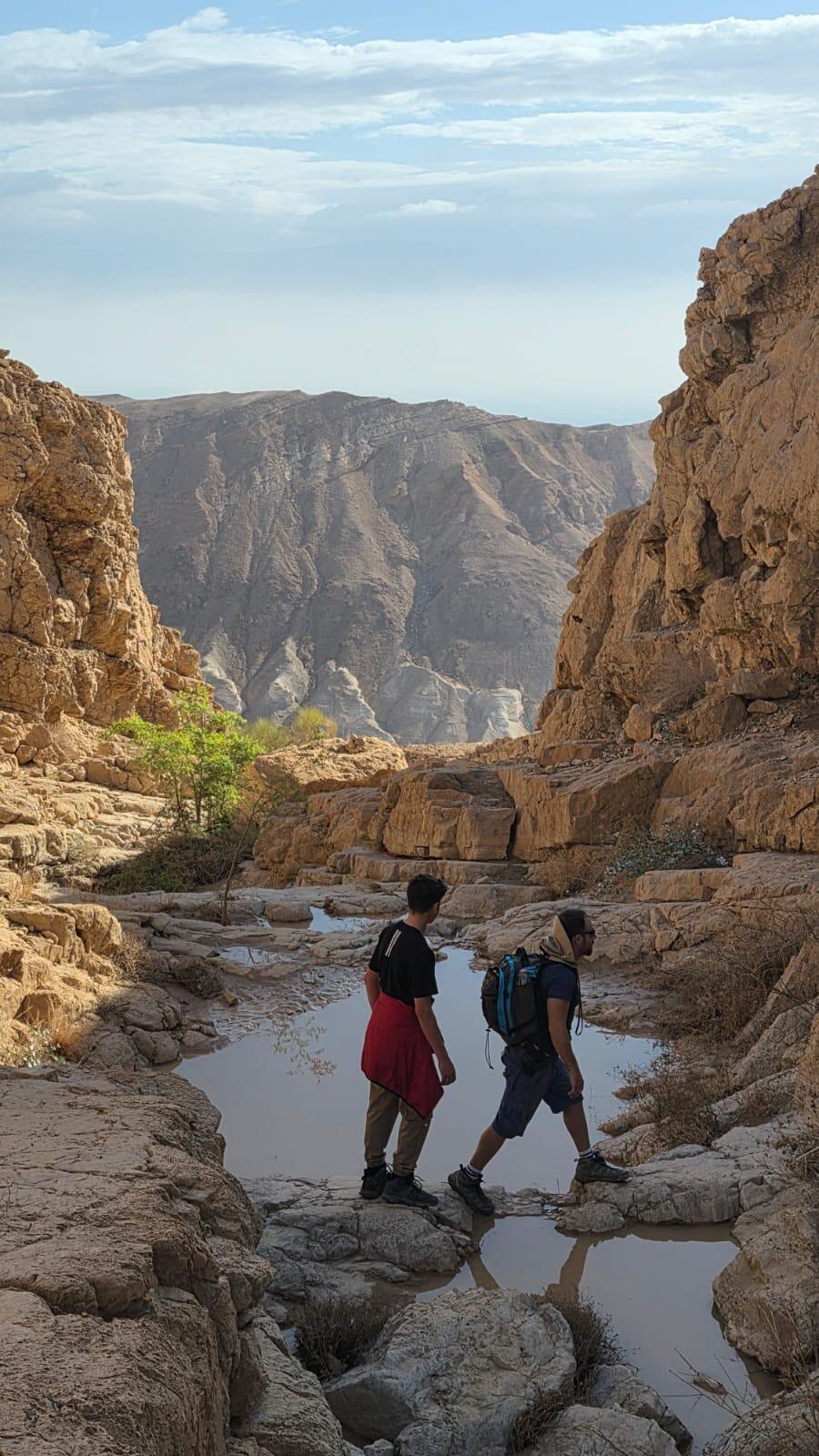
“On every descent you can stand on a rock ledge and look toward the Dead Sea. The scenery is striking. The pools appear in different shapes — some like an eye, some like a heart. Pools of water in the middle of the desert really move me.”
(Photo: Shoshi Iluz)
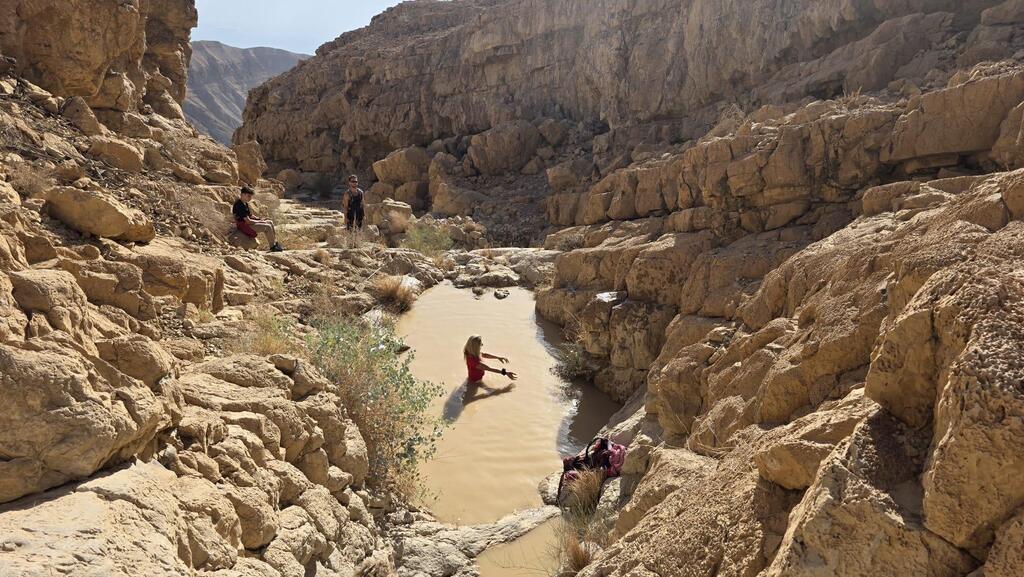
Cold water, clean pools — and the familiar brown tint of desert runoff
“The water was amazing,” she said. “I went in to check the depth and see if you can jump. Three pools were full, and the water was cold.”
Iluz says she handles the cold easily: “I go in at once. My body is used to it. It refreshes me.”
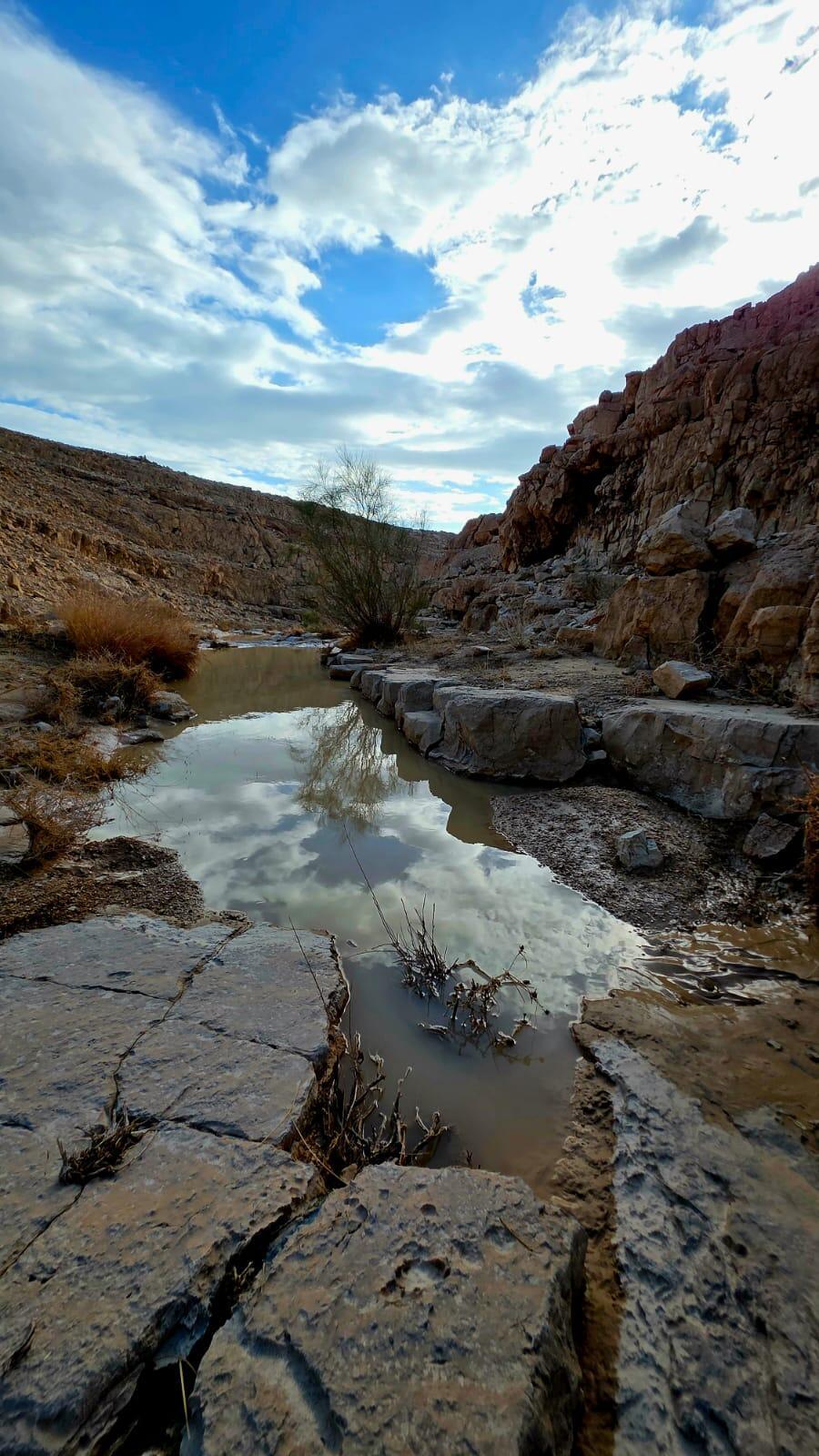
Some online commenters might look at photos and assume the brownish water is dirty. But Iluz says that’s a misconception.
(Photo: Shoshi Iluz)
“Not everything that looks brown in nature is dirty,” she said. “It was the first post-flood flush of the season. The water was clean, but a bit of silt remained at the bottom. After the second flood, even that will disappear.”
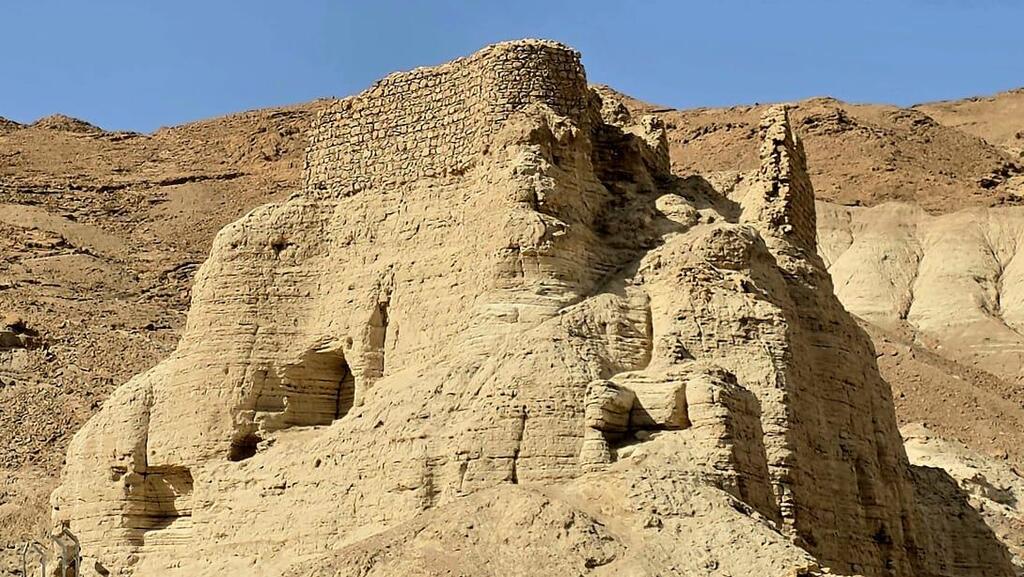
She describes the sight of water flowing through the desert as “magic.”
“As a child I always wondered what lies deep inside the desert. I grew up, dared and discovered the life hidden there.”
(Photo: Shoshi Iluz)
‘The desert is everything — healing for the mind and body’
“What does the desert give you?” I ask.
“The desert is everything — healing for the soul, the body, the thoughts. It contains you, and I return home recharged for the week.”
Iluz emphasizes that the route is only for experienced hikers.
“It’s not for families with children. The loop is about 12 kilometers, and I did it in seven hours with breaks. You can also turn it into a linear hike using two cars and avoid the tough climb back. The views from the top make up for the hardship — the entire desert and the Dead Sea. It’s magical.”
(Photo: Shoshi Iluz)
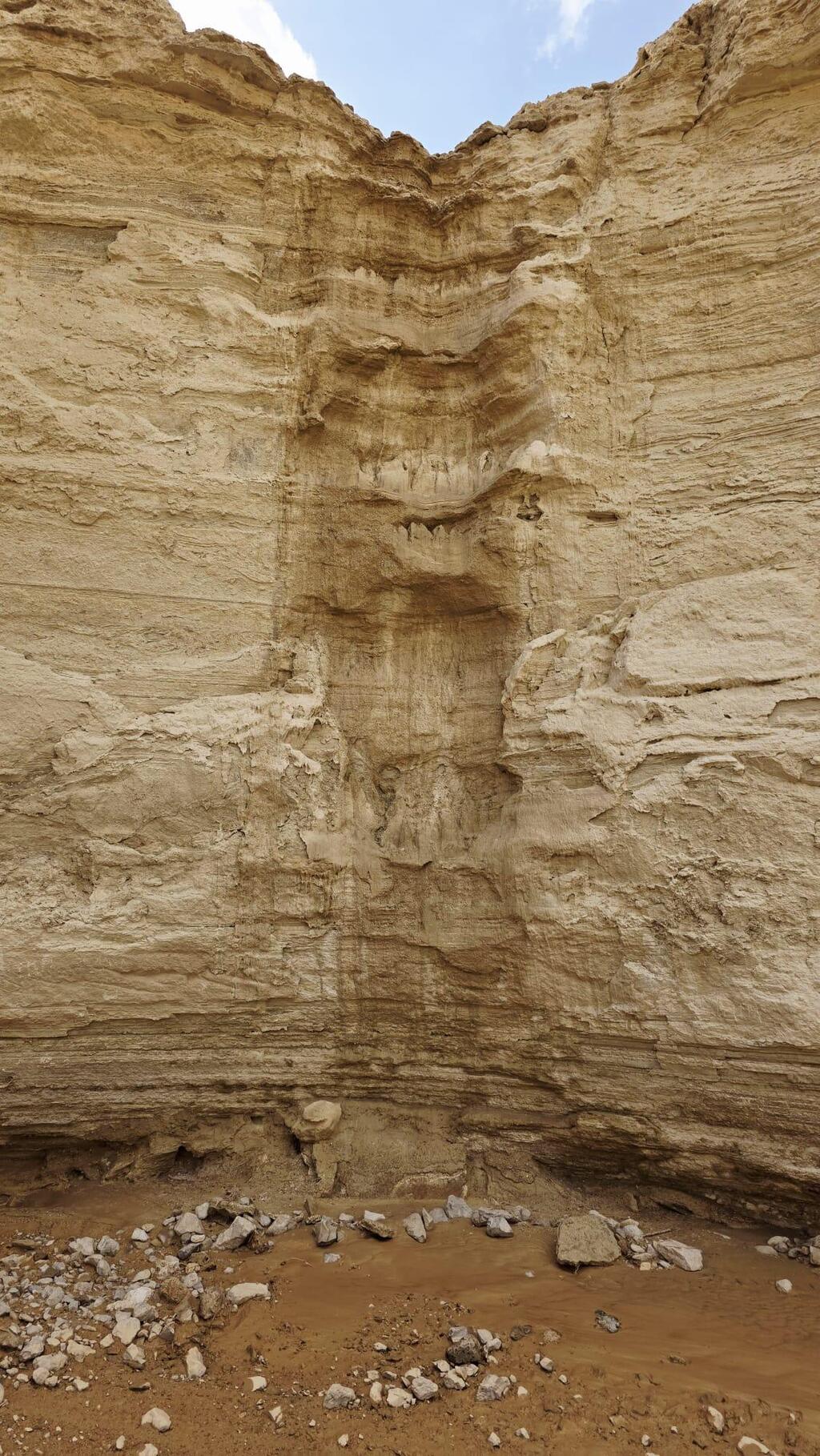
Along the path is a rock formation known as “Elephant Foot Cave,” named for the large rock above it shaped like an elephant’s leg.
“But the cave ceiling collapsed,” she warned. “I don’t recommend going inside. It’s dangerous.”
Navigation, safety and how to reach the trailhead
Iluz has heard reports of break-ins at parking lots in the area but said she hasn’t experienced any herself. She recommends bringing 3 liters of water per person, sturdy hiking shoes, sandals for wading, a hat and a towel.
To reach the route, she says, drive from the city of Arad down Highway 31 toward the Dead Sea and turn left onto a dirt road toward the Tzuk Tamarur parking area. “The turn is confusing, so check the map. If you reach Metzudat Zohar, you missed it and must turn back safely. You can also enter ‘Tzuk Tamarur parking’ into Waze.”
(Photo: Shoshi Iluz)
From there, the blue-marked trail leads to the Ezrach parking area, less than a kilometer away. A red trail — part of the Israel Bike Trail — continues another three kilometers downhill.
Then the real challenge begins: entering a wild, unmapped ravine with no markings.
“After about three kilometers you see the pools and drop into the ravine. You must be extremely careful. Anyone unfamiliar with the area will struggle to find the turn. It’s a less-traveled, unmarked channel, and you must use caution. Even though the channel eventually drops into Nahal Zohar, people who can’t read a map can get lost.”
Farther down, the ravine meets Nahal Zohar and the beautiful Zohar Pools, a stretch of about 5.5 kilometers with multiple flood-filled water holes along the way.
Safety warning
Swimming in desert pools is unsupervised and at visitors’ own risk. Do not enter canyons during rain or when rain is forecast; flash floods in the Judean Desert are extremely dangerous