

Japanese pancakes as tall as clouds, trains arriving with second-by-second precision and an entire country that, at least according to Instagram, seems to live 20 years in the future. When travel blogger Orit Yalon-Shoshan, 38, her husband and their 4-and-a-half-year-old son Roi left Israel to fulfill a long-held dream of an extended trip around the world, there was one destination around which almost the entire journey was built: Japan.
For years, they had heard again and again that it was the most amazing country in the world, the kind of place every traveler returns from in love. But between the endless lines, the crowds, the disappointing hotels and the very real gap between the videos online and the streets of Tokyo and Kyoto, the travel blogger found herself asking a question that has almost become taboo among Israeli travelers: Could it be that Japan has been slightly overhyped?
Gallery
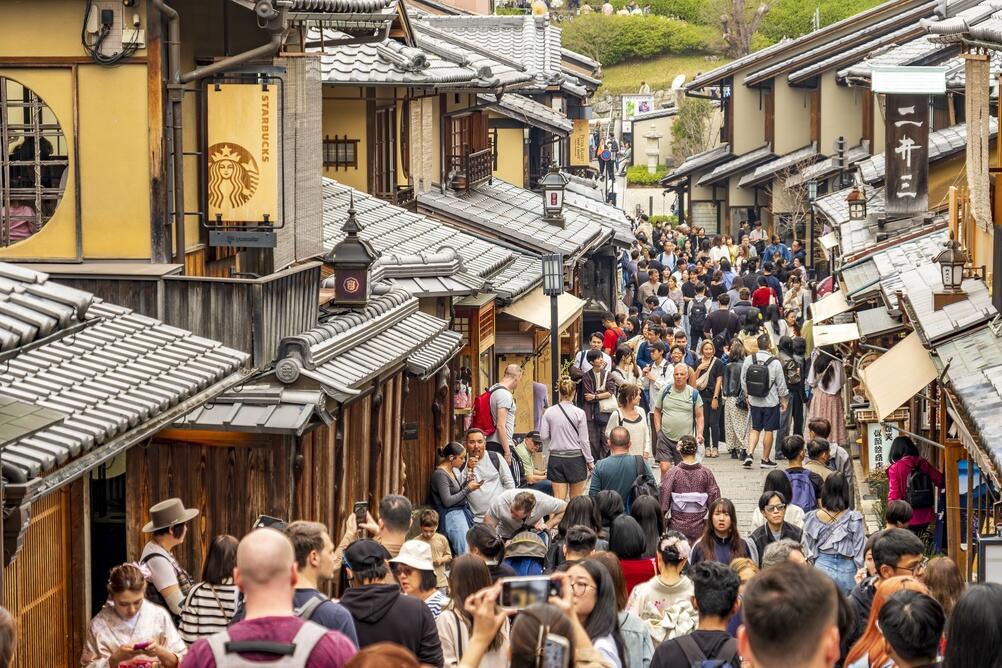
Kyoto’s Sannenzaka shopping street, lined with traditional machiya houses, is packed with visitors
(Photo: Hanneke Wetzer / shutterstock)
“Our entire trip was built around Japan,” Yalon says in an interview with ynet. “Everyone I told we were going there said to me, ‘It’s the most amazing place we’ve ever been,’ and on social media you constantly see how perfect Japan is.”
But when she finally arrived in the country she had dreamed of visiting for years, she discovered that the gap between TikTok and reality was much wider than she had expected.
“I didn’t come to say that Japan is a bad place and that people shouldn’t go there,” she stresses. “But they made a little too much of it. I’ve been to many other places in the world that I liked more than Japan.”
Yalon’s big trip with her family was born after a life-shaking event. “A year ago, I had cancer,” she says openly. “Today I’m healthy, thank God, after treatments. That period actually made us understand that we wanted to take a break from life and just set out on the road.”
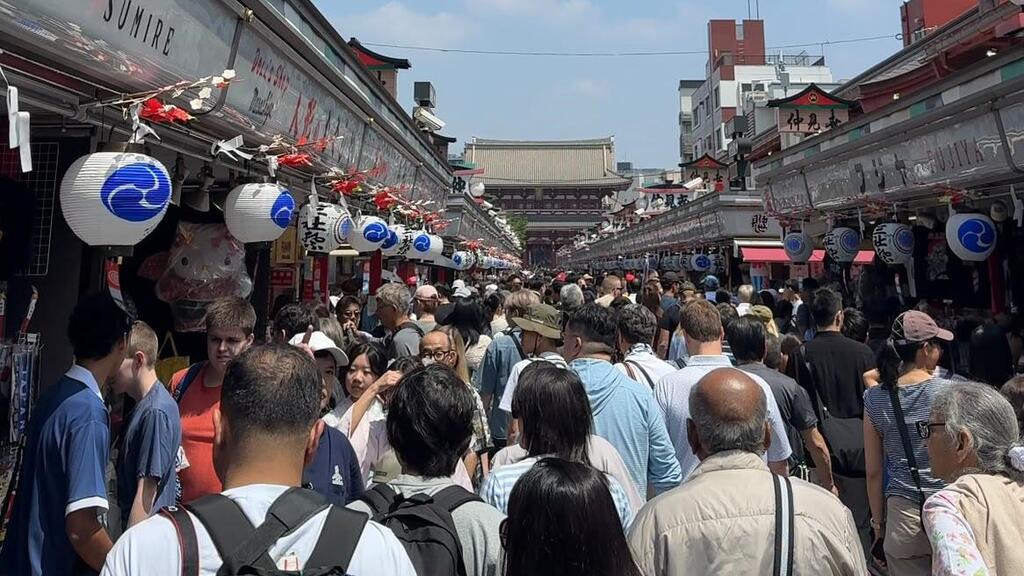
Tokyo. Crowds on the street leading to Senso-ji Temple
(Photo: Orit Yalon)
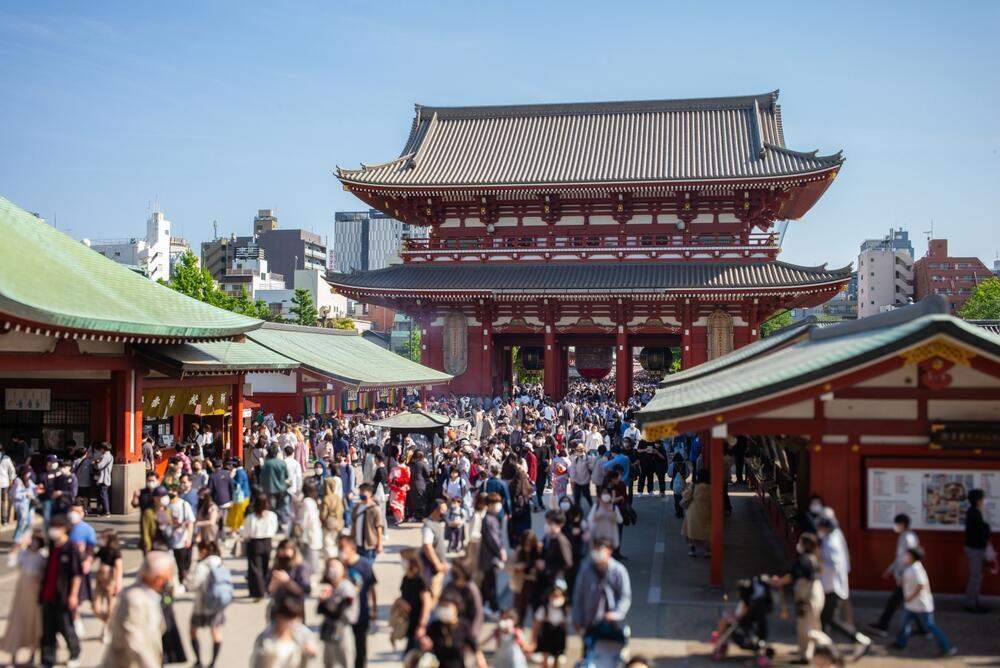
(Photo: RepoTokyo / shutterstock)
“I think I arrived with an impossible level of expectations because of all the hype around Japan,” she says. According to her, social media presents a very partial version of reality.
“People film a 20-second video from Tokyo, but they don’t show that it took them an hour to get there and another hour to stand in line.”
One of the biggest surprises for her was the amount of time wasted in the Land of the Rising Sun on completely ordinary daily activities.
“There is a line for everything. In Tokyo, it takes a very long time to get from place to place. The public transportation really is excellent, but you can walk 20 minutes just inside the train station.” According to her, a large part of the day simply disappears. “I felt like every small thing turned into a project. You want to get to a restaurant? There is a line. You want to buy something? There is a line. You want to get into an elevator? There is a line.”
The greatest difficulty, she says, was in an area that is discussed less often on social media. “I think a large part of my experience has to do with the fact that Japan is really not a place for children. I traveled with a 4-and-a-half-year-old child and a stroller, and that completely changed the experience.”
She says she barely encountered families with children. “We hardly saw children in Japan.” Even the famous Japanese politeness did not always appear in the way she had expected. “At the airport, they are actually very considerate of families and take you out of the line, but in other places that is less common. There were times when I waited with a stroller for an elevator, and people simply got in ahead of me.”
One of her biggest disappointments was the shopping experience in Tokyo.
“The prices are good and there are amazing things to buy, but the stores are extremely crowded. We went into a Uniqlo that had 12 floors. On paper, that sounds amazing, but in reality you wait for the elevator or climb narrow, crowded stairs, with masses of people around you. You’re on a floor of maybe 60 square meters, and there are another 300 people there with you. You’re not pushing people, but it’s hard to move, and with a stroller it’s even more noticeable. I really love shopping, but at some point I simply gave up.”
The food experience, which in recent years has become one of Japan’s biggest attractions, also turned out to be more complicated than expected. “I don’t want to plan three months in advance what time I’ll be hungry,” Yalon says, laughing ironically about the culinary reality she encountered in Japan. “Almost everywhere we arrived, there was a line. You’re hungry now, and you have to stand in line for an hour.”
The advice she received from other tourists did not always work either. “They told me, ‘Just wander around and find another restaurant,’ but in Tokyo that doesn’t really work. A lot of restaurants aren’t on the street at all, but inside buildings. If you don’t know they exist, you probably won’t find them.”
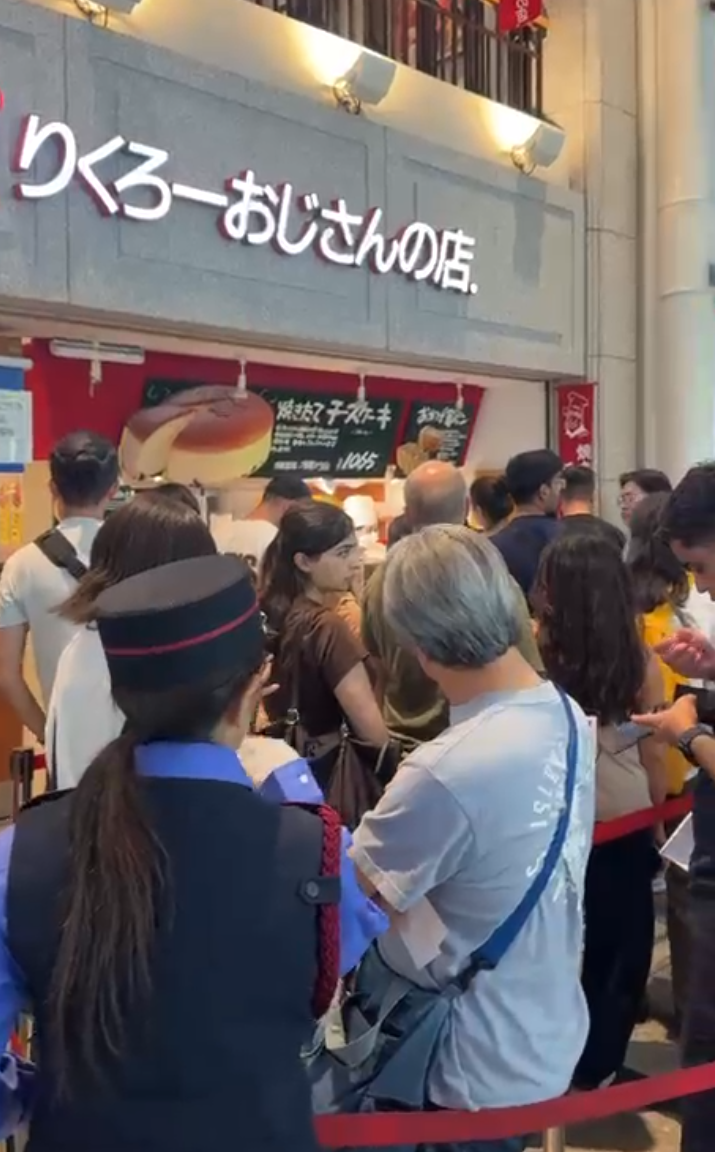
Line for cheesecake in Osaka
(Photo: Orit Yalon)
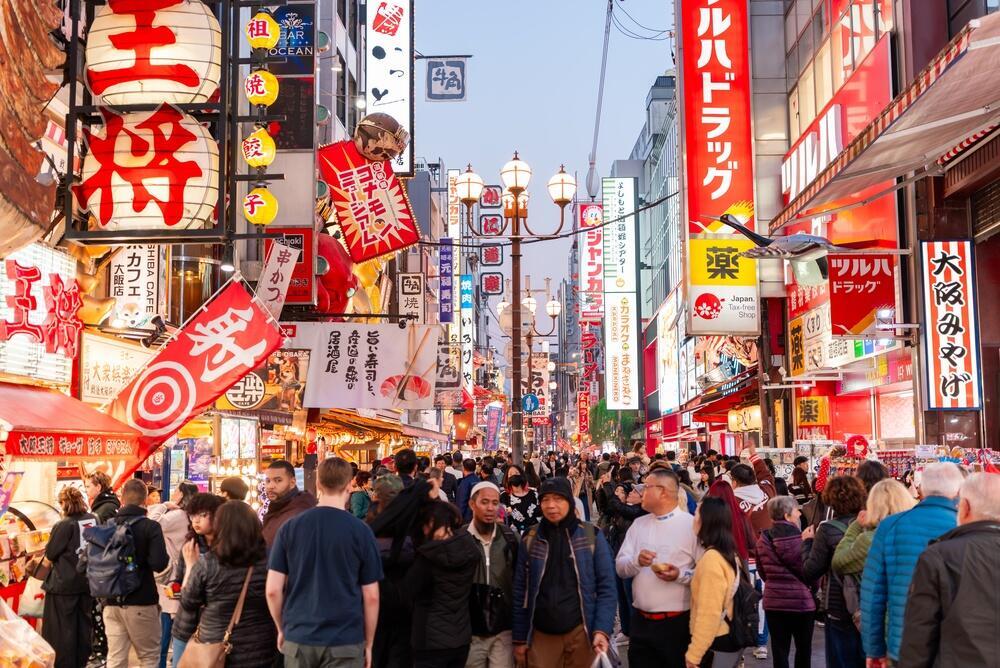
Tourists in Osaka’s Dotonbori district, one of the city’s main tourism and nightlife hubs
(Photo: kitzcorner / shutterstock)
The pancake that broke the dream became, for her, one of the biggest symbols of Japan’s hype. She had heard about the famous Japanese pancake from every direction. “I saw countless videos of huge, fluffy pancakes that look like clouds.” Then reality arrived.
“There was an hour-long line,” she laughs. “There is a limit to everything. I’m not going to wait an hour for a pancake, certainly not with a small child.” In the end, she did manage to taste the famous dish in one of the smaller cities. “The pancake was beautiful, and it was even tasty. But it wasn’t wow.” Then comes a loaded sentence that will probably irritate quite a few Japan fans. “I ate a Japanese pancake in Bangkok that was much tastier,” she laughs.
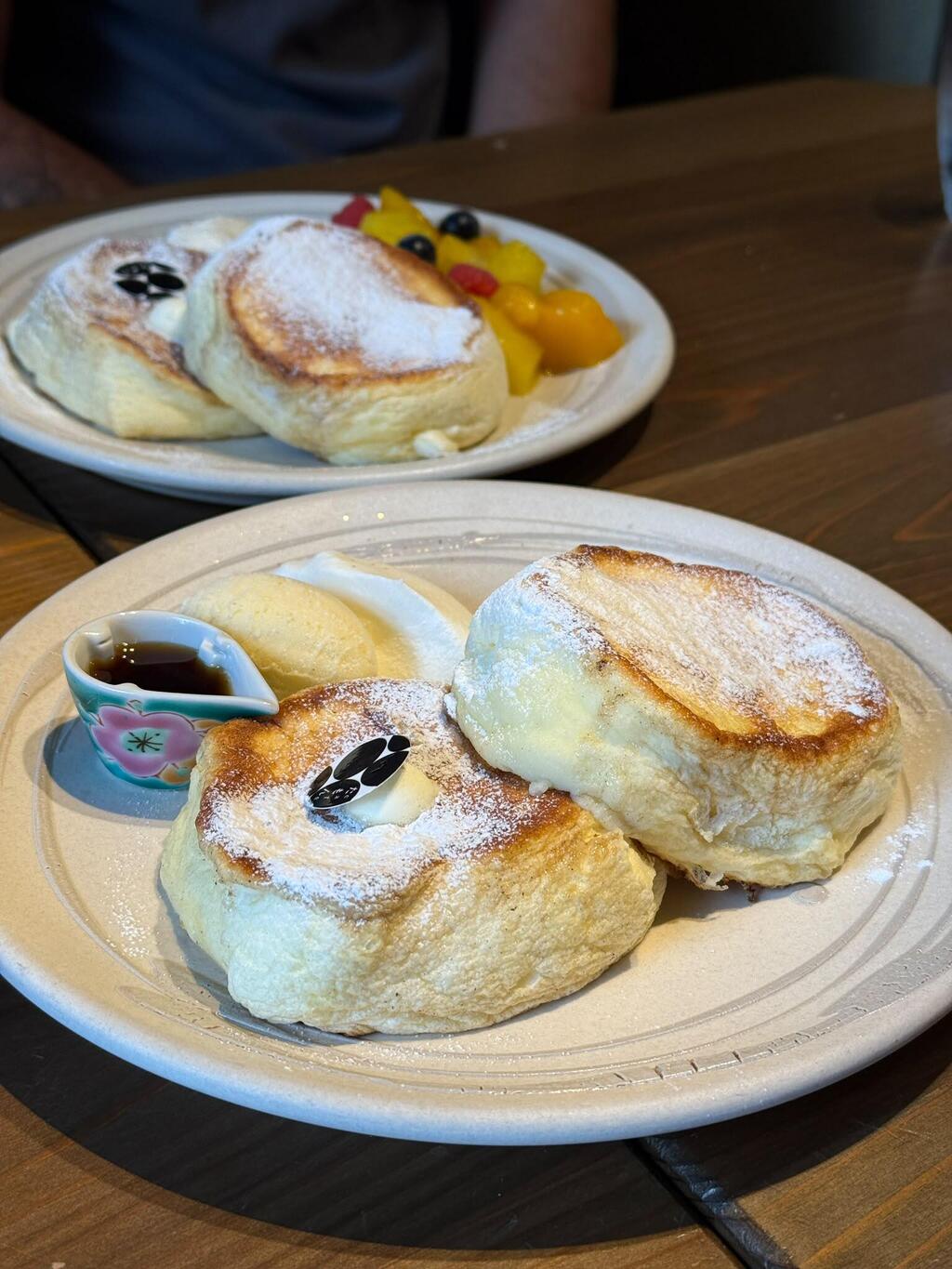
Japanese pancake
(Photo: Orit Yalon)
When she talks about her criticism, some people are quick to tell her that she simply visited the wrong places. But according to her, even outside the big cities, reality was not perfect.
“We were also in the Japanese Alps, and there really is less congestion there. You can find restaurants without lines. But then there is another problem: bizarre opening hours. We were in the Nasu area and found an Italian restaurant that was open only from 11 a.m. to 2 p.m. We found ourselves eating a lot at 7-Eleven. The food there is good, really good, but how much can you do that?”
“I expected to meet more local people, to understand more of Japanese culture, but that almost didn’t happen,” she says. According to her, the very technology and automation that attract many visitors became a barrier.
“You arrive at a restaurant and stand in front of a machine. You order through a screen, pay through a screen, get the food without speaking to almost anyone. Suddenly you understand that you can spend an entire evening without exchanging a word with a human being.”
“I felt that many people simply like being alone,” she says, surprised. “In most restaurants there are very few large tables and no windows. You sit inside a small, closed space, disconnected from the street and from what is happening outside. It was strange for me.”
Japanese hotels also proved deeply disappointing. “I wasn’t looking for luxury hotels,” Yalon laughs. “I wanted a central hotel, space for three people and the ability to open a suitcase without blocking the passage.” But the reality, she says, was very disappointing. “In Kyoto, we paid almost $300 a night. We got a long, narrow room with a double bed and a single bed, and that was it. There was no room to move. And I’m not talking about pampering or luxury, but basic space.”
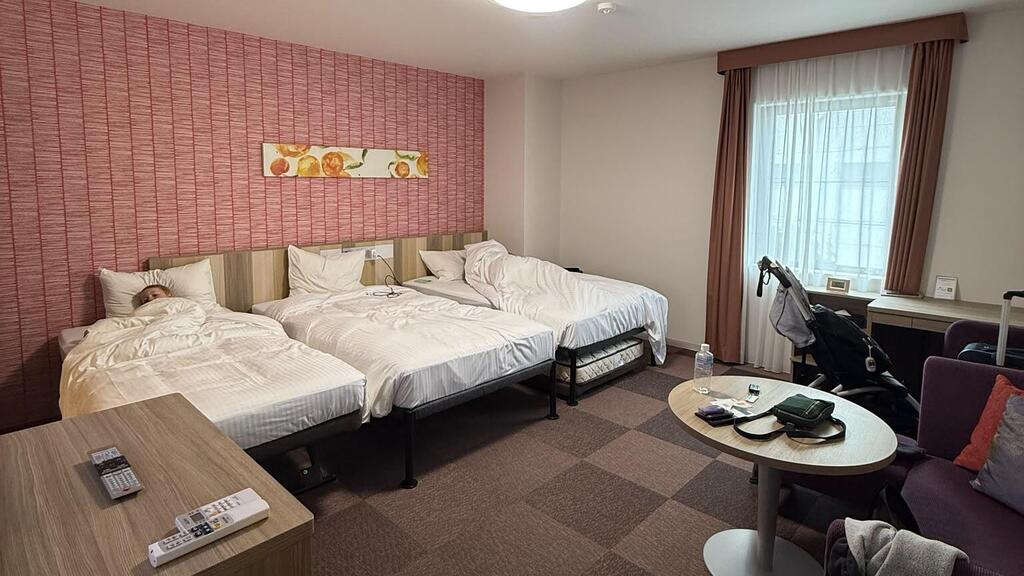
Expensive and unpleasant hotel
(Photo: Orit Yalon)
The bathrooms surprised her too. “The faucets are strangely low, the bathtubs are small, everything is very compact. I don’t know if this is the right word, but there were moments that felt a little like prison.”
One of Japan’s best-known attractions is the smart toilet, and here too she discovered that she was in the minority. “I know a lot of people are excited by it, but I just didn’t connect with it. Outside it’s hot and humid, and then you sit on a heated seat. That was the last thing I wanted, and it took me time to understand how to turn it off.”
Ironically, the least Japanese place in Japan became, for the traveling family, one of the highlights of the trip. “I’m addicted to Disney and I’ve been to almost every Disney park in the world,” she says. Here too, of course, the lines were an inseparable part of the experience.
“We arrived at 9 a.m., and only after an hour did we manage to enter the park. People arrive at 8 a.m. to wait for opening, and there are people who sit from 1 p.m. to secure a spot for the parade that starts only at 9 p.m.”
Perhaps the biggest surprise came after Yalon posted a critical video online. “The responses were very harsh,” she sighs. According to her, some users treated the criticism as if it were a personal attack. “I felt as if I had insulted someone from their family.”
Some called her a liar, while others mocked her. “At the same time, a lot of people wrote to me privately that they felt exactly the same.”
Even after the storm, she refuses to attack Israel’s travel blogger community. “I don’t think they are lying,” she says. “It may be that someone truly thinks it was worth waiting two hours for a certain restaurant, and therefore doesn’t feel any need to mention it.”
But for her, that information is no less important than the quality of the food itself. “I want to get the full picture. I want them to tell me that the restaurant was amazing, but also that they waited two hours in line.”
She knows that her next comment will also provoke plenty of reactions. “Maybe Japan is a country more suited to travelers in their 60s,” she concludes. “There is no need to stop being excited about Japan, only to remember that behind the perfect Instagram video there is sometimes an hour in line and a crowded train.”