

Thirty-three U.S. military refueling aircraft are expected to remain parked at Ben Gurion Airport despite a plan for 13 of them to leave by Tuesday evening, increasing the risk of significant delays to civilian flights.
Following a security assessment by the Transportation Ministry and other relevant authorities, officials decided not to cancel flights at this stage. The Israel Airports Authority is nevertheless preparing for substantial delays in both takeoffs and landings.
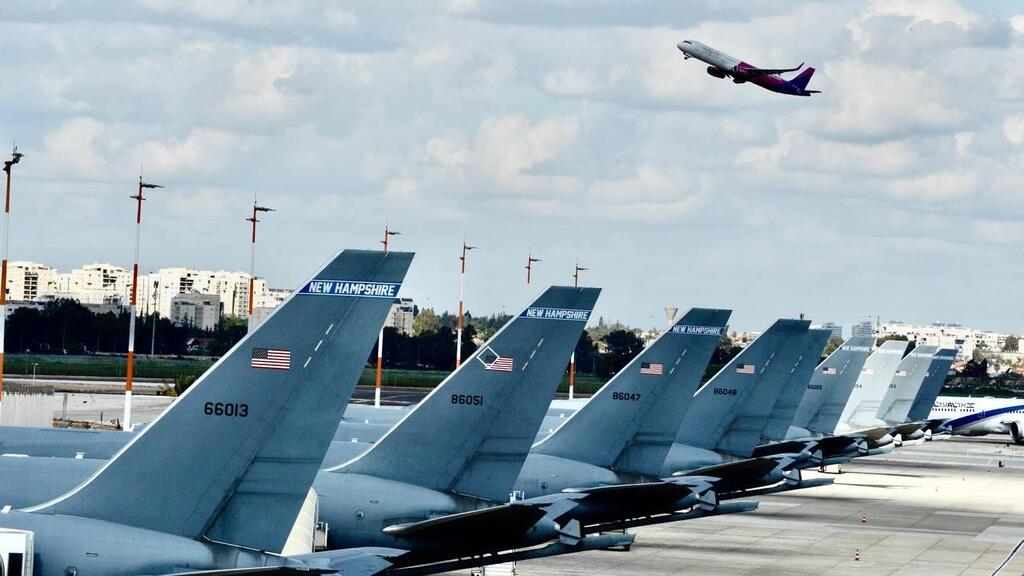
The American aircraft are occupying parking stands also used by civilian planes, placing additional pressure on the airport’s limited capacity.
The immediate concern is the possible arrival of another tanker aircraft. Officials said that if an additional plane required parking at Ben Gurion Airport, flight cancellations could become unavoidable.
Authorities are currently trying to prevent that scenario.
The tankers remain in Israel against the backdrop of continuing fighting between the United States and Iran. The U.S. military said Tuesday that it had completed a 10th consecutive night of strikes in Iran.
According to U.S. Central Command, the latest wave targeted military command centers, missile and drone launch sites, naval capabilities and air-defense systems.
The continuing American military campaign has increased the operational importance of the refueling fleet, which supports long-range missions and sustained air operations across the region.
The latest development comes one week after the dispute over the aircraft intensified.
On July 14, Israel stopped approving the arrival of additional U.S. refueling aircraft for parking at Ben Gurion Airport after the original evacuation plan was frozen because of the escalation with Iran.
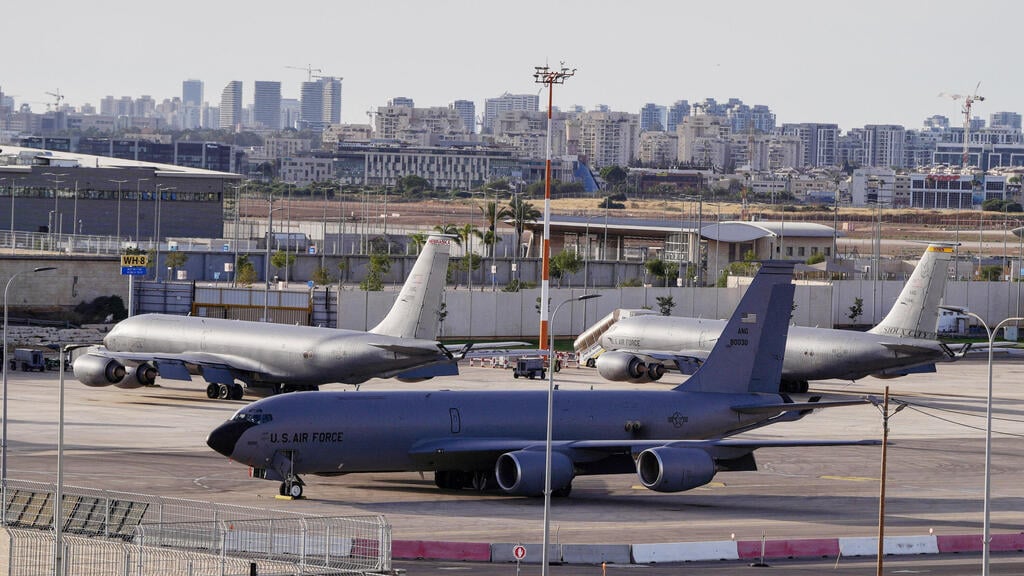
Ben Gurion Airport
(Photo: REUTERS/ Dedi Hayun)
The Israel Airports Authority warned at the time that if the situation continued, airlines could be forced to cancel tens of thousands of tickets at the beginning of August.
The Israeli decision drew frustration from senior officials at U.S. Central Command, who contacted the IDF and Israel’s defense establishment and argued that restrictions on parking additional tanker aircraft were interfering with American operational requirements.
“The American request is justified,” a senior Israeli military official told ynet at the time.
“The refueling aircraft are a strategic U.S. asset in the region and an integral part of the joint preparations against Iran.”
Israel and the United States had agreed that only 20 tanker aircraft would remain at Ben Gurion Airport.
Their number temporarily fell to 28, but four additional aircraft landed last week without prior coordination. The total later rose to 33.
Transportation Minister Miri Regev subsequently instructed authorities not to allow any additional tanker aircraft to land for parking beyond the agreed limit.
The problem began last month when dozens of American tankers occupied a substantial portion of Ben Gurion Airport’s parking capacity.
Airport officials warned that unless the aircraft were moved, airlines would have to reduce their flight schedules.
At one point, more than 200,000 airline tickets for July and August were considered at risk of cancellation.
On June 26, the Transportation Ministry announced that an agreement had been reached with the U.S. military to accelerate the gradual transfer of the aircraft from Ben Gurion Airport to Israeli Air Force bases around the country.
That agreement initially removed the threat to summer flight schedules.
The renewed escalation with Iran, however, led to the evacuation plan being suspended, once again raising the possibility of disruption to civilian aviation.