

Some vacations begin at an air-conditioned reception desk, with a lavish breakfast and room service on call. Others require guests to bring their own food, firewood and charcoal.
Hidden in the Negev mountains, just before Mitzpe Ramon, an old bus has been transformed into one of the more unusual places to stay in Israel. There is no air conditioning, no staff and no one waiting to greet you when you arrive. But there is a small plunge pool, a surprising green orchard in the middle of the arid landscape, complete silence, no cell reception and a rare feeling of being cut off from the world.
Gallery
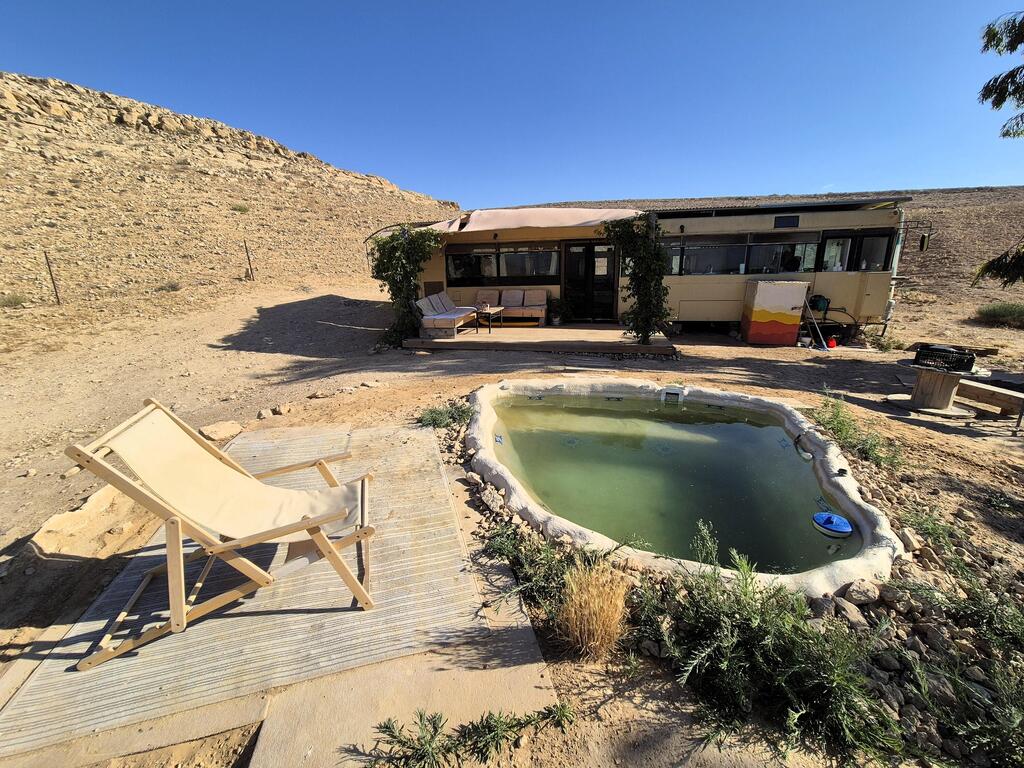
A converted bus at Kerem Shezaf in the Negev offers a secluded desert stay near Mitzpe Ramon
(Photo: Assaf Kamar)
The directions were precise. Driving along Route 40, shortly before Mitzpe Ramon, we turned right at Haruhot Junction, passed the iconic structure of the IDF’s Officers’ Training School, Bahad 1, then turned left onto a generic, dusty dirt road. Suddenly, in the middle of the desert, an almost miraculous patch of agriculture appeared: rows of budding grapevines and a magical olive grove full of birds, turning an abandoned wadi into an oasis.
The lone farm where the bus is hidden at the edge of its cultivated land is called Kerem Shezaf. After opening and closing several vehicle gates, meant to keep out wild animals that could damage the unripe grapes, the bus suddenly appeared in the middle of nowhere, full-sized and parked on the shaded slope of a barren hill at the edge of the vineyard.
Inside was a warm, carefully designed living space: a small, well-equipped kitchen, a comfortable double bed facing the horizon, a seating area, an excellent shower with hot water and proper toilets. Only a few details remained to remind guests that this was still a bus, among them the steering wheel, the driver’s seat and the original doors.
Outside, a furnished deck faced the desert view, alongside a fire pit and barbecue station. All around, there was only silence. This was not my first night in a lone bus converted into a place to sleep in the middle of nowhere, but here the design had been done with real taste. There was room to breathe, room to move and the perfect conditions for a pleasant night in nature.
Behind the project are two close friends from high school: Ariel Grossman, 31, an entrepreneur in the hotel industry in Spain, and Yotam Falik, 30, an architecture student. “Yotam and I are very good friends from the environmental education high school in Sde Boker,” Grossman told ynet. “We always loved building. We both worked with wood, iron and all kinds of construction, and our friendship and love for the desert developed alongside that hobby. This bus is the result of both of those things.”
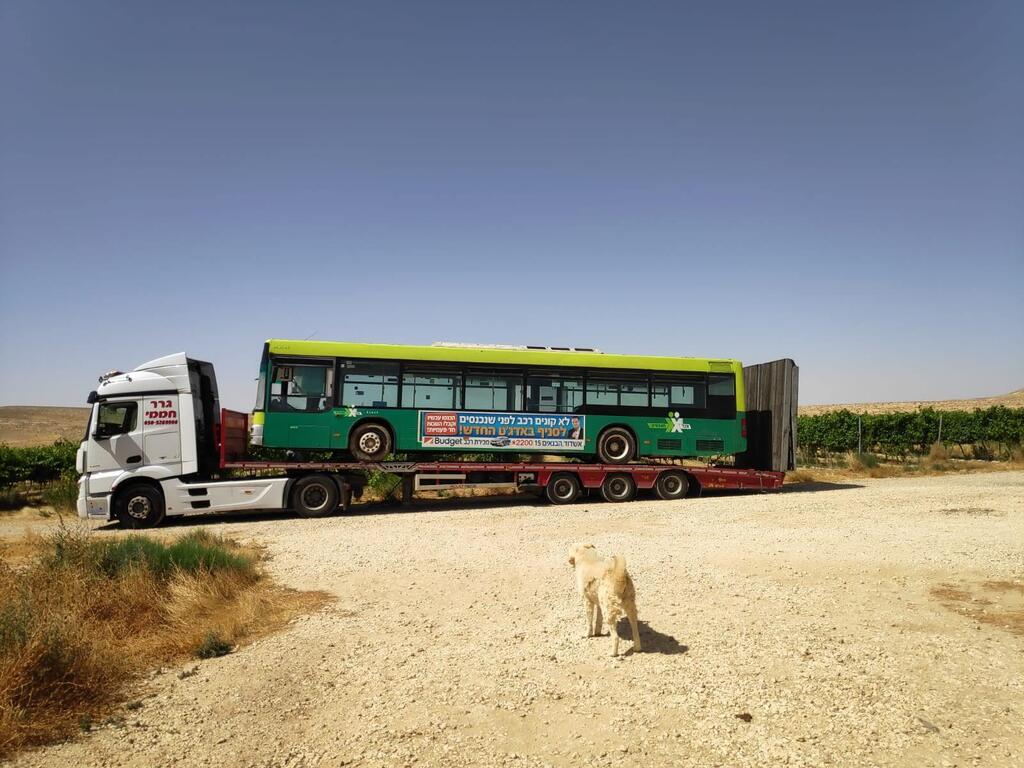
The bus before it was converted into a guesthouse
(Photo: Courtesy of Bus BaKerem)
(Photo: Assaf Kamar)
Their connection to the desert deepened while volunteering at Kerem Shezaf farm in its early days. “We became friends with Tsur Shezaf, who invited us to come volunteer with him when he was just setting up the farm,” Grossman said. “We were 18, we worked with him, learned from him and were very close to him. Only a few years later, during the COVID-19 pandemic, when we came back from the post-army trip, we had the idea of buying a bus together and doing something different with it.”
“At first, we just wanted to build a home for ourselves,” he said. “We weren’t thinking about a tourism business or trying to set up a vacation rental. We wanted to make a place we would actually want to live in, something ecological that blends into the landscape and doesn’t feel out of place. A place that truly feels like part of the desert.”
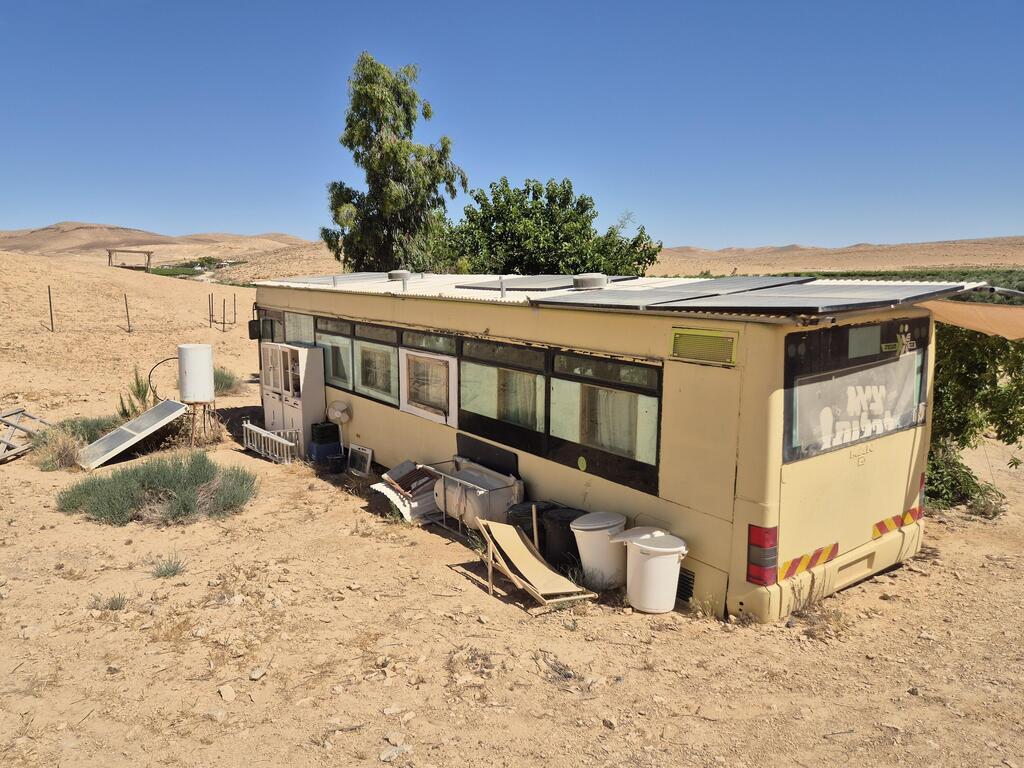
“A lot of thought went into building a smart structure that could handle the desert,” he said. “There is heavy insulation, ventilation, shade and careful planning. The bus is positioned so the sun mainly hits one side, which is especially well insulated. When you stand in the kitchen and look out at the view, the sun doesn’t hit you at all but stays behind you.”
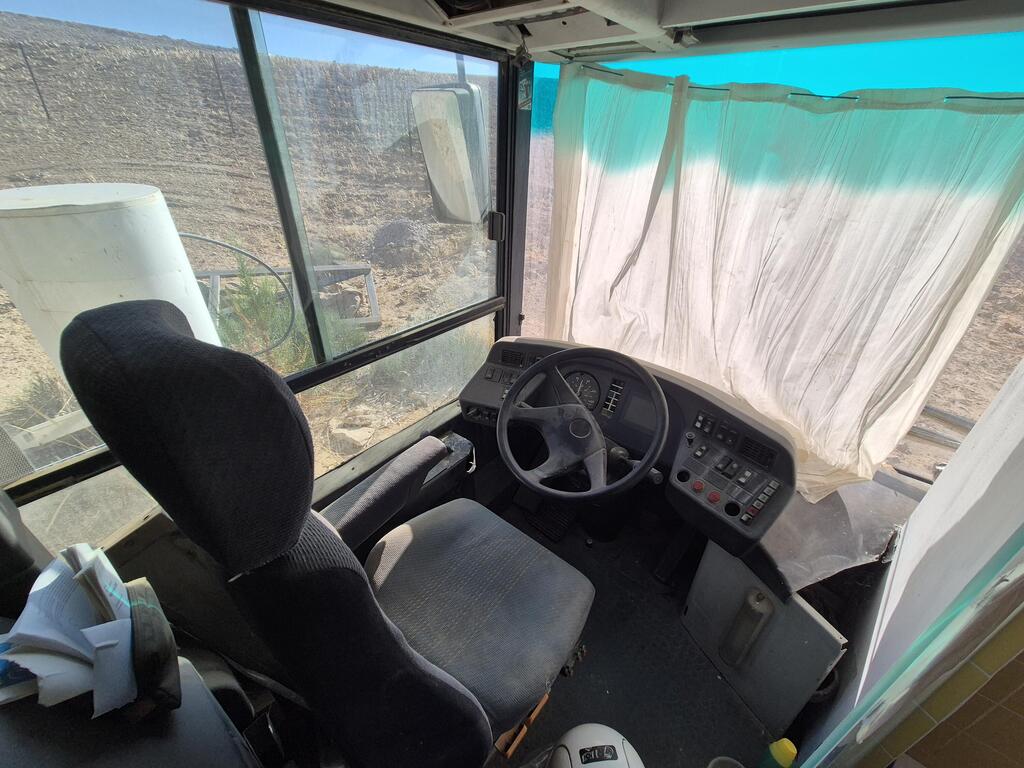
The steering wheel is still there, a reminder that this is a bus
(Photo: Assaf Kamar)
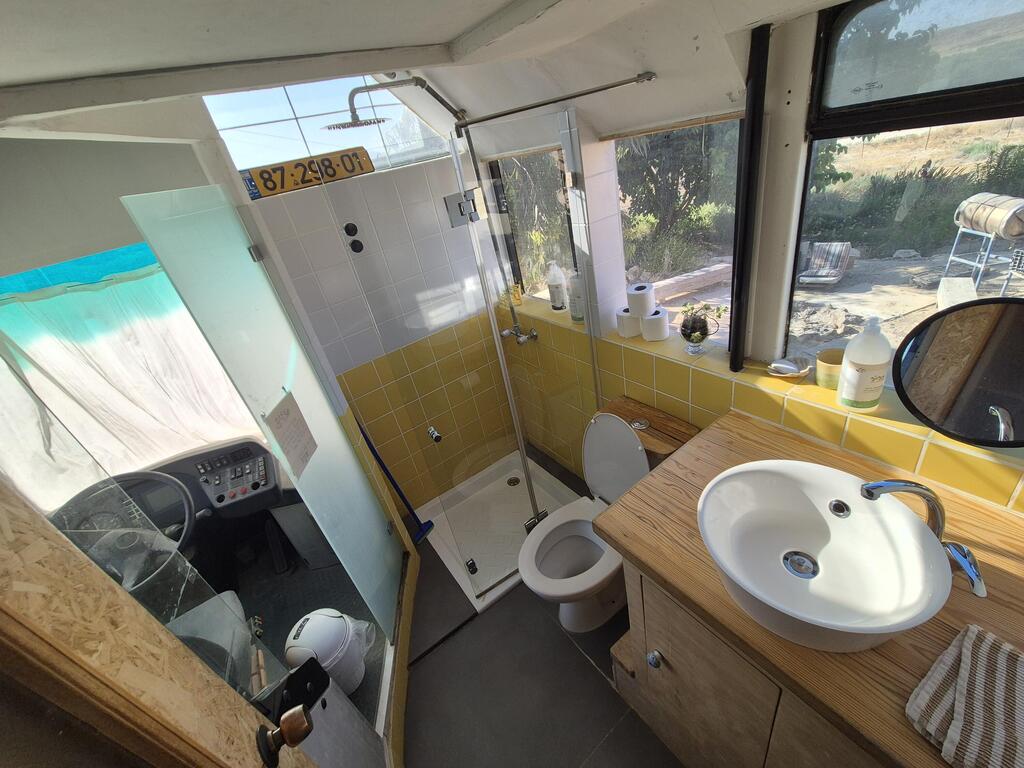
The toilet and shower
(Photo: Assaf Kamar)
The entire build took just three months. “We lived there while we worked and built everything ourselves,” he said. “No workers, no contractors. Friends and family came to help, but the planning and construction were all ours, from the electricity and plumbing to the carpentry and interior design.” Six years later, the project is still evolving. “The pool, for example, was added only two years ago, and the bathroom also underwent a major renovation,” he said.
The hospitality experience is also very different from a standard desert cabin. There is no room service, no indulgent breakfast made from local produce and no catering. “You can think of the bus like a home,” Grossman said. “When you come back to your own home, nobody is waiting for you with breakfast. We want people to feel at home. Part of the experience is going into the kitchen and cooking the things you love.”
There is a fire pit, but guests need to bring their own wood. There is a barbecue, but guests need to bring charcoal. There is a stocked kitchen with spices, tea, and coffee, but the raw ingredients are up to you. “A lot of the experience we offer is solitude,” Grossman said. “To be there completely alone. Nobody greets you, nobody walks around near you. People come to us to connect with themselves, with their partners, and to really experience being alone in the middle of the desert. You can walk around naked all day and nobody will peek at you,” he laughed.
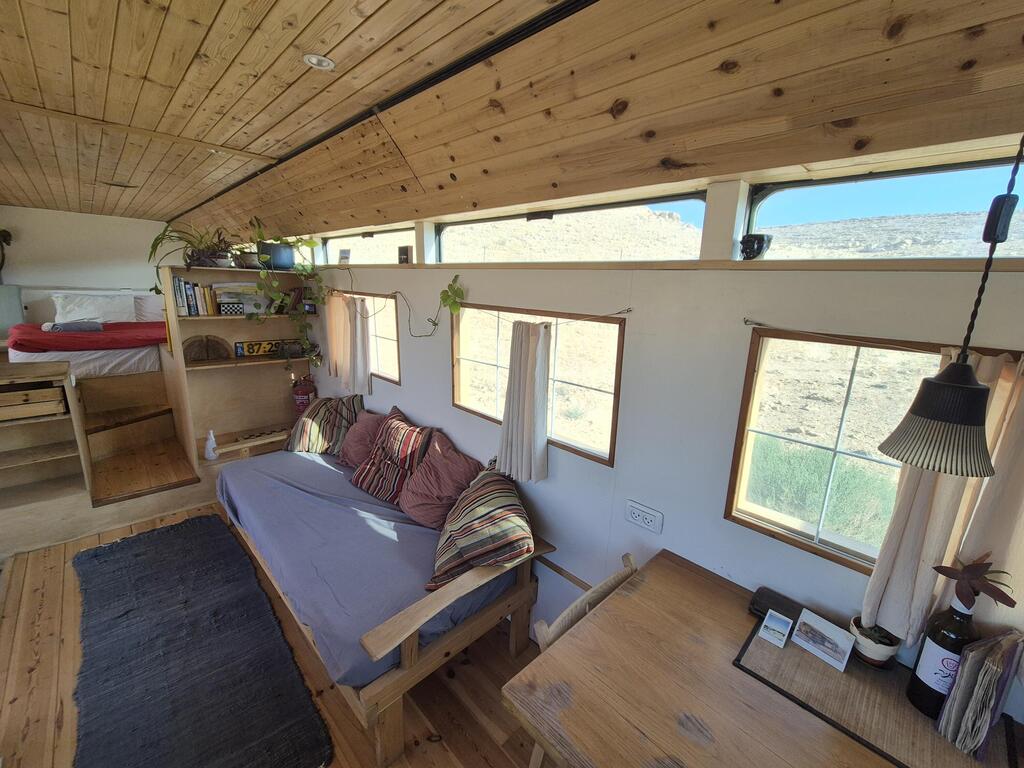
The small, cozy living room
(Photo: Assaf Kamar)
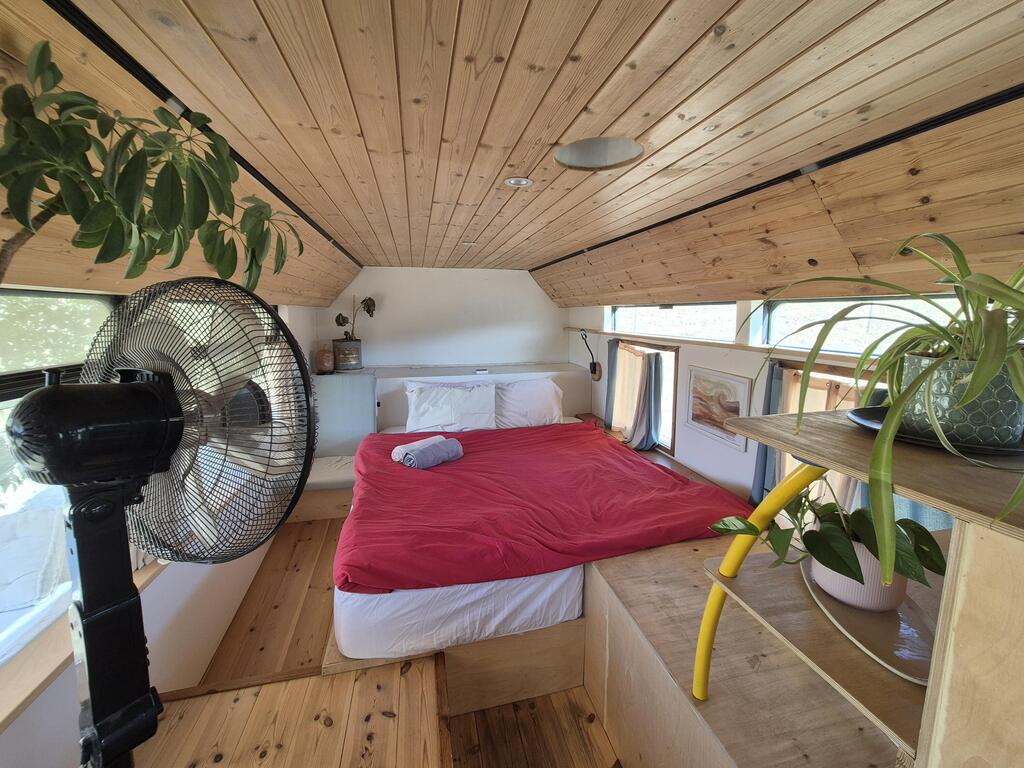
The bedroom
(Photo: Assaf Kamar)
One of the most unusual decisions, and perhaps the bravest one, was what they chose not to install. When asked why the comfortable bus has no air conditioning, Grossman said it was an ideological decision as much as a technical one.
“It’s important to understand that we’re not a typical vacation rental, and definitely not a hotel room,” he said. “The people who come here are nature people. On another weekend, they might be pitching a tent somewhere in the desert. We see this as upgraded glamping, not an air-conditioned cabin or a hotel.”
The goal, he said, is not to separate guests from the desert, but the opposite. “We deliberately didn’t install air conditioning,” he said. “We want people to go outside, feel the heat, feel the desert, get into the pool, and hike. If you come to the desert and spend the whole time in air conditioning, then you’ve missed a big part of the experience. Inside the bus, we are not cut off from nature. We are part of nature.”
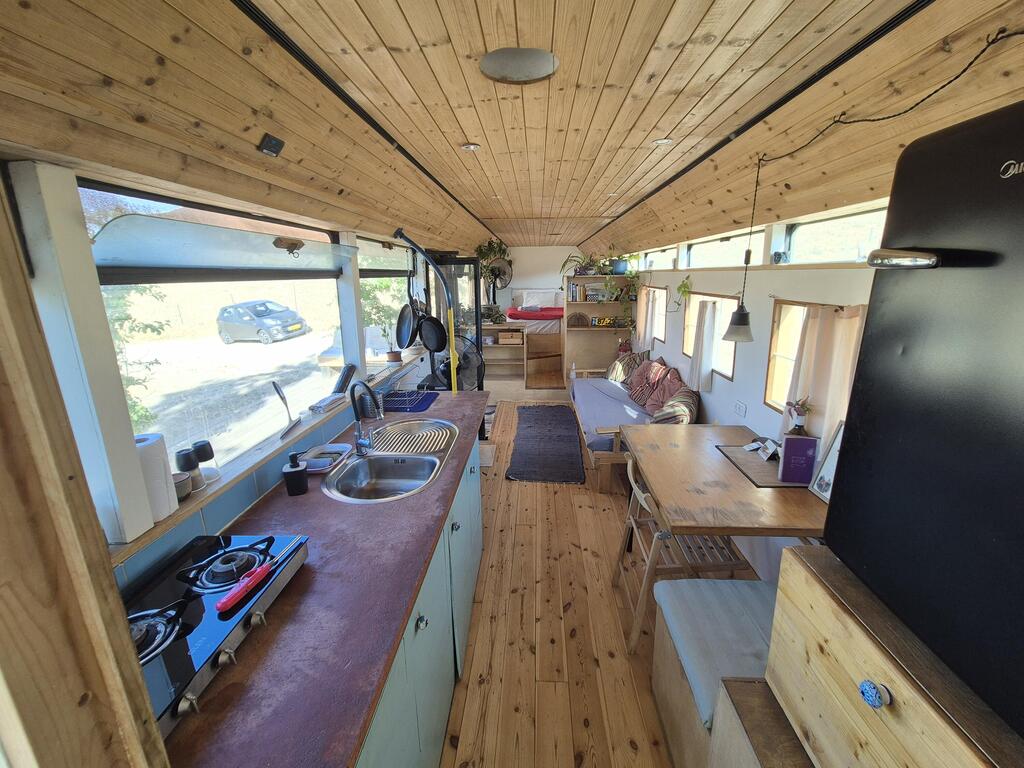
Carefully designed interior
(Photo: Assaf Kamar)
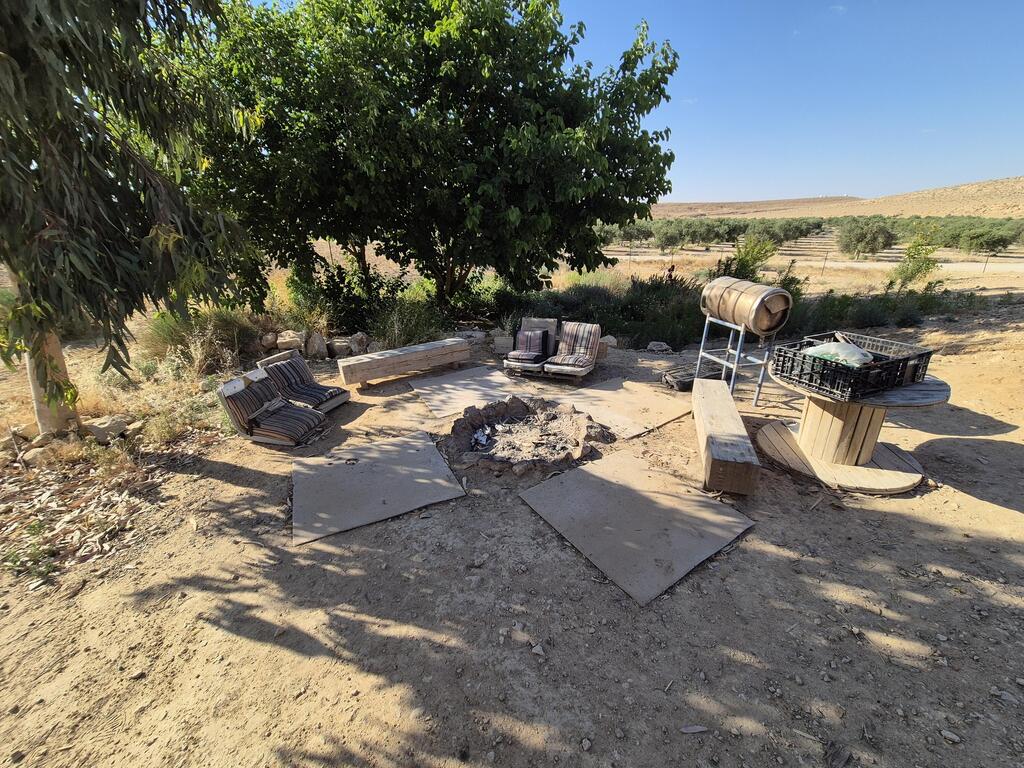
The fire pit
(Photo: Assaf Kamar)
That approach is felt almost everywhere, including in the visit from a chubby, adorable desert rodent that briefly appeared near the bus and stood on its hind legs like a kangaroo. “This is a common fat sand rat,” Grossman laughed. “Animals are roaming around the area. We don’t come and spray the desert. We don’t come to take it over. We came to be guests in the wadi. That’s how we see it.”
The infrastructure was planned according to the same worldview. “Our electricity is solar,” he said. “We are not connected to any infrastructure. The water from the shower and toilets irrigates the orchard, and there is ecological shampoo in the bus. It’s all part of the same idea of blending into the environment and not changing it.”
After sunset, the desert took on a different mood. The air turned colder, the flies vanished, the silence grew deeper and the darkness outside became almost complete. The fire pit cast a small circle of light, while inside the bus, a comfortable bed and hot shower were waiting.
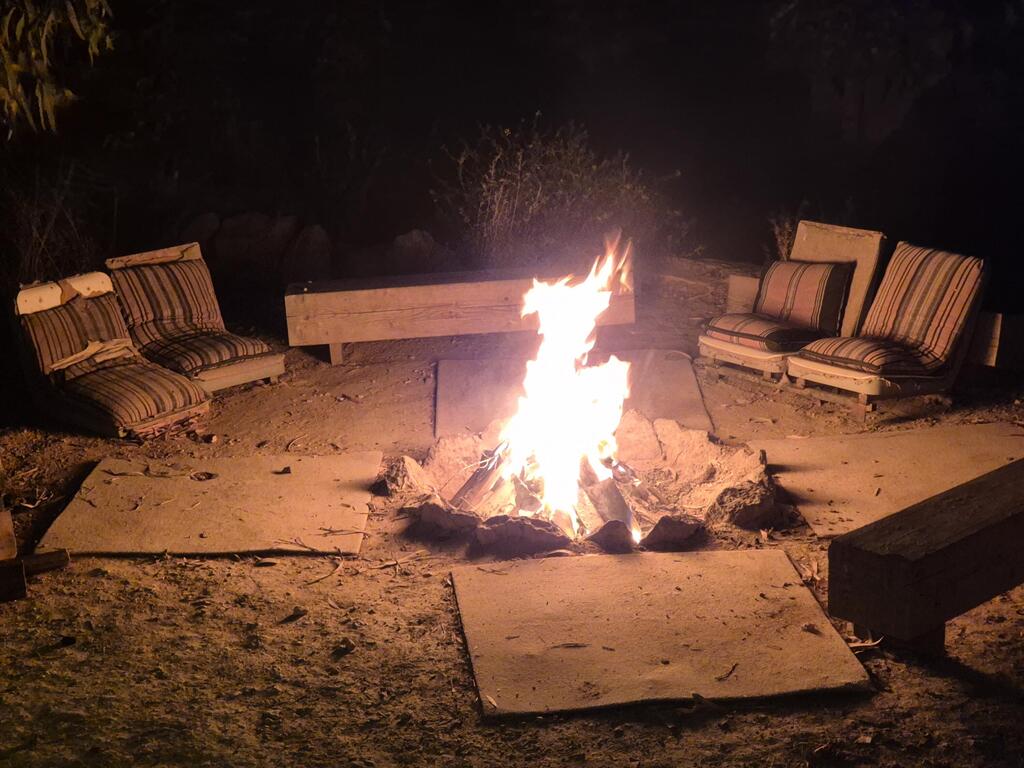
And this is what it looks like after night falls
(Photo: Assaf Kamar)
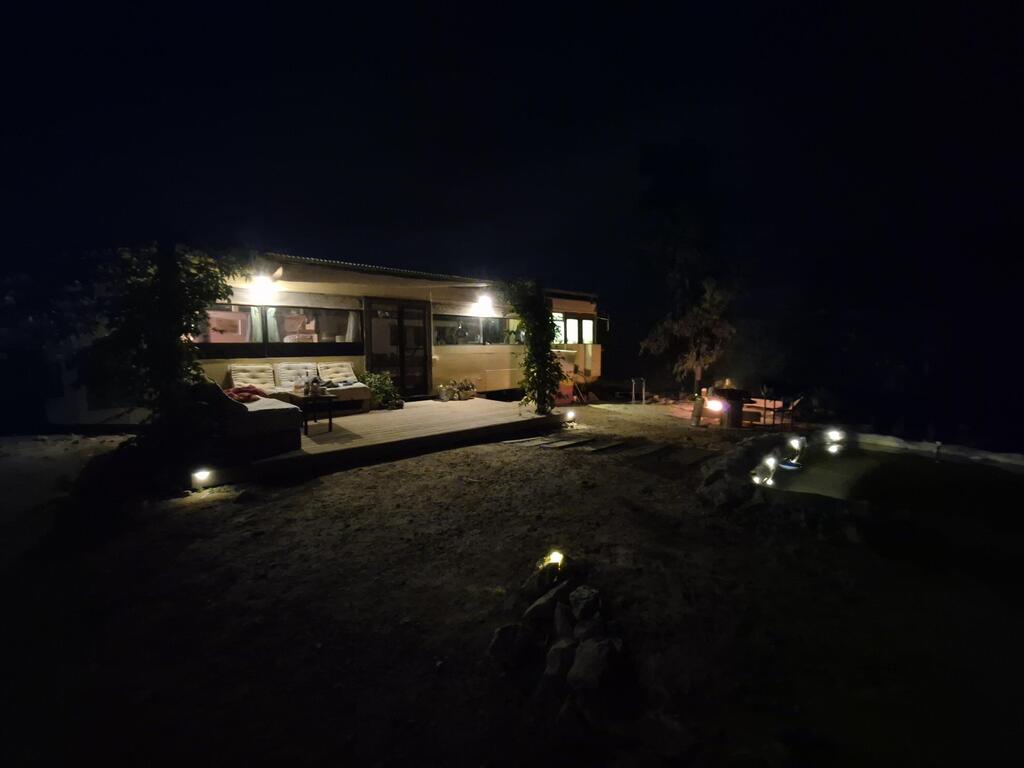
You can hear the silence
(Photo: Assaf Kamar)
But first came a curious wine tasting at Tsur Shezaf’s mysterious winery. After a 10-minute walk through the vines, I met Shizaf, who had just returned from a trip to Saudi Arabia. His wife, Dorit, had laid out local cheeses, and we tasted eight intriguing wines from the farm.
The next morning, the Negev mountains were bright again. The night had not been completely silent, but the wild sounds of animals outside were one of the most moving parts of the experience. Through the bus windows, the vineyard, birds and open desert came back into view.
The magic of the place does not come from exaggerated luxury in the middle of nowhere, but from the combination of simplicity, quiet and nature. A night inside a bus in the desert sounds strange at first, but after spending the night there, it feels entirely different.
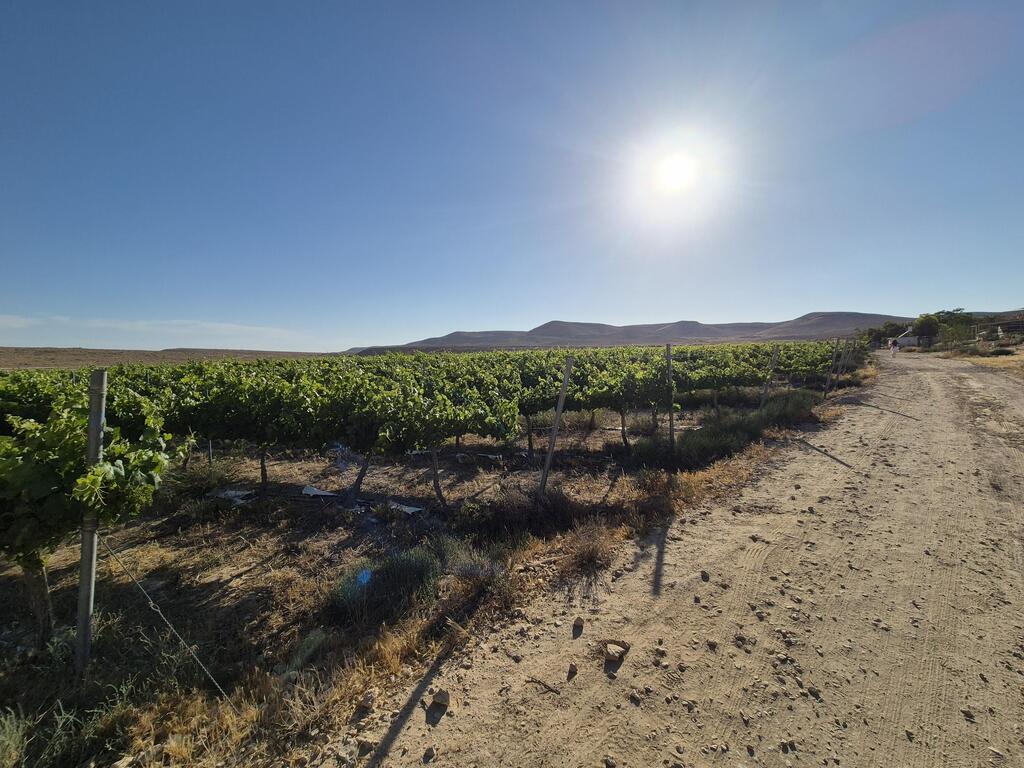
An oasis in the desert
(Photo: Assaf Kamar)
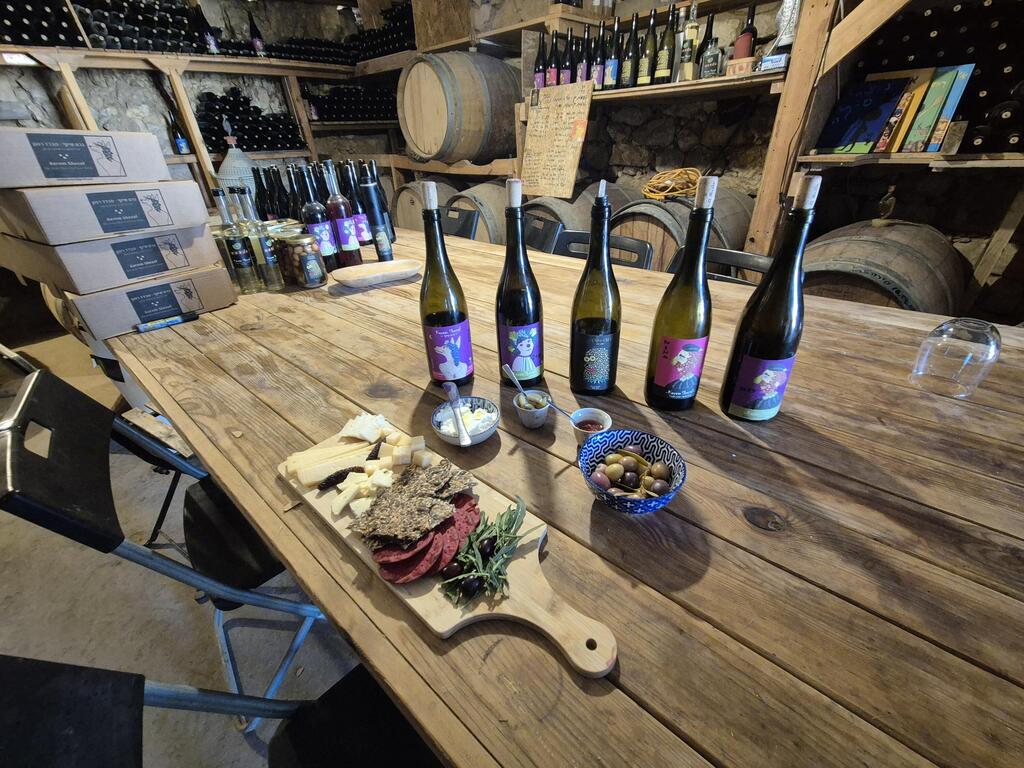
Wine tasting at Shezaf Vineyard
(Photo: Assaf Kamar)
Grossman admits the bus is not for everyone. “We always try to make that clear in advance,” he said. “Someone looking for a hotel or a classic countryside cabin may connect with it less. But someone looking for nature, quiet and solitude usually falls in love with the place.”
How much does it cost?
Prices vary according to season and day of the week. Grossman says midweek stays cost around 850 shekels per night, while weekends cost around 1,350 shekels per night. Discounts are available for guests booking more than one night, and reservations usually open two months in advance.
For anyone looking for a fashionable vacation with pampering room service, round-the-clock air conditioning and a rich culinary buffet, a lone bus in a remote vineyard in the Negev is probably not the right place.
But for anyone dreaming of waking at sunrise to a mirage-like view of green vines in the middle of the desert, hearing the birds, playing hide-and-seek with a common fat sand rat and forgetting for a few hours that the world is still spinning outside, “Bus BaKerem (bus in the vineyard) offers something that is becoming increasingly rare in Israel: quiet and peace.
First published: 15:45, 06.19.26