

While Boeing and Airbus continue refining the familiar tube-and-wing aircraft design, an American startup is betting that the future of commercial aviation will look radically different.
JetZero, which is developing a passenger aircraft built around a blended-wing body, has taken another step toward turning that vision into reality. The company signed a letter of interest with the U.S. Export-Import Bank to explore up to $3 billion in financing for its first American manufacturing plant, according to The Wall Street Journal.
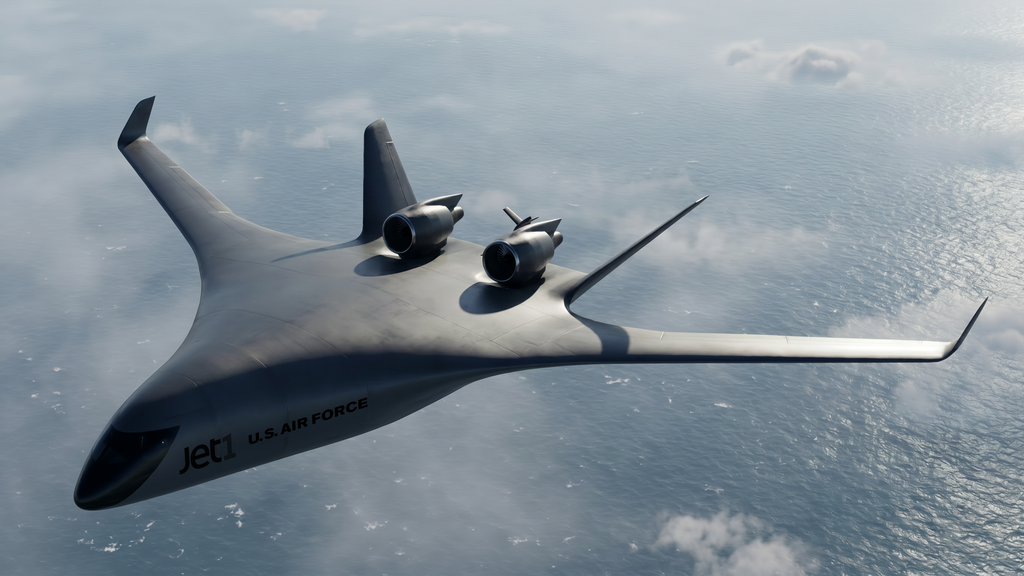
The move could help bring JetZero’s proposed Z4 aircraft closer to production. The company says the design could reduce fuel consumption by as much as 50% compared with conventional aircraft of a similar size.
The letter was signed under the bank’s Make More in America initiative, which is intended to encourage domestic manufacturing. It does not constitute final approval, and any financing would remain subject to further review, authorization and the construction of a U.S.-based factory.
JetZero hopes to begin manufacturing its first commercial aircraft in 2030.
A radically different shape
The Z4 differs from almost every passenger aircraft currently in service.
Instead of a cylindrical fuselage with wings attached to either side, the aircraft’s body and wings form a single continuous surface. The broad, flattened shape resembles a manta ray and is known as a blended-wing body.
JetZero says the aerodynamic structure reduces drag, allowing the aircraft to fly farther while consuming significantly less fuel.
The unconventional shape could also transform the passenger cabin. Because the aircraft’s body is much wider than that of a traditional jet, designers would have more space for broader aisles, flexible seating arrangements and larger windows.
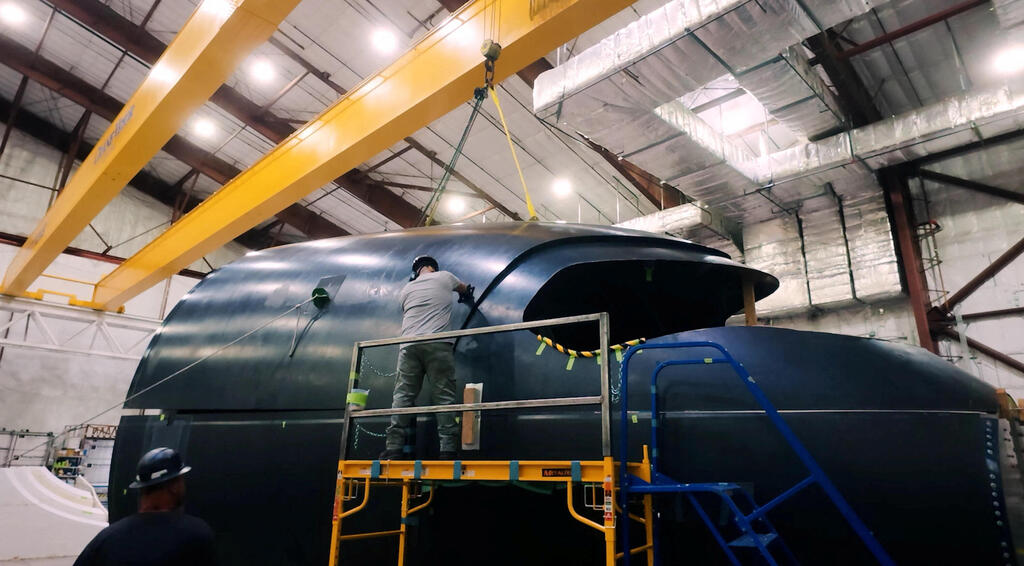
Workers assemble JetZero’s Jet1 demonstrator aircraft at the company’s facility in Mojave, California
(Photo: Jenny Dervin/JetZero/Handout via REUTERS)
Recent concepts released by JetZero and Delta Air Lines also show a dedicated waiting area near the restrooms and individual overhead storage compartments for each passenger.
The company argues that the design could therefore deliver not only lower fuel costs, but also a more spacious and comfortable passenger experience.
First flight planned for 2027
Despite the recent progress, the project remains in development.
A full-scale demonstrator known as Jet1 is expected to make its first flight in 2027, Reuters reported. It will be a technology demonstrator intended to test the blended-wing configuration rather than a commercial passenger aircraft.
The development effort is also backed by the U.S. Air Force, which awarded JetZero a $235 million contract to build a test aircraft. Military planners believe the technology could eventually be adapted for transport and aerial-refueling missions.
That support gives JetZero access to funding and engineering resources while allowing the Air Force to evaluate whether the design could improve range and fuel efficiency for future military fleets.
Airlines are watching closely
Major U.S. carriers are already monitoring the project.
United Airlines has signed a conditional agreement to purchase as many as 200 aircraft, provided that the Z4 meets required safety, performance and economic standards.
Delta is working with JetZero on the passenger experience and the design of the future cabin.
The involvement of major airlines does not guarantee that the aircraft will reach commercial service, but it reflects growing interest in a design that promises lower operating costs and reduced emissions at a time when the aviation industry is under pressure to become more efficient.
If the planned 2027 test flight succeeds, JetZero hopes it will clear the way for additional orders and move the company closer to becoming one of the aviation industry’s most closely watched new players.
The ambition is substantial: halve fuel consumption, extend range and redesign the passenger cabin, all while bringing an unfamiliar aircraft configuration through the lengthy process of testing and certification.
For now, the Z4 remains a vision under construction. But with potential federal financing, military backing and interest from major airlines, the manta ray-shaped aircraft is moving closer to the sky.